From breakfast to dinner, from healthy meals to sweet desserts – Next Yum Recipes brings you quick, simple and tasty ideas for every occasion and every time.


 This Recipe
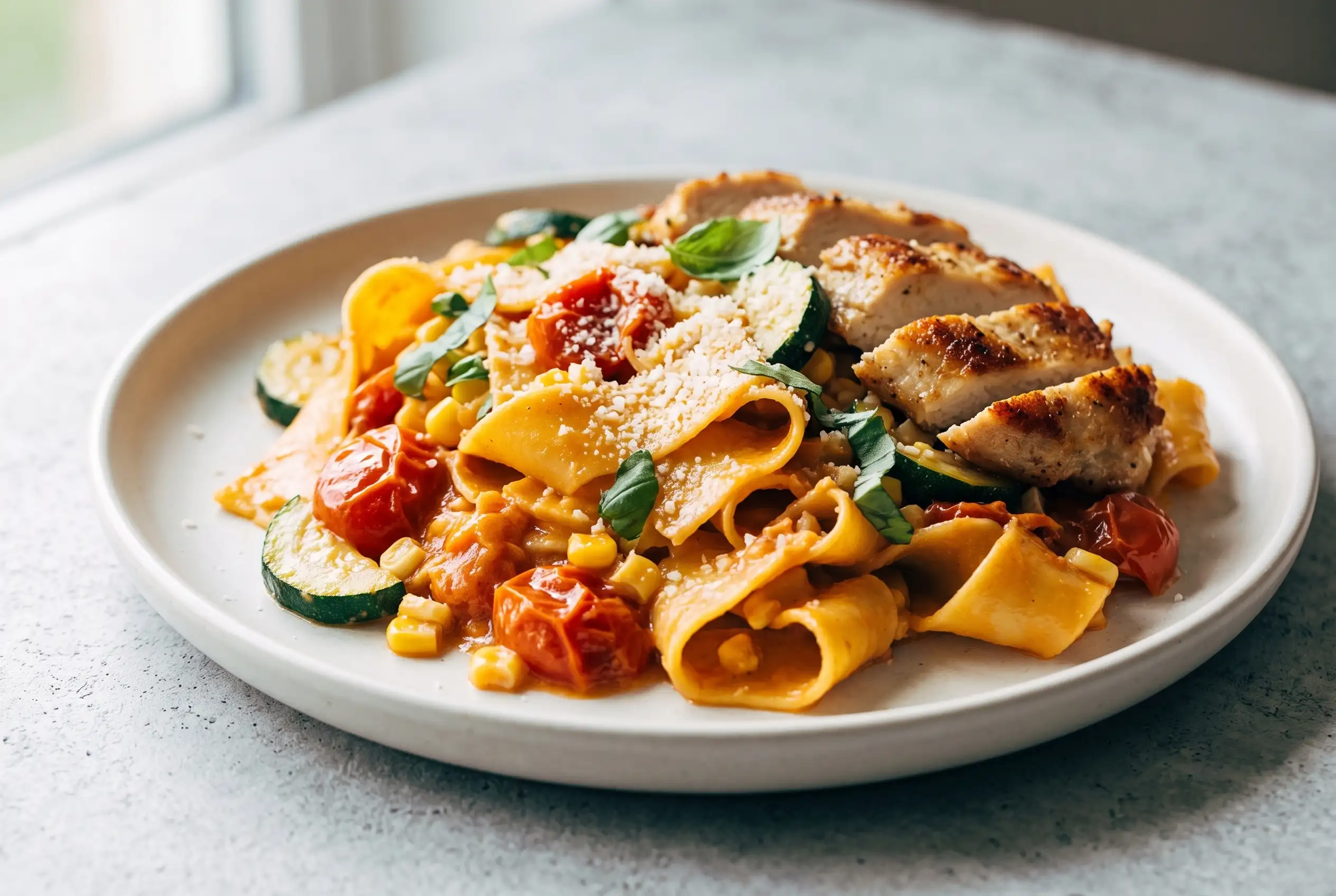
Burst tomato pappardelle brings together wide ribbons of pasta, juicy tomatoes, seasonal vegetables, and golden pan-fried chicken in a dish built around fresh textures and a creamy finish. The combination works because the tomatoes create a naturally rich sauce while zucchini and sweet corn keep each bite bright.
Burst Tomato Pappardelle Builds Layers Through Fresh Pan Flavors
Kitchen warmth develops quickly as cherry tomatoes soften and release their juices into the skillet. Those concentrated tomato juices become the foundation that coats the pasta, creating a sauce with a fresh character instead of a heavy texture.
Golden chicken pieces add a satisfying contrast beside the tender noodles and vegetables. The flour coating helps create a lightly crisp surface while keeping the chicken connected to the creamy tomato sauce when everything is combined.
Balanced textures define this chicken pappardelle pasta because every element has a clear role. The broad pasta ribbons hold onto the sauce, the vegetables provide seasonal color, and the chicken turns the dish into a complete meal with a hearty centerpiece.
Cherry Tomatoes Shape the Sauce With Their Natural Juices
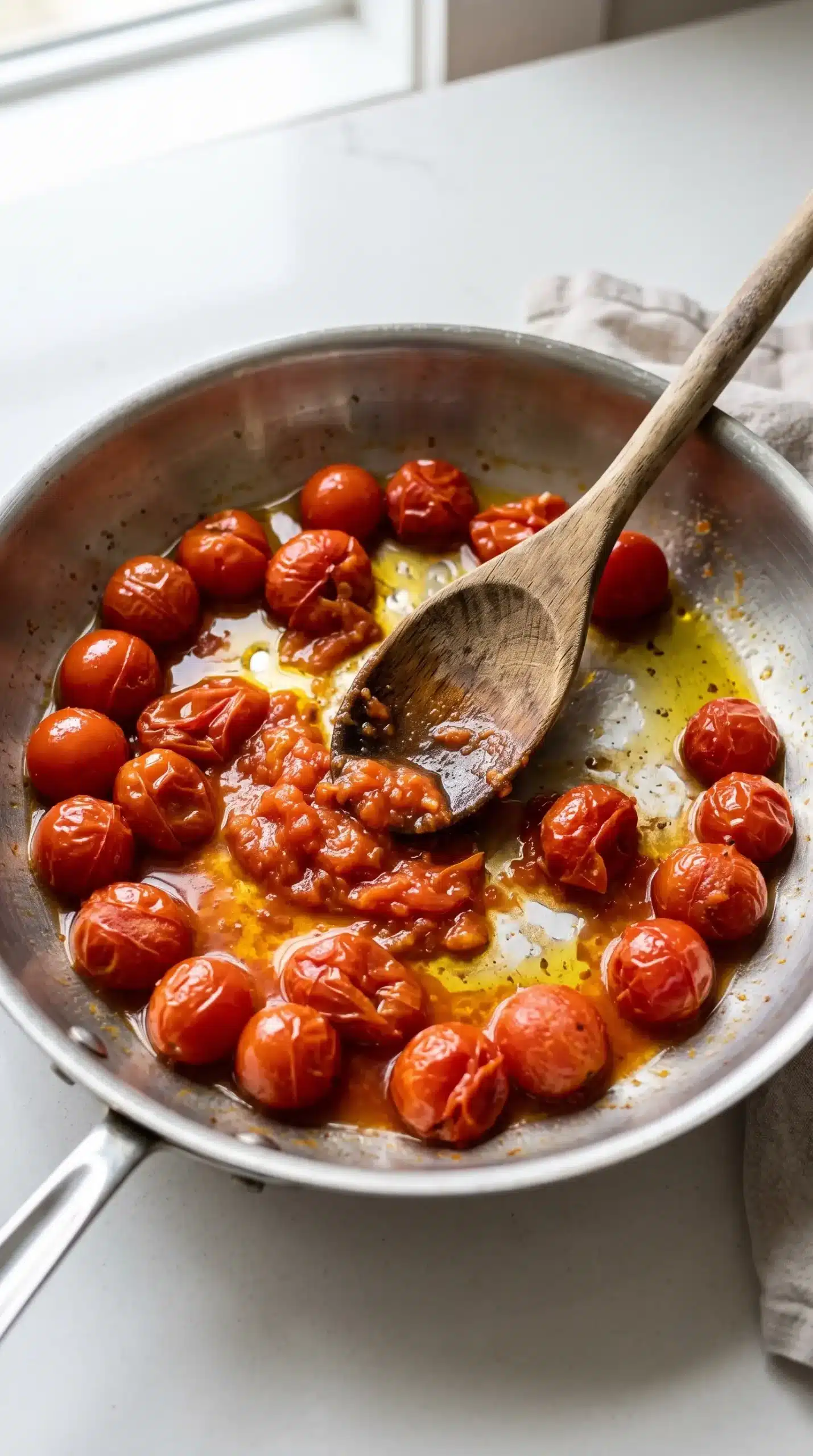
Tomato selection matters most when creating the base of burst tomato pappardelle. Cherry tomatoes work well because their small size allows them to soften evenly and release flavorful juices that can be pressed into a quick skillet sauce.
Gentle pressure from a spoon transforms softened tomatoes into a thicker coating for the pasta. Keeping some small tomato pieces intact adds texture, while the released juices blend with cream and seasonings for a smooth finish.
Important choices during this stage include:
- Tomato texture: Wait until the skins soften and the tomatoes easily break before pressing them.
- Sauce balance: Add cream after the tomato flavor has developed so the sauce keeps its bright character.
- Seasoning timing: Adjust salt after the vegetables and creamy elements join the skillet.
Pappardelle Ribbons Carry the Creamy Tomato Coating
Wide egg pappardelle provides enough surface area to capture the tomato and cream sauce, allowing the vegetables and chicken to stay connected with each forkful instead of settling separately.
Pan-Fried Chicken Creates the Golden Savory Center
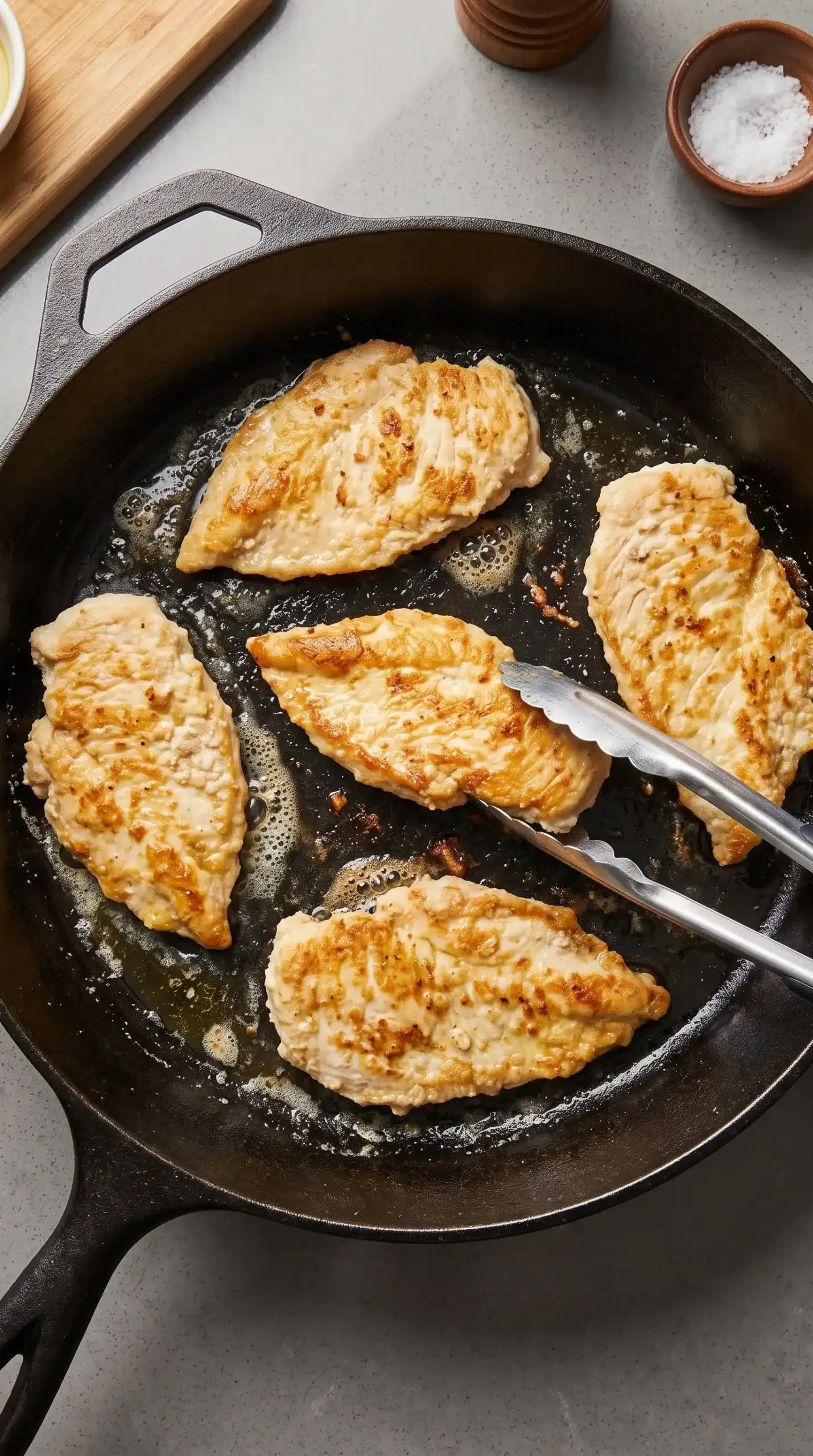
Thin chicken pieces are especially useful for this pasta because they cook quickly while developing a browned exterior. A light flour coating seasoned with salt and pepper helps the surface color evenly during pan frying.
Careful skillet preparation keeps the chicken from losing its delicate texture. Heating the olive oil before adding butter helps the cooking fat handle the higher heat while still bringing the flavor of butter into the finished chicken.
Before combining the chicken with the pasta, check that each piece reaches a 165°F internal temperature to confirm it is safely cooked while keeping the slices ready for the creamy sauce.
After cooking, allowing the chicken to remain warm before serving keeps the slices ready to pair with the saucy pasta. The browned exterior also gives the creamy tomato chicken pasta a savory contrast against the softer noodles and vegetables.
Cooking Control Keeps Every Component in Balance
Successful preparation depends on timing the separate elements so they meet at the right texture. Pasta should be ready to combine without becoming overly soft, while vegetables need enough heat to soften without losing all of their character.
Skillet management has the biggest effect on the finished dish. Medium-high heat helps create color on the chicken, while gentler cooking lets tomatoes break down and form a sauce without scorching their natural juices.
Useful control points during cooking include:
| Cooking stage | Important observation | Helpful adjustment |
|---|---|---|
| Tomatoes | Skins soften and juices release | Press gently to build the sauce |
| Zucchini and corn | Zucchini becomes tender but holds shape | Keep sautéing brief |
| Chicken | Outside turns golden and inside cooks through | Use evenly thin pieces |
Zucchini and Corn Add Sweet Seasonal Contrast
Pappardelle with zucchini and corn gains its character from the vegetables joining the tomato base at the right moment. The zucchini absorbs surrounding flavors, while sweet corn brings a gentle contrast that keeps the sauce from feeling one-dimensional.
Common Mistakes Can Weaken Burst Tomato Pappardelle Results
Several small choices can change how the finished pasta feels. Overworking the tomatoes, rushing the chicken, or adding ingredients before the skillet is ready can prevent the textures from coming together properly.
Frequent issues include:
- Watery sauce: Adding cream before the tomato juices concentrate can leave the coating thinner than desired.
- Uneven chicken browning: Crowding pieces or skipping excess flour removal can reduce the golden exterior.
- Soft vegetables: Cooking zucchini too long may remove the fresh texture that balances the pasta.
Corrections are usually simple once the cause is identified. A sauce that needs more body can be cooked gently to concentrate flavors, while chicken texture improves when pieces are cut evenly and given enough space in the skillet.
Creamy Tomato Sauce Finishes the Pasta Without Hiding Fresh Flavors
Cream creates a smooth connection between the burst tomatoes, pasta ribbons, and vegetables. A balanced sauce keeps the bright acidity noticeable while adding richness, much like the careful layering found in tomato basil pasta with fresh ingredients and a creamy finish.
Serving Details Highlight the Chicken Pappardelle Pasta
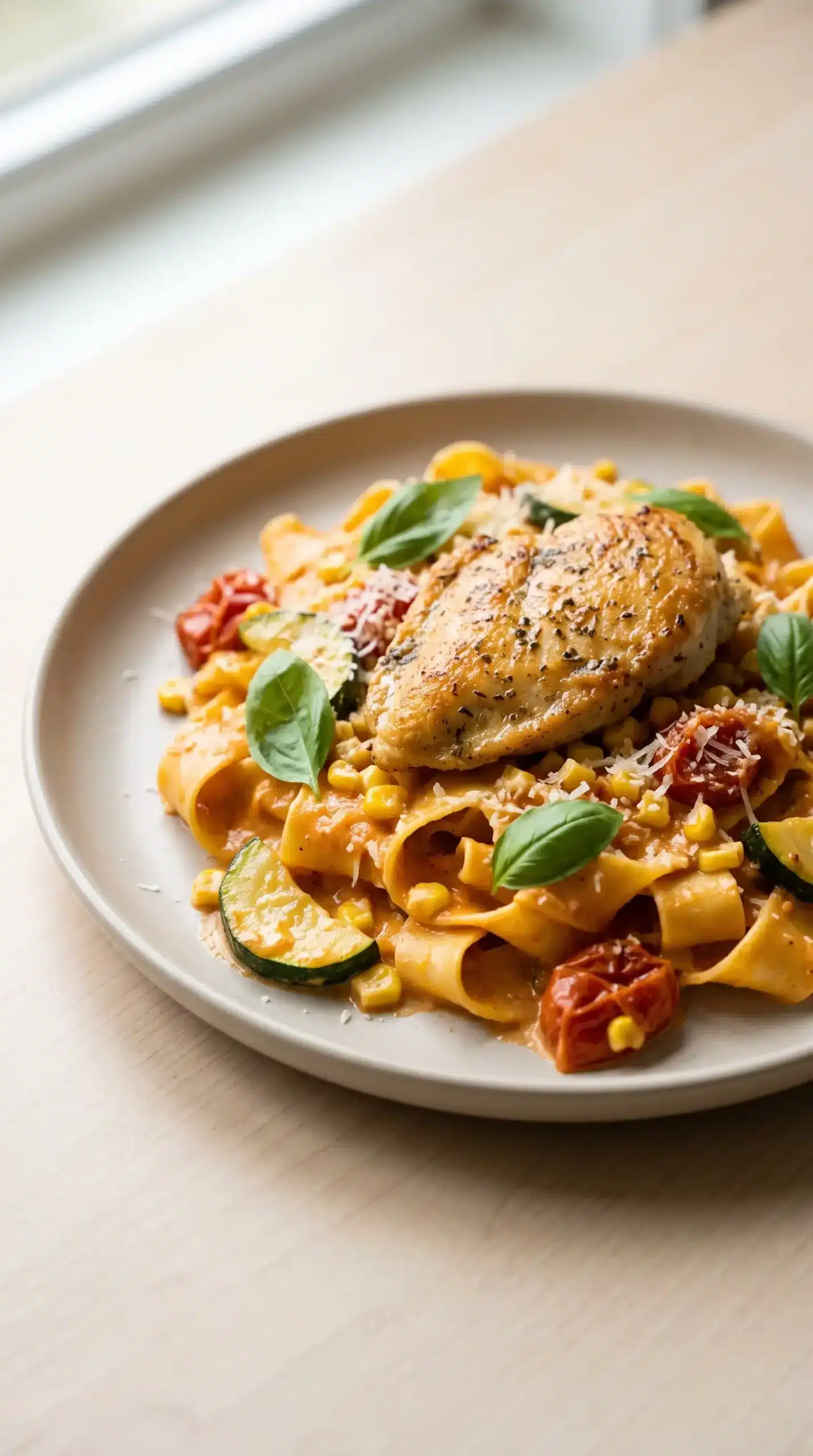
Presentation works best when the pasta is tossed together before adding the chicken on top. This keeps the sauce distributed while allowing the browned chicken pieces to remain visible as the main finishing element.
Simple toppings provide the last layer of flavor and texture. Parmesan adds savory depth, while basil brings a fresh aroma that matches the vegetables and tomato base.
| Finishing option | Effect on the dish | Best use |
|---|---|---|
| Parmesan | Adds salty richness | Sprinkle over warm pasta |
| Basil | Adds fresh herbal notes | Use near serving time |
| Lemon juice | Brightens creamy flavors | Balance the sauce before serving |
Storage Choices Protect the Pasta Texture
Separate storage works best for leftovers because the sauce, noodles, vegetables, and chicken soften at different rates. Keeping components apart helps preserve more of the original texture when reheating.
Simple Variations Keep the Vegetable Pasta Flexible
Small adjustments can change the character of the dish while keeping its main structure intact. Additional herbs, different seasonal vegetables, or a slightly lighter sauce can create variety without changing the core cooking approach.
Suitable changes should respect the balance between the creamy sauce and fresh produce. Swapping vegetables with similar cooking behavior works better than adding ingredients that release excessive moisture or require very different cooking times.
Burst Tomato Pappardelle Gains Its Best Texture Through Timing
Burst tomato pappardelle succeeds when the sauce, pasta, vegetables, and chicken reach the plate with complementary textures. Soft tomatoes, tender ribbons, crisp-edged chicken, and lightly cooked zucchini depend on attention to heat and timing.
Fresh ingredients create the strongest result when each part keeps its own character while joining the same sauce. The finished combination delivers a creamy tomato pasta experience where seasonal vegetables and pan-fried chicken remain distinct.
Questions About Sauce Texture and Pasta Preparation
Can burst tomato pappardelle be made without chicken?
Yes, the pasta can stand on its own as a vegetable-focused meal. Removing the chicken keeps the tomato, zucchini, corn, and creamy sauce combination intact while creating a lighter version.
How can the sauce become thicker?
A thicker sauce develops by allowing the tomatoes to soften fully and release their juices before adding the creamy ingredients. Gentle simmering after combining the components can also help the coating cling more closely to the pasta.
Can another pasta shape replace pappardelle?
Other wide or sturdy pasta shapes can work, especially those that hold creamy sauces well. The texture will change because pappardelle provides broad ribbons that capture more sauce with each serving.
What makes the chicken coating turn golden?
The seasoned flour coating creates a surface that browns during pan frying. Removing excess flour before cooking helps the coating stay light and allows the chicken surface to develop color.
How should zucchini be cooked for the best texture?
Zucchini is best when heated until tender while still maintaining some structure. Short sautéing keeps the vegetable from becoming overly soft beside the pasta and sauce.
Burst Tomato Pappardelle with Zucchini and Chicken
Burst Tomato Pappardelle is a creamy, hearty pasta dish with tender ribbons, fresh vegetables, and golden chicken for a comforting meal. It is a great choice when you want a flavorful weeknight dinner with a rich tomato finish.
Ingredients
Method
Preparation
- Cook the pappardelle according to the package directions, then toss with oil and set aside.
- Prepare the flour mixture with salt and pepper for coating the chicken.
Cooking
- Place the cherry tomatoes in a pan with oil and cook until softened and bursting. Press the tomatoes gently with the back of a spoon to release their juices and create a thick sauce.
- Add the corn and zucchini to the pan and sauté for a few minutes until the zucchini softens. Stir in the garlic during the final minute of sautéing, then add lemon juice, cream, and season with salt and pepper.
- While the vegetables cook, coat each chicken breast in the flour mixture and remove excess flour. Heat olive oil in a large skillet over medium-high heat, add butter after the oil is hot, and cook the chicken pieces for a few minutes per side until browned and cooked through. Remove the chicken and keep warm.
Assembly
- Add the cooked pasta to the vegetable sauce and toss gently until combined.
- Serve the pasta topped with Parmesan, basil, and the warm golden chicken pieces.
Notes
Use evenly thin chicken pieces so they cook consistently and develop a browned exterior.