From breakfast to dinner, from healthy meals to sweet desserts – Next Yum Recipes brings you quick, simple and tasty ideas for every occasion and every time.


 This Recipe
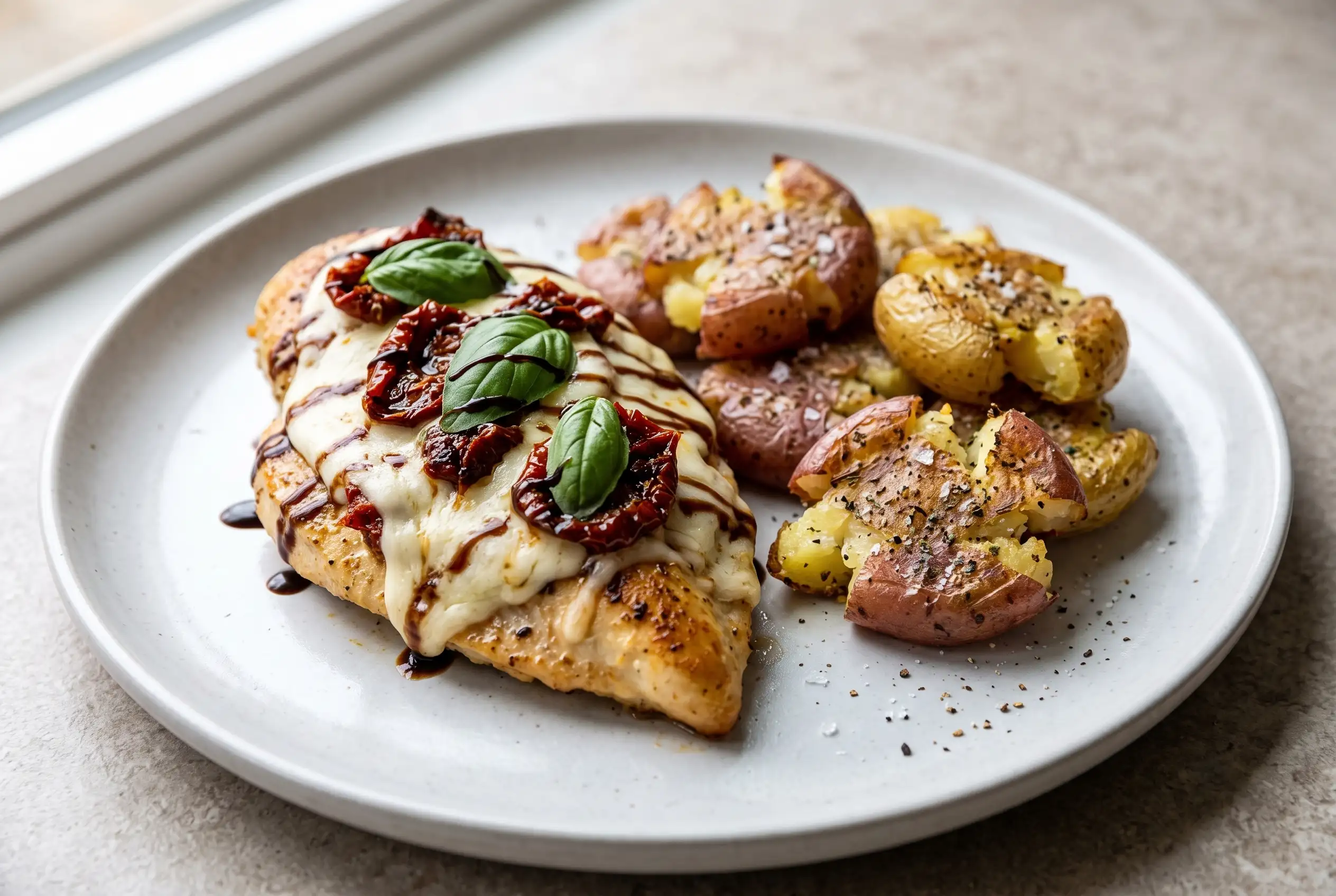
Caprese chicken Brings Tomato Basil Flavor Together
Caprese chicken combines browned chicken, roasted or sun dried tomatoes, melted cheese, basil, and balsamic reduction into a dinner built around contrast. The chicken provides a savory center while the toppings create the familiar caprese-style balance of creamy, herbal, acidic, and sweet notes.
Fresh preparation choices shape the way the finished plate eats. Thin chicken pieces cook more evenly, smashed potatoes develop crisp edges from direct oven heat, and careful topping placement keeps each part recognizable after baking.
Smashed Potatoes Give Caprese Chicken a Crisp Side
Golden potato edges come from a simple preparation choice: partially softening the potatoes before pressing them open and roasting them. Keeping the potato shape mostly intact allows the center to stay tender while the exposed surfaces absorb olive oil and seasonings.
| Potato stage | Texture result | Cooking focus |
|---|---|---|
| Boiled until slightly tender | Soft interior for smashing | Avoid breaking the potatoes apart completely |
| Gently flattened | More surface area for browning | Keep enough structure for serving |
| Roasted with oil and seasoning | Crisp edges with seasoned flavor | Use a baking surface with room between pieces |
Simple adjustments make smashed potatoes fit the chicken well. Red or gold potatoes hold their shape during handling, and fresh parsley or chives bring a clean finish after the richer cheese and tomato toppings.
Havarti, Tomatoes, and Basil Shape Caprese Chicken
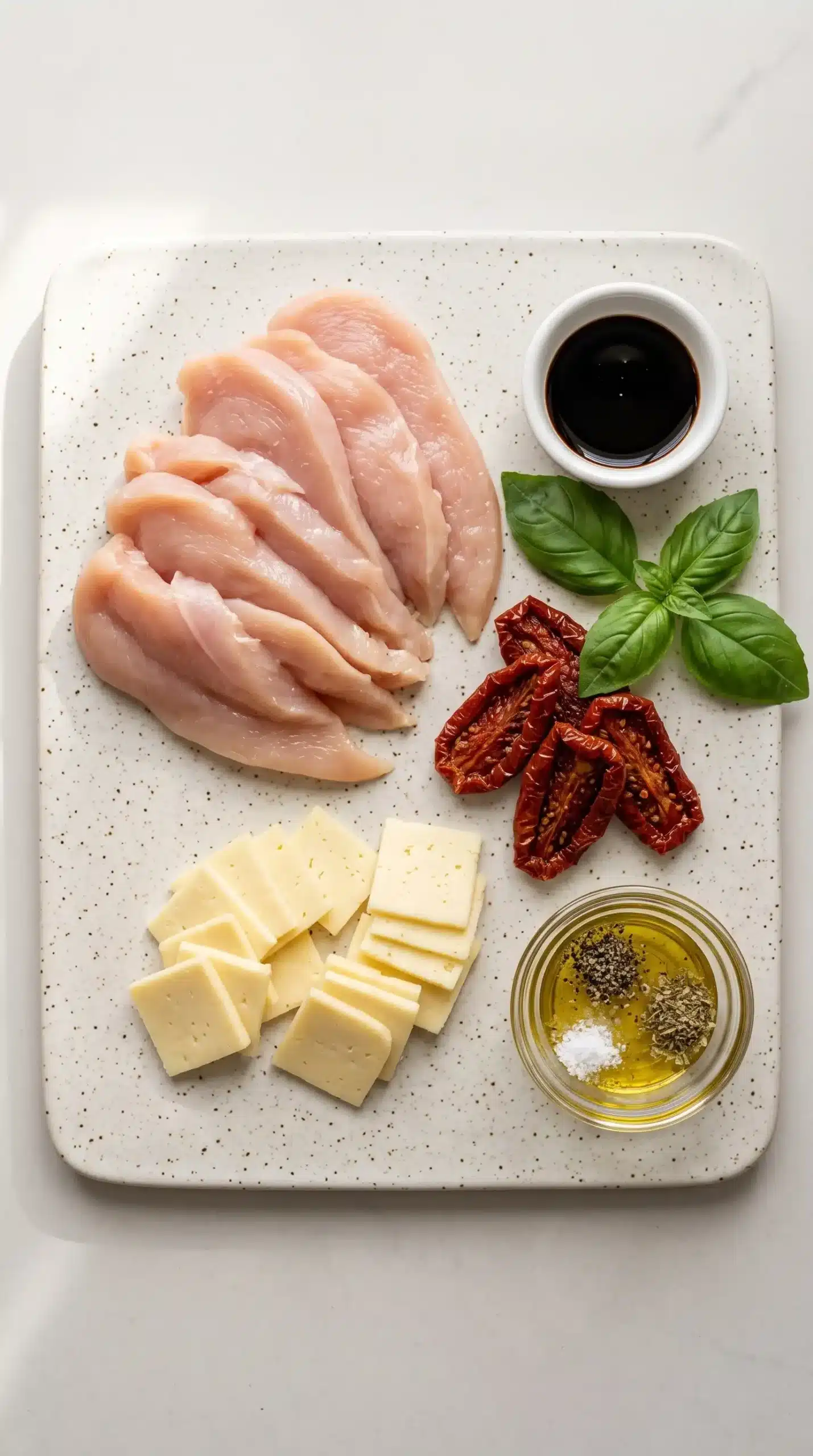
Ingredient choices have the biggest effect when the dish relies on a small number of recognizable flavors. Havarti melts smoothly over the chicken, creating a soft layer that connects the roasted tomatoes with the meat underneath.
Roasted or sun dried tomatoes bring concentrated tomato flavor without adding excess moisture. Their texture helps prevent the topping from becoming watery while the chicken finishes in the oven.
Basil and balsamic reduction arrive after baking because their fresh qualities are easiest to notice when they are not exposed to prolonged heat. The basil keeps its herbal character, and the reduction adds a glossy sweet-tart accent.
- Cheese choice: Use a cheese that melts well and fits the available ingredients.
- Tomato texture: Choose concentrated tomatoes to maintain a balanced topping.
- Herb timing: Add basil after baking to preserve freshness.
Small Potato Choices Change the Smashed Texture
Small potatoes work especially well because their size creates a useful balance between a tender middle and crisp exterior. Pressing them gently keeps the pieces easy to serve alongside the chicken.
Chicken Thickness Controls the Oven Finish
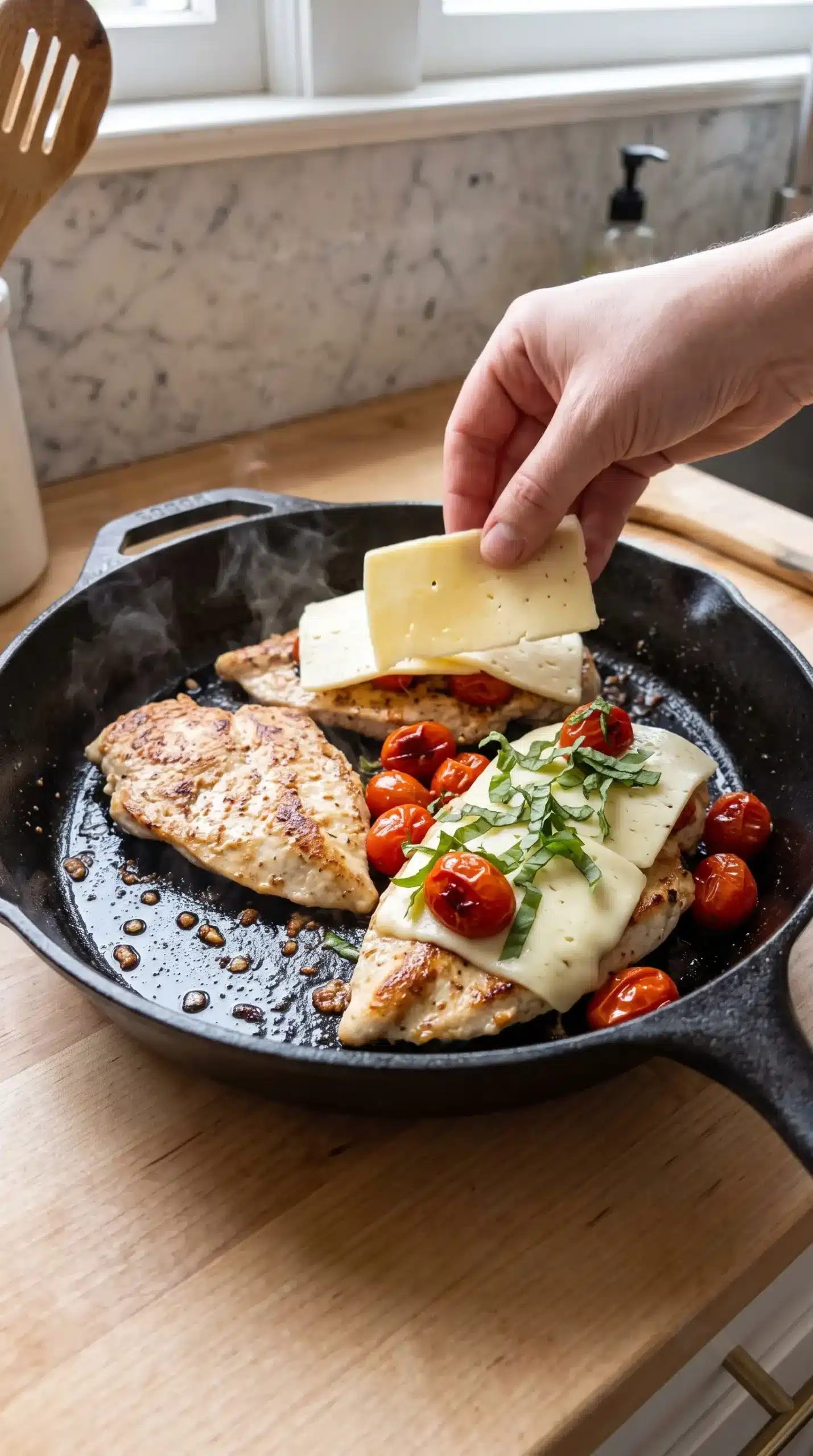
Chicken preparation affects every later step because thick pieces and thin pieces do not heat at the same rate. Cutting chicken breasts lengthwise into thinner portions creates pieces that can brown quickly before the cheese topping finishes melting.
Careful browning builds flavor before the oven stage begins. The skillet provides direct heat for surface color, while the later bake allows the tomatoes and cheese to warm together with the chicken.
Visual cues matter during cooking. Melted cheese, a cooked center, and a firm texture indicate that the chicken has reached the right point, while overextended oven time can make lean breast meat less tender.
Balsamic Reduction Adds the Closing Contrast
Balsamic reduction changes ordinary vinegar into a thicker drizzle with concentrated flavor. Simmering balsamic vinegar until it becomes a reduced balsamic vinegar creates a finishing sauce with a concentrated texture that can be applied lightly over the chicken and potatoes.
Caprese Chicken Cooking Control Prevents Uneven Results
Temperature management separates a balanced baked caprese chicken from a dish where one component finishes too early. The skillet and oven work together, with the first stage adding browning and the second stage completing the interior cooking.
Consistent sizing helps every portion follow the same timeline. Similar chicken thicknesses reduce the chance that one piece dries out while another still needs more heat.
Potato handling requires a different type of control. A gentle press creates the rough surfaces needed for browning, but excessive force can turn the side dish into loose pieces that are difficult to serve.
Serving Pairings Keep the Plate Balanced
Balanced serving choices highlight the contrast already present in caprese chicken. The potatoes provide a hearty base, while fresh garnishes and a lighter drink can complement the tomato, basil, and balsamic notes.
| Serving element | Role beside the chicken | Helpful approach |
|---|---|---|
| Smashed potatoes | Add crisp and tender texture | Serve warm so the edges remain enjoyable |
| Basil garnish | Refresh the richer toppings | Add close to serving time |
| Balsamic drizzle | Provide acidity and sweetness | Use enough to accent the plate without covering flavors |
Caprese Chicken Mistakes Come From Simple Timing Errors
Common mistakes with caprese chicken usually happen when texture changes are overlooked. Small adjustments in preparation can prevent the most noticeable issues.
- Over-smashing potatoes: Pressing too hard can remove the structure needed for crisp edges and easy serving.
- Thick chicken pieces: Uneven portions may brown before the centers are ready, making timing harder to manage.
- Adding basil too early: Heat can reduce the fresh herbal character that makes the garnish noticeable.
Another issue appears when toppings are treated as decoration instead of part of the cooking process. Tomatoes and cheese need enough oven time to warm and soften while the chicken completes its bake.
Cheese Placement Protects the Baked Caprese Chicken Texture
Layering the topping correctly helps baked caprese chicken keep its structure. Cheese placed over the tomatoes creates a melted cover that joins the flavors without hiding the tomato pieces completely. The same careful topping placement matters when preparing baked chicken with mozzarella, where the cheese layer needs to melt evenly while remaining part of the finished dish.
Melting behavior matters when choosing substitutions. A flexible cheese option can work if it softens well under heat and supports the tomato and basil flavors.
Positioning also affects presentation. Keeping the topping centered on each chicken piece helps every serving include a similar combination of cheese, tomato, and garnish.
Leftover Handling Keeps Components Separate
Stored portions maintain better texture when the chicken and potatoes are cooled and kept in a way that respects their different qualities. The potatoes may soften after refrigeration, while the chicken and toppings can remain flavorful.
Flexible Swaps Maintain the Dish Structure
Substitutions work best when they preserve the balance between savory chicken, creamy cheese, concentrated tomato, and fresh finishing elements. Different melting cheeses can replace havarti, and herbs such as parsley or chives can adjust the final presentation.
Fresh Garnishes Complete the Plate
Fresh basil, herbs, and a measured drizzle of balsamic reduction provide the finishing details that connect the separate parts of caprese chicken without changing the cooking process.
Caprese Chicken Succeeds Through Balanced Heat and Texture
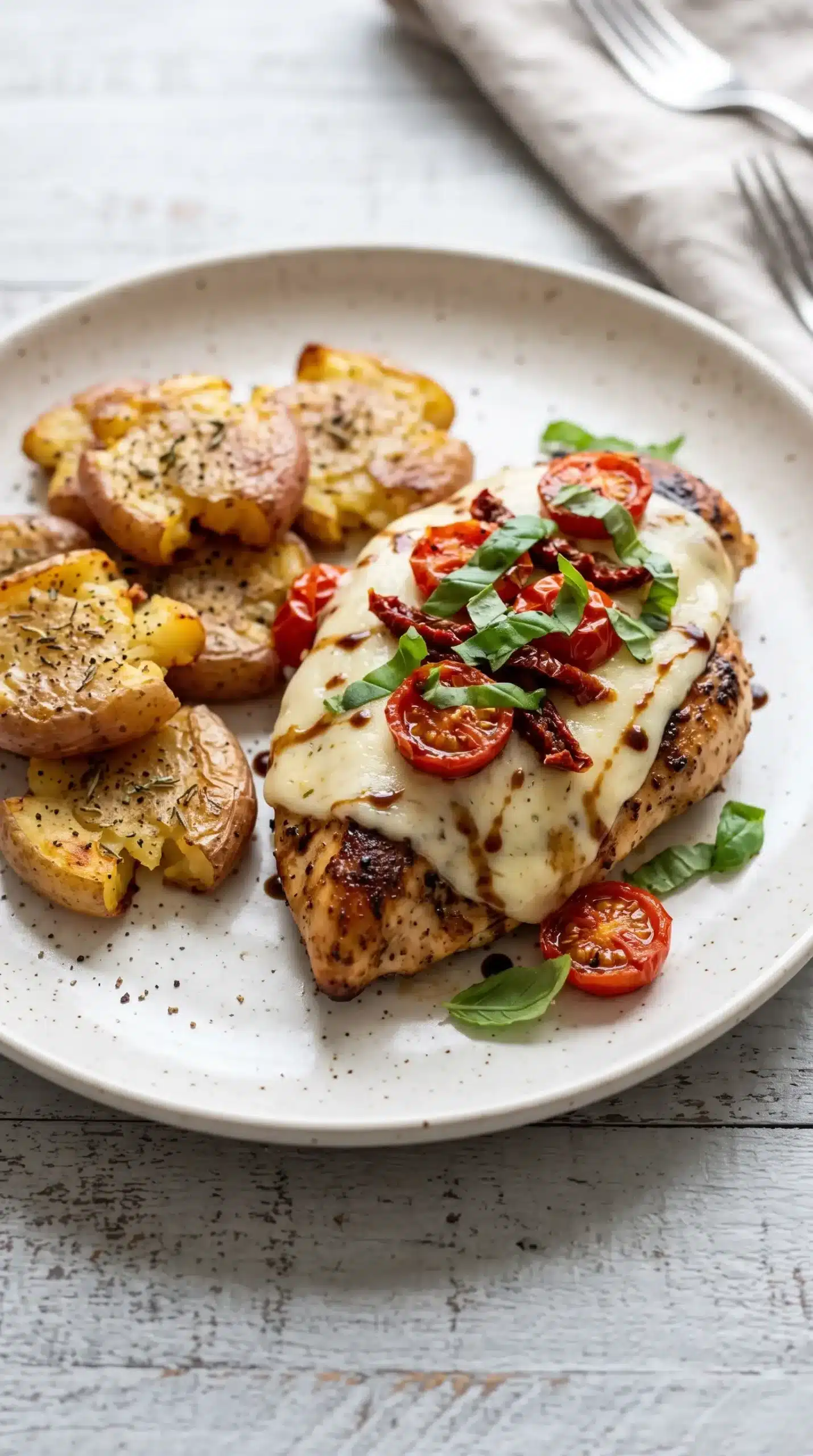
Caprese chicken depends on coordination between tender meat, crisp-edged potatoes, melted cheese, and fresh finishing ingredients. The most important cooking judgment is recognizing when each component has reached its best texture before combining the flavors on the plate.
Careful handling keeps the dish balanced from the skillet to the serving plate. The chicken stays centered, the potatoes provide contrast, and the toppings remain distinct enough to deliver the tomato, basil, and balsamic character expected from this style of meal.
Caprese Chicken Questions About Timing, Storage, and Swaps
Can caprese chicken use thicker chicken breasts?
Thicker chicken breasts can work, but they may require more attention because the exterior can brown before the center finishes cooking. Slicing the chicken into thinner pieces creates a more even cooking path for this preparation.
How can smashed potatoes stay crisp after baking?
Crisp smashed potatoes depend on enough exposed surface area and careful handling before roasting. Leaving the pieces intact after pressing helps the edges brown while the centers remain soft.
Can the balsamic drizzle be prepared ahead?
Balsamic reduction can be prepared before assembling the meal and kept ready for serving. Having the drizzle finished in advance makes it easier to add the right amount after the chicken comes from the oven.
What cheese alternatives work for caprese chicken?
Cheese alternatives should have good melting qualities and a flavor that works with tomatoes and basil. Flexible options include other mild cheeses that soften well when baked.
How should leftovers be reheated?
Reheating gently helps protect the chicken texture and prevents the cheese topping from becoming overly firm. Warming the portions until heated through keeps the flavors intact while accepting that the potatoes may lose some crispness.
Caprese Chicken with Smashed Potatoes and Fresh Basil
Caprese Chicken with Smashed Potatoes is a comforting dinner featuring tender chicken, crispy-edged potatoes, melted cheese, fresh basil, and a flavorful balsamic finish. It is a great choice for an easy weeknight meal with balanced textures and classic caprese-inspired appeal.
Ingredients
Method
Preparation
- Preheat the oven to 425°F (218°C). Place the potatoes in a pot, cover with water, and bring to a boil. Once boiling, cook for 10 minutes, then drain and let cool slightly.
- Press each potato gently under a clean dish towel, keeping it mostly intact. Move the potatoes to a baking sheet.
Cooking
- Coat the potatoes with olive oil and season with garlic powder, salt, and pepper. Bake for 10-15 minutes.
- Heat a small amount of oil in an oven-safe skillet over medium heat. Season the chicken with salt and pepper, then brown both sides without needing to cook it completely through.
- Add the sun dried tomatoes and cheese slices over the chicken. Transfer the skillet to the oven and bake for 8-10 minutes, until the chicken is cooked through and the cheese has melted.
Assembly
- Finish the chicken with fresh basil and balsamic reduction. Serve with the smashed potatoes.
Notes
Make the balsamic reduction by simmering about a cup of balsamic vinegar over medium heat in a small saucepan. Continue cooking until the liquid has reduced significantly and coats the back of a spoon, then remove from the heat for a smooth balsamic drizzle.