From breakfast to dinner, from healthy meals to sweet desserts – Next Yum Recipes brings you quick, simple and tasty ideas for every occasion and every time.


 This Recipe
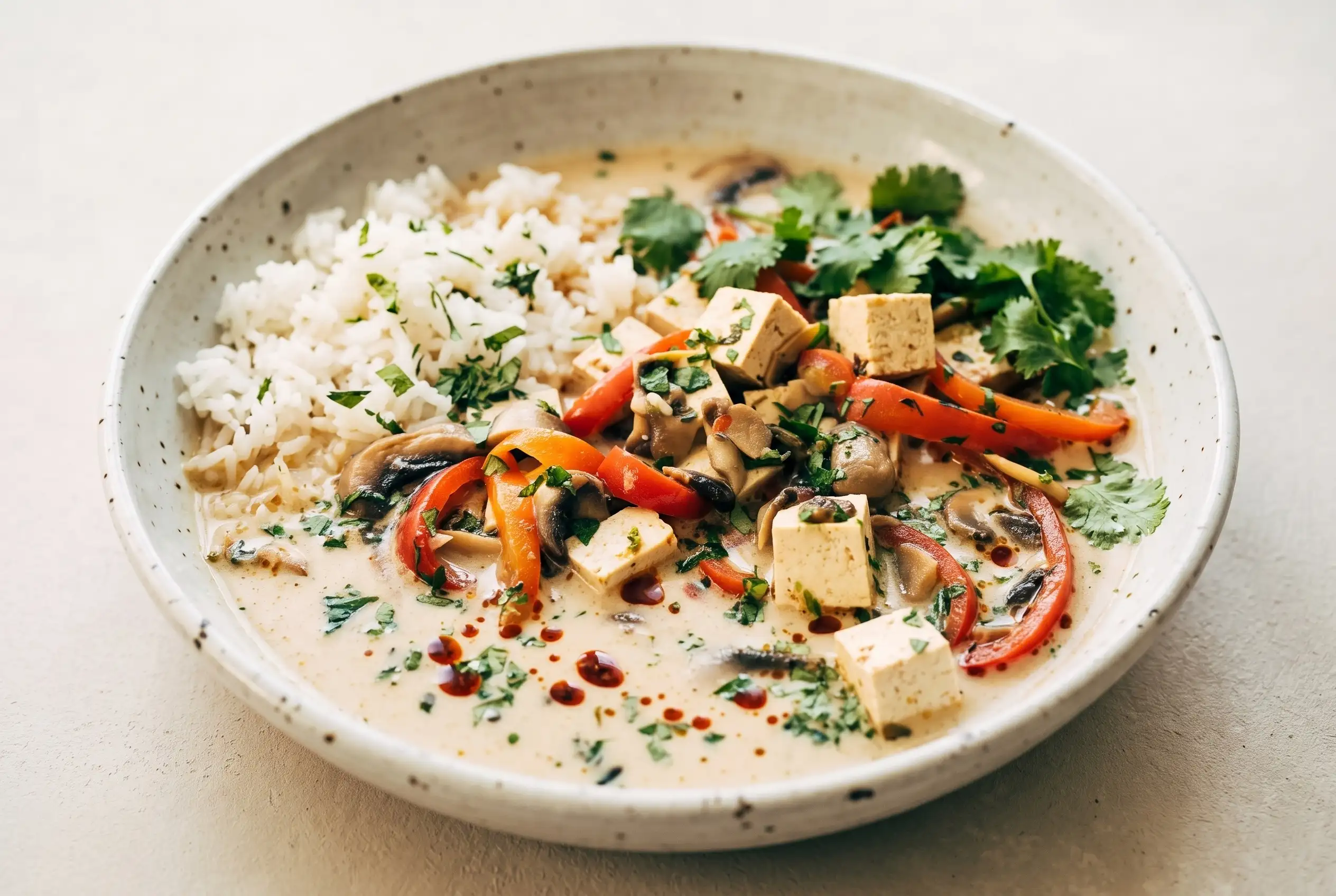
Thai coconut soup with tofu and rice builds its character from fragrant garlic, ginger, lemongrass, roasted red chili paste, creamy coconut milk, bright lime, and a deeply seasoned broth. What makes the bowl especially satisfying is the contrast between the silky coconut base, tender tofu, lightly softened vegetables, and rice that gradually absorbs the broth as it sits.
Although the ingredient list contains several bold flavors, successful thai coconut soup depends less on intensity than on balance. Aromatics need gentle heat, the chili paste benefits from brief cooking in oil, coconut milk should remain smooth, and fish sauce, brown sugar, and lime need to be adjusted together. Small changes at those points have a larger effect than simply adding more seasoning at the end.
Garlic, Ginger, and Lemongrass Need Gentle Heat
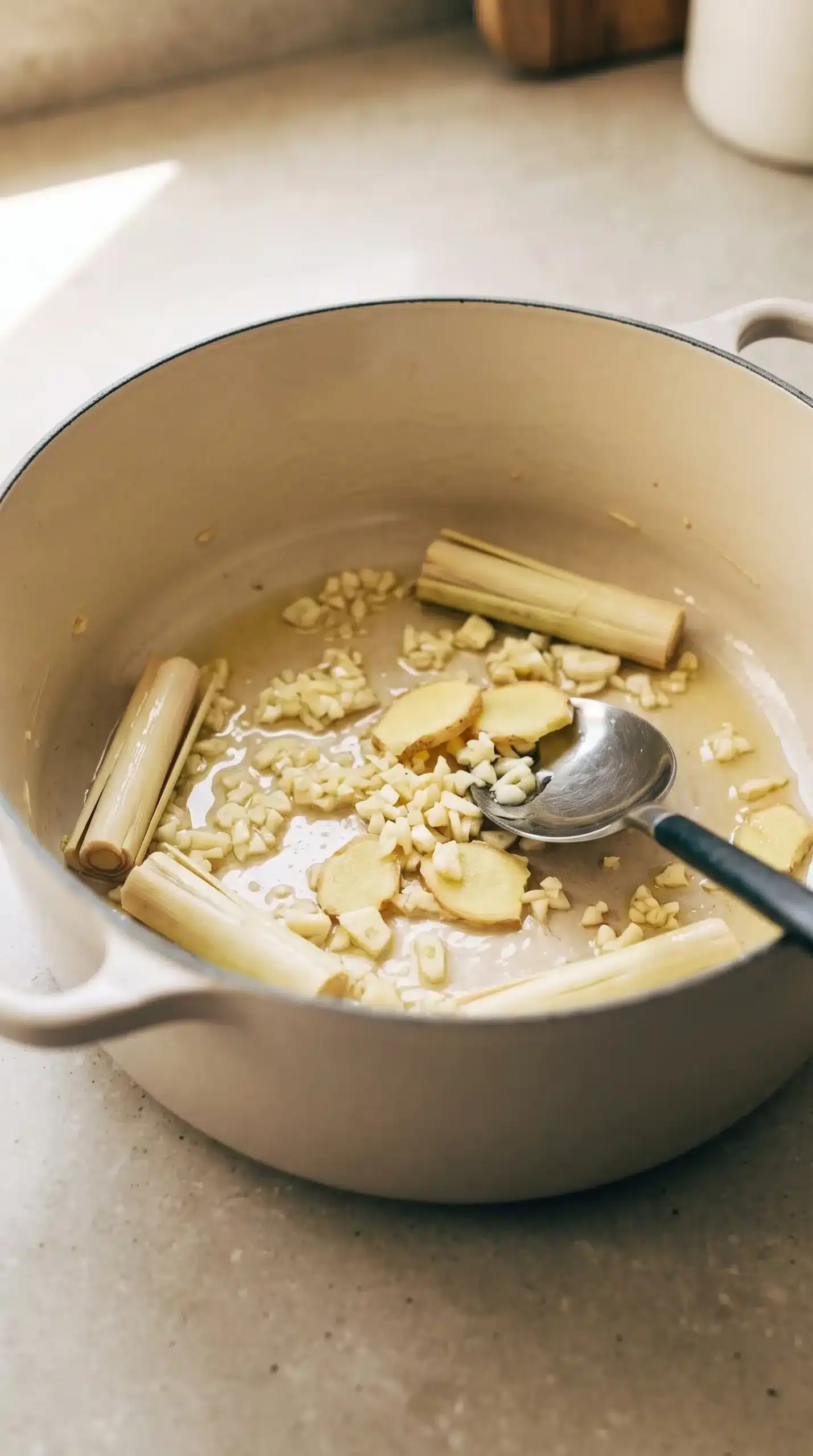
Garlic is the most heat-sensitive aromatic in the pot. Once it browns deeply, its sharper toasted flavor can compete with the cleaner ginger and lemongrass notes. Moderate heat gives the garlic a chance to soften while the ginger perfumes the oil and the lemongrass begins releasing its citrusy aroma.
Thin ginger slices work especially well in thai coconut soup because they expose plenty of surface area without disappearing into the broth. Some slices may remain in the finished bowl, where they become softer and more saturated with coconut broth. Keeping them thin makes those occasional bites less assertive.
Lemongrass behaves differently from both garlic and ginger. Larger pieces are useful because they flavor the liquid while remaining easy to locate before serving. Crushing or slicing the stalks more aggressively is unnecessary here because their purpose is infusion, not becoming part of the spoonful.
Roasted Red Chili Paste Benefits From Direct Contact With the Pot
Briefly cooking the roasted red chili paste after the aromatics helps distribute it through the oil before broth enters the pot. Its concentrated chile, seasoning, and roasted flavors become more integrated this way, while excessive frying could push the garlic toward browning or make the paste catch on the bottom.
Coconut Milk and Broth Define the Soup’s Texture
Full-fat coconut milk gives thai coconut soup its rounded texture, but the broth prevents that richness from becoming overly dense. In a coconut curry soup with tofu, enough liquid should remain around the tofu and vegetables so each spoonful stays brothy rather than becoming thick like a curry sauce.
Vegetable broth keeps the bowl fully centered on the aromatics and tofu, while chicken broth can supply a somewhat fuller savory background. Either works with the stated flavor profile because the strongest seasoning arrives later from fish sauce, lime, chili paste, and cilantro.
Coconut milk is best incorporated after the initial simmer instead of being subjected to prolonged vigorous boiling. Gentle heat keeps the broth cohesive and allows the coconut flavor to remain clean. Once it is added, stirring is enough to bring the liquid together before the seasoning is adjusted.
Extra-Firm Tofu Works Best When It Holds Its Shape
Pressed extra-firm tofu is sturdy enough to simmer without dissolving into the broth, which matters in a bowl containing mushrooms, peppers, rice, and several spoonable garnishes. Cubes should be handled gently once they enter the pot so their edges stay intact.
A dry surface also helps the tofu remain distinct from the liquid. Pressing removes excess water that would otherwise dilute the surrounding broth and leave the cubes tasting less integrated. There is no need to brown the tofu separately because the appeal of coconut tofu soup comes from tender tofu absorbing the seasoned broth.
A Controlled Simmer Protects Aromatics, Tofu, and Coconut
Simmering is the most useful cooking control in thai coconut soup because several ingredients respond poorly to aggressive boiling. A steady but restrained bubble softens the vegetables, infuses the broth, and warms the tofu without knocking it apart.
High heat can also reduce the liquid too quickly before the coconut milk and finishing seasonings are added. If the broth level drops noticeably or the pot begins bubbling hard across the entire surface, lowering the heat preserves a more generous soup consistency.
Once the coconut milk enters, vigorous boiling becomes even less helpful. Keeping the pot calm makes it easier to judge thickness and seasoning because the liquid is not rapidly concentrating while fish sauce, sugar, and lime are being adjusted.
Mushrooms and Red Pepper Should Stay Clearly Defined
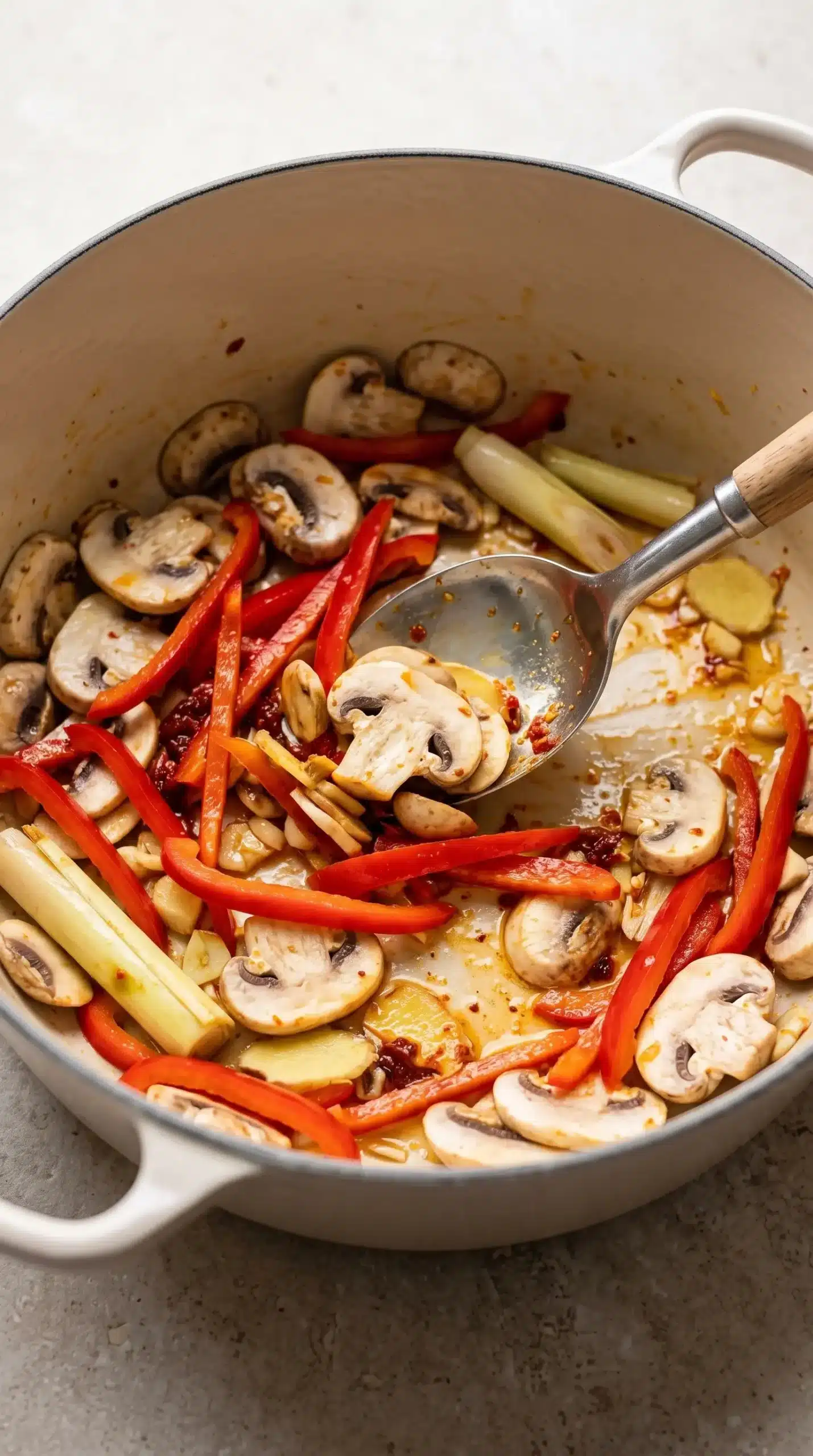
Sliced mushrooms and red pepper benefit from a short sauté before the broth is added because they begin softening and release some moisture without losing all structure. In thai coconut soup with tofu, those vegetables are most appealing when they remain recognizable beside the soft tofu instead of collapsing into the liquid.
Fish Sauce, Brown Sugar, and Lime Must Be Balanced Together
Fish sauce supplies concentrated saltiness and savory depth, brown sugar softens sharper edges, and lime brings acidity plus fresh citrus aroma. Adjusting only one can push the broth out of balance, so tasting after all three are present gives a more accurate picture of what the soup needs.
Lime zest and juice perform different jobs. Zest strengthens the aromatic citrus impression, while juice changes the broth’s acidity directly. Adding more zest cannot correct a broth that tastes too sweet, just as adding extra juice may make an already bright soup feel thin or sharp.
A useful correction depends on the flavor that is dominating at that moment:
| What You Notice | Likely Imbalance | Useful Adjustment |
|---|---|---|
| Broth tastes flat or muted | Not enough saltiness or acidity | Add a small amount of fish sauce or lime, then taste again |
| Flavor feels too sharp | Acidity is dominating | Use a little brown sugar or additional coconut milk |
| Soup tastes overly sweet | Sugar is masking the savory notes | Add lime and reassess the fish sauce |
| Broth feels too salty | Fish sauce or broth is too concentrated | Dilute with unsalted broth or coconut milk |
Rice Changes the Bowl as the Broth Soaks In
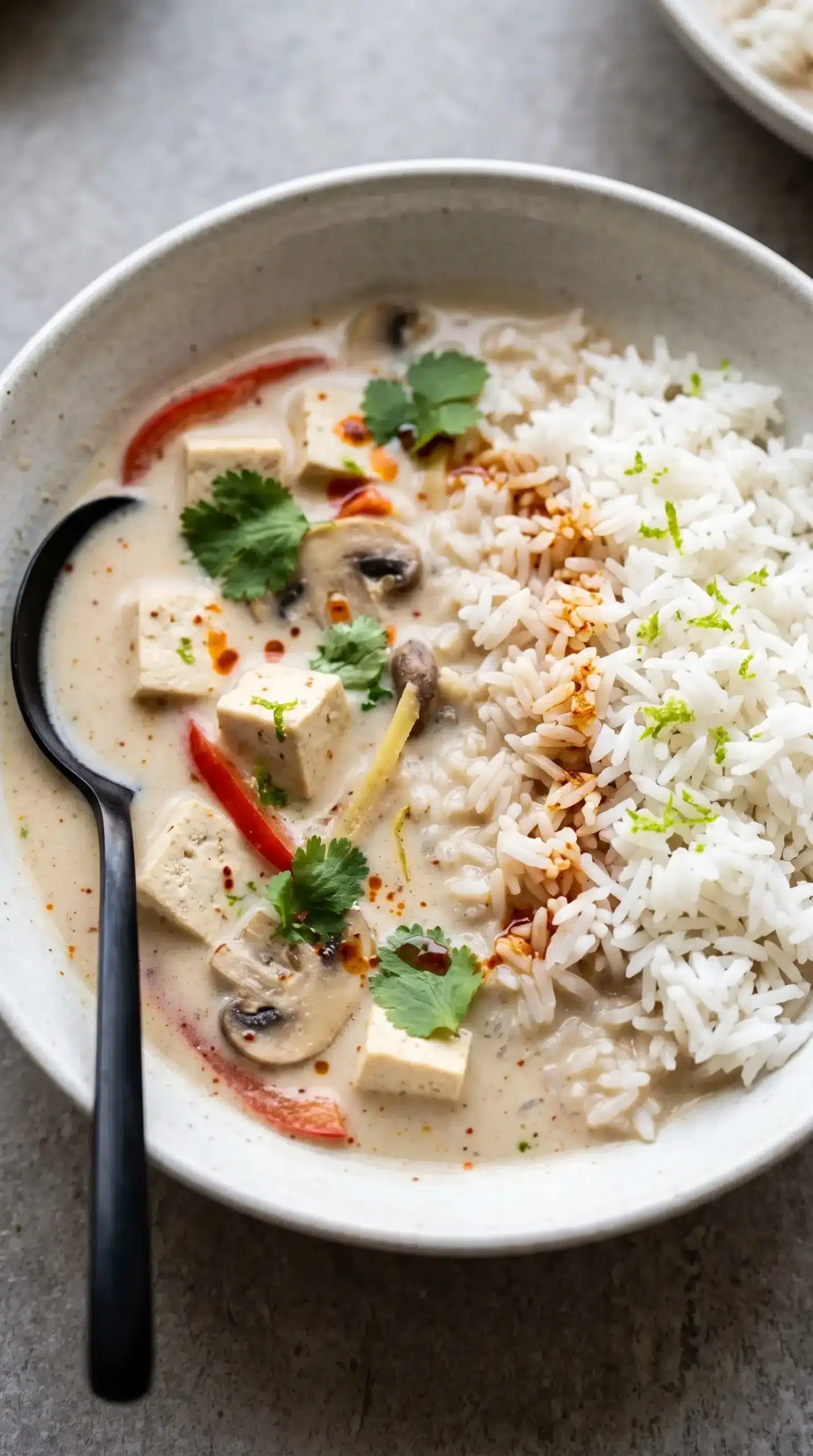
Serving thai coconut soup with rice partly separated in a shallow bowl creates two textures at once. Some rice stays relatively distinct while the grains nearest the broth absorb coconut, lime, and chili flavors, allowing each spoonful to range from brothy to almost creamy without changing the soup in the pot.
Common Thai Coconut Soup Mistakes Are Usually Heat or Balance Problems
Several avoidable errors show up most clearly in the finished broth. Burned aromatics create bitterness, hard boiling reduces liquid too quickly, and leaving large lemongrass pieces in the serving bowl creates an unpleasantly tough bite. Each problem has a visible or taste-based warning before the soup reaches the table.
- Darkening garlic: lower the heat immediately if the minced garlic begins taking on noticeable brown color.
- Rapid boiling: reduce the burner once the entire surface is rolling instead of gently simmering.
- Over-soft vegetables: stop prolonged cooking once the mushrooms and pepper are tender but still distinct.
- Tough lemongrass pieces: remove the larger stalk sections before ladling the soup.
- One-note seasoning: adjust salty, sweet, and sour elements in small increments instead of correcting with a single ingredient.
Another common problem is deciding the broth’s seasoning too early. Fish sauce, coconut milk, brown sugar, and lime can substantially change how salty, rich, or bright the soup tastes, so judging it before those elements are combined often leads to unnecessary correction later.
Careful tasting near the end is especially important because the broth will be served with rice. Rice slightly softens the perceived intensity of the liquid, so a broth that tastes lively on its own often lands more evenly once spooned around the grains.
Lemongrass Comes Out, While Thin Ginger Can Stay
Large lemongrass sections remain fibrous, so whole stalk pieces used for infusion can be simmered whole and discarded before serving. Thin ginger slices are softer and can stay in the bowl if their occasional warm, spicy bite is welcome; lemongrass paste is also a practical alternative when avoiding stalk removal is more important than using whole pieces.
Small Variations Can Shift the Bowl Without Losing Its Character
Extra vegetables can fit naturally as long as they can soften in the same gentle broth without overwhelming the tofu. The existing mushrooms and red pepper establish a useful model: vegetables should be cut so they cook evenly and remain easy to eat with a spoon.
- Add firmer vegetables early enough for them to become tender before the coconut milk is incorporated.
- Add quick-cooking vegetables closer to the end so they keep their color and texture.
- Keep the total vegetable load moderate so the broth still surrounds the tofu and rice freely.
Leftover Coconut Tofu Soup Needs Gentle Reheating
Stored soup will continue carrying strong aromatic flavors, and the coconut broth may thicken slightly when chilled. Reheat it gently while stirring so the coconut milk returns to an even consistency without an unnecessary hard boil.
Keeping rice separate during storage gives better control over texture. Rice left in the soup continues absorbing broth, which can make leftovers substantially thicker. Reheated thai coconut soup can then be ladled over fresh or separately stored rice just before serving.
Balanced Broth Is What Makes Thai Coconut Soup Work
A calm simmer, intact tofu, softened vegetables, and fragrant aromatics all matter, but the broth determines whether the bowl feels cohesive. When coconut richness is matched by lime, fish sauce, controlled sweetness, and chile warmth, thai coconut soup stays creamy without tasting heavy and vivid without becoming harsh.
Rice then becomes part of that balance instead of a separate side, absorbing just enough broth to carry the coconut and citrus flavors while leaving plenty of liquid around the tofu and vegetables.
Thai Coconut Soup Questions About Tofu, Lemongrass, and Broth
Can the tofu be browned before adding it to the soup?
Yes, although browning changes the character of the bowl. Seared tofu develops a firmer exterior and roasted flavor, while unbrowned tofu stays softer and absorbs more of the coconut broth. Either approach can work, but the supplied preparation is designed around tender tofu simmered directly in the soup.
What should I do if I cannot find fresh lemongrass?
Lemongrass paste can provide a convenient alternative and eliminates the need to remove fibrous stalk pieces before serving. Because prepared pastes vary in concentration, add it conservatively and taste the broth before increasing the amount.
Why does my coconut broth look separated?
Strong boiling can make a coconut-based broth look less uniform. Lower the heat and stir gently as the soup warms. Separation does not necessarily mean the soup is ruined, but restrained reheating helps restore a smoother appearance.
Can the soup be made without fish sauce?
Fish sauce contributes concentrated saltiness and savory depth, so omitting it requires another source of seasoning. A vegetarian-friendly savory seasoning can be used in its place, but it should be added gradually because its salt level and flavor may differ considerably.
Should the rice be cooked directly in the coconut soup?
Cooking the rice separately gives much better control over the broth consistency. Rice cooked in the pot would absorb a substantial amount of liquid and release starch, producing a thicker result that differs from the intended bowl of coconut broth surrounding tofu, vegetables, and rice.
Thai Coconut Soup with Tofu and Rice in Coconut Broth
Thai coconut soup with tofu and rice is a creamy, brothy bowl filled with tender tofu, mushrooms, red pepper, fragrant aromatics, and bright lime. Its comforting coconut broth and fresh toppings make it an inviting meal for a cozy dinner.
Ingredients
Method
Cooking
- Warm the oil in a soup pot over medium heat. Add the garlic, ginger, and lemongrass and cook for 3-5 minutes, keeping the garlic from browning. If it begins to brown, remove the pot from the heat or lower the heat.
- Once the aromatics have softened and become fragrant, stir in the roasted red chili paste and cook for 1-2 minutes.
- Add the mushrooms and red bell pepper and cook for 3-5 minutes, allowing the vegetables to soften slightly. Add the tofu and broth, then bring the soup to a simmer. Continue simmering for 10-15 minutes.
- Stir in the coconut milk, fish sauce, brown sugar, lime juice and zest, and salt. Add the cilantro, then taste and adjust the seasoning to your preference. Remove the lemongrass pieces before serving.
Serving
- Fill a shallow bowl halfway with rice and ladle the soup alongside it so the coconut broth partially flows into the rice. Finish with extra cilantro and chili oil.
Notes
Some recipes keep ginger in larger pieces so it can be removed before serving, but thinly sliced ginger can remain in the soup for occasional bites of softened, broth-soaked ginger. Larger lemongrass pieces can be tough, so remove them before serving. Lemongrass paste can also be used for convenience, allowing the flavor to remain without needing to remove the stalks. For the Instant Pot method, use the Sauté button to heat the oil, then cook the garlic, ginger, and lemongrass for 2-3 minutes until softened. Add the roasted red chili paste and cook for another minute, then add the tofu and 4 cups of broth. Secure the lid and cook on Manual mode at high pressure for 3 minutes, followed by a quick pressure release through the valve. Stir in the coconut milk, fish sauce, brown sugar, lime juice and zest, and salt. Add the mushrooms and red pepper. If more liquid is needed, add an additional cup of broth. Press Sauté again and simmer the vegetables for 5-6 minutes until softened. Remove the lemongrass pieces and stir in the cilantro.