From breakfast to dinner, from healthy meals to sweet desserts – Next Yum Recipes brings you quick, simple and tasty ideas for every occasion and every time.


 This Recipe
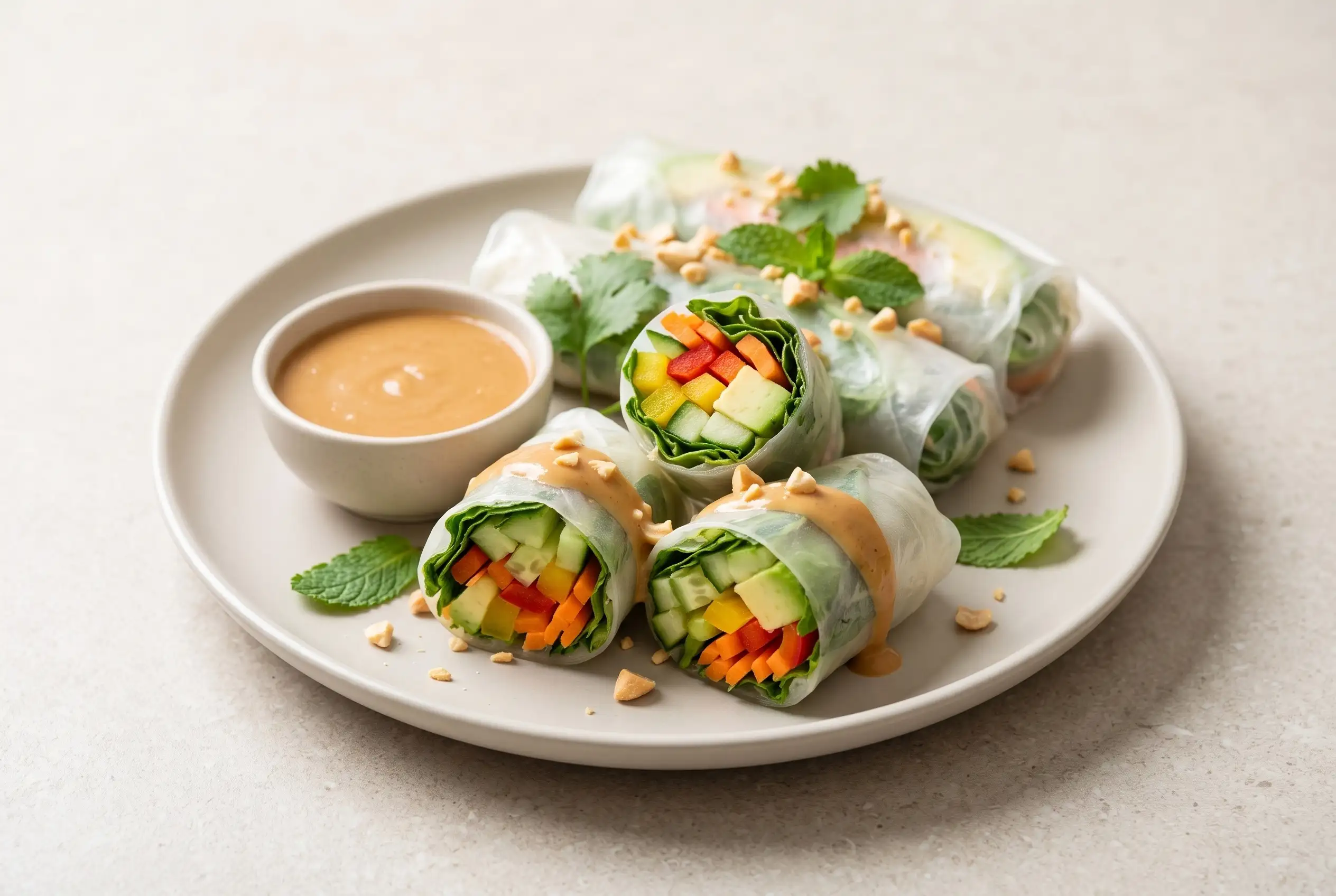
Thai summer rolls combine crisp vegetables, tender rice paper, creamy avocado, fresh herbs, and a smooth peanut sauce in a cool, colorful roll built around texture. Cucumber, bell pepper, carrots, leafy greens, mint, and cilantro create layers of crunch and freshness, while avocado softens the center and crushed peanuts add contrast at serving.
Good vegetable summer rolls depend less on complicated preparation than on moisture control and careful handling. Rice paper changes from firm to delicate very quickly, sliced vegetables need to fit together without puncturing the wrapper, and the peanut sauce needs enough balance to work as both a dip and a drizzle. Paying attention to those few details makes each roll easier to shape and cleaner to eat.
Rice Paper Texture Depends on Brief Soaking
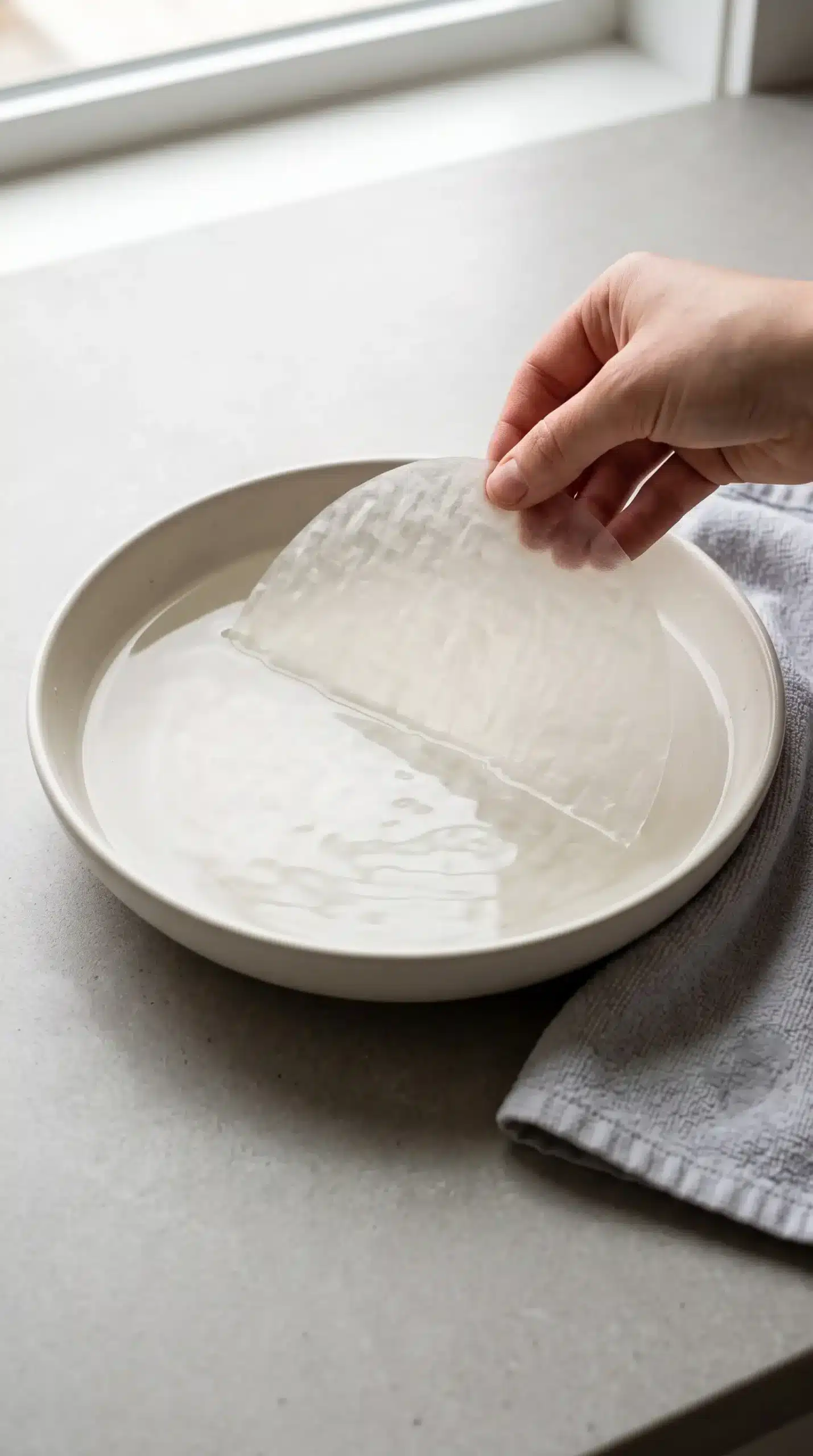
Rice paper begins softening as soon as it is moistened, but it does not need to become completely limp before leaving the bowl. The wrapper continues to soften after leaving the water, so removing it while it still has some firmness helps prevent oversaturation. Waiting until it feels extremely soft in the water makes it harder to transfer and more likely to fold onto itself.
Once softened, the wrapper benefits from a damp work surface because dry fabric can pull against its sticky exterior. Gently patting away obvious water keeps the surface manageable without drying it until it stiffens again. Dry hands are equally useful because wet fingers can make the thin wrapper slide during filling.
Work with one sheet at a time. Soaking several wrappers together encourages sticking, and softened sheets become increasingly difficult to separate without tearing. For thai summer rolls, a steady single-wrapper rhythm gives much more control than preparing the rice paper in batches.
Thin Vegetable Strips Make Tighter Summer Rolls
Cucumber, bell pepper, and carrots are easiest to contain when cut into narrow strips of similar length. Uniform cuts keep bulky pressure points out of delicate wrappers and make leftover sliced vegetables easier to portion into fresh-vegetable chicken wraps. Very long pieces can extend beyond the folded sides, while consistent lengths keep the exposed cross-section of the rice paper summer rolls balanced after slicing.
Dry Greens and Herbs Protect the Wrapper
Leafy greens, mint, and cilantro should be free of excess washing water before they reach the wrapper. Droplets trapped inside the filling make an already delicate rice paper surface more slippery, while reasonably dry leaves stay where they are placed and help create a stable base for the firmer vegetables.
Avocado Belongs Where Pressure Is Lowest
Avocado is softer than the cucumber, carrot, and bell pepper, so it responds differently when the wrapper is tightened. Large chunks can flatten or slip outward under pressure, especially when positioned against the edge of the filling. Neat slices are easier to distribute and less likely to create one oversized center.
Placing the avocado after the sturdier vegetables helps protect it during assembly. The firmer strips establish the shape of the filling first, leaving the softer avocado to settle into the center instead of carrying the force of the roll.
Because avocado has a smooth surface, restraint matters. A crowded roll becomes harder to close, and excessive filling increases tension on the rice paper. Thai summer rolls look generous even when the interior is kept compact because the transparent wrapper makes every layer visible.
Peanut Sauce Works Best When Fully Blended
The dipping sauce combines oil, garlic, soy sauce, peanut butter, water, vinegar, honey, lime, and a small amount of fish sauce. Blending is especially useful here because peanut butter and oil need to disperse through several water-based ingredients. A smooth sauce should look cohesive instead of separating into oily and watery streaks.
Peanut butter quantity affects both body and flavor. Using the smaller amount produces a looser sauce with a lighter peanut presence, while adding more makes it thicker and more pronounced. That choice can be made according to whether the sauce will mainly be drizzled over the platter or used for dipping.
Garlic also benefits from mechanical blending because the cloves become finely distributed without leaving large raw pieces in a bite. When thai summer rolls are served with sauce on the side, a uniform texture helps the sauce cling evenly to the cut surface and vegetables.
Soy, Lime, Honey, and Fish Sauce Need Restraint
Low-sodium soy sauce supplies the main salty element, honey brings sweetness, lime and vinegar sharpen the sauce, and fish sauce adds another savory note. Since all of those flavors are concentrated in a small quantity of sauce, tasting after blending is more useful than trying to intensify every element at once. Gluten-free tamari can fill the soy-sauce role when needed.
A Stable Filling Order Makes Rolling Easier
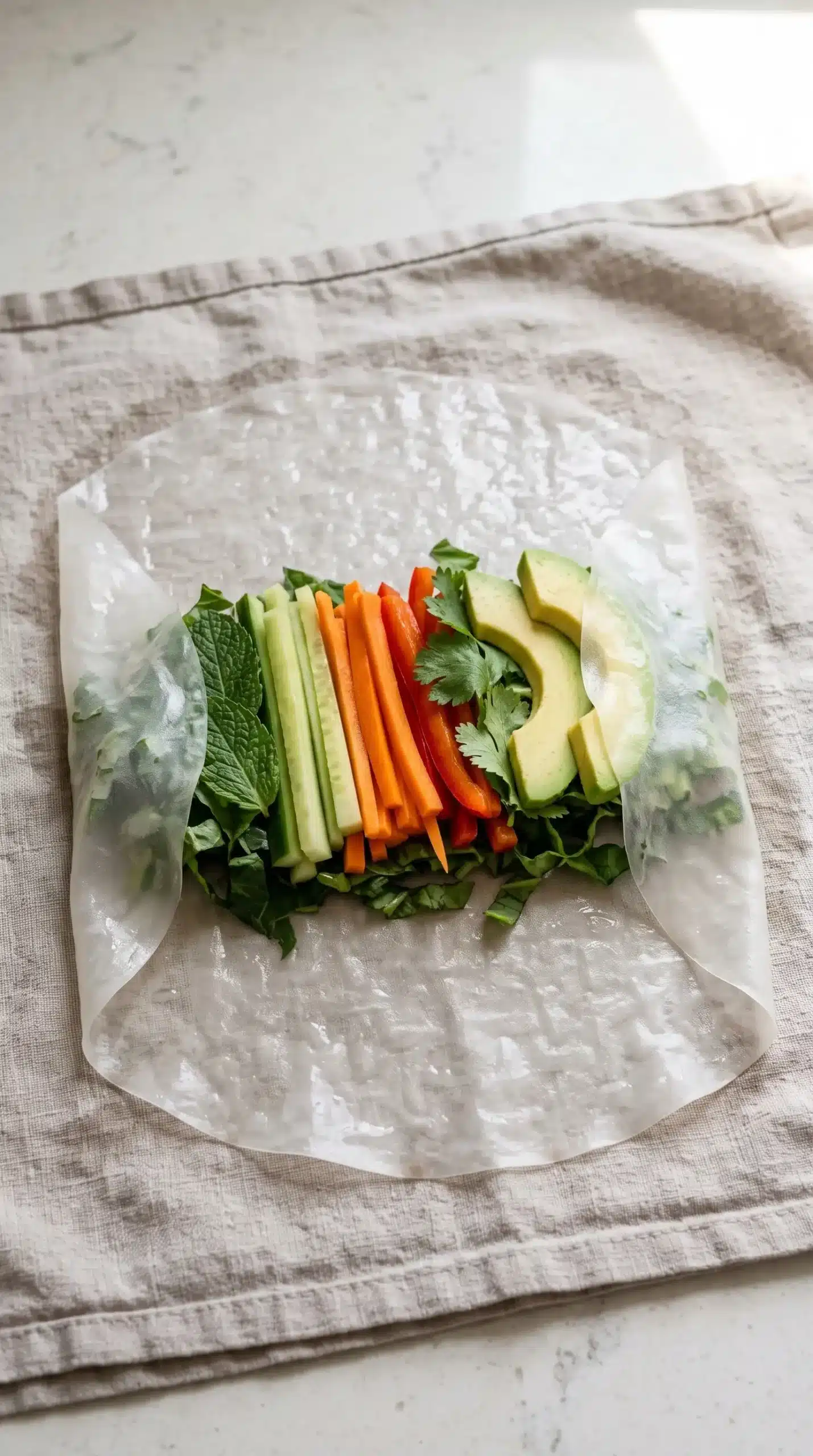
Leafy greens provide a useful first layer because they create a softer barrier between the rice paper and the cut vegetables. Once that base is in place, the cucumber, bell pepper, and carrot strips can sit together in a compact horizontal bundle without sharp ends pressing directly into the wrapper.
Fresh herbs are easier to control when tucked close to the vegetables instead of scattered across the entire sheet. Keeping mint and cilantro inside the central filling zone prevents loose leaves from catching in the side folds or sticking where the wrapper needs to seal.
After the firmer ingredients are aligned, avocado can complete the bundle without becoming the structural base. A compact center gives thai summer rolls enough empty wrapper on all sides for folding, which is more important than fitting the largest possible amount of filling into each sheet.
Rolling Pressure Matters More Than Speed
Rice paper becomes sticky enough to grip itself, so the roll does not need forceful handling. Gentle tension is more effective: the wrapper should stay close to the filling while the sides remain tucked inside. Pulling aggressively can stretch a damp sheet until a vegetable edge breaks through.
A useful folding sequence keeps the filling contained before the cylinder is tightened:
- Contain the sides: Bring the left and right edges inward so the vegetable strips cannot slide out.
- Cover the filling: Fold the near flap over the vegetables and keep the bundle compact with the fingertips.
- Roll with steady tension: Continue forward while keeping the wrapper snug without pressing hard enough to crush the avocado.
Common Mistakes That Damage Thai Summer Rolls
Most problems with thai summer rolls come from wrapper hydration, excess moisture, or overfilling. Each issue has a visible warning sign before the roll is completely assembled, so small corrections during preparation can prevent torn or loose rolls.
- Oversoaked wrapper: A sheet that feels extremely floppy in the water can become difficult to lift and may stick to itself during transfer.
- Wet filling: Water clinging to greens or vegetables makes the center slippery and reduces control while tightening the wrapper.
- Overfilled center: A bulky mound leaves too little rice paper for secure side folds and puts extra pressure on the seam.
- Uneven vegetable cuts: Thick or protruding pieces create pressure points that can stretch or puncture the wrapper.
- Hard rolling pressure: Squeezing the cylinder can crush avocado and force vegetables against the delicate rice paper.
When a wrapper begins to stick awkwardly, slowing down is usually more useful than pulling it free quickly. The rice paper can often be guided back into position with dry fingertips as long as it has not torn. If a sheet does split badly, transferring its filling to a freshly softened wrapper is cleaner than trying to force a weak seam closed.
Cut Summer Rolls With a Clean, Decisive Slice
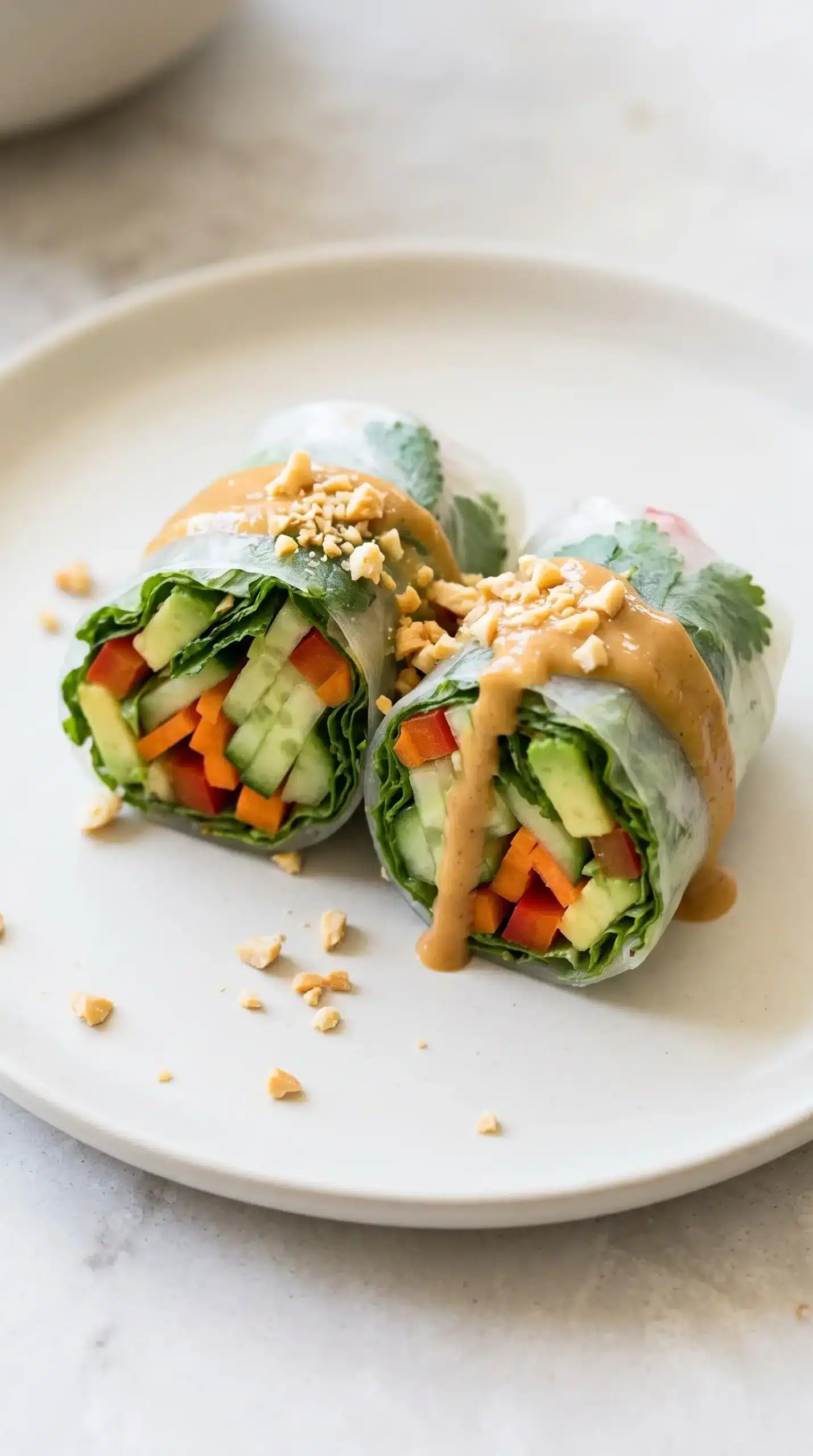
Halving the rolls exposes the layered vegetables and gives the platter a more finished appearance, but the knife should move cleanly through the sticky rice paper instead of pressing down repeatedly. Arrange the cut sides where the colorful filling remains visible, then add crushed peanuts and serve the sauce for dipping, drizzling, or both.
Fresh Assembly Gives Rice Paper Its Best Texture
Rice paper summer rolls are most appealing when the wrapper is soft and flexible while the vegetables remain crisp. Extended holding can change both qualities: exposed rice paper may dry at the surface, while tightly covered rolls can collect condensation if the filling carries excess moisture.
Avocado creates another reason to assemble close to serving. Once cut and enclosed with moist vegetables, it gradually loses its freshly sliced appearance. Mint and cilantro also have their best shape and aroma before prolonged contact with damp ingredients.
If preparation needs to be divided, slice the vegetables and prepare the sauce first, then keep the wrapper soaking and rolling for closer to serving. That approach preserves the contrast that defines thai summer rolls without making the delicate assembled rolls carry the burden of storage.
Small Variations Should Preserve the Roll Structure
Adjustments work best when they respect the same physical balance of crisp vegetables, soft avocado, leafy greens, and flexible rice paper. Swapping one similar vegetable or changing the sauce seasoning is easier to manage than adding several wet or bulky fillings that alter how the wrapper closes.
| Adjustment | What Changes | What to Watch |
|---|---|---|
| Use spinach or another tender leafy green | The base becomes softer and more compact | Dry the leaves thoroughly before rolling |
| Replace low-sodium soy sauce with gluten-free tamari | The sauce keeps a similar savory role | Taste before adding any extra salty seasoning |
| Use more peanut butter | The sauce becomes thicker and more peanut-forward | Add it gradually so the dip remains easy to blend and serve |
| Leave out fish sauce | The sauce loses one savory layer | Rely on the existing soy or tamari instead of compensating aggressively |
Crushed peanuts can stay on top as a finishing texture instead of being packed inside the wrapper. Keeping hard, irregular pieces outside protects the rice paper and gives the finished vegetable summer rolls a clear contrast between a tender wrapper and crunchy garnish.
Thai Summer Rolls Succeed Through Texture Control
Softened rice paper, dry vegetables, even cuts, a compact filling, and moderate rolling pressure work together more decisively than any elaborate technique. When those conditions are in balance, thai summer rolls hold their shape while still showing the cucumber, carrot, pepper, greens, herbs, and avocado through the translucent wrapper.
Peanut sauce completes that structure by adding a smooth, savory-sweet contrast without changing the roll itself. Keeping the filling crisp and the wrapper delicate allows the sauce to remain an accompaniment instead of compensating for texture problems inside the roll.
Thai Summer Rolls Questions About Sticking, Tearing, and Sauce
Why does rice paper stick to the towel?
A wrapper may cling if the towel is too dry or if the rice paper has softened excessively before transfer. Use a damp surface, lift the wrapper gently, and avoid leaving the softened sheet sitting unused while preparing the filling.
Can the peanut sauce be made without a food processor?
Yes. Finely grate or mince the garlic, then whisk the sauce ingredients thoroughly until the peanut butter is evenly dispersed. A blender or processor makes emulsification easier, but careful whisking can still produce a smooth dipping sauce.
Why do my summer rolls split after they are rolled?
Splitting commonly points to too much filling, vegetable pieces pressing sharply against the wrapper, or excessive tension during rolling. Reduce the amount in the center and keep firm vegetable edges tucked within the leafy portion of the filling.
Can rice paper summer rolls be stacked on a platter?
Direct stacking can make the sticky wrappers adhere to one another. Arrange them with a little space when possible, especially soon after rolling, so individual pieces can be lifted without pulling on neighboring wrappers.
What can make the peanut sauce thinner if it becomes too thick?
A small amount of water can loosen an overly thick peanut sauce while preserving its basic flavor balance. Add only a little at a time and blend or whisk again so the sauce stays cohesive instead of becoming watery.
Thai Summer Rolls with Peanut Sauce and Fresh Herbs
Thai summer rolls are fresh, crisp rice paper rolls filled with colorful vegetables, creamy avocado, and herbs, paired with a smooth savory-sweet peanut sauce. They are an easy choice for a light, flavorful meal or appetizer.
Ingredients
Method
Peanut Sauce
- Add the canola oil, garlic, low sodium soy sauce, peanut butter, water, white distilled vinegar, honey, lime juice, and fish sauce to a food processor or blender.
- Pulse or blend the mixture until the sauce is smooth and cohesive.
Preparation
- Cut the cucumber, bell pepper, and carrots into thin strips about 3 inches long. Cut the avocado into pieces.
- Place the leafy greens, mint, and cilantro in a condition suitable for filling, keeping excess moisture off the leaves.
Assembly
- Soak one rice paper wrapper at a time in a bowl of warm-ish water for about 30 seconds. Remove it when the wrapper becomes loose and elastic, then place it on a damp towel. Gently pat it dry and dry your hands.
- Position a few vegetables and herbs horizontally across the center of the wrapper, beginning with the leafy greens and finishing with the avocado.
- Bring the left and right sides toward the center. Fold the top flap over the filling, tuck the contents in, and roll the wrapper tightly around the filling, handling the sticky, delicate rice paper carefully.
- Repeat with the remaining wrappers and filling.
Serving
- Cut the finished rolls in half and arrange them on a serving platter.
- Drizzle with the peanut sauce, serve with the sauce for dipping, or use both. Finish with crushed peanuts.
Notes
Keep the filling compact and avoid overfilling the rice paper so the delicate wrapper can be folded and rolled securely.