From breakfast to dinner, from healthy meals to sweet desserts – Next Yum Recipes brings you quick, simple and tasty ideas for every occasion and every time.


 This Recipe
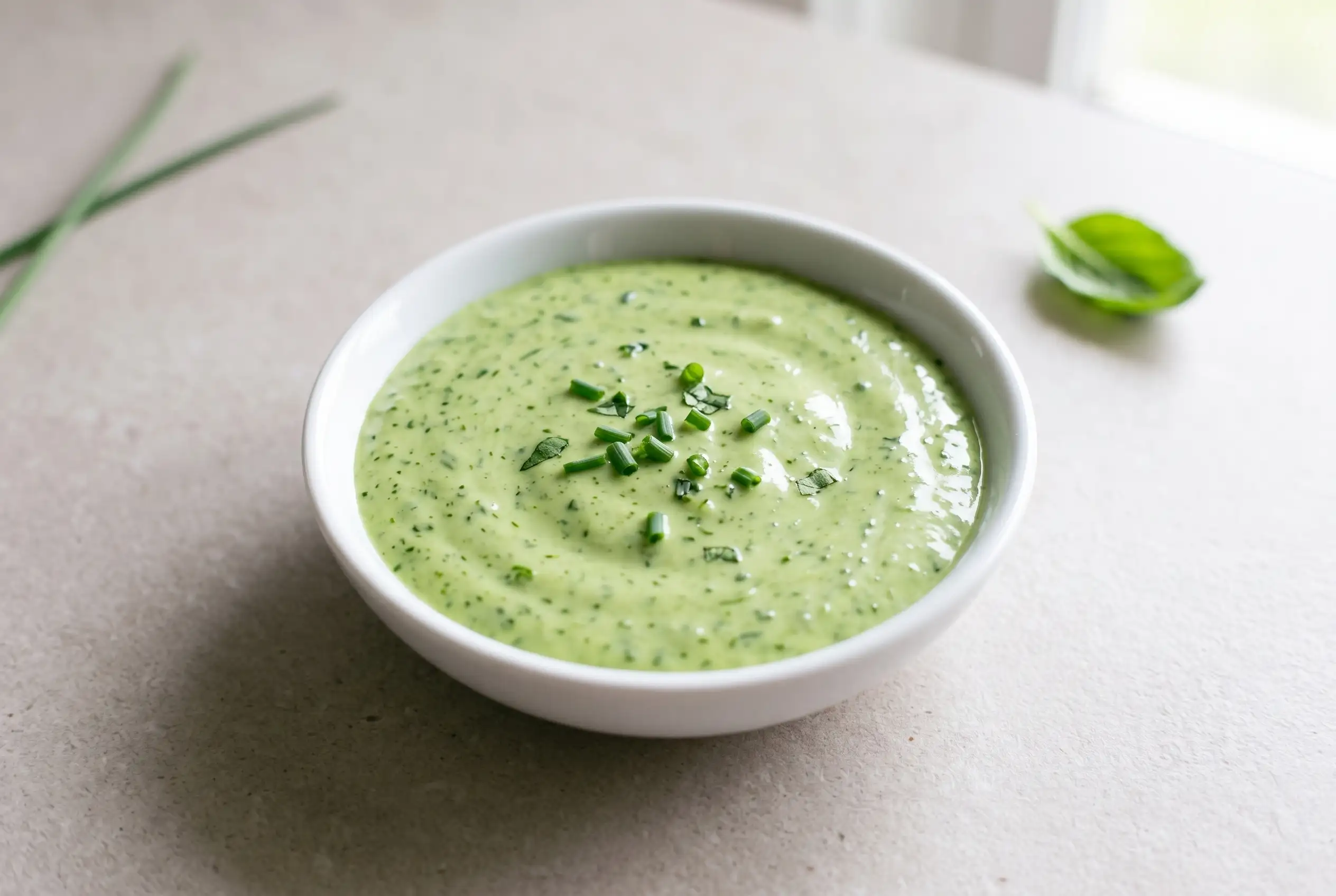
Basil sauce turns a small handful of fresh herbs into a creamy, savory condiment with enough brightness to wake up everything around it. Fresh basil leads the flavor, while chives, garlic, Parmesan, lemon juice, and mayonnaise build a sauce that is rich without losing its herbal character. The texture can stay almost completely smooth or retain tiny flecks of herbs, depending on how long you blend it. Because the ingredients go straight into a blender or food processor, the biggest improvements come from choosing fresh herbs, controlling acidity, and tasting before adding salt.
A Creamy Basil Sauce Built for Fresh Herb Flavor
The appeal of this basil sauce comes from balance. Mayonnaise provides the creamy base, but the sauce does not depend on richness alone. Fresh basil gives it a distinctly green character, chives add a mild onion note, and Parmesan brings savory depth.
Garlic contributes a sharper edge, while lemon juice keeps the mixture from tasting heavy. Dried oregano is optional, but its concentrated herbal flavor can give the finished sauce another layer when used with restraint.
Because everything is blended together, no single ingredient needs to dominate. The best texture is one where the herbs are thoroughly incorporated while the sauce still looks fresh and green, with small flecks visible if you prefer a little more texture.
Fresh Basil and Chives Set the Sauce’s Character
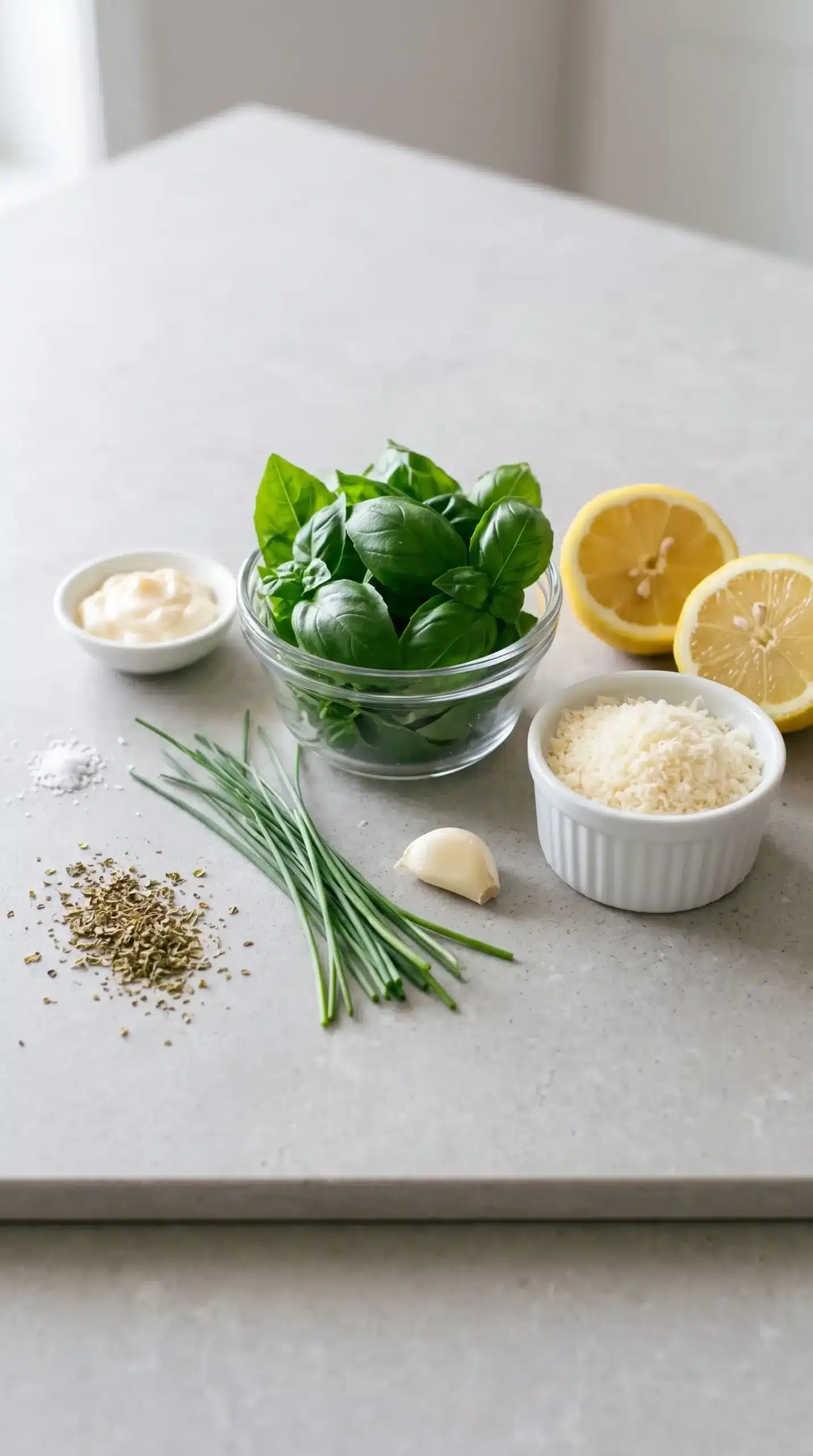
Fresh basil matters most here because it supplies the defining flavor and color. Use leaves that look vibrant and clean, and pack the basil into the measuring cup so the amount reflects the intended herb intensity. Chives can be replaced with green onions when needed, although green onions bring a somewhat stronger onion presence.
Parmesan should be finely grated so it can disperse through the creamy base without leaving large pieces behind. Its savory quality also affects how much salt the sauce needs, which is why seasoning is better handled after blending.
- Herb balance: Keep basil prominent, with chives supporting it instead of overwhelming it.
- Garlic level: One clove provides a noticeable savory bite that becomes integrated during blending.
- Herbal depth: Dried oregano is optional and can be included when a more layered herb profile suits the dish.
Texture Depends on How Far You Blend the Basil
A nearly smooth texture makes the sauce easy to spread, drizzle, or fold into another dish. Blending for longer breaks the herbs and garlic down more thoroughly and distributes the Parmesan throughout the mayonnaise.
Shorter blending leaves more visible herb pieces and creates a slightly more rustic appearance. That approach works when you want the basil and chives to remain visually noticeable instead of disappearing into a uniform green mixture.
Either texture can work well, so the useful decision is visual and practical: stop when the sauce looks the way you want it to look. A compact food processor or mini chopper is especially convenient for a small batch because the ingredients can circulate without requiring a large appliance.
Small Adjustments Keep Basil Sauce Balanced
Tasting after blending gives you the clearest indication of what needs changing. Lemon juice can sharpen the flavor, Parmesan can deepen its savory quality, and a little more mayonnaise can soften an overly intense or salty result.
Salt belongs at the end because both Parmesan and mayonnaise already contribute seasoning. Adding it before tasting makes it harder to judge how much additional salt the sauce actually needs.
Parmesan and Mayonnaise Control Richness and Savory Depth
Mayonnaise supplies the creamy foundation and also gives you room to adjust the finished consistency. If the sauce tastes too intense, adding a little more mayonnaise can dilute the concentration of garlic, Parmesan, herbs, and seasoning while preserving the basic character.
Parmesan changes more than flavor. Its saltiness and umami affect the overall balance, so increasing the cheese can make the sauce taste fuller while simultaneously reducing the amount of additional salt that may be necessary.
Keeping those two ingredients in balance prevents the basil from becoming buried beneath richness. A creamy basil sauce should still taste clearly herbal, with enough lemon and fresh greens to keep the mouthfeel lively.
Lemon Juice Gives the Basil Parmesan Sauce Its Lift
Lemon juice is the easiest way to brighten the mixture once the creamy base and savory ingredients are combined. Start within the supplied range, then taste before deciding whether more acidity is useful.
| Adjustment | What changes | When it helps |
|---|---|---|
| More lemon juice | Sharper, brighter flavor | When the sauce tastes heavy or muted |
| More Parmesan | Deeper savory flavor and more saltiness | When the sauce needs additional umami |
| More mayonnaise | Softer intensity and creamier consistency | When the flavor feels too strong or salty |
Blending Control Matters More Than Extra Preparation
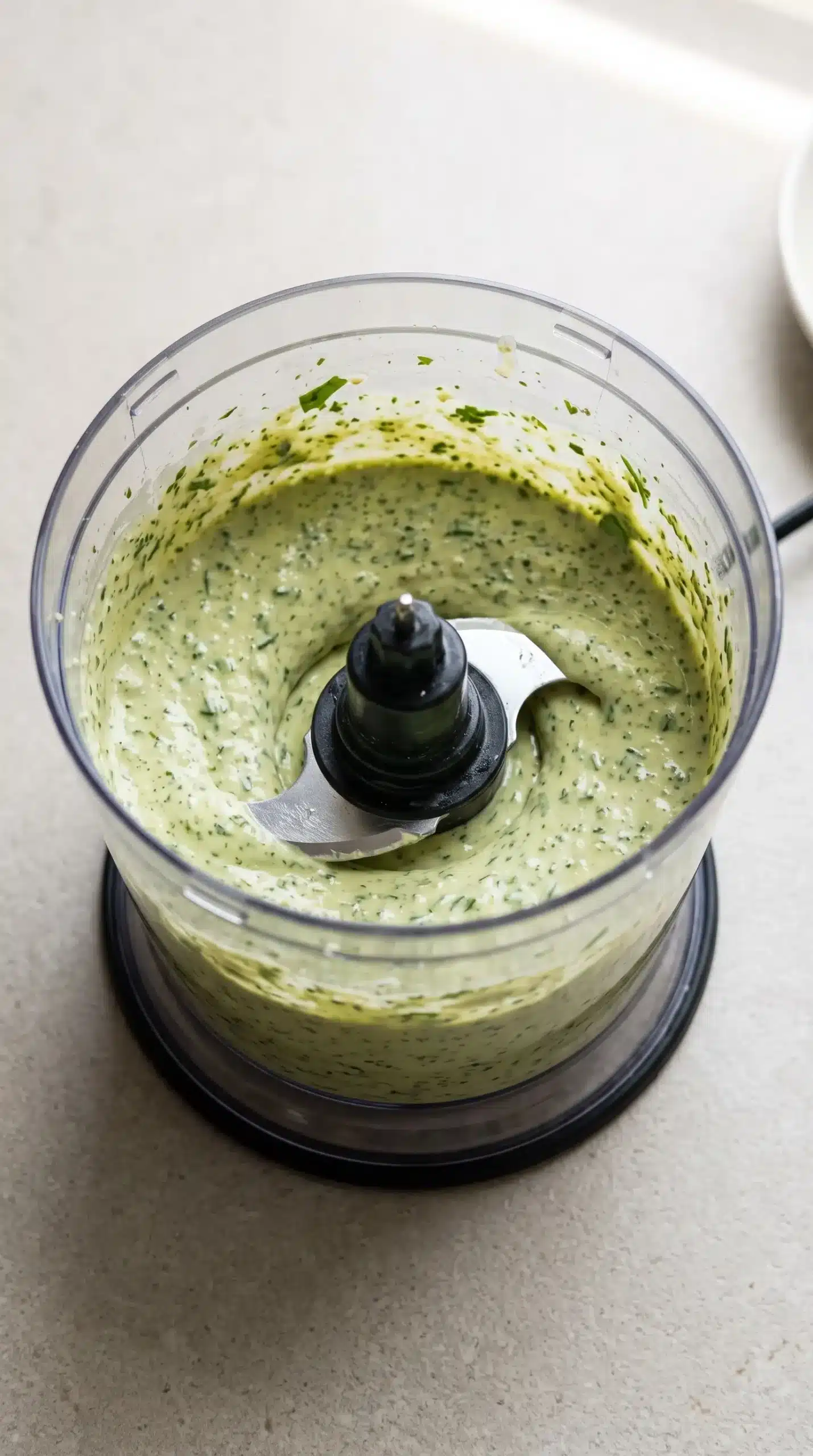
Place the ingredients into the blender or food processor and let the appliance do the work of combining the herbs, creamy base, cheese, garlic, and acidity. There is no separate cooking stage to manage, so attention can stay on texture.
Watch the mixture as it changes instead of relying only on a fixed blending duration. Once the herbs are distributed and the sauce reaches your preferred consistency, stop. Continuing beyond that point is unnecessary if the texture is already right.
For a particularly smooth fresh basil sauce, pause once or twice to check the sides of the container if needed. This helps identify any larger herb pieces that have escaped the blade’s main path without forcing you to overblend the entire mixture.
Serving Ideas That Let Basil Sauce Stay Noticeable
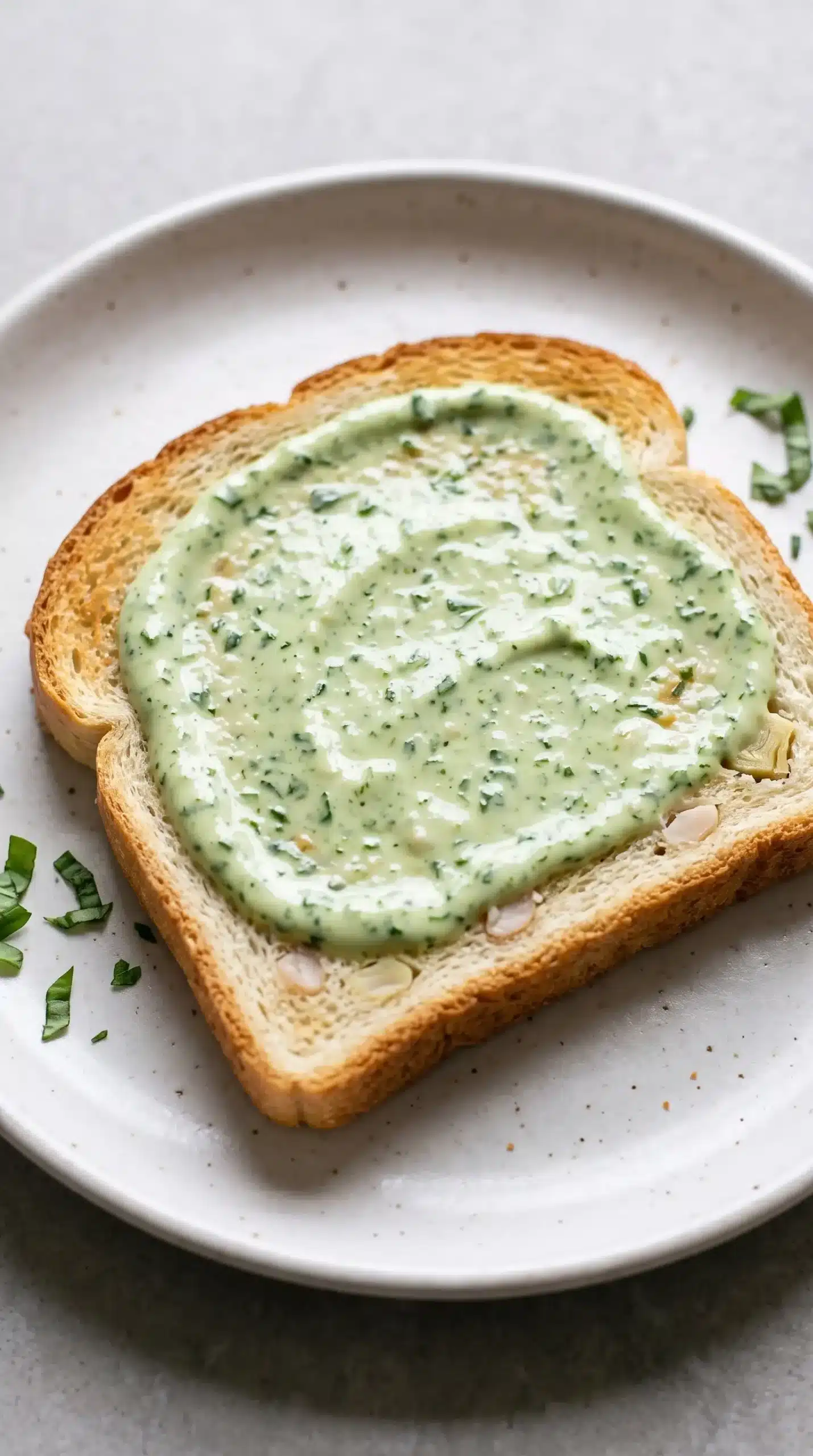
A sauce with this combination of herbs, Parmesan, lemon, and mayonnaise can work wherever a cool, creamy accent is useful. For a simple lunch or appetizer, spread a thin layer over white bean artichoke toast, or use it alongside cooked vegetables, sandwiches, wraps, grilled foods, or simple proteins.
Its concentrated flavor also means a modest amount can contribute plenty of character. Spreading it thinly lets the basil remain noticeable while preventing the creamy base from dominating the rest of a dish.
Common Basil Sauce Mistakes and How to Correct Them
Over-salting is one of the easiest problems to create because Parmesan and mayonnaise already contribute flavor. If the blended sauce tastes too salty, adding more mayonnaise is the direct correction supported by the ingredient balance. Taste again before making another adjustment.
Excessive lemon can shift the sauce from bright to sharply acidic. Add acidity gradually and evaluate the mixture after it has been fully blended so you are tasting the combined sauce instead of judging the lemon on its own.
Stopping before the herbs are adequately incorporated can leave large pieces of basil or chives scattered through the mixture. Continue blending until the texture matches your preference, whether that means nearly smooth or visibly flecked.
Green Onion Works When Chives Are Unavailable
Green onions can stand in for the small bunch of chives when necessary. Their flavor is more assertive, so the substitution may make the onion character easier to notice beside the basil and garlic.
Keep the rest of the flavor balance unchanged while making that swap. The lemon, Parmesan, and mayonnaise still provide the same useful adjustment points, allowing you to soften the overall intensity if the substituted onion tastes especially strong.
Very Incredible Basil Sauce Finds Its Balance Through Tasting
Fresh basil gives the sauce its identity, but balance determines whether that herb flavor remains clear after the mayonnaise, Parmesan, garlic, and lemon are combined. Blending to the desired texture and tasting afterward provides the control needed to make those elements work together.
Fresh basil can darken after cutting or blending because damage activates enzymes that promote oxidation. Fresh basil browning can be slowed by acidity, which is one reason the lemon juice in this sauce can help preserve a brighter green appearance.
The most useful judgment comes at the end: adjust acidity, savory depth, or creaminess only when the blended sauce tells you something is missing or too intense. That approach keeps the finished condiment fresh-tasting, creamy, and distinctly basil-forward.
Basil Sauce Questions About Storage, Texture, and Flavor
Can basil sauce be made smoother?
Yes. Continue blending until the herbs are broken down more completely and the sauce reaches the texture you prefer. A nearly smooth consistency is particularly suitable when you want the condiment to spread easily.
What can soften basil sauce that tastes too salty?
Add a little more mayonnaise and blend again. The additional creamy base dilutes the concentration of salty and pungent ingredients, after which you can taste the sauce again before making any further changes.
Can green onions replace the chives?
Yes. Green onions are a suitable substitute, although their flavor can be more pronounced. Keeping the basil prominent helps preserve the character of the sauce while the other ingredients maintain its creamy, savory balance.
How can the lemon flavor be adjusted?
Add lemon juice gradually and taste after blending. More lemon increases brightness, while holding back keeps the sauce rounder and less acidic when the other ingredients already provide enough contrast.
Why does Parmesan affect the seasoning?
Parmesan contributes both savory depth and saltiness, so increasing it can change the seasoning balance at the same time that it intensifies the cheese flavor. Taste after incorporating it before deciding whether additional salt is needed.
Basil Sauce with Fresh Basil, Chives, and Parmesan
This creamy basil sauce is fresh, savory, and bright, with a smooth texture and small flecks of herbs. It is an easy choice when you want a flavorful condiment that comes together quickly.
Ingredients
Method
Preparation
- Add the basil, chives, dried oregano if using, garlic, mayonnaise, Parmesan, lemon juice, and salt to a blender or food processor.
- Blend until the sauce reaches your preferred consistency, aiming for an almost completely smooth texture with small flecks of herbs.
Notes
Taste and adjust the sauce as needed. More lemon juice adds brightness, while additional Parmesan increases savory depth and saltiness; if the sauce becomes too salty, blend in a little more mayonnaise to soften the intensity.