From breakfast to dinner, from healthy meals to sweet desserts – Next Yum Recipes brings you quick, simple and tasty ideas for every occasion and every time.


 This Recipe
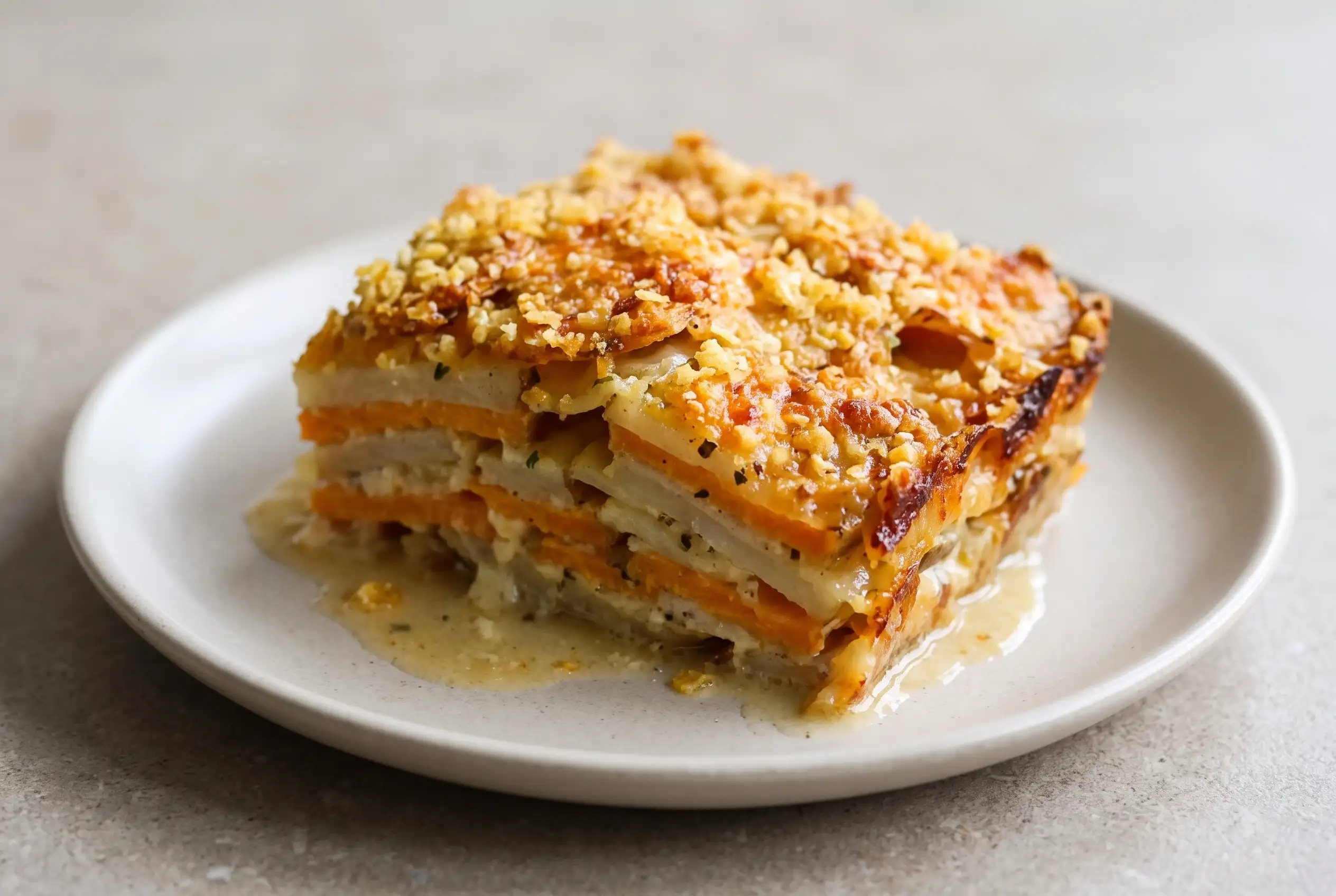
Garlic herb cheesy potatoes combine thin slices of sweet potatoes and Russets with fragrant garlic, fresh herbs, cream, Gruyère, chicken broth, and a crisp layer of crushed potato chips. The contrast is what makes the dish memorable: tender potatoes sit in a savory cheese sauce while the exposed top develops browned, crunchy edges. Careful slicing, balanced layering, and controlled browning matter most because each one affects how evenly the potatoes cook and how much of that flavorful sauce reaches every serving.
Unlike a uniformly creamy potato casserole, these garlic herb cheesy potatoes have several distinct textures in one pan. Sweet potatoes bring softer, slightly sweeter slices, Russets contribute a more familiar starchy potato character, and Gruyère melts around both without hiding the garlic and herbs. Crushed chips make the top deliberately crisp, giving the casserole a strong contrast between its tender center and browned surface.
Sweet Potatoes and Russets Create Distinct Layers
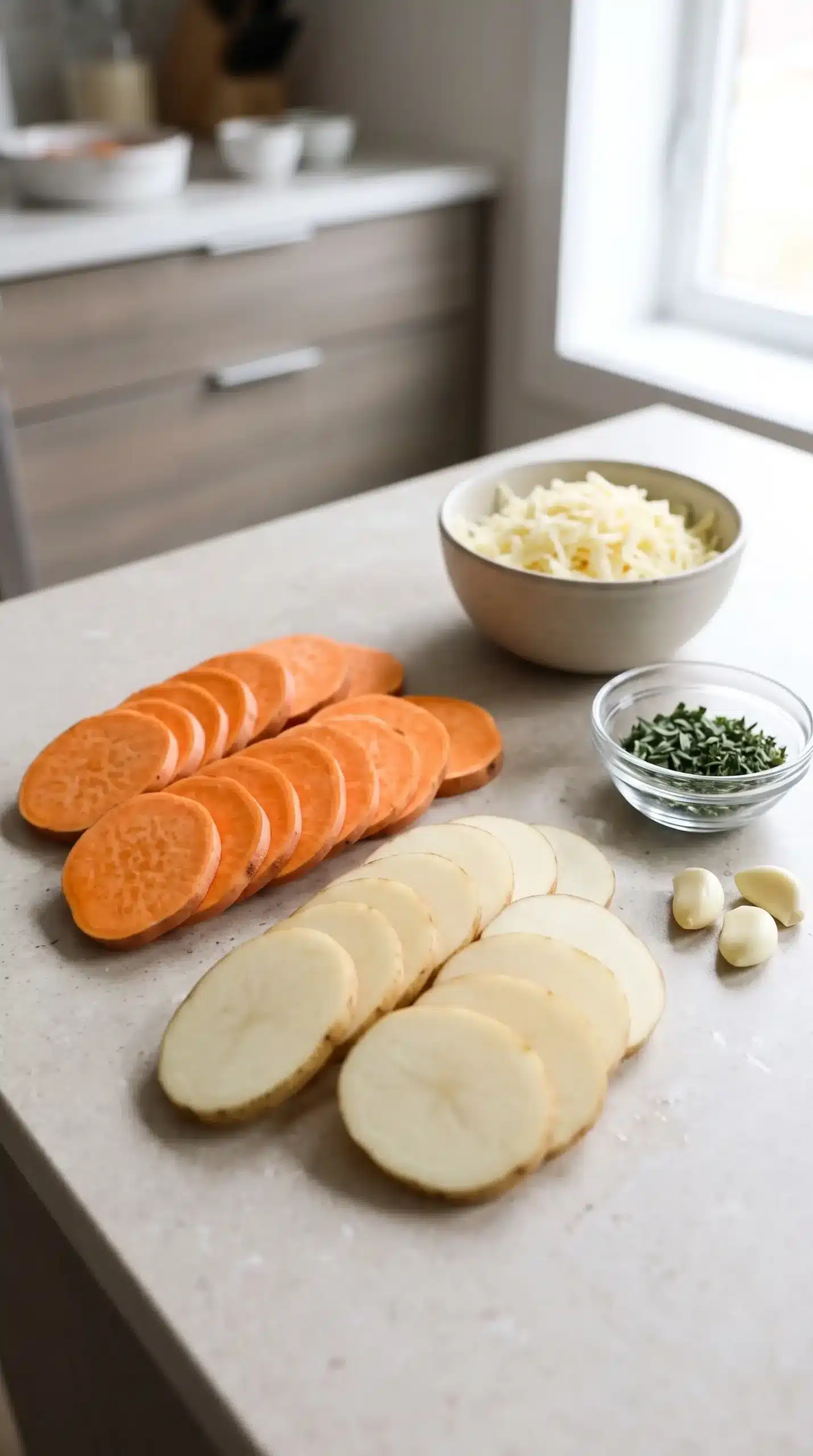
Using both potato varieties gives the bake more textural range than either one would provide alone. Russets soften readily and help the creamy liquid feel integrated with the potato layers, while sweet potatoes retain their own color, flavor, and slightly different structure. Keeping both varieties at a similar thickness helps them reach tenderness together, especially because sweet potato texture changes noticeably as exposed surfaces soften and brown.
Very large differences in slice size can make the pan inconsistent. Thick pieces may remain firm while neighboring thin slices become extremely soft, especially where cream and broth collect around the lower layers. A steady slicing technique is therefore more useful than trying to arrange each variety in a separate zone.
Russets are high-starch, floury potatoes, which helps explain why they soften readily and develop a looser, starchier texture than waxier varieties as they cook. In this casserole, that tendency complements the more distinct sweet potato slices while making consistent slice thickness especially important.
Alternating or loosely mixing the two kinds also makes the sweet potato and russet bake easier to portion. Each scoop can capture both varieties along with cheese and sauce instead of producing servings that taste noticeably different depending on where they came from in the pan.
| Potato characteristic | Russet slices | Sweet potato slices |
|---|---|---|
| Texture in the bake | Soft and starchy | Tender with a slightly firmer identity |
| Flavor contribution | Neutral potato base | Natural sweetness |
| Best preparation priority | Keep slices thin and even | Match the Russet thickness closely |
Gruyère and Cream Need a Savory Counterbalance
Gruyère and heavy cream make the casserole rich, but reduced sodium chicken broth keeps the sauce from becoming entirely dairy-driven and also supplies extra liquid around the potato layers. Salt, garlic, sage, and thyme sharpen that richness, so the finished gruyère potato bake tastes savory and aromatic instead of simply creamy and cheesy.
Thin Slices Determine Whether the Center Turns Tender
Potato thickness is one of the most consequential details in the whole dish. Slices at about one-quarter inch or thinner have enough exposed surface to absorb the surrounding cream and broth while softening during the covered portion of baking. Keeping them uniformly thin also reduces the chance of finding resistant pieces in an otherwise tender casserole.
A sharp knife can handle the job, although consistency matters more than speed. Slices that lean dramatically thicker at one end may cook unevenly even when the overall piece looks thin. Flat, even pieces also stack more neatly, which lets the liquid settle around them without leaving large gaps.
Once cut, the potatoes should be coated thoroughly with the cream, salt, and fragrant butter mixture. That early coating distributes seasoning over a much larger surface area than seasoning only the top of the assembled dish, helping the inner layers taste as complete as the browned surface.
Garlic and Fresh Herbs Benefit From Gentle Heat
Briefly warming the minced garlic, sage, and thyme in butter over medium-low heat releases their aroma without pushing the garlic toward harsh browning. The mixture only needs to become fragrant before joining the potatoes, since the aromatics will continue cooking once the casserole enters the oven.
Layering Keeps Cheese and Broth Throughout the Pan
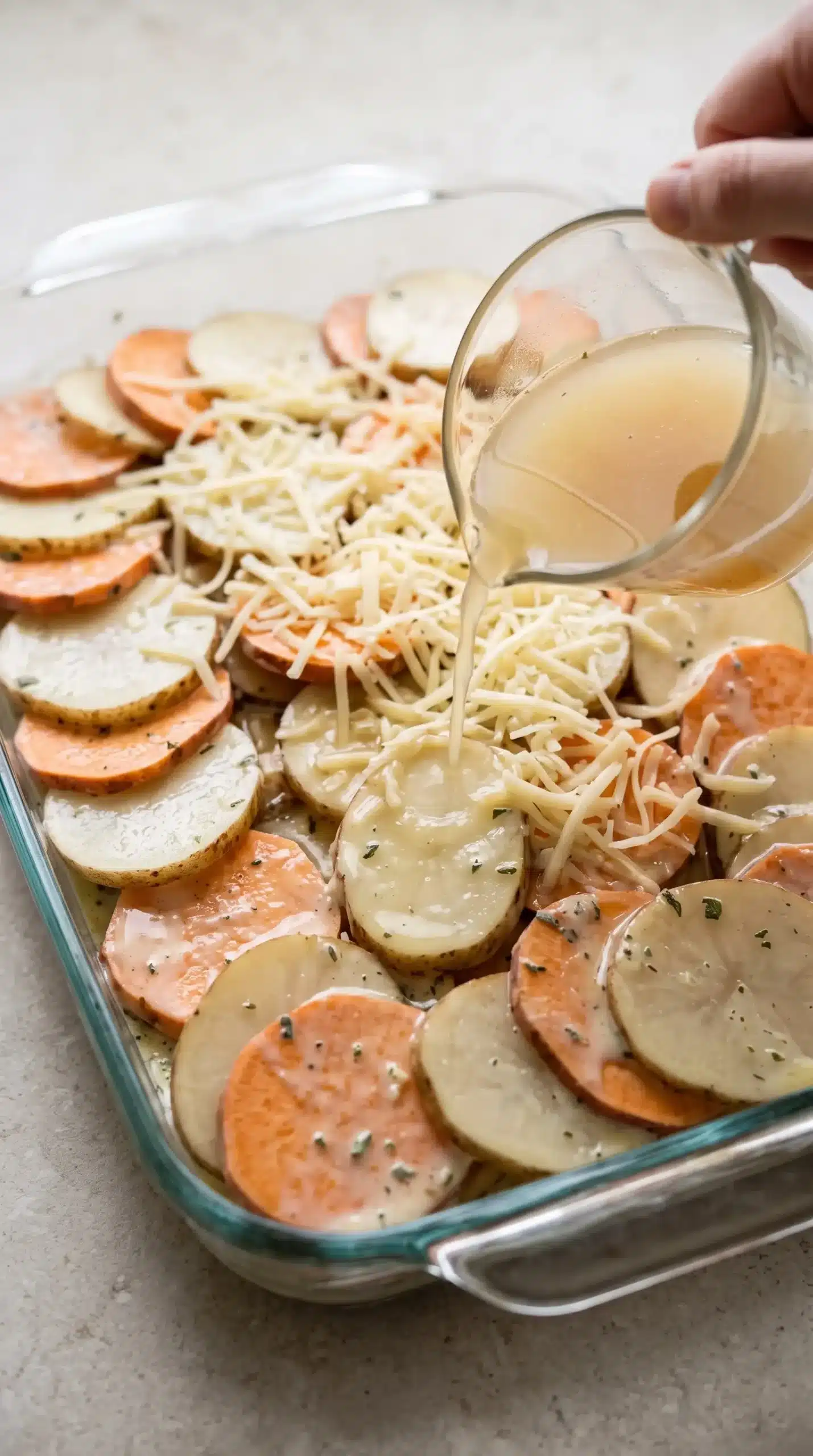
Dividing the potatoes, cheese, and broth between layers has a practical purpose beyond appearance. A middle layer of Gruyère places melting cheese inside the casserole, while some of the broth added there can move between overlapping potato slices instead of remaining concentrated near the surface.
Loose, even layers work better than tightly compressed stacks. When slices overlap naturally but still leave small pathways between them, cream and broth can move through the pan while the potatoes soften. Packing every slice into rigid columns can make that circulation less even.
Upper layers should still receive plenty of cheese and liquid before the chip topping goes on. Those top slices face more direct oven heat later, so surrounding them with moisture during the covered stage helps them tenderize before browning becomes the priority.
Crushed Potato Chips Work as a Deliberate Crust
Potato chips bring salt, crunch, and an already cooked potato flavor to the surface, making them different from a plain breadcrumb topping. Sea salt chips keep the profile more traditional, while roasted garlic chips reinforce the casserole’s garlic character. Crushing them into manageable pieces creates better coverage than leaving large chips intact.
Foil First, Higher Heat Later Controls the Browning
Covering the pan at the beginning traps moisture and protects the surface while the potato slices soften. That enclosed stage is especially important because the dish contains both dairy and cheese, which can brown before thicker potato sections are fully tender if exposed to strong dry heat too early.
After the foil comes off, the cooking objective changes. Moisture can escape more freely, the Gruyère can color, and the crushed chips begin to regain a crisper character. Raising the oven temperature near the end can intensify browning, but visual cues matter because the cheese and chips can darken quickly once exposed.
Look for bubbling around the edges, tender potato slices, and a top that is golden in scattered areas instead of uniformly dark. If the surface is developing color faster than expected, continuing at the lower oven temperature is preferable to forcing extra browning.
| What you observe | What it suggests | Useful response |
|---|---|---|
| Top is pale but potatoes are tender | Interior cooking is complete before browning | Continue uncovered and use the higher finishing heat if desired |
| Chips are darkening quickly | Surface heat is outpacing the interior | Keep the oven at the lower temperature |
| Edges are bubbling and slices yield easily | Liquid is hot and potatoes have softened | Focus only on the desired surface color |
Mistakes That Weaken Garlic Herb Cheesy Potatoes
Most problems with garlic herb cheesy potatoes come from a small number of controllable choices involving slice thickness, moisture, and surface heat. Avoiding those issues preserves both the tender interior and crisp topping.
- Uneven potato slices: mixed thicknesses can leave some pieces firm while others become much softer.
- Overbrowned garlic: aggressive skillet heat can make the garlic taste bitter before it ever reaches the baking dish.
- Skipping the covered stage: early exposure can brown the cheese and chips before the potatoes have had enough protected cooking.
- Discarding the pan liquid: the creamy broth and cheese mixture at the bottom is part of the intended serving texture.
Another easy mistake is treating a deeply browned top as the only sign of doneness. Color tells you about the exposed cheese and chips, not necessarily the potato slices underneath, so tenderness should be checked independently before chasing more surface color.
The Sauce at the Bottom Belongs on Every Serving
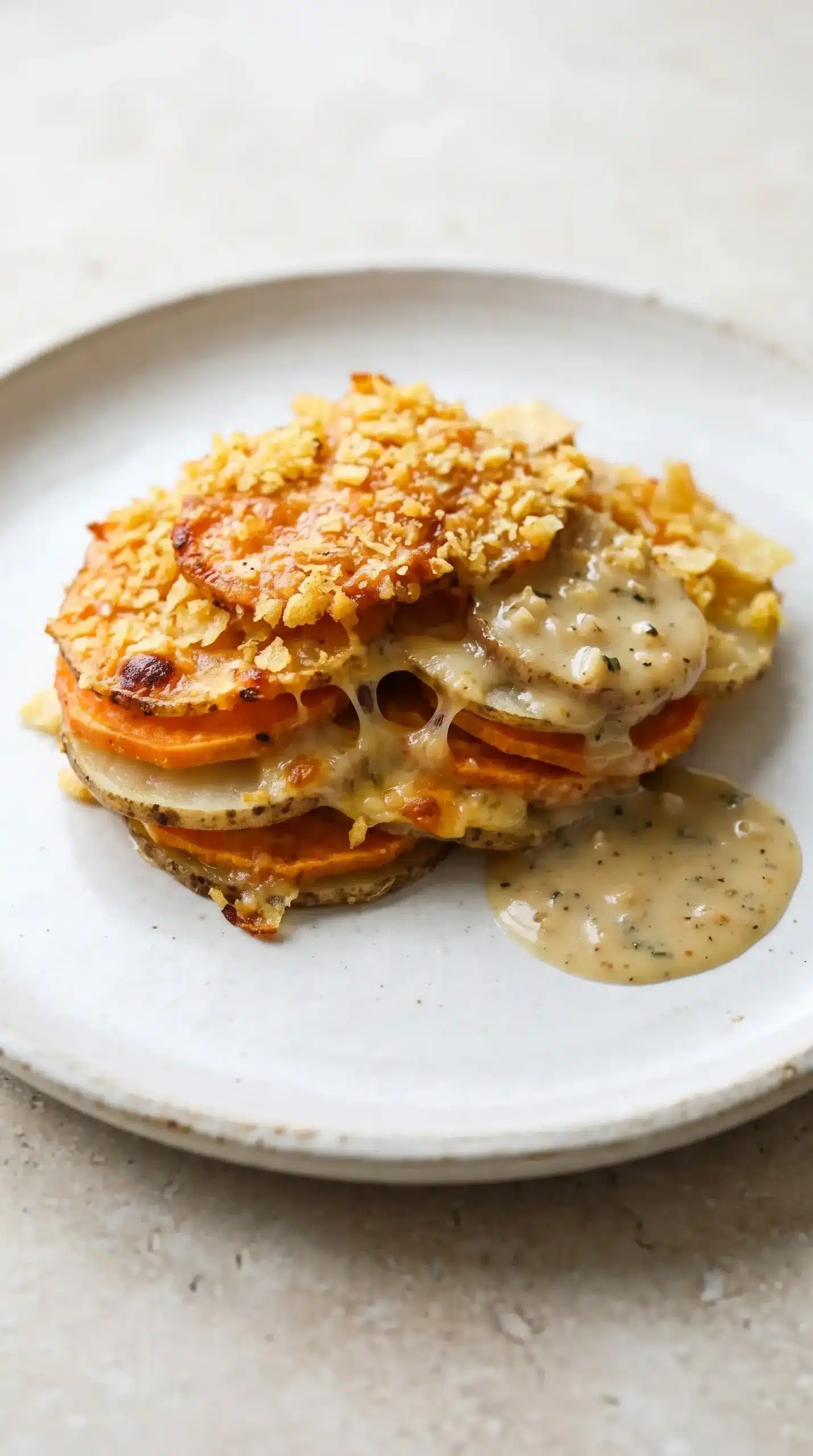
Some creamy liquid remaining beneath the potatoes is expected and useful. Spoon a little of it over each portion because it carries melted cheese, cream, broth, garlic, herbs, and seasoning into every bite, especially around the lower potato layers that may look less browned than the top.
Small Variations Can Shift the Flavor Without Changing the Structure
The easiest variation is the chip flavor. Sea salt produces a straightforward cheesy baked potatoes profile, while roasted garlic chips intensify an ingredient already present in the casserole. Either choice keeps the topping compatible with Gruyère, sage, and thyme.
Herb proportions can also lean more heavily toward sage or thyme while staying within the supplied combination. Sage has a distinctive presence, so cooks who prefer thyme can let it make up more of the minced herb mixture without changing how the casserole behaves in the oven.
For serving, the dish can be portioned to emphasize different textures. Center scoops contain more soft potato and sauce, while portions near the edges usually include more exposed cheese and browned topping. Mixing a little edge and center on each plate gives a broader range of texture.
- More traditional: choose sea salt chips for a neutral crisp topping.
- More garlic-forward: use roasted garlic chips to echo the sautéed garlic.
- More crust in each portion: cut servings so each piece includes some exposed top surface.
Leftovers Need Gentle Reheating to Protect the Topping
Refrigerated portions will firm as the cream, cheese, and potato starch cool. Store leftovers covered, keeping any sauce with the potatoes so it can loosen again during reheating instead of leaving the lower layers dry.
Oven reheating is useful when preserving the chip-and-cheese surface matters, since uncovered heat can refresh some crispness while warming the interior. Individual portions can also be reheated more quickly, though the topping will generally be softer when moisture remains trapped around it.
Balanced Moisture Makes the Cheesy Potato Bake Work
Thin potato slices, cream, broth, and a protected first stage of baking create the tender foundation that allows the browned Gruyère and chip crust to succeed. If the potatoes soften before the surface receives stronger heat, the casserole can develop deep color without sacrificing the creamy layers underneath.
That contrast is the central strength of the garlic herb cheesy potatoes: soft sweet potatoes and Russets underneath, aromatic cheese sauce between the slices, and a salty crisp topping above. Serving the flavorful liquid from the bottom with each portion keeps all three parts connected.
Questions About Tender Potatoes, Sauce, and Browning
How can I tell whether the potato slices are fully tender?
Insert a thin knife into several areas, including the center of the pan. It should move through the layered slices with little resistance; checking more than one spot helps catch an unusually thick piece.
Why is there still liquid in the bottom of the baking dish?
The cream and chicken broth form a loose, savory sauce with the melted cheese and seasonings. Some remaining liquid is intentional, so it can be spooned over individual portions instead of being cooked away completely.
Can I use only Russet potatoes or only sweet potatoes?
A single variety can physically be baked with the same general preparation, but it changes the intended balance of flavor and texture. Using both preserves the contrast between the starchier Russets and naturally sweeter sweet potatoes.
Do the potato chips become completely crisp?
The exposed pieces become the crispest, while portions touching melted cheese and moisture soften somewhat. Crushing the chips and spreading them across the surface creates a mixture of crunchy edges and more integrated cheesy pieces.
What should I do if the top is brown before the potatoes are tender?
Reduce the emphasis on browning and protect the surface with foil again if necessary while the potatoes continue cooking. Tenderness is the more important doneness test because additional color can always develop once the interior has softened.
Can the casserole rest before serving?
A brief rest can make the layers easier to scoop because the bubbling sauce settles slightly after leaving the oven. Keep the flavorful liquid with the portions when serving instead of waiting for it to be completely absorbed.
Garlic Herb Cheesy Potatoes with GruyèRe and Potato Chips
Garlic herb cheesy potatoes layer tender sweet potatoes and Russets with creamy Gruyère, fragrant herbs, and a crisp potato chip topping. This comforting casserole is perfect for gatherings or a hearty family meal.
Ingredients
Method
Preparation
- Preheat the oven to 400°F (204°C).
- Melt the butter in a small skillet over medium-low heat. Add the minced garlic and fresh herbs, then cook for 3-5 minutes, stirring as needed, until fragrant.
- Slice the sweet potatoes and Russet potatoes into very thin pieces, no more than 1/4 inch thick. Combine the potato slices with the heavy cream, salt, and garlic-herb butter mixture, coating them evenly.
Assembly
- Spread half of the coated potato slices evenly in a 9×13-inch baking dish. Sprinkle with 1 cup of the Gruyère and pour over 1/4 cup of the chicken broth.
- Arrange the remaining potato slices evenly over the first layer. Add the remaining chicken broth and Gruyère, then distribute the crushed potato chips across the surface.
Baking
- Cover the baking dish with foil and bake for 35 minutes.
- Remove the foil and continue baking for 15-20 minutes. Increase the oven temperature to 425°F (218°C) for extra browning.
- Serve each portion with some of the flavorful liquid from the bottom of the baking dish.
Notes
Sea salt and roasted garlic potato chips have both been used for this recipe. The roasted garlic flavor was especially enjoyable, while sea salt chips provide a more traditional look and taste.