From breakfast to dinner, from healthy meals to sweet desserts – Next Yum Recipes brings you quick, simple and tasty ideas for every occasion and every time.


 This Recipe
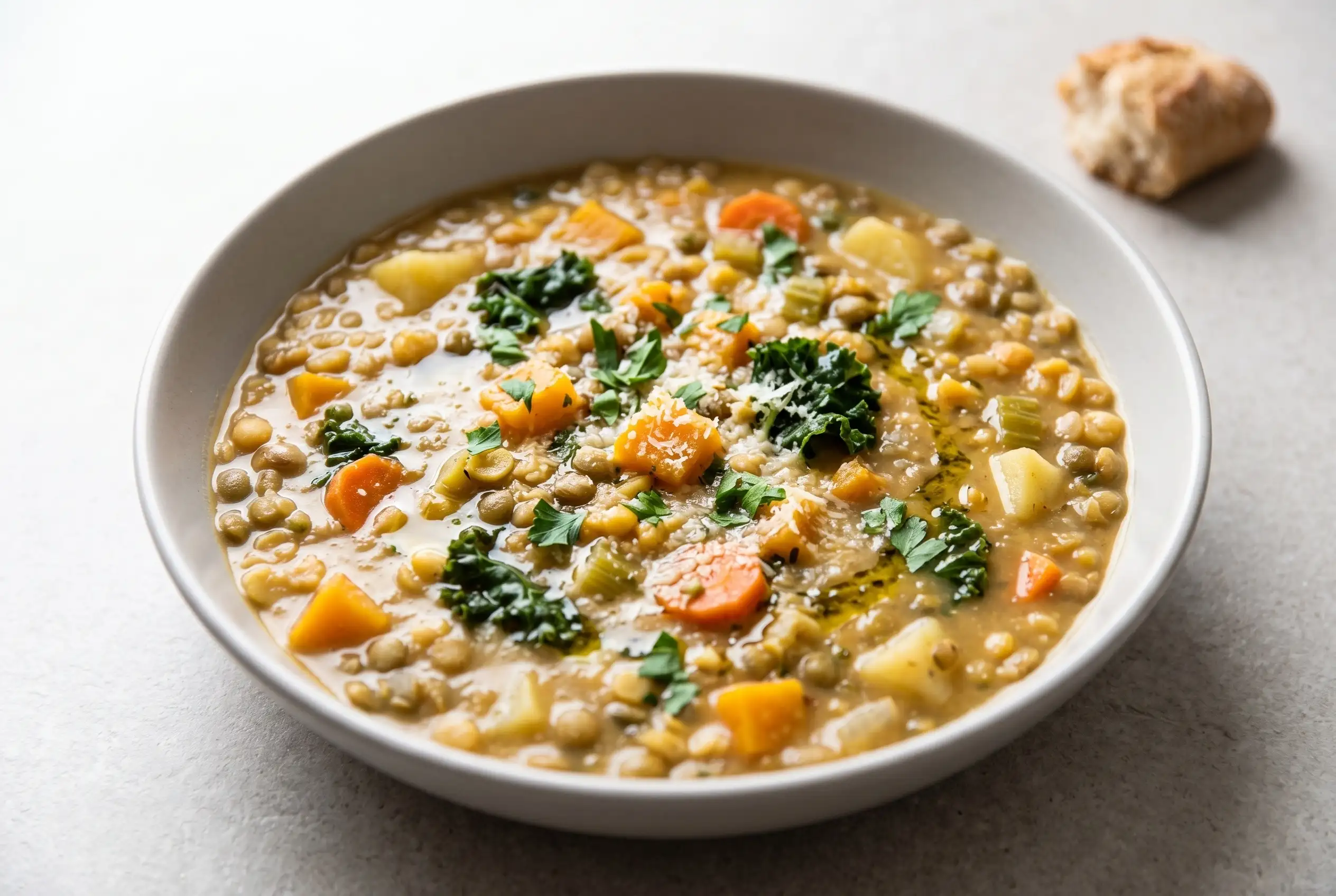
Crockpot lentil soup becomes especially satisfying when lentils, split peas, root vegetables, leafy greens, and herbs are allowed to develop together slowly, then part of the pot is blended into a creamy base. Butternut squash, carrots, potatoes, celery, onion, and garlic create a substantial vegetable foundation, while green lentils and yellow split peas give the soup enough structure to feel hearty without relying on dairy.
The most useful detail is the contrast between textures. Some vegetables and legumes soften into the broth, some remain recognizable, and a portion is blended with olive oil before being stirred back into the pot. Kale, parsley, and a small amount of acid are added near the end, keeping the finished soup from tasting flat or overly heavy. The result is a slow cooker lentil soup that is thick, rustic, and noticeably brighter once the seasoning is adjusted before serving.
Green Lentils and Split Peas Build the Right Body
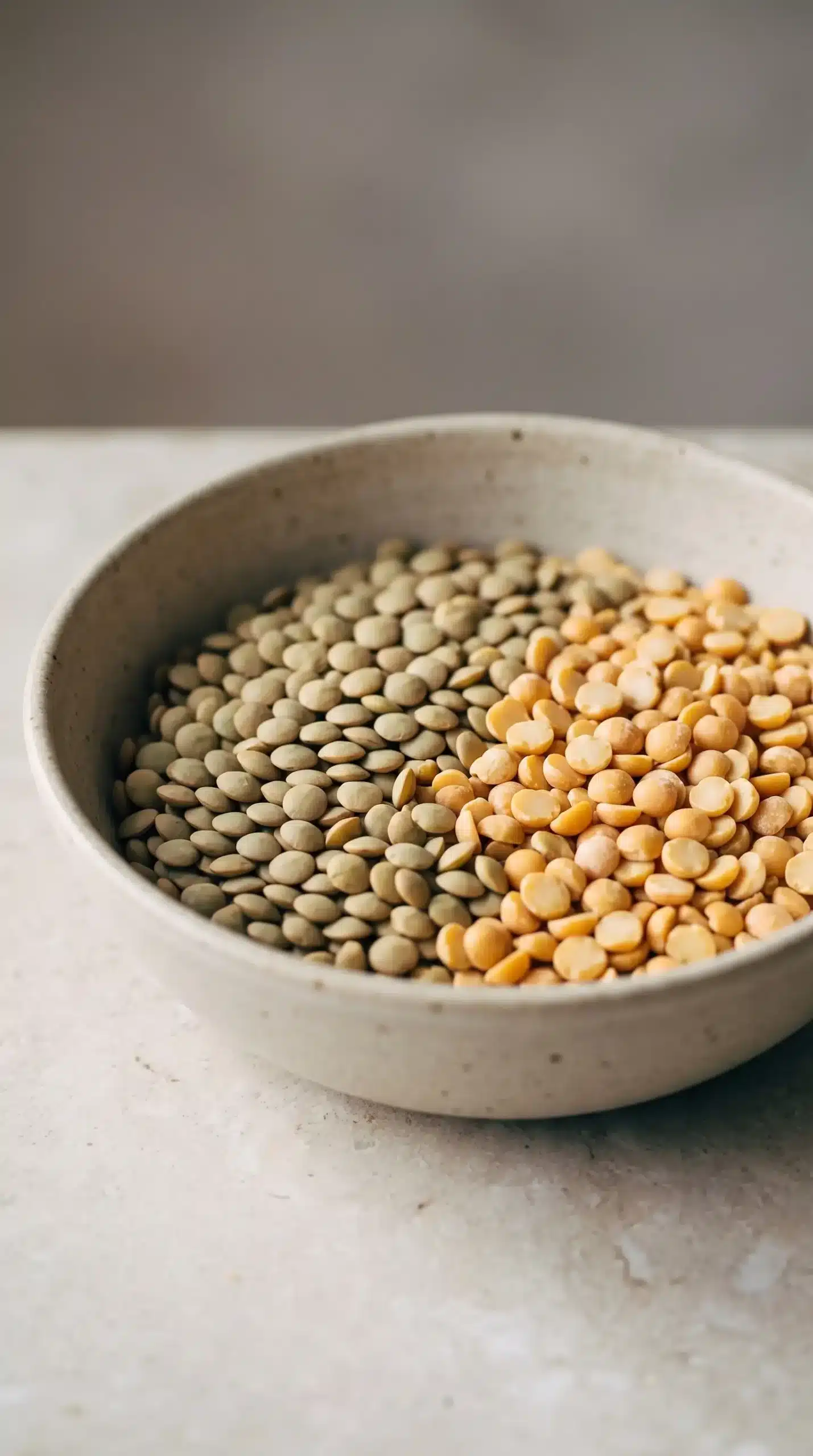
Green lentils and yellow split peas soften differently, which works in favor of the soup. Green lentils hold their shape when cooked relatively well, while split legumes tend to break down more readily. Using both creates a broth that feels substantial before any blending takes place.
Because the pot also contains potatoes and butternut squash, several ingredients contribute starch and softness at the same time. That combination prevents the blended portion from needing to do all the thickening work. Once everything is tender, the soup should already look cohesive, with legumes suspended throughout a broth that has more body than plain stock.
If yellow split peas are unavailable, using additional lentils is a practical substitution supported by the original formula. Expect the texture to remain slightly more distinct because lentils do not dissolve as readily as split peas. The soup can still become creamy after partial blending, but the unblended portion will show more individual legumes.
Butternut Squash Softens Into the Broth
Butternut squash is particularly useful in this lentil soup with butternut squash because its cubes soften enough to integrate with the potatoes and legumes while still contributing mild sweetness. Pieces that become very tender can disappear partly into the broth during stirring, which helps connect the chunky and blended portions without making the entire pot completely smooth.
Broth Level Controls Soup Thickness
The broth amount has a direct effect on how the finished crockpot lentil soup feels in the bowl. Lentils, split peas, potatoes, and squash all absorb liquid or release starch as they cook, so a pot that initially looks loose can become considerably thicker by the time the legumes are tender.
Starting within the supplied broth range allows some flexibility. A larger amount produces a looser soup with more free liquid around the vegetables, while a smaller amount emphasizes the stew-like quality created by the legumes and root vegetables. Either direction can work, provided the solids remain surrounded by enough liquid to cook evenly.
Adjustment is easiest near the end, after the blended portion has returned to the pot. If the soup becomes thicker than preferred, a little additional broth can loosen it without changing the basic flavor profile. If it seems thinner than expected, blending a generous scoop of the tender vegetables and legumes gives the broth more body without adding another thickener.
Blending Only Part of the Pot Keeps Texture
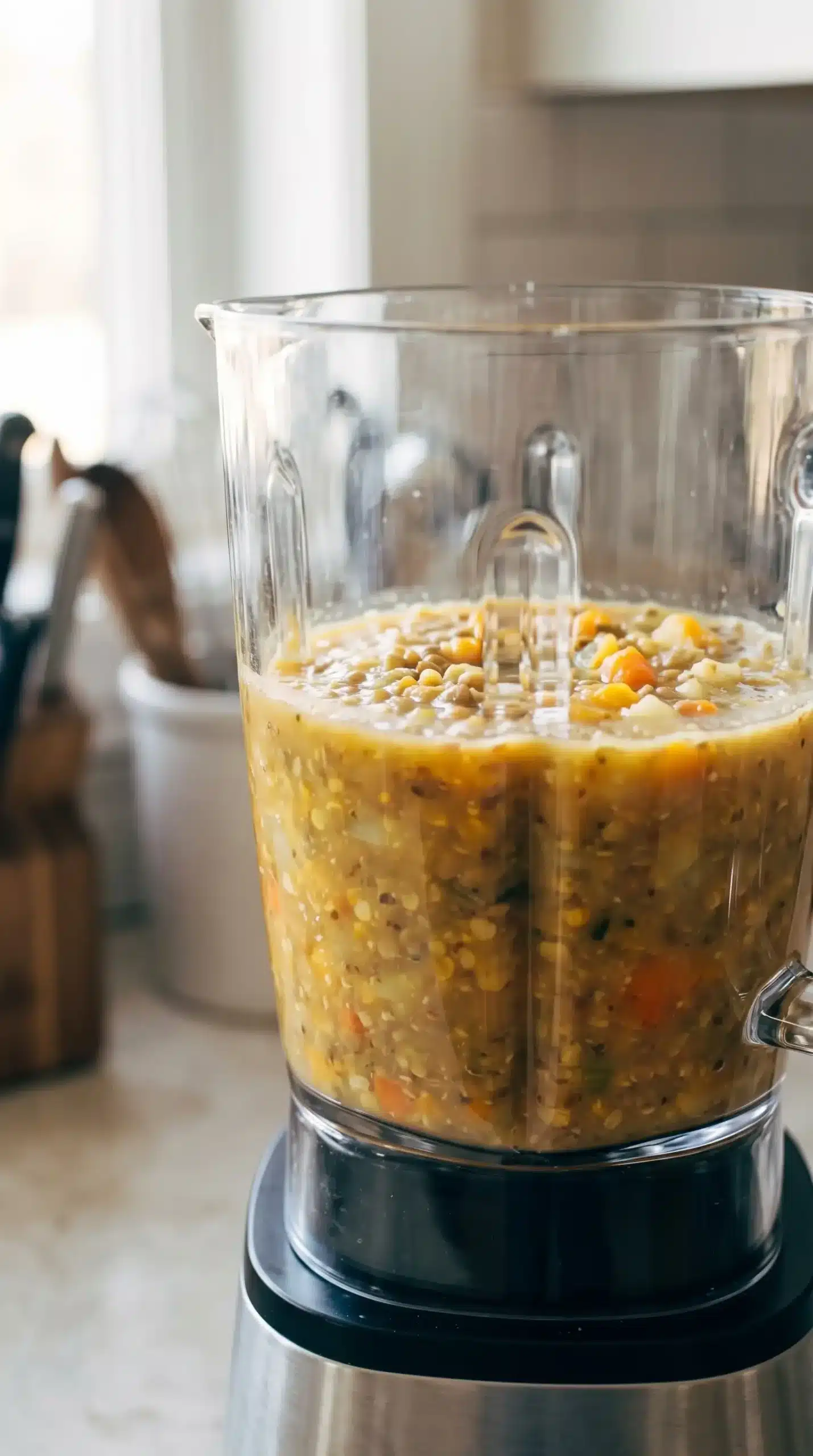
Partial blending is the key structural decision. Removing only some of the cooked soup preserves pieces of carrot, celery, potato, squash, lentils, and split peas in the main pot while creating a creamy base that can be stirred around them. Pulsing gently is enough; turning the removed portion completely smooth would reduce the rustic texture that makes the soup interesting.
Olive Oil Makes the Blended Portion Creamier
Olive oil does more than add richness when it is blended with the cooked soup. The movement of the blender disperses the oil through the liquid and softened vegetables, helping create a more cohesive, creamy-looking mixture even though the soup contains no cream.
An herb-infused oil, especially one with rosemary character, fits naturally with herbs de Provence and the earthy legumes. Plain olive oil also works well because the vegetables and herbs already provide plenty of aromatic flavor. The oil should integrate into the blended portion instead of floating visibly on top.
Once that mixture is stirred back into the crockpot, it coats the remaining vegetables and legumes with a thicker base. This is why judging consistency before blending can be misleading. A pot that appears somewhat brothy beforehand can become noticeably fuller and silkier after the emulsified portion is returned.
Kale and Parsley Stay Fresher Added Late
Kale and parsley are best treated differently from the vegetables that spend the full cooking period in the crockpot. Stirring them in after the main mixture has softened allows the kale to wilt in the residual heat while the parsley keeps more of its fresh herbal character. Keeping kale as a finishing component preserves visible flecks of green and prevents the leaves from cooking down into the background.
Acid Sharpens the Finished Lentil Soup
Sherry, red wine vinegar, or lemon juice can correct a bowl that tastes heavy after slow cooking. Lentils, potatoes, squash, olive oil, and broth create a mellow base, so a small amount of acidity can make the herbs and vegetables seem more defined without changing the soup into something sour.
Seasoning should be judged after the greens are mixed in and the blended portion is fully incorporated. Salt affects the overall savoriness, while acid changes the perception of richness and brightness. Those are separate adjustments, and adding more salt will not solve a soup that mainly needs contrast.
Use the acidic ingredient gradually because the options have different personalities. Lemon juice tastes especially fresh, red wine vinegar brings a sharper edge, and sherry contributes a more rounded tang. Any one of them can work, and combining them is unnecessary unless the finished flavor clearly benefits from another small adjustment.
Common Crockpot Lentil Soup Mistakes to Avoid
Most problems with crockpot lentil soup come from texture decisions near the end, not from complicated technique. A few observable signs make the common errors easy to prevent.
- Blending too much: Processing most of the pot removes the contrast between creamy broth and intact vegetables. Keep a substantial portion unblended.
- Judging thickness too early: The soup changes after the blended portion and olive oil return to the crockpot, so wait before deciding whether more broth is needed.
- Adding the greens too soon: Kale and parsley need only the residual warmth at the end to soften and integrate.
- Skipping the acid check: A soup that tastes dull may need lemon juice, vinegar, or sherry even when the salt level is adequate.
- Overprocessing the blender portion: Gentle pulsing keeps some texture and avoids turning the removed soup into a completely uniform puree.
Another useful safeguard is to look at the lentils and split peas before blending. They should be fully softened, and the squash should give easily when pressed. Blending ingredients that are still firm cannot create the same cohesive body because the starches and legumes have not yet softened enough to integrate smoothly.
Texture Clues Show When the Soup Is Ready
Visual cues are more reliable than expecting every ingredient to look identical. Carrots may remain more defined while squash and potatoes become softer around the edges. Lentils should be tender, and the split peas should contribute noticeable thickness even if a few retain their shape.
| What You Notice | What It Suggests | Useful Adjustment |
|---|---|---|
| Plenty of free broth around tender vegetables | The soup is on the looser side | Blend a generous portion before adding extra liquid |
| Very little free liquid after blending | The legumes and starches have created a thick base | Stir in a small amount of broth until the preferred consistency returns |
| Flavor seems rich but muted | The seasoning may need contrast | Add a small amount of lemon juice, vinegar, or sherry and taste again |
| Kale remains slightly firm after stirring | The residual heat has not fully wilted it yet | Let the soup stand briefly before serving |
Consistency should also be judged while stirring. A properly thickened batch will move as one cohesive mixture, yet the spoon should still reveal recognizable vegetables and legumes. If the spoon leaves a trench that barely closes, the soup is probably thicker than necessary for a bowl-style serving.
Resting briefly after the greens are added gives the textures another chance to settle together. The soup often appears more unified once the blended base has coated the remaining solids and the kale has softened into the hot mixture.
Crusty Bread and Parmesan Suit the Thick Broth
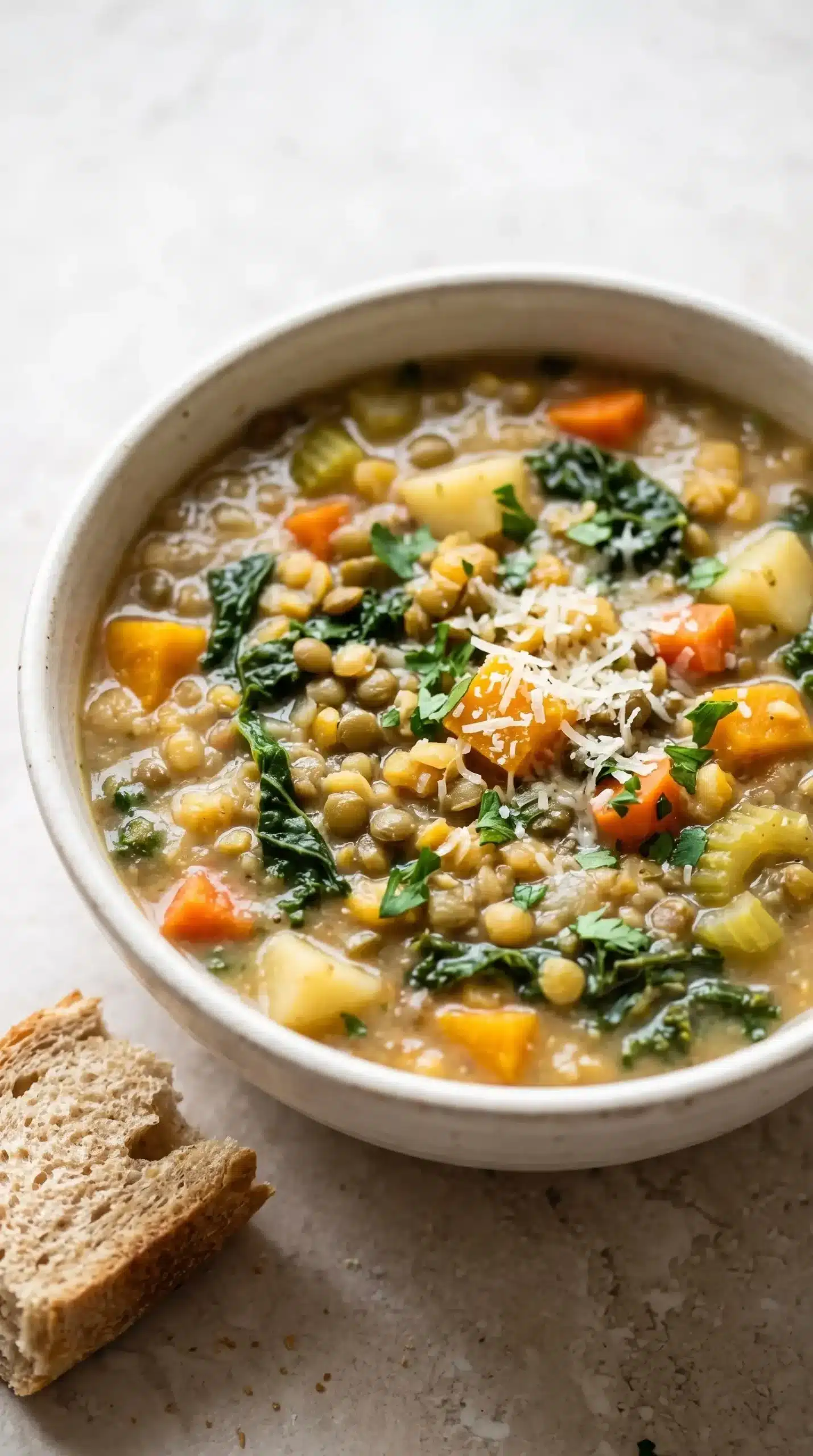
Because the finished soup has a creamy, spoon-coating base with substantial vegetables, crusty wheat bread is a natural match for catching the broth, while a little Parmesan adds a salty finishing accent. Keep garnishes restrained so the parsley, herbs de Provence, lentils, and vegetables remain the main flavor profile.
Cooling and Reheating Change the Consistency
Lentil-based soups commonly thicken as they sit because cooked legumes and starch-rich vegetables continue holding moisture. After chilling, the broth may look much denser than it did when freshly finished, especially once the blended squash, potato, lentils, and split peas have fully settled.
Reheating works best with gentle stirring so the creamy portion loosens evenly around the vegetables. If the soup remains too thick once hot, adding broth in small amounts restores a spoonable consistency while preserving the established seasoning.
Acid is worth reassessing after reheating because temperature and added broth can change how vividly the flavors register. A small fresh splash of lemon juice or vinegar can restore contrast if the reheated soup tastes softer than it did initially.
Partial Blending Gives Crockpot Lentil Soup Its Best Balance
Tender lentils, split peas, squash, and potatoes create the foundation, but the most important finishing choice is keeping only part of that mixture creamy. Blending a portion with olive oil thickens the broth while leaving enough vegetables and legumes intact to preserve a hearty, varied texture.
Late-added kale, parsley, and a measured touch of acidity complete that structure by bringing freshness to a rich slow-cooked base. When those elements stay distinct, the soup remains substantial without becoming uniformly heavy or completely pureed.
Crockpot Lentil Soup Questions About Thickness and Texture
Why did my crockpot lentil soup become very thick?
Lentils, split peas, potatoes, and butternut squash all contribute body, and partial blending concentrates that effect. If the soup thickens beyond the preferred consistency, stir in broth gradually while it is hot until it loosens to the texture you want.
Can I make the soup without yellow split peas?
Yes. The supplied recipe allows additional lentils in place of the split peas. The finished soup may retain a little more visible lentil texture because split peas typically break down more readily, but partial blending will still create a creamy base.
Should kale stems go into the soup?
The supplied preparation calls for removing the stems before chopping the kale. Using the leafy portions keeps the late-added greens tender enough to wilt in the residual heat without introducing firmer stem pieces.
Can the soup be made without herb-infused olive oil?
Plain olive oil is suitable. Herb-infused oil adds another aromatic layer, but herbs de Provence, garlic, parsley, and the vegetables already provide plenty of seasoning, so the emulsified texture does not depend on flavored oil.
What should I do if the soup tastes too acidic?
If too much lemon juice, vinegar, or sherry has been added, first dilute the sharpness with some additional broth and allow it to combine fully before tasting again. Avoid adding more acid until the soup has been reheated and the seasoning has had a chance to redistribute.
Crockpot Lentil Soup with Split Peas and Butternut Squash
Crockpot lentil soup is a hearty, creamy-textured soup with tender vegetables, legumes, herbs, and a bright finishing touch. It is an easy, comforting choice when a substantial bowl of soup is wanted.
Ingredients
Method
Cooking
- Add all ingredients to the crockpot. Cover and cook on high for 5-6 hours or on low for 7-8 hours.
Blending and Finishing
- Transfer about 4 cups of the soup to a blender and add the olive oil. Pulse gently until the mixture is semi-smooth and creamy-looking, with the oil emulsified into the soup.
- Return the blended mixture to the crockpot and stir well. Add the kale and parsley, then turn off the heat and allow the soup to rest briefly before serving.
- Taste and adjust the seasoning as needed. Add sherry, red wine vinegar, and/or lemon juice at this stage.
Serving
- Serve the soup with crusty wheat bread and a little Parmesan cheese.
Notes
Stovetop Instructions: Place the same first group of ingredients on the stovetop and simmer over low heat for about an hour, or until the lentils, split peas, and squash have softened. Follow the same blending instructions, then add the kale and parsley. Instant Pot Instructions: Place the same first group of ingredients in the Instant Pot with only 6-7 cups of broth and cook on the soup setting for 30 minutes with a quick release. Follow the same blending instructions, then add the kale and parsley.