From breakfast to dinner, from healthy meals to sweet desserts – Next Yum Recipes brings you quick, simple and tasty ideas for every occasion and every time.


 This Recipe
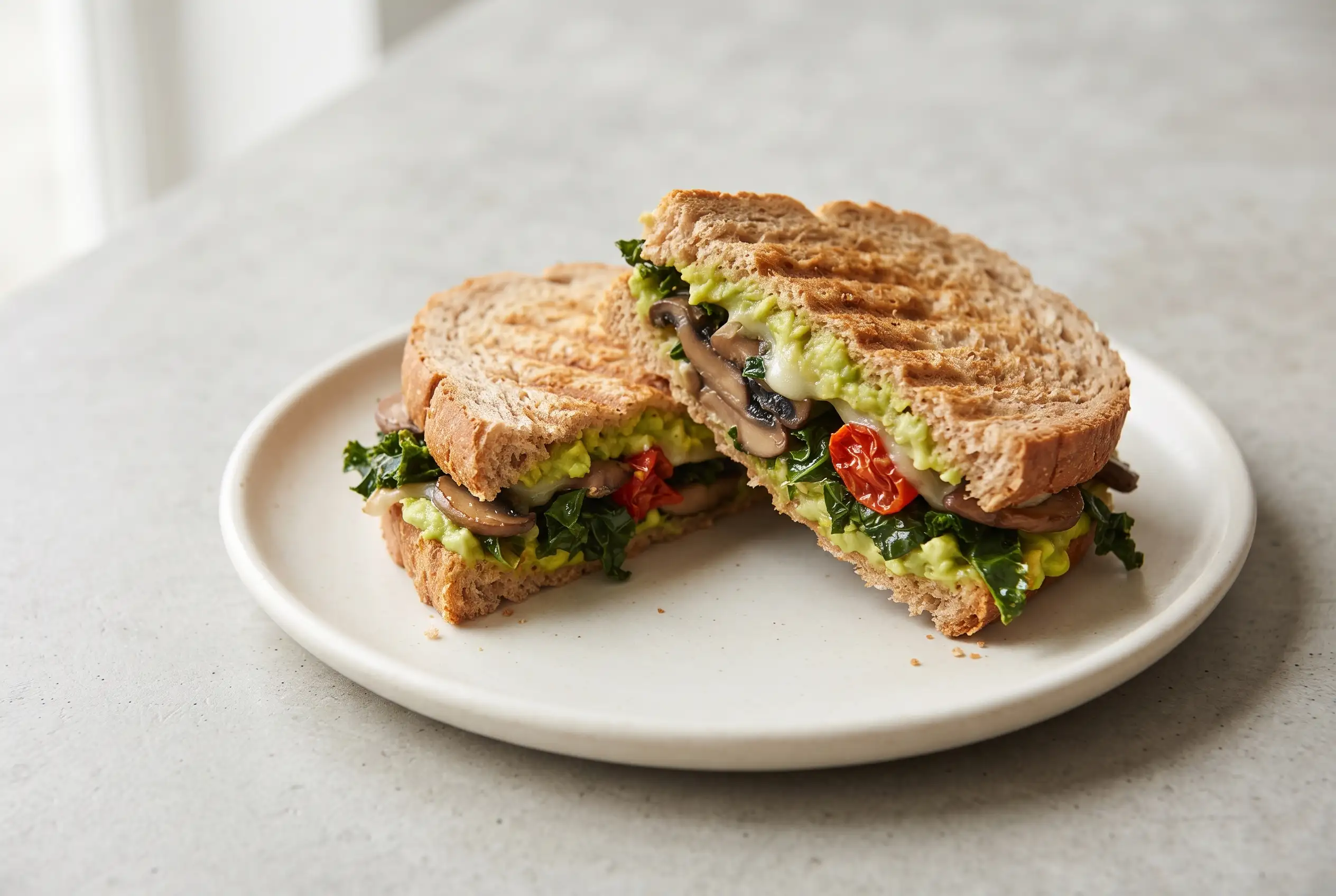
Avocado veggie panini brings together creamy avocado, sautéed vegetables, sturdy wheat bread, and optional melted cheese in a pressed sandwich built around contrasting textures. The combination of mushrooms, kale, tomatoes, and avocado creates a vegetable-forward meal where careful preparation matters as much as the ingredients themselves.
Mushrooms and Kale Shape the Vegetable Filling
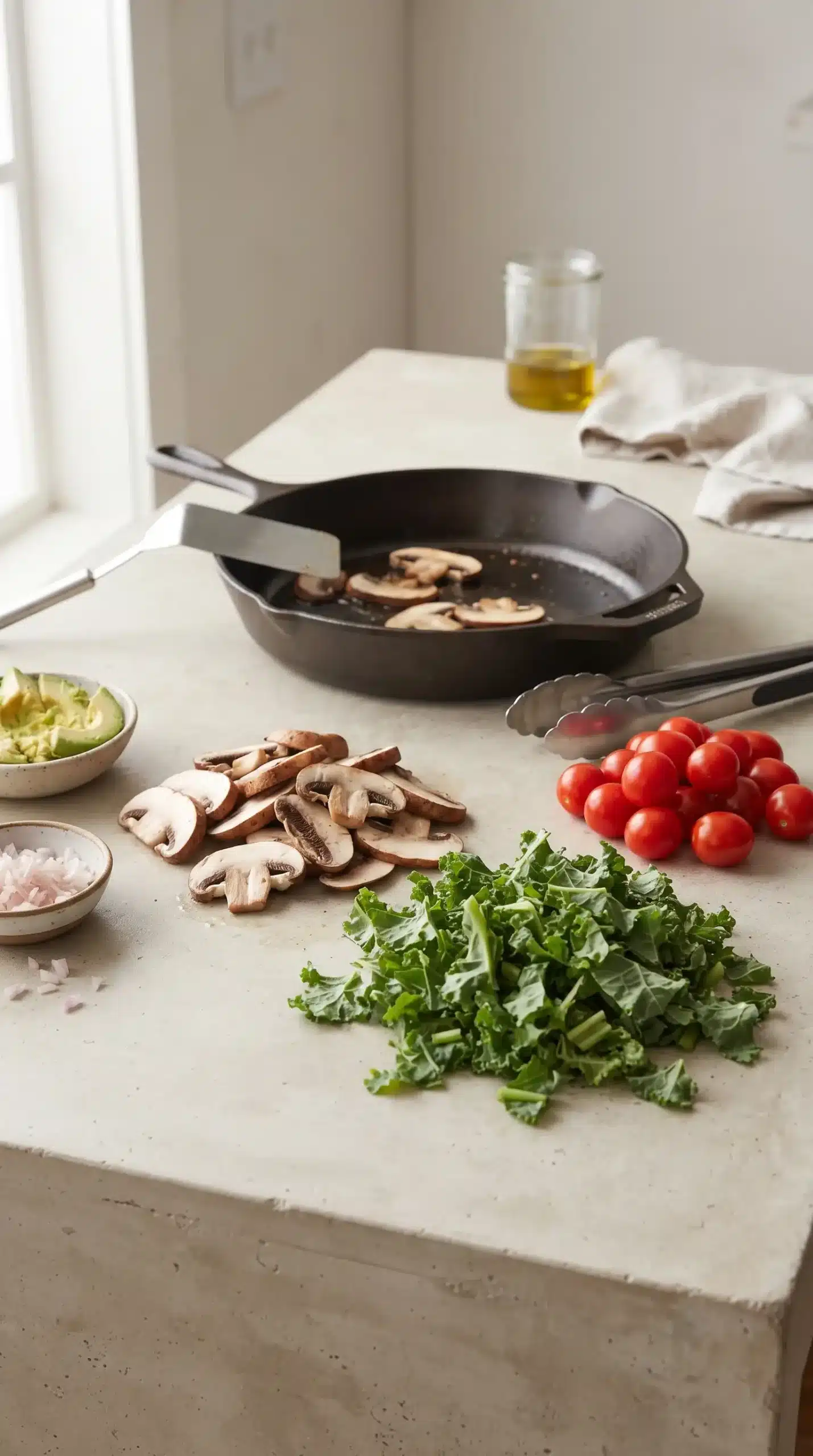
Fresh vegetables define the character of an avocado veggie panini because their texture changes during cooking. Baby portobello mushrooms develop a lightly browned exterior while keeping a tender center, creating a savory foundation that supports the softer avocado spread.
Kale requires attention during the skillet stage because its sturdy leaves need enough heat to become tender without losing their structure. Removing the stems before chopping helps the vegetable integrate more evenly into the sandwich layers.
Tomatoes add a bright element that balances the cooked vegetables. Leaving them whole creates a burst of warm tomato flavor when bitten, while slicing or chopping them beforehand makes assembly easier and reduces the chance of uneven filling placement.
Avocado Texture Controls the Panini Sandwich Finish
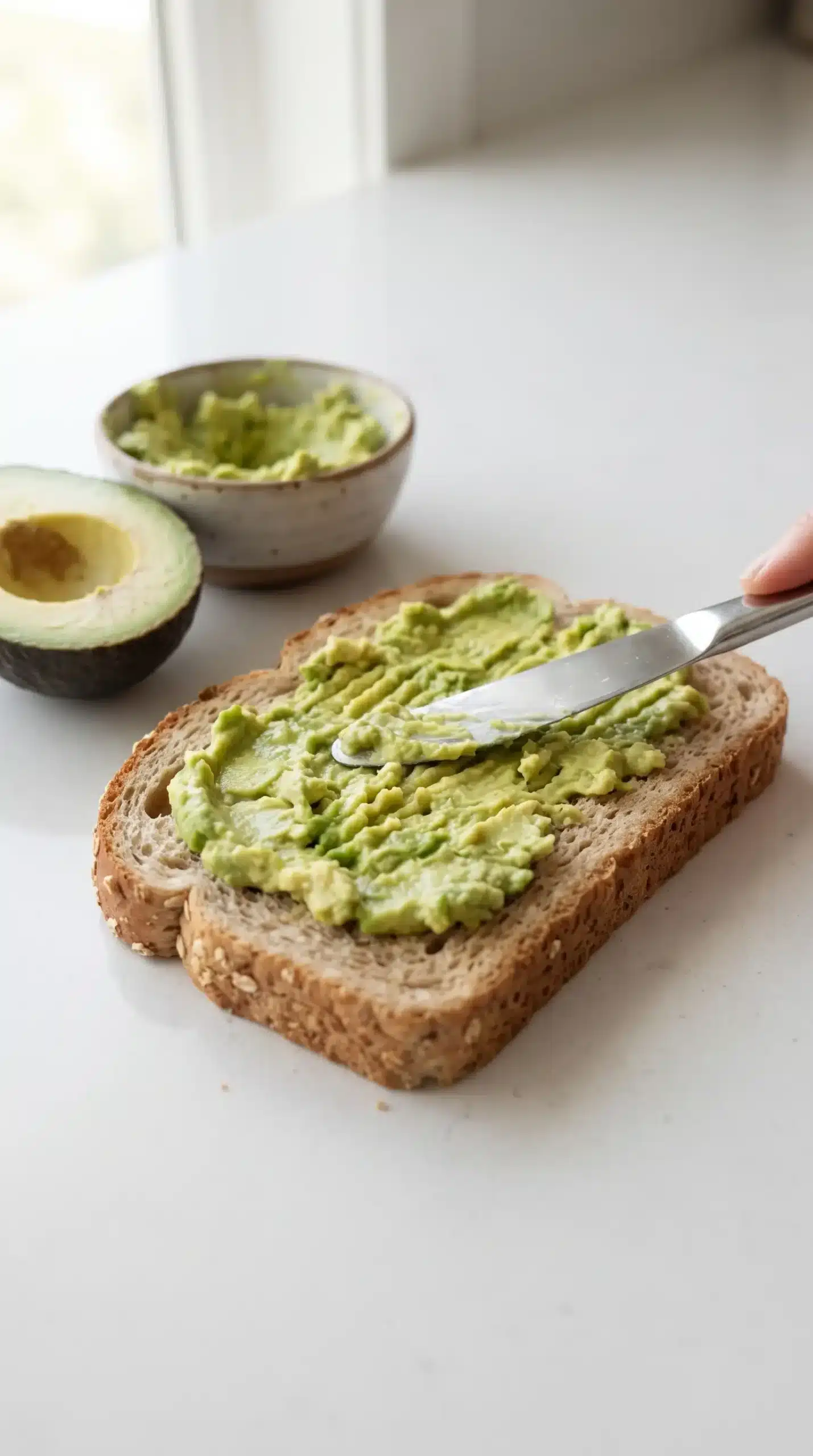
Mashed avocado acts as both a creamy layer and a way to connect the vegetables with the bread. A fork-mashed texture keeps the spread simple while allowing some natural variation, which gives the avocado panini sandwich a more substantial bite.
Choosing Bread and Cheese for a Sturdy Pressed Sandwich
Thick, sturdy wheat bread is important because the filling contains moisture from vegetables and creaminess from avocado. A stronger slice provides enough support for pressing while still developing a browned exterior in the panini press.
Optional cheese choices influence the sandwich without changing its vegetable focus. Melty white cheeses such as Provolone or Mozzarella can create a richer center that helps bind the filling once warmed, and an artichoke and red pepper melt combines bread with layered vegetable fillings in a pressed sandwich format.
Bread thickness also affects how much filling can be comfortably added. Since vegetables compress during pressing, arranging ingredients with enough room between layers helps prevent an overfilled sandwich that becomes difficult to handle.
Cooking Control Keeps Avocado Veggie Panini Layers Together
Successful pressing depends on controlling heat and watching visual changes. A preheated panini press encourages the bread to brown while warming the interior, allowing the vegetables and optional cheese to reach a cohesive texture.
The pressing stage changes more than the surface of the bread because a panini press applies heated pressure from both sides, helping create an evenly toasted exterior while the filling warms through.
The skillet preparation before assembly also affects the finished sandwich. Light browning on mushrooms and gentle cooking of kale and tomatoes develop flavor while reducing excess moisture that could make the bread softer.
Useful signs during cooking include a golden outside, warmed filling, and a sandwich that holds together when moved. Paying attention to those cues helps avoid relying only on a fixed appearance or texture expectation.
Tomato Handling Changes Each Bite of the Panini
Tomato preparation is one of the few choices that noticeably changes the eating experience. Whole cherry or grape tomatoes create a juicy surprise inside the pressed sandwich, while chopped pieces distribute their flavor more evenly across every section.
Common Avocado Veggie Panini Mistakes to Avoid During Assembly
Several small choices can affect the quality of an avocado veggie panini. Avoiding these issues keeps the pressed sandwich balanced and easier to eat.
- Overfilling layers: Add vegetables carefully because the filling compresses during pressing and can shift outward.
- Ignoring tomato placement: Whole tomatoes may burst with hot juices, so arrange them thoughtfully or prepare smaller pieces.
- Using fragile bread: Thin slices may struggle to support the warm vegetable mixture and creamy avocado.
Assembly order influences how each bite feels. Spreading avocado across the bread creates a base that helps hold vegetables in place, while placing larger pieces carefully prevents uneven sections.
Rushing the vegetable preparation can also reduce the sandwich’s appeal. Allowing mushrooms to brown lightly and kale to warm through creates a filling with more defined texture.
Vegetable Preparation Creates Better Pressed Sandwich Texture
The sautéed filling benefits from attention before it reaches the bread. Mushrooms, tomatoes, and kale each respond differently to heat, so treating them as a combined mixture while monitoring their textures creates a more balanced result.
Chopping vegetables consistently makes the sandwich easier to assemble and eat. Smaller pieces spread across the bread more naturally, while larger pieces can create pockets that separate the layers.
A veggie panini with mushrooms and kale depends on contrast. Tender cooked vegetables, creamy avocado, melted cheese if used, and crisp bread create the variety that makes each serving satisfying.
A Vegetable Avocado Panini Adapts to Simple Ingredient Swaps
The structure of a vegetable avocado panini allows flexible choices while keeping its main character. Onion or garlic can replace shallot, and olive oil can replace butter when preparing the vegetable filling.
Serving Ideas Keep the Avocado Panini Sandwich Fresh and Balanced
Serving the avocado panini sandwich soon after pressing highlights the contrast between crisp bread and warm vegetables. The sandwich is especially suited to simple pairings that do not overpower the fresh avocado and sautéed filling.
Storage and Reheating Choices Protect the Sandwich Texture
Prepared components can be handled separately when planning ahead. Keeping cooked vegetables apart from the bread and avocado helps preserve the textures that make the sandwich enjoyable.
Avocado is best added close to serving because its creamy texture is most noticeable when freshly mashed and spread. Separating this layer also prevents the bread from absorbing moisture during storage.
When reheating a prepared sandwich, gentle warming helps restore some crispness without making the vegetable filling overly soft. A panini press can be useful again because it warms the center while refreshing the exterior.
The Veggie Panini with Mushrooms and Kale Benefits from Thoughtful Pressing
A veggie panini with mushrooms and kale relies on more than simply warming ingredients together. The pressing stage changes the relationship between the layers by bringing the bread, vegetables, avocado, and optional cheese into closer contact.
Pressure should help the sandwich hold its shape without forcing the filling out of the bread. Careful portioning before pressing makes the finished sandwich easier to serve and enjoy.
Texture remains the deciding factor throughout preparation. The best results come from maintaining a crisp outside, a creamy avocado layer, and vegetables that still offer their own character.
Small Details Improve a Homemade Avocado Panini Sandwich
Simple details make a noticeable difference in a homemade avocado panini sandwich. Removing kale stems, choosing dependable bread, and considering tomato size all influence how smoothly the ingredients come together.
Avocado Veggie Panini Works Through Contrast Between Crisp and Creamy
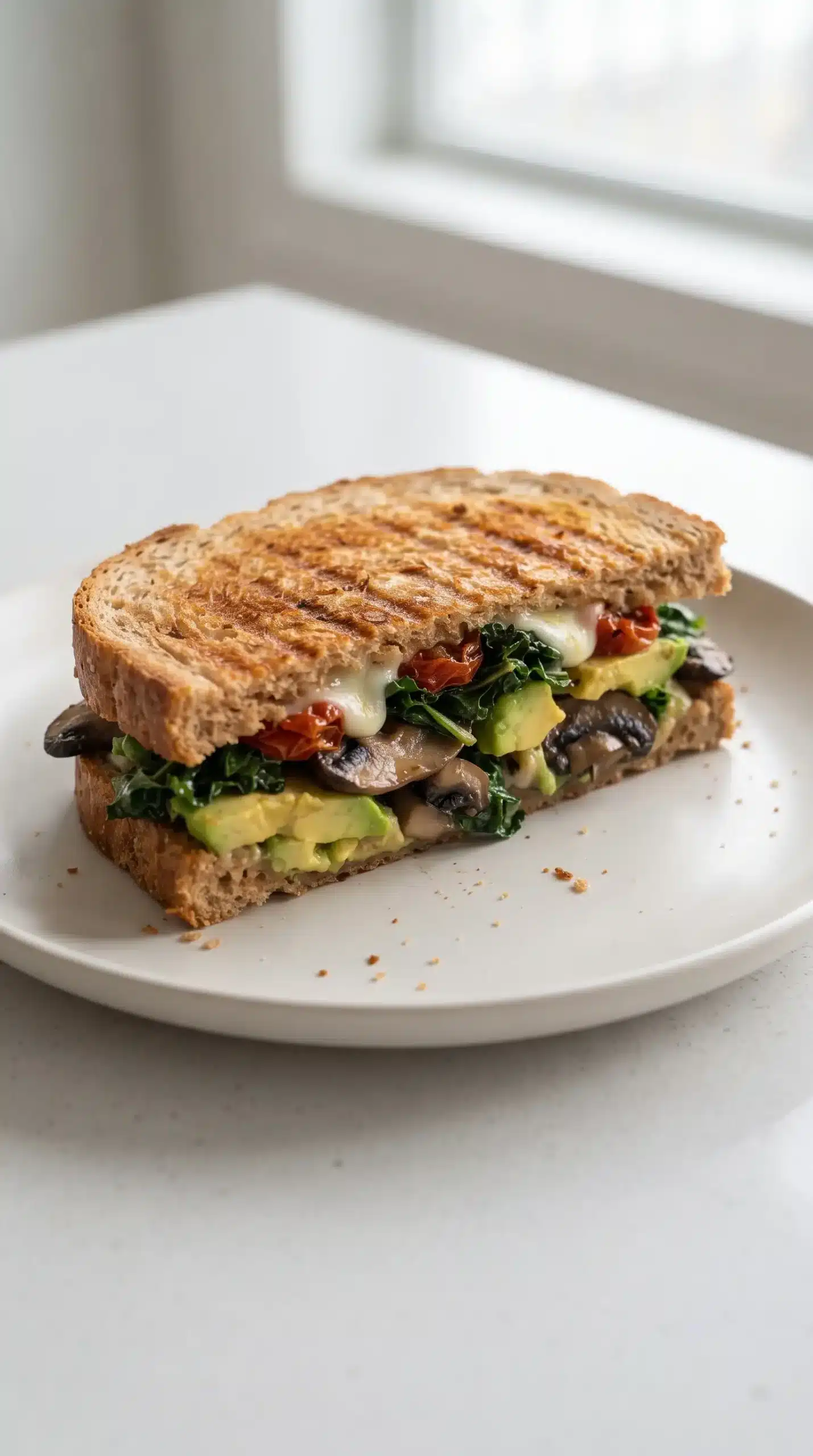
Avocado veggie panini layers succeed because each element has a clear purpose in the finished sandwich. The creamy avocado softens the crisp bread, while sautéed mushrooms, kale, and tomatoes create a warm filling with varied texture.
The most important cooking judgment comes from managing moisture and structure. When vegetables are prepared carefully and the sandwich is pressed with attention, the result keeps its shape while delivering the contrast that defines the dish.
Common Questions About Heat, Tomatoes, and Avocado Veggie Panini
Can the avocado veggie panini be made without cheese?
Yes. The mashed avocado provides creaminess on its own, allowing the sandwich to remain satisfying without the optional Provolone or Mozzarella layer.
Should tomatoes be sliced before making the panini?
Slicing tomatoes is a practical choice when easier assembly is important. Whole cherry or grape tomatoes can stay inside the sandwich, but they may release hot juices when bitten.
How can the vegetables stay inside the sandwich while pressing?
Arrange the vegetables evenly across the avocado-coated bread and avoid adding more filling than the bread can support. The vegetables naturally compress, so balanced layering helps maintain the sandwich shape.
What bread works best for an avocado panini sandwich?
A thick, sturdy wheat bread works well because it can support the moist filling and develop a browned exterior during pressing.
Can olive oil replace butter in the vegetable filling?
Yes. Olive oil is a suitable alternative for sautéing the shallot, mushrooms, tomatoes, and kale while keeping the vegetable mixture flavorful.
Avocado Veggie Panini with Mushrooms and Kale Filling
Avocado Veggie Panini is a creamy, crispy pressed sandwich filled with sautéed vegetables and fresh avocado flavor. It is an easy, satisfying choice for a hearty meal when you want a warm vegetable-forward sandwich.
Ingredients
Method
Cooking
- Heat the butter in a large skillet over medium-high heat. Add the shallots and cook until translucent.
- Add the mushrooms and sauté until lightly browned on the outside.
- Stir in the tomatoes and kale, then cook until the kale is wilted and the vegetables are warmed through. Remove from the heat and season with salt.
Assembly
- Mash the avocado in a bowl with a fork. Spread avocado over each slice of bread.
- Arrange the cooked vegetables over the avocado-covered bread, adding as much filling as the bread can support.
- Place the cheese over the vegetables if using, add the remaining bread slices, and transfer the sandwiches to a preheated panini press.
- Press until the outside of the bread is browned, then remove from the heat. Use care when eating if whole tomatoes were used, as they may release hot juices.
Notes
The whole tomatoes can be difficult to keep inside the sandwiches, but they create a burst of flavor when eaten. For simpler assembly, slice or chop the tomatoes beforehand.