From breakfast to dinner, from healthy meals to sweet desserts – Next Yum Recipes brings you quick, simple and tasty ideas for every occasion and every time.


 This Recipe
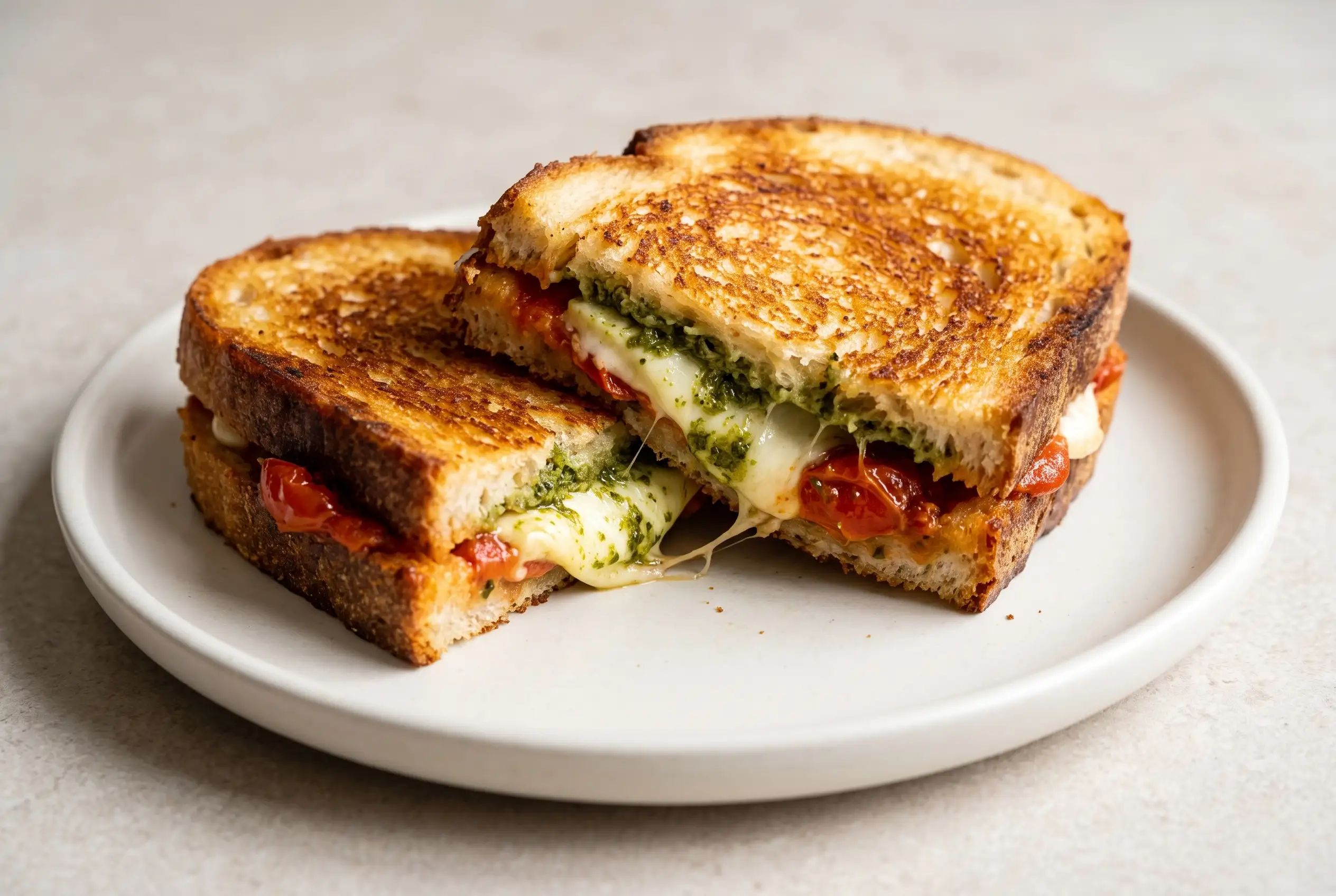
caprese grilled cheese combines crisp sourdough, fresh mozzarella, pesto, and a rich garlic butter tomato sauce into a sandwich built around contrast. The bread develops a browned exterior while the center holds melted cheese, bright tomato flavor, and the herbal character of pesto. A loaded caprese grilled cheese sandwich succeeds when each layer keeps its own identity while working together.
Fresh preparation choices make the difference between a sandwich that feels heavy and one that tastes balanced. The tomato mixture is cooked until concentrated, the cheese is given enough heat to soften, and the bread is handled carefully so the structure remains sturdy. Small decisions during cooking create the textures that define this Italian-inspired comfort food.
Caprese Grilled Cheese Builds Layers of Fresh Italian-Inspired Flavor
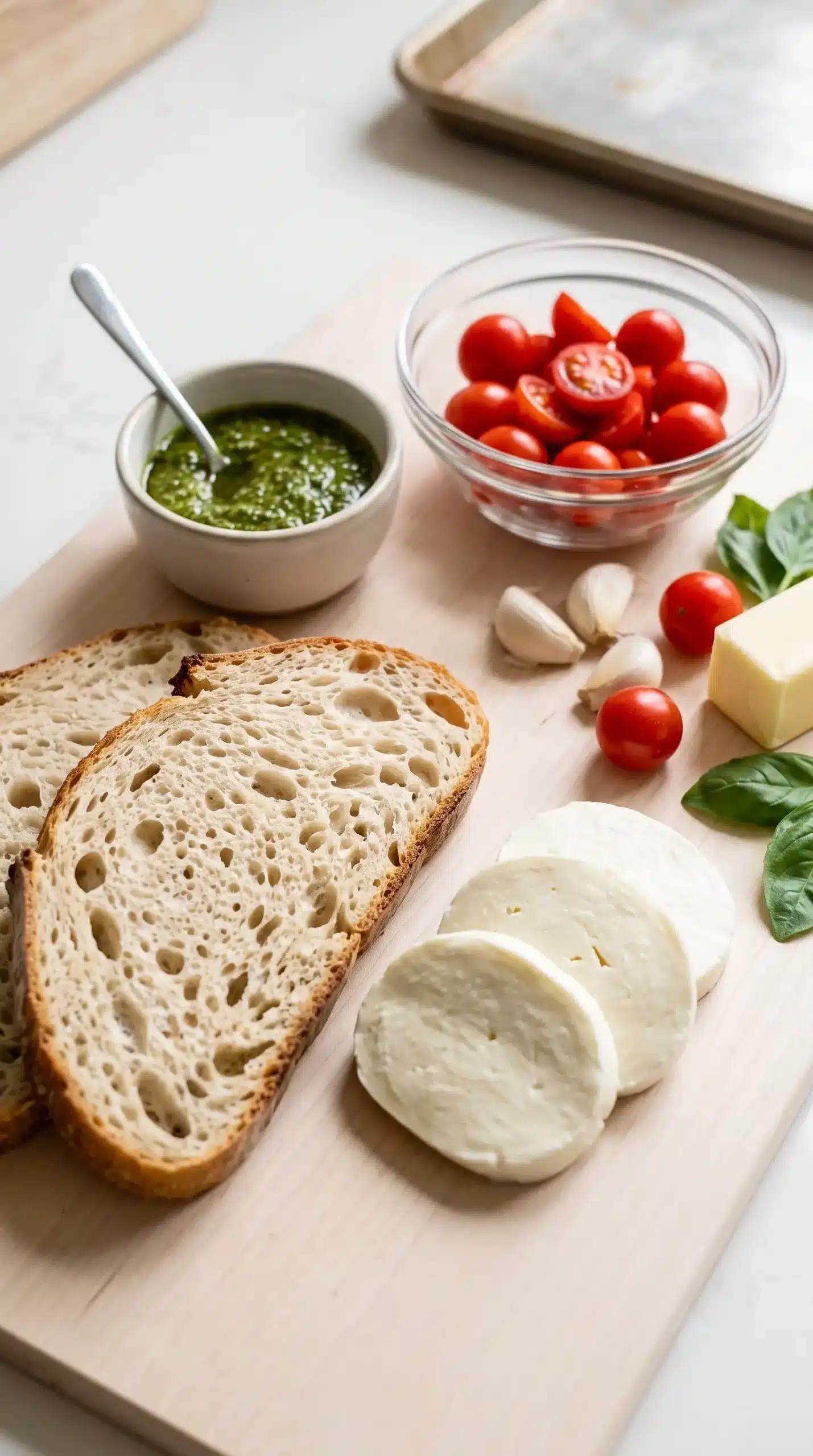
Warm sandwiches often depend on one dominant flavor, but caprese grilled cheese creates interest through several connected elements. Sourdough provides tang and crunch, mozzarella brings a creamy center, and pesto introduces a savory herb note that links the sandwich to classic caprese combinations.
Cherry tomatoes take on a deeper character after they are heated in the skillet. Light charring adds a roasted edge, while pressing the tomatoes releases juices that become part of the garlic butter sauce. That concentrated tomato layer prevents the sandwich from tasting like only bread and cheese.
Balanced assembly keeps the sandwich satisfying from the first bite to the last. The sauce, pesto, and mozzarella need to sit together without overwhelming the sourdough, creating a finished sandwich where every section contributes to the overall experience.
Sourdough Bread Creates the Crisp Foundation for Each Sandwich
Thick sourdough slices are especially useful for a loaded caprese grilled cheese sandwich because they can support generous fillings while still developing a browned surface. The bread needs enough structure to hold the tomato sauce and melted cheese without becoming difficult to handle.
Proper butter coverage affects how the exterior cooks in the skillet. Spreading butter on the outside allows the bread to contact the heat with a rich coating that encourages even browning. The sandwich should remain supported by the bread instead of allowing moisture from the filling to dominate.
Careful heat management also protects the sourdough during cooking. Using controlled skillet heat helps the bread brown while giving the cheese time to soften, preventing a surface that finishes before the mozzarella inside.
Mozzarella Selection Keeps the Cheese Center Soft and Creamy
Fresh mozzarella gives caprese grilled cheese its signature creamy texture because thick slices melt into the surrounding layers while maintaining a recognizable cheese presence. The slices should be positioned evenly so each portion of the sandwich receives a consistent amount.
Garlic Butter Tomato Sauce Concentrates the Cherry Tomato Flavor
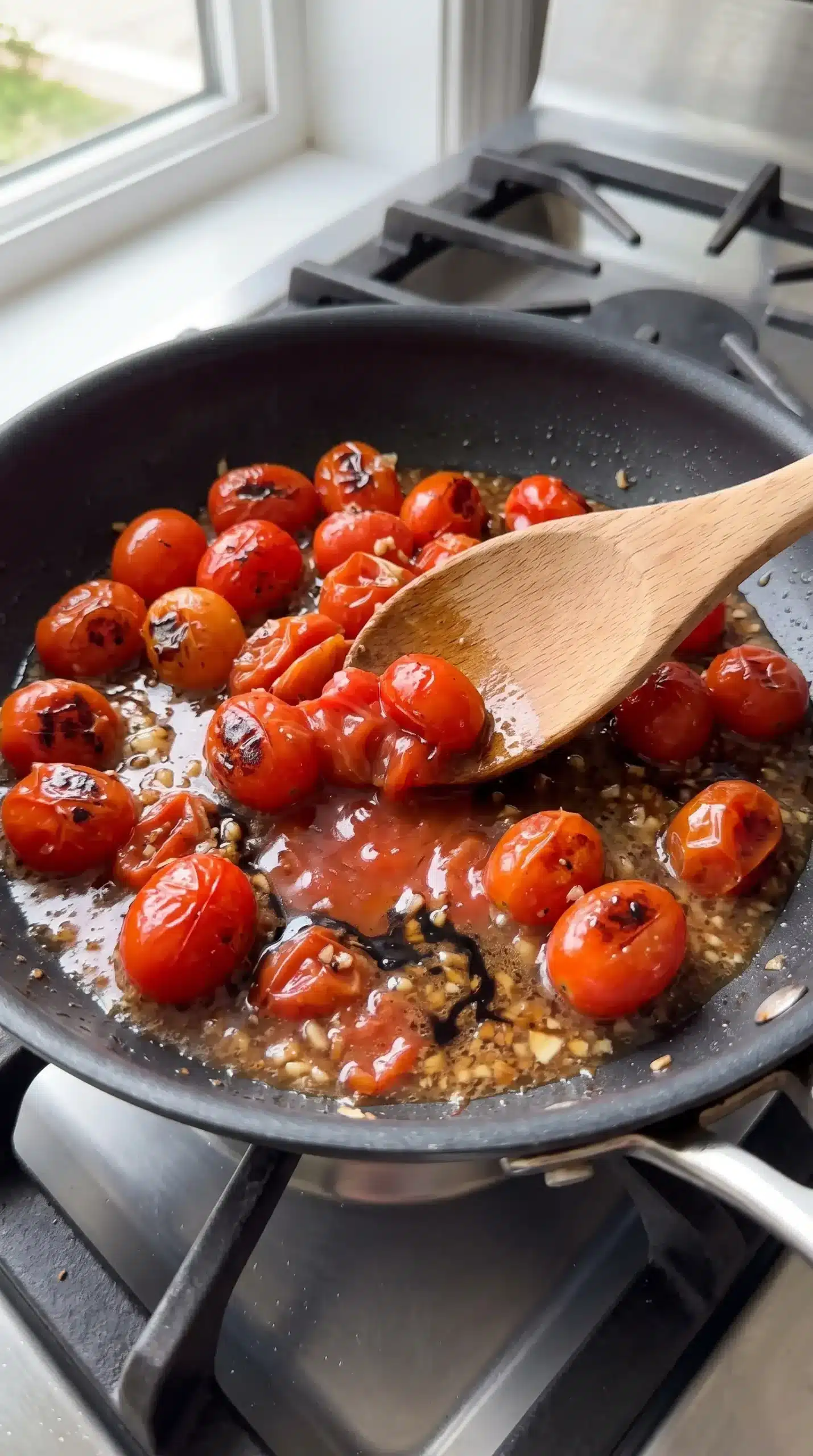
Tomatoes are transformed into the strongest supporting layer through gentle skillet cooking. The dry pan start helps the cherry tomatoes develop slight exterior color before butter, garlic, and balsamic vinegar build a richer sauce around them.
During cooking, the tomato juices combine with the butter to create a coating that clings to the sandwich filling. Pressing the tomatoes gently encourages this texture while keeping pieces of tomato available for a more noticeable bite.
Several signs show that the sauce has reached the right stage. The mixture should appear thicker, the tomatoes should look softened, and the flavors should taste concentrated instead of watery. Seasoning at this point allows the tomato layer to complement the mozzarella and pesto.
| Tomato stage | Visual cue | Sandwich effect |
|---|---|---|
| Fresh cherry tomatoes | Firm shape with bright color | Adds freshness before cooking |
| Lightly charred tomatoes | Slight exterior browning | Creates deeper roasted flavor |
| Simmered tomato sauce | Thicker juices around softened tomatoes | Provides a concentrated filling layer |
Pesto Mozzarella Grilled Cheese Gets Its Herbal Balance From Pesto
Pesto connects the creamy cheese and tomato layers with a fresh, savory flavor. A thin spread is enough to season the sandwich because the garlic butter tomato sauce already contributes richness and moisture.
Ingredient Choices Shape the Best Caprese Grilled Cheese Texture
Ingredient selection matters most when several soft and flavorful components share the same space. Thick sourdough, fresh mozzarella, pesto, and cooked tomatoes each need to be chosen with the finished texture in mind.
- Sturdy bread: Thick sourdough supports the fillings and creates a crisp exterior.
- Moisture-aware cheese: Fresh mozzarella adds creaminess while pairing naturally with tomato.
- Concentrated sauce: Cooked cherry tomatoes provide flavor without leaving the sandwich flat.
Walnut pesto can be used when a slightly nutty pesto flavor fits the sandwich style. Keeping the pesto layer controlled helps the tomato and mozzarella remain noticeable instead of allowing one ingredient to dominate.
Skillet Heat Controls the Melt and Browning of Caprese Grilled Cheese
Cooking control determines whether a caprese grilled cheese has the right balance between melted filling and toasted bread. Medium-high skillet heat allows the exterior to brown while the interior warms gradually.
Flipping the sandwich carefully helps both sides develop color. Multiple gentle turns can be useful when the bread needs additional browning without leaving the cheese layer behind while the exterior is already finished.
Watching the cheese provides the best indicator of progress. Mozzarella should soften and connect the layers, while the bread should show a browned surface that feels crisp enough to contrast with the creamy center.
Common Caprese Grilled Cheese Mistakes Come From Moisture and Heat
Several problems can affect a loaded caprese grilled cheese sandwich, but most are connected to moisture control or uneven cooking. Understanding the cause makes it easier to correct the result during preparation.
- Wet tomato filling: Excess liquid can soften the bread, so the tomato sauce should cook until thicker before assembly.
- Overheated skillet: Bread can brown before mozzarella melts, so heat needs attention throughout cooking.
- Uneven layers: Thick piles of filling can make flipping difficult and prevent consistent bites.
Another common issue occurs when the sandwich is assembled before the tomato mixture has cooled slightly. Very hot sauce can make handling harder and may soften the bread before the skillet has a chance to create a crisp crust.
Tomato Mozzarella Grilled Cheese Sandwich Serving Details Complete the Meal
A tomato mozzarella grilled cheese sandwich pairs naturally with simple sides that do not compete with the pesto, cheese, and tomato flavors. A bowl of tomato soup with San Marzano tomatoes creates a classic pairing by adding a warm, smooth component that complements the crisp bread and creamy filling.
Caprese Grilled Cheese Variations Adjust the Classic Sandwich Style
Small changes can create different versions while keeping the main structure recognizable. The strongest variations focus on changing flavor accents without removing the relationship between bread, cheese, pesto, and tomato.
Storage Choices Preserve Leftover Caprese Grilled Cheese Quality
Freshly cooked sandwiches have the best texture because the bread is crisp and the mozzarella is soft. If leftovers are saved, gentle reheating is important because strong heat can dry the cheese or affect the bread texture.
Balsamic Tomato Cooking Defines the Sandwich Character
The garlic butter tomato sauce is the detail that separates this sandwich from a simple grilled cheese. Cooking the tomatoes until their juices become concentrated creates a filling that supports the mozzarella and pesto with a deeper savory flavor.
Caprese Grilled Cheese Succeeds When Crisp Bread Meets a Balanced Filling

The sourdough exterior, melted mozzarella, pesto, and concentrated tomato sauce each depend on careful handling. A successful caprese grilled cheese comes from managing moisture and heat so the sandwich keeps both its crisp surface and creamy center.
Finished sandwiches reveal why the cooking choices matter. The browned bread provides contrast, the mozzarella softens into the filling, and the tomato layer adds a bright richness that ties the entire sandwich together.
Loaded Caprese Grilled Cheese Questions About Melting and Storage
How can mozzarella melt evenly in a caprese grilled cheese?
Even mozzarella melting comes from using manageable slices and cooking the sandwich at a heat level that warms the center while browning the bread. Allowing the skillet heat to work gradually helps the cheese soften throughout the sandwich.
Can the tomato sauce be prepared before assembling the sandwich?
Yes, the garlic butter tomato sauce can be prepared ahead during the cooking process and used when ready for assembly. Keeping it concentrated helps maintain the intended texture when it meets the bread.
Why does the bread become soft after adding tomato?
The bread can soften when tomato juices remain too loose. Cooking the cherry tomatoes until the sauce thickens reduces excess moisture and helps the sourdough keep its structure.
What makes this different from a basic grilled cheese?
The combination of pesto, fresh mozzarella, and garlic butter tomato sauce creates a caprese-inspired filling that adds layers of herbal, creamy, and savory flavor beyond traditional cheese and bread.
How should leftover sandwich portions be reheated?
Reheating gently in a skillet can help restore some exterior crispness while warming the filling. Avoiding excessive heat helps prevent the mozzarella from becoming dry and the bread from becoming overly firm.
Caprese Grilled Cheese with Garlic Butter Tomato Sauce
Caprese grilled cheese layers crispy sourdough with creamy mozzarella, fresh pesto, and rich garlic butter tomato sauce. It is a quick, comforting choice when you want an extra-flavorful grilled cheese.
Ingredients
Method
Garlic Butter Tomato Sauce
- Place the tomatoes in a dry nonstick skillet and heat until their exteriors are lightly charred.
- Reduce the heat, stir in 1 tablespoon butter, and gently press the tomatoes with the back of a wooden spoon to release their juices.
- Add the balsamic vinegar, garlic, and remaining 1 tablespoon butter. Simmer until the sauce thickens, then season with salt and pepper.
Assembly
- Layer pesto, mozzarella, and tomato sauce on one slice of bread. Top with another slice and spread butter over the outside surfaces. Repeat to assemble the second sandwich.
Cooking
- Transfer the sandwiches to a skillet over medium-high heat. Cook until the bread is browned and the cheese has melted, flipping once or twice so both sides cook evenly.
Notes
This recipe makes two generously sized sandwiches and can serve two or four people. The original recipe uses walnut pesto.