From breakfast to dinner, from healthy meals to sweet desserts – Next Yum Recipes brings you quick, simple and tasty ideas for every occasion and every time.


 This Recipe
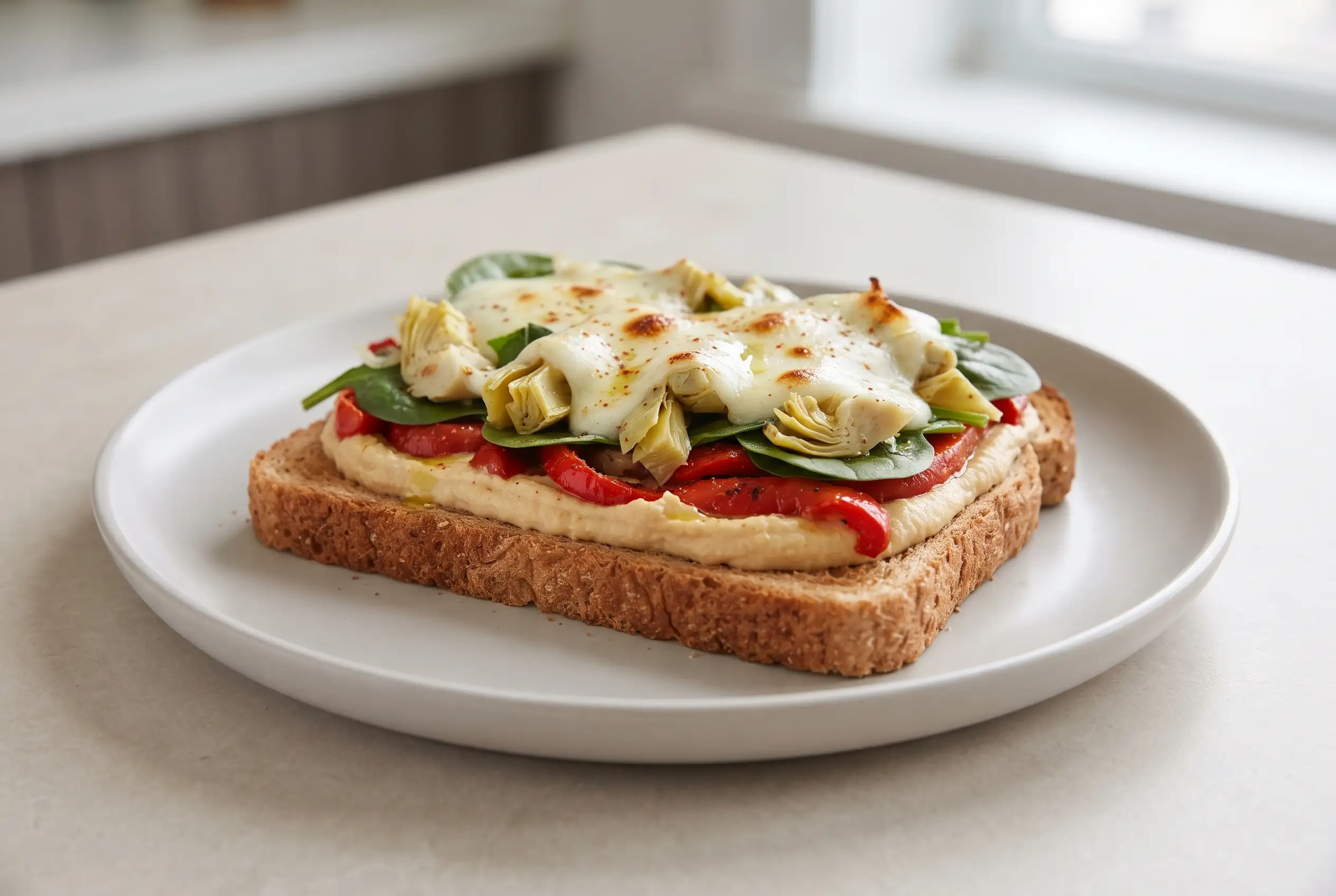
Artichoke and red pepper melt brings together creamy hummus, roasted peppers, chopped artichokes, spinach, and melted mozzarella on crisp whole wheat bread for a warm sandwich-style meal with Mediterranean-inspired flavors. The combination works because each layer has a clear purpose: the hummus creates a rich base, the peppers bring sweetness, the artichokes add a tender bite, and the cheese ties the toppings together under gentle heat.
Unlike a simple grilled sandwich that relies mainly on bread and cheese, this roasted red pepper artichoke melt uses vegetables and hummus to create a more layered experience. Careful topping placement matters because the open-faced format allows every ingredient to remain visible and helps the cheese melt evenly across the surface.
Hummus Creates the Foundation for Artichoke and Red Pepper Melt
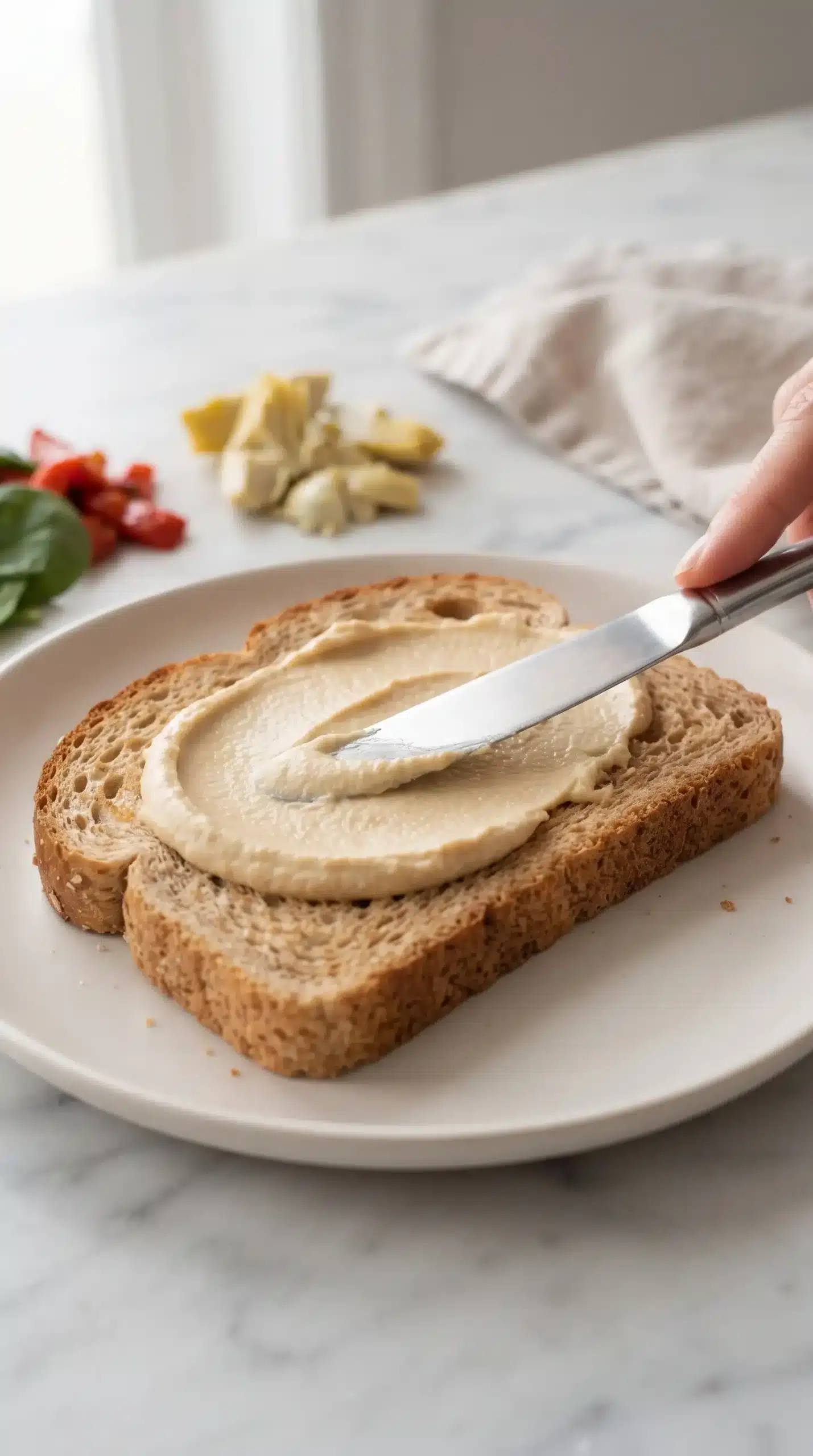
The hummus layer is the first decision that shapes the sandwich. Spread across the bread, it provides a creamy surface that helps the roasted red peppers, spinach, and artichokes stay in place while adding a smooth contrast to the vegetables. A generous but even coating keeps the toppings connected without overwhelming the bread.
Artichoke and red pepper melt depends on balance because the toppings already bring several textures. Hummus supports the vegetables by giving the finished sandwich a cohesive bite, while the whole wheat bread provides structure underneath. Keeping the hummus spread consistent from edge to edge helps each serving contain the same combination of flavors.
Roasted Peppers and Artichokes Shape the Sandwich Flavor
Roasted red peppers are especially important in this sandwich because they introduce a naturally sweet, softened vegetable element. Their tender texture works well with creamy hummus and melted cheese, creating contrast without adding extra preparation steps beyond arranging the toppings.
Artichokes contribute a distinct savory character and a slightly firm texture when they are drained and chopped. The pieces should be manageable enough to eat comfortably while still remaining noticeable in every portion of the melt.
Fresh spinach adds another layer by bringing a green vegetable component to the topping arrangement. Chopping the spinach helps it distribute throughout the sandwich so it does not create large sections that separate from the other ingredients.
- Roasted peppers: Use the tender pieces to add sweetness and moisture to the topping layer.
- Artichokes: Keep chopped pieces evenly sized so the melt has a balanced texture.
- Spinach: Spread the chopped greens across the surface for consistent bites.
Whole Wheat Bread Choice Controls the Melt Structure
Whole wheat bread gives the artichoke red pepper sandwich a sturdy base that can support creamy toppings and melted cheese. Keeping the crust on the outside helps the bread maintain its shape while the toppings warm beneath the broiler, and White Bean Artichoke Toasts with Basil Spread uses a similar open-faced format where a firm bread base supports a layered vegetable topping.
Layering Order Keeps the Artichoke and Red Pepper Melt Balanced
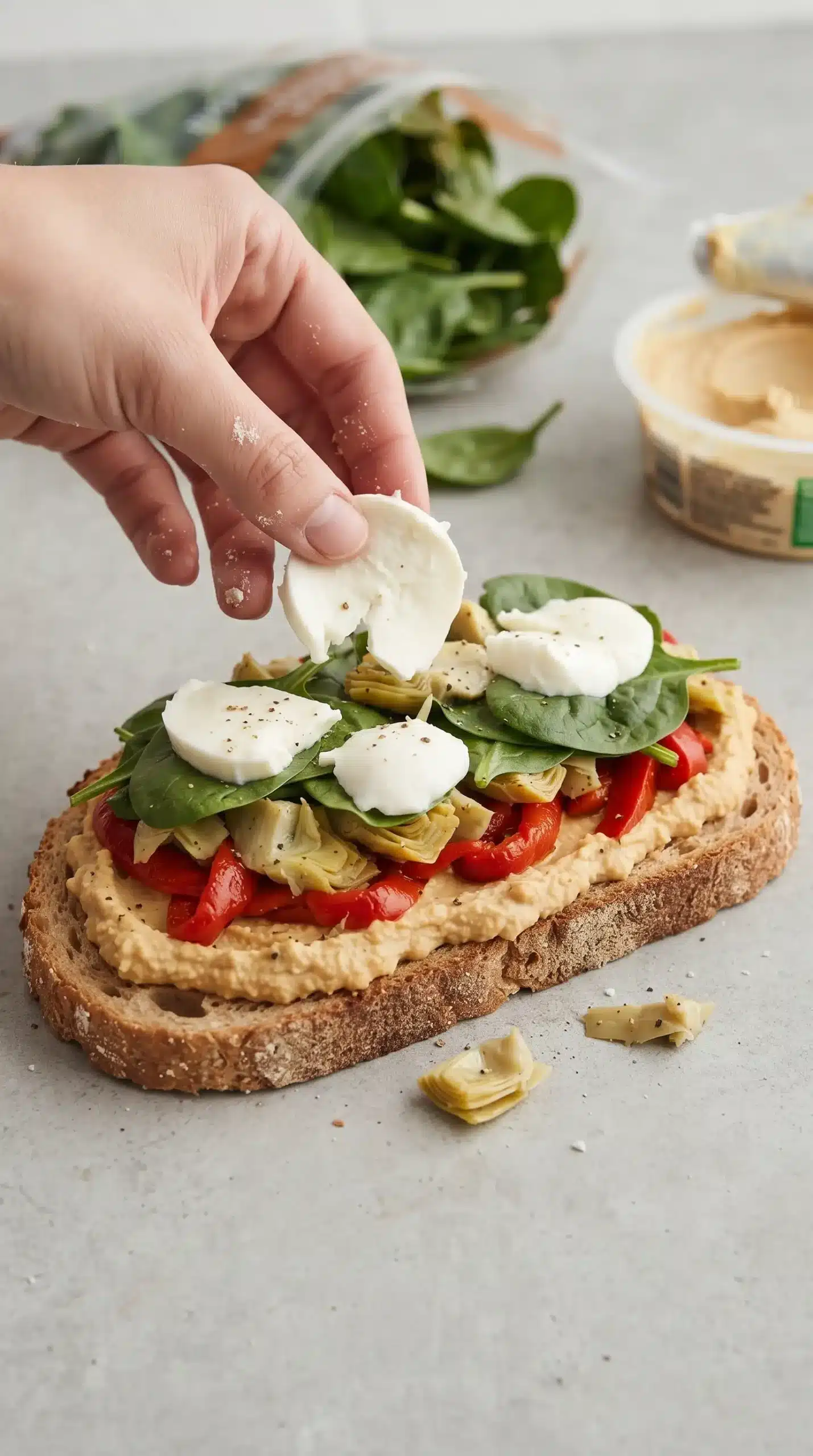
The order of the toppings affects how the sandwich cooks and eats. Placing hummus first creates a stable base, while vegetables positioned above it stay closer to the heat. Finishing with mozzarella allows the cheese to melt over the other toppings and helps unify the surface.
| Layer | Purpose | Placement reason |
|---|---|---|
| Hummus | Creates a creamy base | Helps toppings adhere to bread |
| Roasted red peppers | Adds tender sweetness | Sits above the spread for visibility |
| Mozzarella cheese | Provides melted coverage | Finishes the top for broiling |
Broiler Heat Determines the Melt Finish
Broiling changes the sandwich from a collection of toppings into a unified warm dish. The direct heat focuses on the mozzarella, allowing it to melt while warming the vegetables beneath. Watching the cheese closely is important because the goal is a smooth melted finish without drying the toppings.
Cooking control matters most with an open-faced sandwich because the exposed surface receives heat directly. The bread needs enough time to warm and develop a pleasant texture while the cheese reaches the desired melted state.
Artichoke and red pepper melt benefits from attention during the broiling stage because small changes in placement or heat exposure can affect the final texture. Keeping the toppings evenly distributed helps prevent some areas from becoming overloaded while others remain uncovered.
Common Artichoke and Red Pepper Melt Mistakes to Avoid
Several small mistakes can change the quality of this sandwich. Excess moisture, uneven topping distribution, and poor cheese placement are the main issues to watch for when preparing an open-faced melt.
| Problem | Why it happens | Better approach |
|---|---|---|
| Soft bread base | Moist toppings weigh down the bread | Drain artichokes and peppers before assembling |
| Uneven bites | Toppings are piled in thick sections | Distribute ingredients across the surface |
| Incomplete melt | Cheese does not cover enough area | Spread mozzarella across the top layer |
Moisture Management Protects the Sandwich Texture
Draining vegetables before assembly is one of the most useful preparation choices for a hummus artichoke melt. Artichokes and roasted peppers naturally contain moisture, and removing excess liquid helps the bread remain firm while the toppings heat.
The hummus already provides a creamy component, so additional moisture from the vegetables should be controlled. A well-balanced sandwich keeps the vegetables tender while allowing the bread to maintain enough structure for serving.
Serving Ideas Highlight the Artichoke Red Pepper Sandwich
The sandwich can be served as a simple lunch or a lighter meal where the vegetable toppings remain the focus. Its open-faced presentation also makes it easy to see the layers of hummus, peppers, greens, artichokes, and cheese.
Small Changes Create New Artichoke and Red Pepper Melt Variations
Variations work best when they preserve the balance between creamy, tender, and melted elements. The basic combination already provides a strong foundation, so changes should complement the existing flavors instead of covering them.
- Cheese adjustment: Try another melting cheese if a different flavor profile is preferred.
- Vegetable emphasis: Increase the chopped spinach or roasted peppers while keeping the topping layers balanced.
- Seasoning finish: Use cayenne and olive oil as directed for a final touch of heat and richness.
Preparing Components Makes Assembly More Efficient
Having the roasted peppers, chopped artichokes, and spinach ready before building the sandwich simplifies the cooking process. The open-faced design relies on quick assembly because the toppings are arranged directly before broiling.
Cayenne and Olive Oil Complete the Artichoke and Red Pepper Melt
The finishing touches influence the overall impression of the sandwich. Cayenne adds a hint of spice after the cheese melts, while a drizzle of olive oil contributes richness that connects the vegetables and creamy base.
Artichoke and Red Pepper Melt Rewards Careful Topping Balance
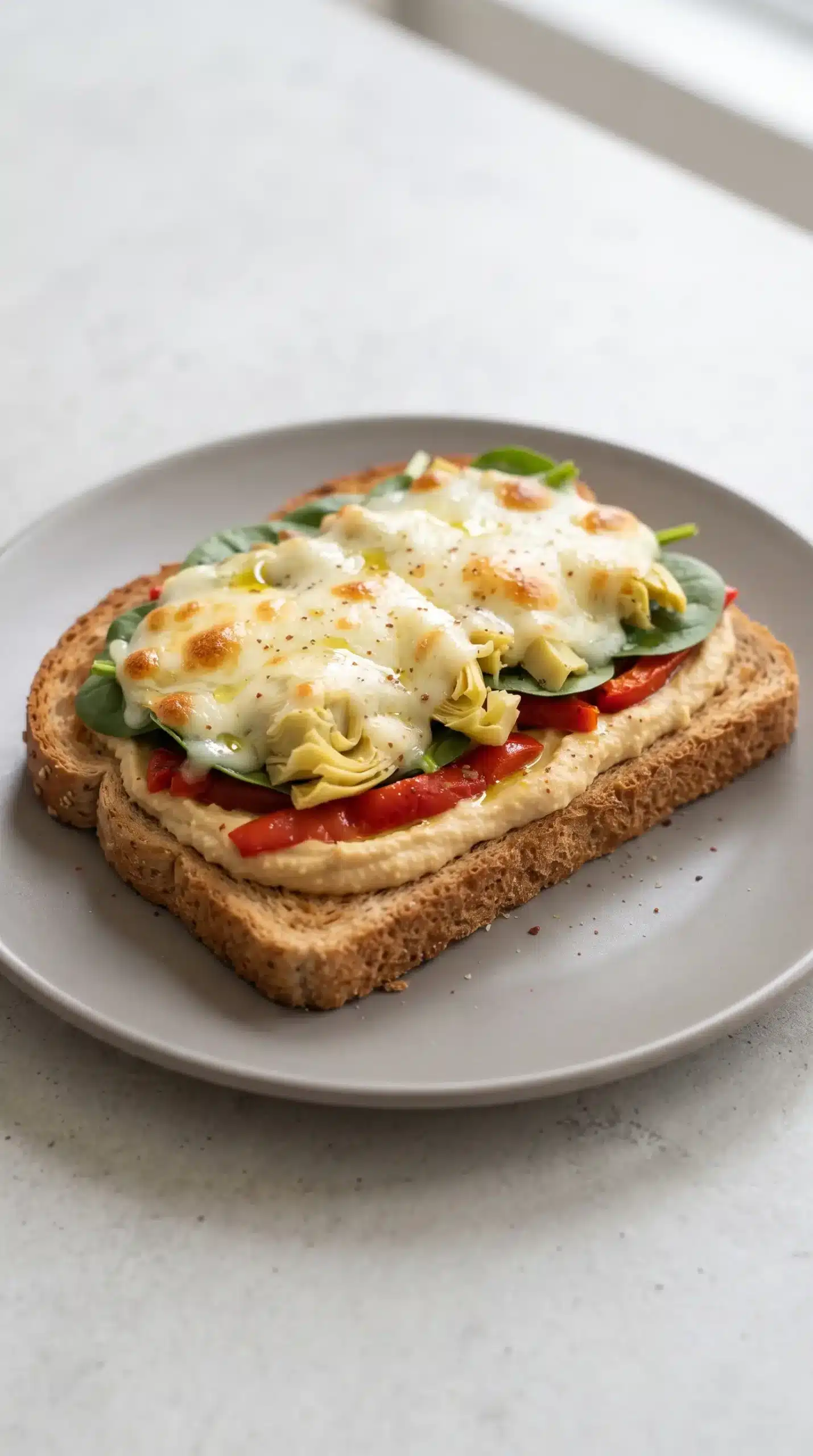
Artichoke and red pepper melt succeeds when every layer has enough space to contribute. The hummus should remain noticeable, the vegetables should stay distinct, and the mozzarella should create a warm finish across the surface.
Artichoke and Red Pepper Melt Questions About Texture
Can the artichoke and red pepper melt be made less spicy?
Yes. The cayenne finish can be reduced or left out if a milder sandwich is preferred. The roasted peppers, hummus, artichokes, spinach, and mozzarella still provide plenty of flavor without the added heat.
Why should the artichokes and peppers be drained before making the sandwich?
Draining helps control moisture so the whole wheat bread stays stronger beneath the toppings. It also allows the hummus and melted mozzarella to create the creamy texture that defines the sandwich.
Can hummus be replaced in the artichoke red pepper sandwich?
A different creamy spread can work if it provides a similar base that holds the toppings together. The replacement should complement roasted peppers and artichokes while maintaining a smooth layer beneath the vegetables.
Hummus works well in this melt because it is a traditional Middle Eastern dip made from blended chickpeas with ingredients such as tahini, lemon juice, garlic, and seasonings. Understanding its classic flavor profile makes it easier to choose a replacement that keeps the sandwich balanced.
How can the cheese melt evenly on top?
Spreading mozzarella across the topping surface helps the heat reach the cheese more consistently. Keeping the topping layers fairly even also supports a uniform finish during broiling.
What makes this sandwich different from a regular vegetable melt?
The combination of hummus, roasted peppers, and artichokes creates a deeper flavor structure than a sandwich built only around vegetables and cheese. The creamy spread becomes part of the topping experience instead of simply acting as a condiment.
Artichoke Melt with Red Peppers and Hummus on Wheat Bread
Artichoke and red pepper melt is a creamy, open-faced sandwich with a warm, savory topping combination and melted cheese. It is an easy choice for a quick meal when you want a flavorful vegetable-focused melt.
Ingredients
Method
Assembly
- Split the toppings evenly between the two bread slices, layering them in this order: hummus, roasted red peppers, spinach, artichokes, and mozzarella cheese.
Cooking
- Broil the assembled bread slices at 400°F (205°C) for about 10 minutes, or until the cheese has melted.
- Finish with a sprinkle of cayenne and a drizzle of olive oil before serving.
Notes
Drain the artichokes and roasted peppers before assembling to help maintain the bread's texture.