From breakfast to dinner, from healthy meals to sweet desserts – Next Yum Recipes brings you quick, simple and tasty ideas for every occasion and every time.


 This Recipe
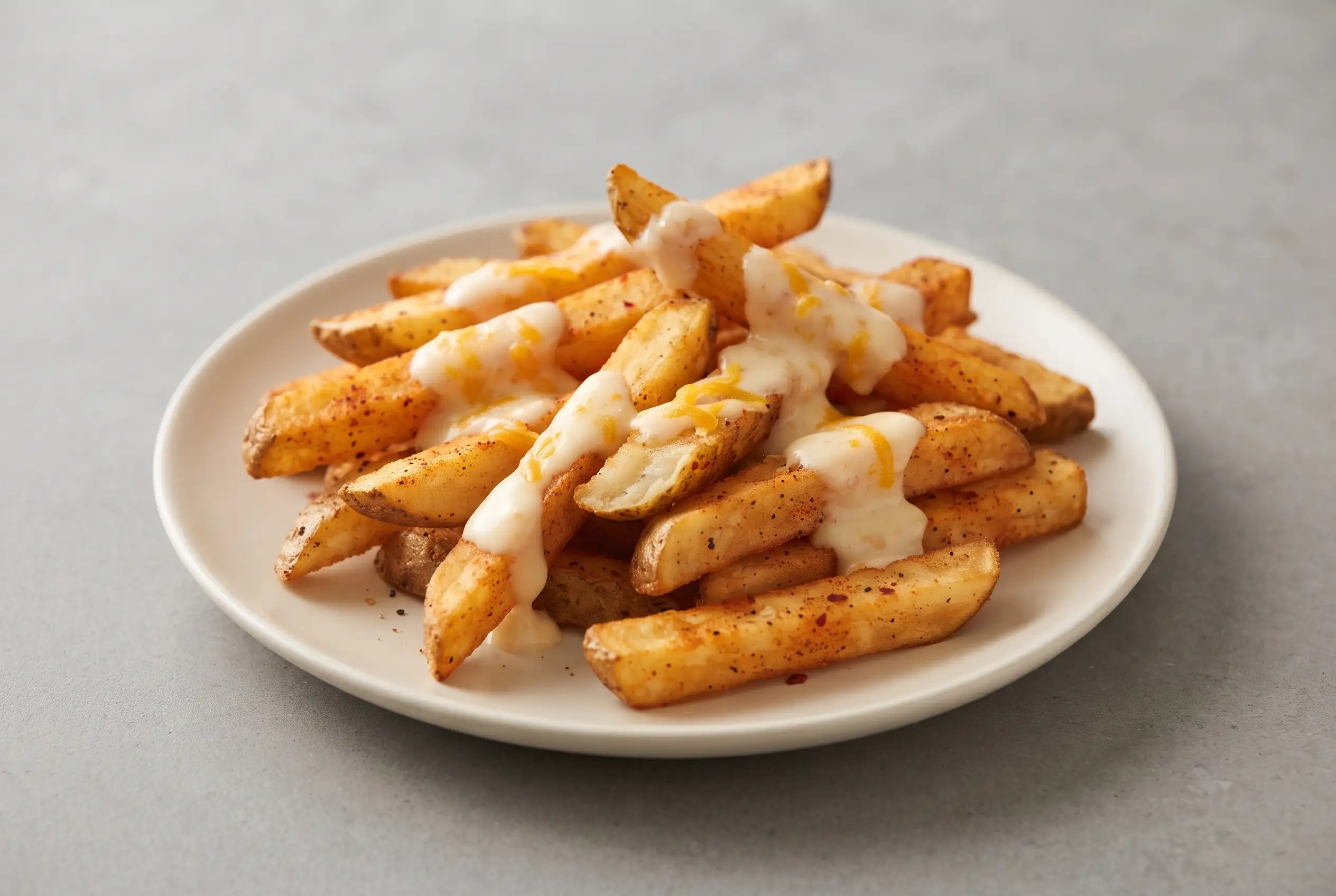
Baked spicy fries bring together a crisp potato exterior, bold seasoning, and a creamy garlic cheese sauce that turns simple oven fries into a satisfying comfort food. The oven baked spicy fries approach creates a different texture from traditional frying by using carefully prepared potato strips, a seasoned coating, and controlled baking stages. The result is a plate of fries with smoky heat, a soft center, and a rich sauce that balances the spices.
Why Idaho Potatoes Create Better Baked Spicy Fries
Idaho potatoes are a strong choice for spicy fries because their baking texture helps create a fluffy interior while the outside develops a golden surface. Medium baking potatoes can hold their shape when sliced into thick fry-style pieces, allowing the edges to dry and brown during baking without becoming overly fragile.
For a baking-focused potato choice, russet potatoes are considered better for baking, making them a useful option when selecting potatoes for oven fries.
Because baking relies on moisture management, washing and drying the potatoes before seasoning matters. Excess surface water can slow browning and make it harder for the outside of each fry to become firm. A dry potato surface gives the egg white coating and spices a better chance to cling evenly.
During cooking, the fries should move through different texture stages. Early baking helps the potato begin firming, while later exposure directly on the baking sheet encourages a drier exterior. The contrast between the crisp outside and tender middle is what makes a baked spicy fries recipe worth the extra attention.
The Seasoning Balance Behind Spicy Fries with Garlic Cheese Sauce
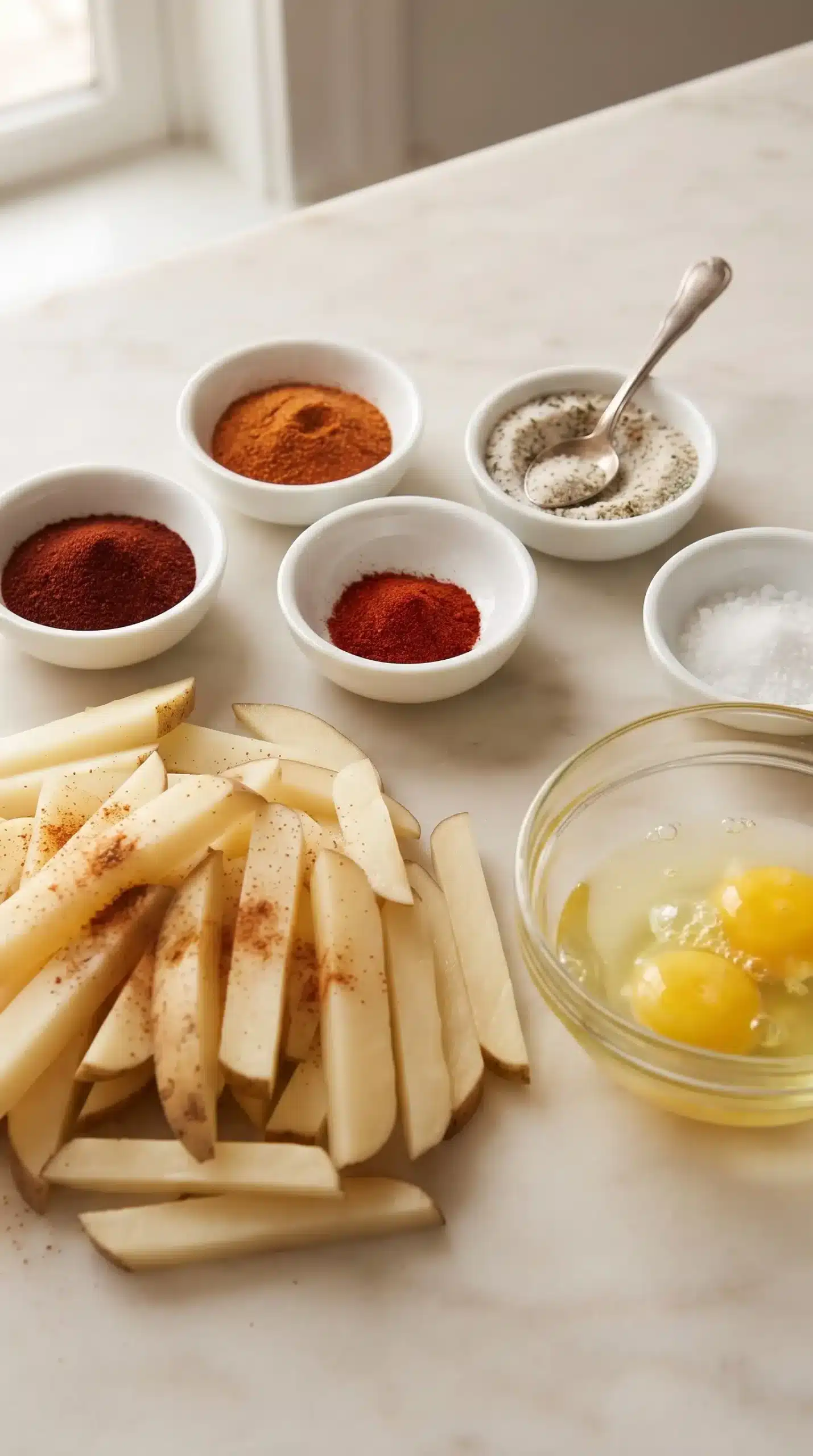
Seasoning choices determine how the fries carry heat without overwhelming the creamy topping. Chili powder, smoked sweet paprika, cayenne, and seasoning salt create layers of flavor, with the smoked paprika adding a deeper roasted character and the cayenne bringing a sharper kick.
The chili and spice mixture works best when distributed across the potatoes before baking. An even coating prevents some fries from becoming intensely salty or fiery while others remain plain. The egg whites help the seasonings adhere, creating a light coating that supports the surface texture.
Garlic cheese sauce changes the balance by adding richness to the spicy fries. The cream cheese base, garlic, milk, oil, and shredded cheese create a smooth topping that softens the heat from the seasoning blend. Adjusting the amount of milk allows the sauce to move from a thick coating to a thinner drizzle.
Cutting and Coating Choices That Shape Oven Baked Spicy Fries
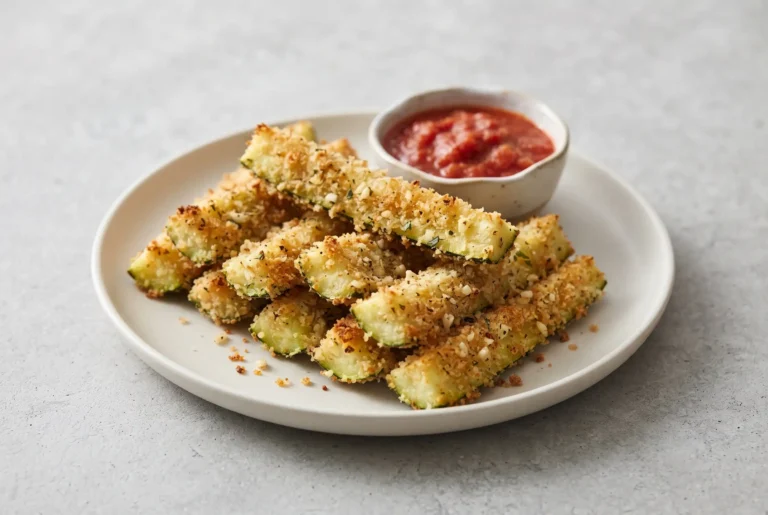
Potato strips around the recommended fry size provide enough surface area for browning while keeping enough thickness for a soft center. Consistent cutting and a well-managed coating help create a crisp exterior, and baked zucchini fries use a seasoned coating technique that highlights the importance of surface texture during oven baking.
Parchment Timing Controls Crisp Potato Texture
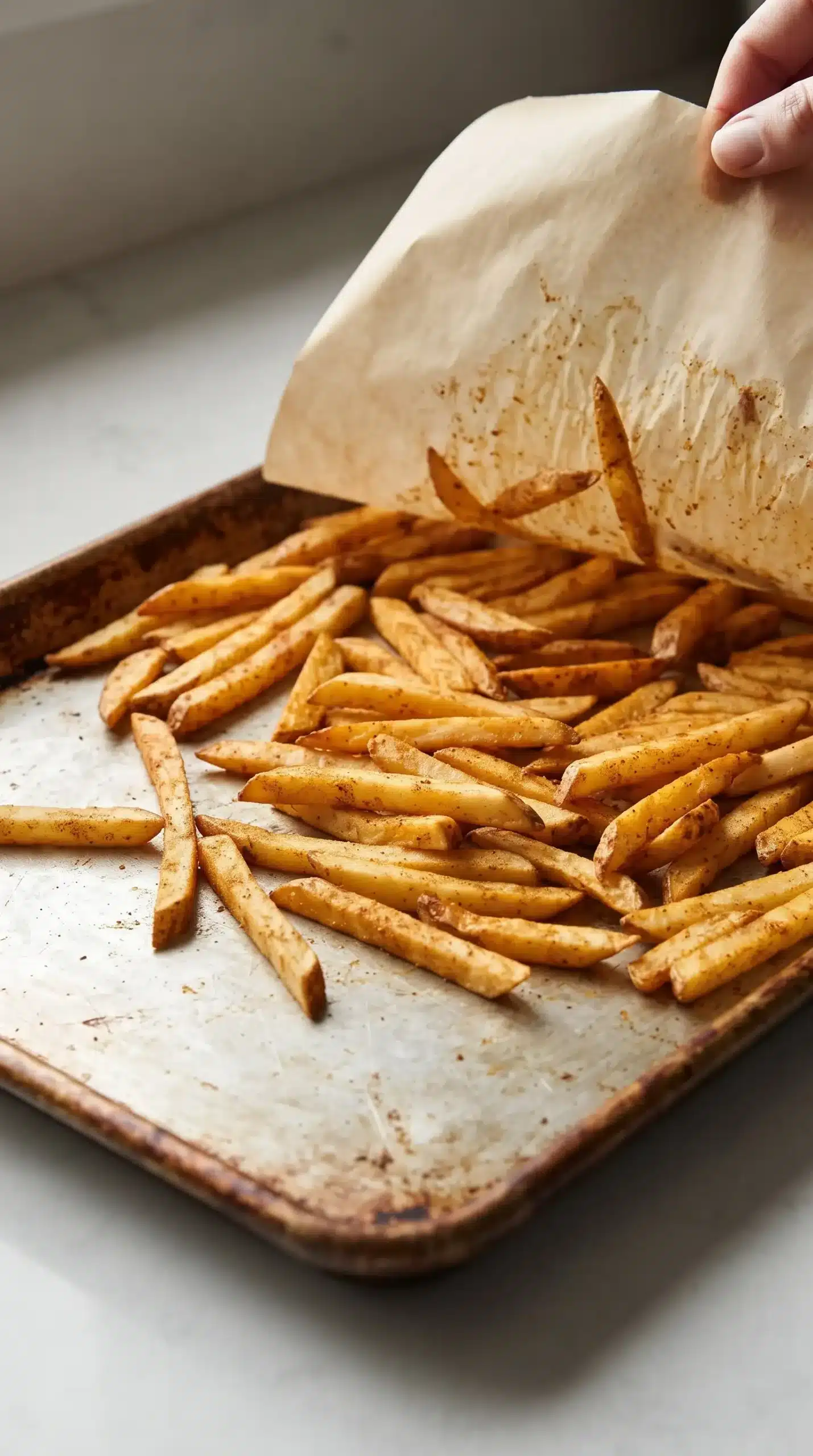
Controlled heat management is the key factor behind the texture of these fries. Starting with parchment helps the potatoes cook without sticking while the coating sets. Removing the parchment later allows direct contact with the baking sheet, which supports more browning on the outer surface.
Removing parchment at the right stage also helps prevent excess moisture from staying trapped underneath the potatoes. The fries should slide away easily when the parchment is lifted, leaving them ready for direct baking contact.
Repeated stirring during baking keeps the fries exposed to heat on multiple sides. Gentle handling matters because the goal is to maintain the fry shape while encouraging even color development across the batch.
| Cooking stage | Surface condition | Useful action |
|---|---|---|
| Initial baking | Coating begins setting | Keep fries on parchment |
| Direct baking | Outside starts drying | Move fries carefully onto the sheet |
| Later baking | Golden exterior develops | Stir gently between intervals |
Garlic Cheese Sauce Gets Its Smooth Finish
Smooth sauce preparation depends on gentle melting and careful thinning. The cream cheese should become soft enough to whisk with milk, garlic, seasoning salt, and oil before the shredded cheese is added. Extra milk can loosen the consistency if the sauce needs to pour more easily over the fries.
Baked Spicy Fries Mistakes That Ruin Crisp Results
Overcrowded pans can prevent the fries from developing the texture expected from oven baking. When too many pieces are packed together, moisture can collect around the potatoes and reduce the dry exterior needed for a crisp bite.
Leaving excess egg white on the baking sheet can also affect the coating. The extra liquid at the bottom of the bowl should stay behind because it can create uneven patches instead of a light, seasoned layer around each fry.
Adding cheese sauce too early can soften the freshly baked surface. Pouring the warm garlic cheese sauce over the fries after they have developed their exterior keeps the contrast between the crisp potato and creamy topping more noticeable.
- Pan spacing: Give potato pieces room to release moisture during baking.
- Coating control: Use the seasoned egg white mixture that clings to the fries instead of leftover liquid.
- Sauce timing: Add the garlic cheese sauce when serving for the best texture contrast.
Serving Ideas That Fit Spicy Fries with Garlic Cheese Sauce
Serving options include offering the fries as a shared appetizer, a side dish, or a snack with the sauce poured over the top. The creamy topping pairs naturally with the smoky seasoning, creating a dish that works well when a bold potato side is needed.
Storing and Reheating Baked Spicy Fries Successfully
Proper storage keeps leftover fries and sauce in better condition when they are saved for another meal. Keeping the fries separate from the garlic cheese sauce helps protect their texture because the sauce adds moisture over time.
Cold leftovers can lose some crispness after refrigeration, but reheating can restore some of the original warmth and surface firmness. Spreading the fries out before warming helps avoid a soft, steamed texture.
Careful reheating also applies to the sauce. Gentle warming and stirring can bring back a smoother consistency if the cheese mixture has thickened after cooling.
| Component | Storage approach | Reheating consideration |
|---|---|---|
| Baked fries | Store separately from sauce | Warm until heated through |
| Garlic cheese sauce | Keep covered | Stir while gently warming |
| Combined serving | Best enjoyed fresh | Texture may become softer |
Adjustments for Different Heat and Cheese Preferences
Heat preferences can be changed by adjusting the balance of chili powder, smoked paprika, and cayenne while keeping the same cooking approach. A milder version can reduce the cayenne, while a stronger version can emphasize the spicy elements already included in the seasoning blend.
What Makes the Potato Exterior Turn Golden
Golden surfaces develop when the potato coating and baking conditions work together. The egg whites create a thin layer around the seasoned strips, while direct contact with the baking sheet during later stages encourages the exterior to become drier and more colored.
Visible browning is a useful visual cue because the fries are meant to have a dry-to-the-touch outside with a tender interior. Color alone is not the only sign of readiness; texture and firmness also help determine when the potatoes have reached the desired stage.
Freshly baked fries should keep their structure when handled. Gentle stirring throughout the baking process helps expose different sides without breaking the pieces apart, supporting a more even finish.
Fries Become Crisp and Creamy Through Balanced Cooking
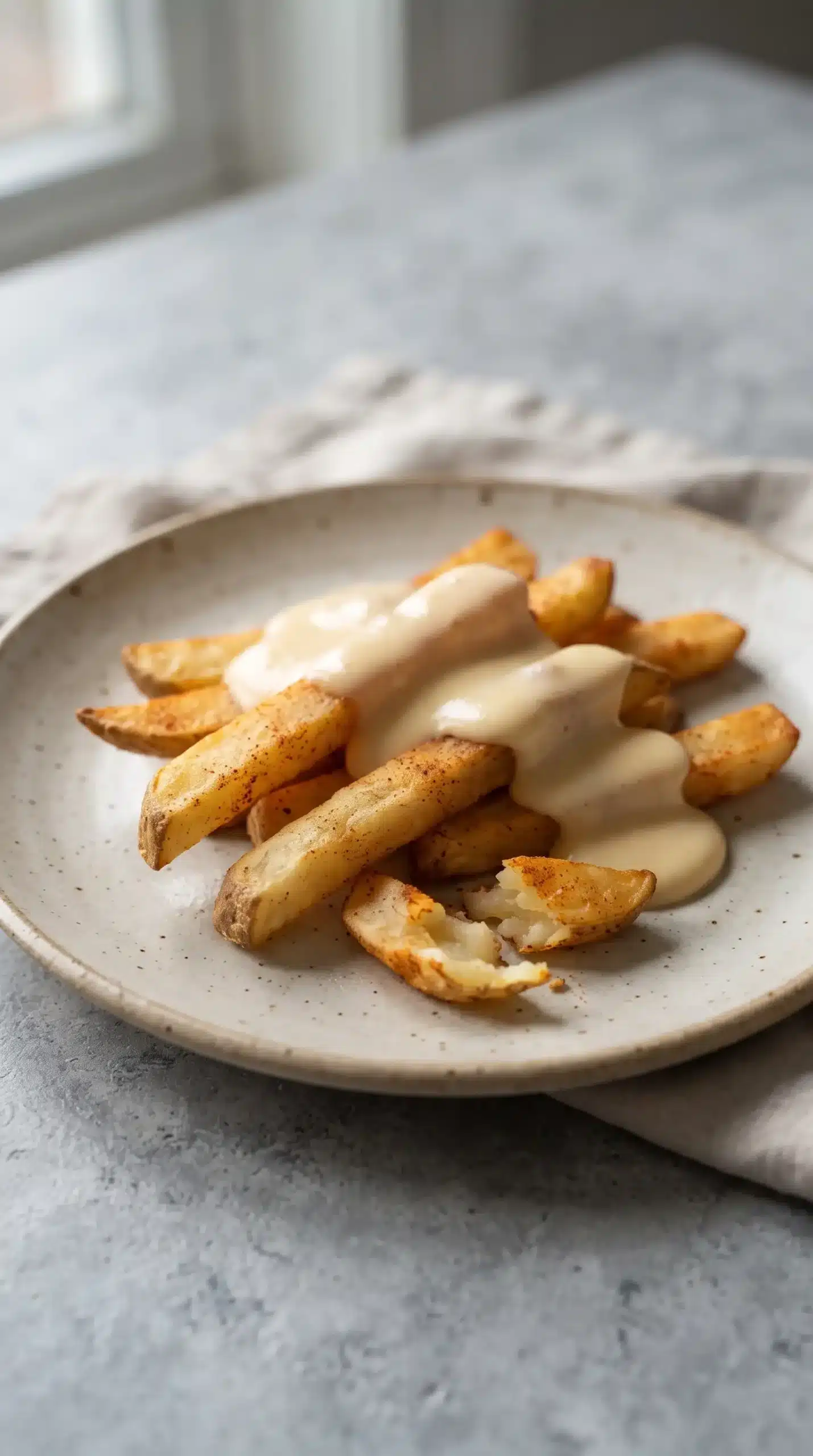
Fries become memorable when the potato texture, spice coating, and garlic cheese sauce support one another. The strongest results come from managing moisture, allowing the seasoned exterior to develop before adding the creamy topping.
The combination of smoky spices and smooth cheese sauce works because each part has a clear role. A carefully baked potato base provides the structure needed for the rich sauce, creating a balanced serving of baked spicy fries.
Questions About Crispness and Sauce Texture
How can baked spicy fries stay crisp after adding cheese sauce?
Add the garlic cheese sauce close to serving time and avoid covering the fries while they are still developing their baked exterior. Keeping the sauce separate until the last moment preserves more of the surface texture.
Can the fries be made less spicy without changing the recipe?
Yes. Reduce the cayenne amount or adjust the chili powder while keeping the smoked paprika for flavor depth. The seasoning blend can be customized while the potato preparation stays the same.
Why do the fries need parchment at the beginning?
Parchment helps prevent sticking while the coating sets during the early baking stage. Removing it later allows the potatoes to make direct contact with the baking sheet for additional browning.
What can make the garlic cheese sauce too thick?
A thicker sauce can happen when the cheese mixture cools or when there is not enough milk added during whisking. Adding small amounts of milk and stirring thoroughly can create a smoother pouring consistency.
Can another type of potato be used for spicy fries?
Other baking potatoes can work, especially varieties with a starchy texture. The important factors are consistent cutting, proper drying, and careful baking so the fries develop the intended contrast.
Baked Spicy Fries with Garlic Cheese Sauce and Potato
Baked Spicy Fries are crispy oven-baked potato fries with bold smoky seasoning and a creamy garlic cheese sauce. They are a comforting choice when you want a flavorful potato dish with a satisfying texture.
Ingredients
Method
Preparation
- Preheat the oven to 430°F (221°C).
- Wash and dry the potatoes, then cut them into fry-style strips about 3/4 inches wide.
- Coat the potato strips with egg whites, chili powder, seasoning salt, smoked sweet paprika, cayenne, and coarse sea salt, stirring until evenly covered.
Baking
- Line each baking sheet with parchment paper. Place the coated potatoes onto the parchment, leaving the excess egg white mixture behind in the bowl.
- Bake for 10 minutes, then remove the baking sheets and transfer the fries directly onto the baking sheets by sliding them off the parchment.
- Bake for another 5-8 minutes, then remove and gently stir while keeping the fries intact.
- Continue baking and stirring in intervals until the fries have a puffy golden brown exterior that feels dry to the touch. The total baking time will be about 25-35 minutes.
Cheese Sauce
- Microwave the cream cheese for about 30 seconds until softened.
- Whisk in the milk, minced garlic, seasoning salt, and oil until smooth.
- Add the shredded cheese and microwave for another 20-30 seconds. Whisk again until smooth, adding more milk if needed to reach the desired consistency.
Serving
- Pour the garlic cheese sauce over the baked fries and serve.
Notes
The sauce can be prepared in the microwave for convenience, or it can be made in a regular saucepan on the stovetop.