From breakfast to dinner, from healthy meals to sweet desserts – Next Yum Recipes brings you quick, simple and tasty ideas for every occasion and every time.


 This Recipe
Burger Bowls Turn Classic Burger Flavors Into Fork Friendly Meals
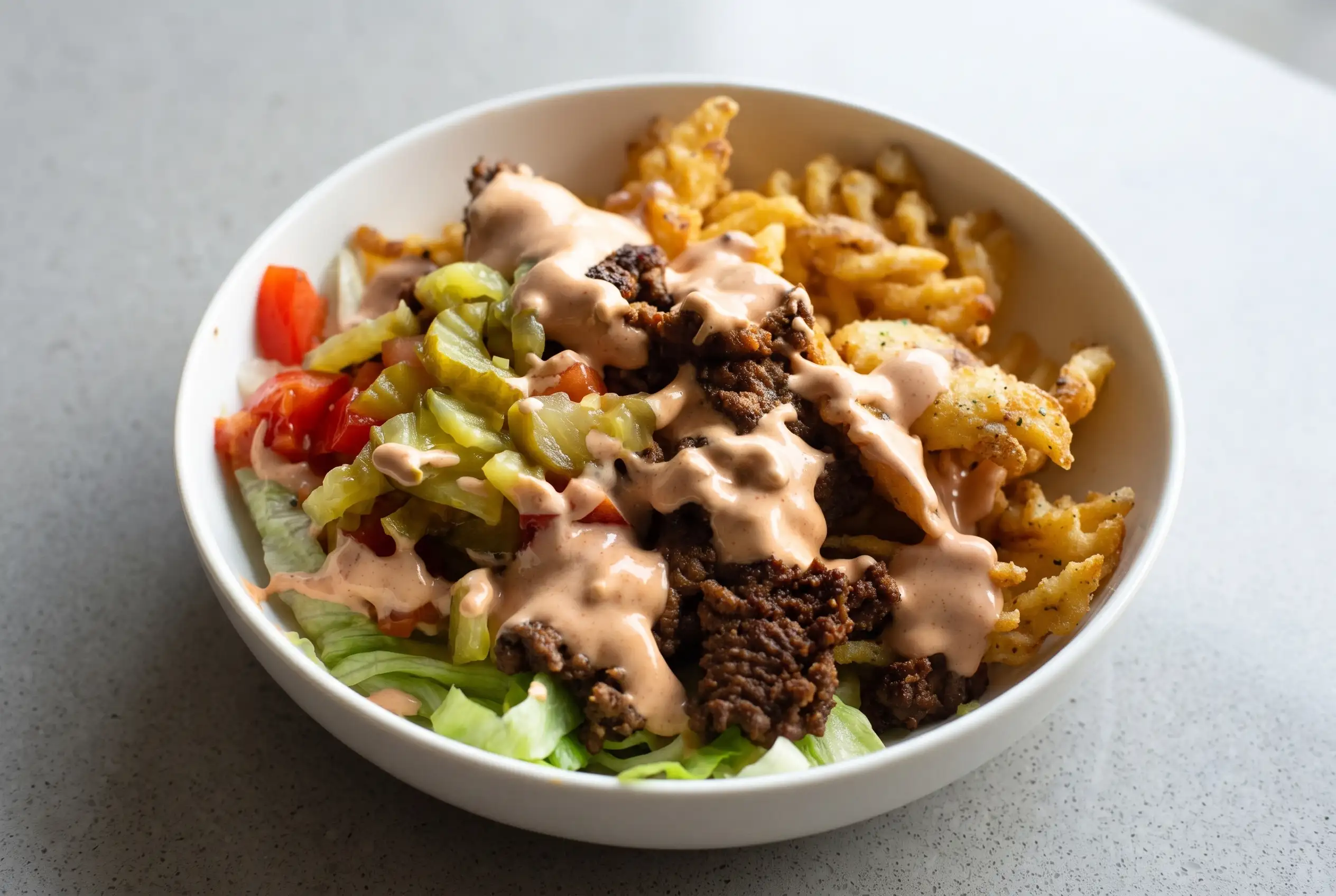
Burger bowls bring the familiar combination of seasoned beef, crisp toppings, creamy sauce, and golden fries into a format built for easy serving. These burger bowls focus on the contrast that makes a great diner-style meal satisfying: browned meat, cool vegetables, crunchy potatoes, and a bold sauce that ties everything together.
Instead of relying on a bun to hold every element, the bowl format lets each part keep its own texture. The beef can develop a deep seared surface, the ranch fries stay distinct, and the toppings can be added with control so every forkful has a balanced mix.
Ground beef burger bowls work especially well for casual dinners because they combine familiar flavors with a flexible presentation. A person who enjoys a classic burger can still find the important details here: savory seasoning, juicy beef pieces, pickles, tomatoes, lettuce, and a sauce with a little extra character.
Ground Beef Choice Shapes Juicy Burger Bowl Texture
Ground beef selection has the biggest effect on how the meat feels once it reaches the bowl. An 85/15 blend keeps enough fat available for browning and moisture because ground beef fat percentage influences the balance between tenderness, flavor, and greasiness while cooking.
Large browned pieces create a better eating experience than tiny crumbles that lose moisture quickly. Keeping the beef in fork-sized chunks allows the surface to caramelize while the inside stays tender enough to pair with the creamy house sauce.
| Beef approach | Texture result | Best use in burger bowls |
|---|---|---|
| Larger chunks | Juicy with browned edges | Closest to a burger-style bite |
| Fine crumbles | More uniform but less substantial | Works when mixing into other fillings |
| Overworked beef | Denser and firmer | Less ideal for a bowl centered on texture |
Ranch Fries Create The Crispy Base For Burger Bowls
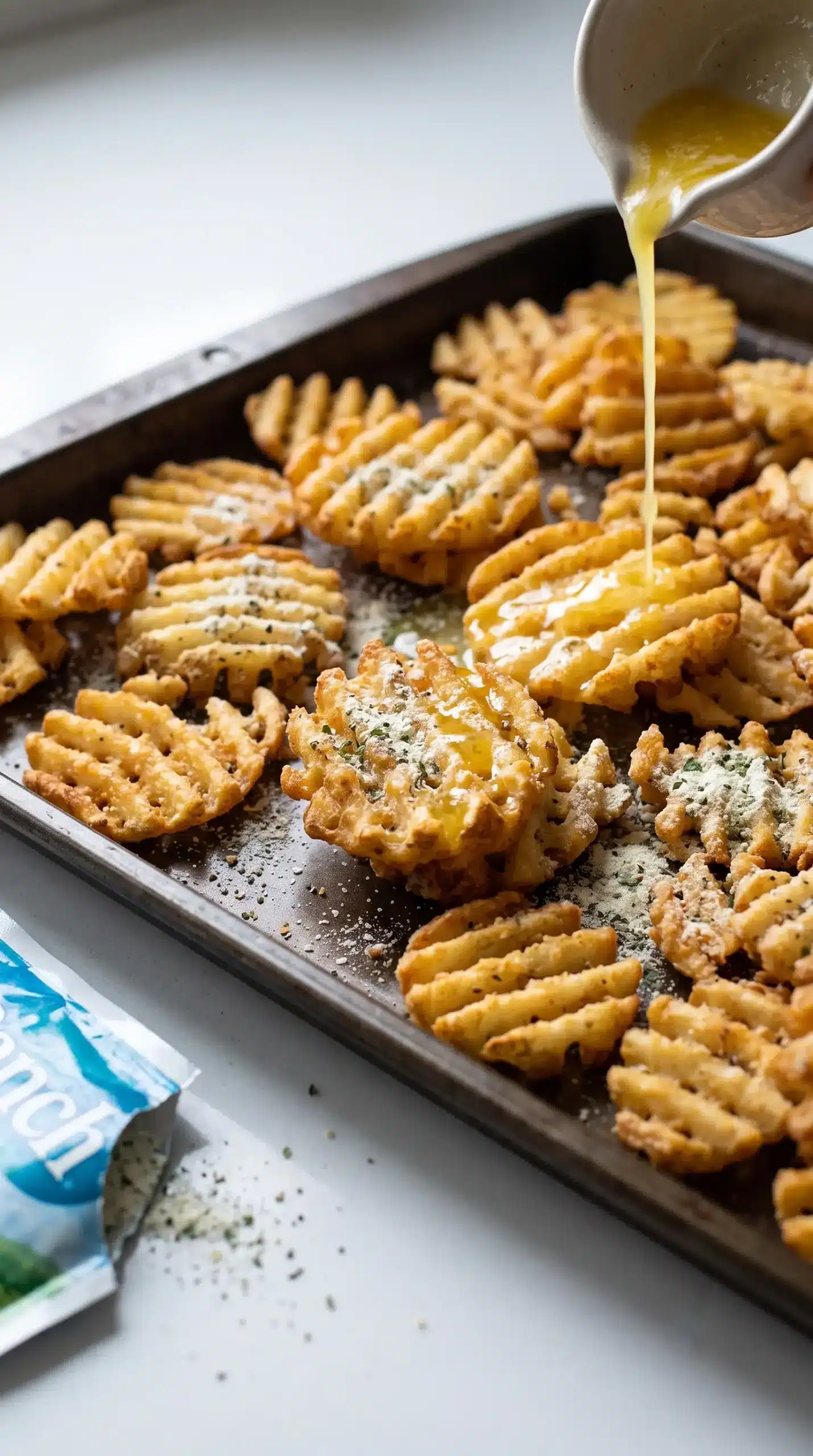
Frozen waffle fries become a sturdy foundation because their shape catches seasoning and sauce while leaving room for toppings. Butter added after baking helps the ranch seasoning cling to the surface, creating fries with a richer finish.
The ranch coating should match the amount of fries being prepared and personal flavor preference. A lighter coating keeps the potato flavor noticeable, while a heavier sprinkle creates a stronger ranch-forward layer that pairs well with the seasoned beef.
Crispy potato sides can be adjusted with stronger seasonings when the bowl needs extra flavor contrast. A serving of Baked Spicy Fries with Garlic Cheese Sauce uses bold toppings and seasoning additions that fit the idea of building fries with a more developed finish.
- Fresh coating: Toss warm fries with butter and seasoning while they still have enough heat to help the flavors settle.
- Texture protection: Add wetter toppings thoughtfully so the waffle fries keep some crisp edges.
- Flavor balance: Use the ranch seasoning level that complements the sauce instead of overwhelming it.
House Sauce Brings Tangy Balance To Every Bite
The house sauce combines creamy mayonnaise with ketchup, horseradish, Worcestershire, paprika, and garlic for a burger-inspired flavor that connects the different parts of the bowl. Its richness works alongside the browned beef and seasoned fries.
Mixing the sauce before assembly gives the flavors time to come together. A quick taste check helps adjust the balance so the sauce supports the other ingredients without covering their individual qualities.
Searing Control Protects The Flavor Of Ground Beef Burger Bowls
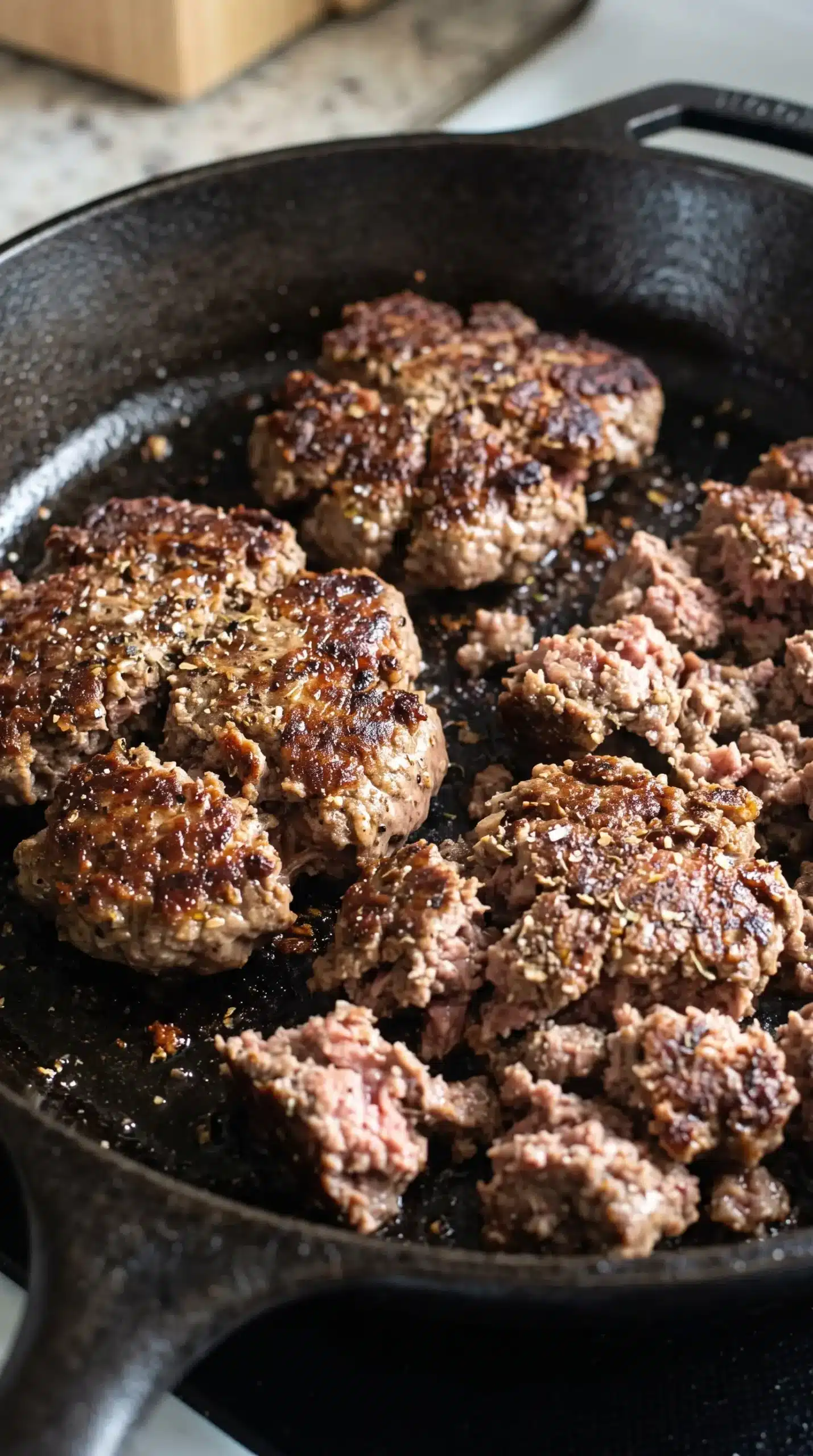
High heat is the important cooking decision behind deeply browned beef. A hot cast iron pan creates the surface conditions needed for a flavorful crust before the meat is broken apart into smaller eating portions.
Leaving the first side undisturbed gives the beef time to develop color. Moving it too early can reduce browning because moisture has less opportunity to evaporate from the surface.
Seasoning both sides before and during the searing process helps distribute flavor through the finished pieces. Once the beef has developed a browned exterior, gentle breaking keeps the chunks pleasant to eat while maintaining their juicy texture.
| Cooking choice | What it changes | Helpful observation |
|---|---|---|
| Very hot pan | Improves surface browning | Look for a deep golden crust |
| Early stirring | Reduces contact with the pan | Wait until browning begins |
| Large beef pieces | Keeps a juicier bite | Break into fork-friendly portions |
Burger Bowls With House Sauce Avoid These Common Mistakes
Several small choices can change the finished texture of burger bowls. The biggest issues come from losing the beef crust, making the fries soggy, or adding sauce without considering how the other components will eat together.
Overbreaking the beef into tiny pieces is a common mistake because the meat can become less satisfying. Keeping larger sections during cooking allows the outside to brown before the pieces are divided for serving.
Heavy toppings added too early can soften the fries before the meal is enjoyed. Placing lettuce, tomatoes, pickles, and sauce with some attention keeps the bowl closer to the intended contrast of crisp, juicy, and creamy textures.
- Dry beef: Avoid excessive cooking after the crust has formed because smaller pieces can lose moisture quickly.
- Weak flavor: Avoid under-seasoning the meat or fries because both provide important savory notes.
- Soft fries: Avoid letting wet ingredients sit on every fry surface for too long before eating.
Toppings Build Fresh Contrast Around Warm Components
Lettuce, tomatoes, and burger pickles provide the fresh elements that separate burger bowls from a plate of only meat and potatoes. Their cool textures create a useful contrast against the warm beef and ranch-coated fries.
Tomatoes bring moisture and brightness, while pickles add the familiar tang associated with burgers. Lettuce adds structure and helps create lighter bites between richer combinations of beef, sauce, and fries.
Cast Iron Technique Changes The Crust And Moisture Balance
Cast iron is useful for this style of cooking because it holds strong heat and supports the quick searing needed for ground beef. A well-seasoned surface can help create the browned exterior that gives the meat its burger-like character.
Other pans can still work when cast iron is unavailable. The important factor is maintaining enough heat for browning while avoiding unnecessary movement that interrupts contact between the beef and the cooking surface.
Serving Styles Make A Burger Bowl Recipe With Fries Flexible
A burger bowl recipe with fries can fit different serving preferences without changing its central idea. The components can be arranged in separate sections for a more structured meal or combined for a fully mixed forkful experience.
Customization works naturally with this format. Extra pickles, different lettuce amounts, or adjustments to the sauce allow each serving to match personal tastes while keeping the core combination intact.
Storing Components Keeps Burger Bowls Ready For Later Meals
Separate storage helps protect the textures that make burger bowls enjoyable. Keeping beef, fries, toppings, and sauce apart prevents moisture from moving between components before serving.
Reheating works best when each part receives the treatment it needs. Warm beef and fries separately when possible, then add fresh toppings and sauce after reheating so the contrast remains noticeable.
Pairings And Variations Expand The Burger Bowl Experience
The same flavor structure can support small changes while staying recognizable. Different burger seasonings, additional vegetables, or alternate sauces can shift the style without changing the foundation of browned beef and seasoned fries.
| Variation | Adjustment | Result |
|---|---|---|
| Extra pickle focus | Add more diced burger pickles | Sharper tangy flavor |
| Sauce change | Use another burger-style sauce | Different creamy finish |
| Seasoning swap | Change the burger seasoning blend | New flavor direction |
Assembly Order Keeps Burger Bowls Balanced From First Forkful
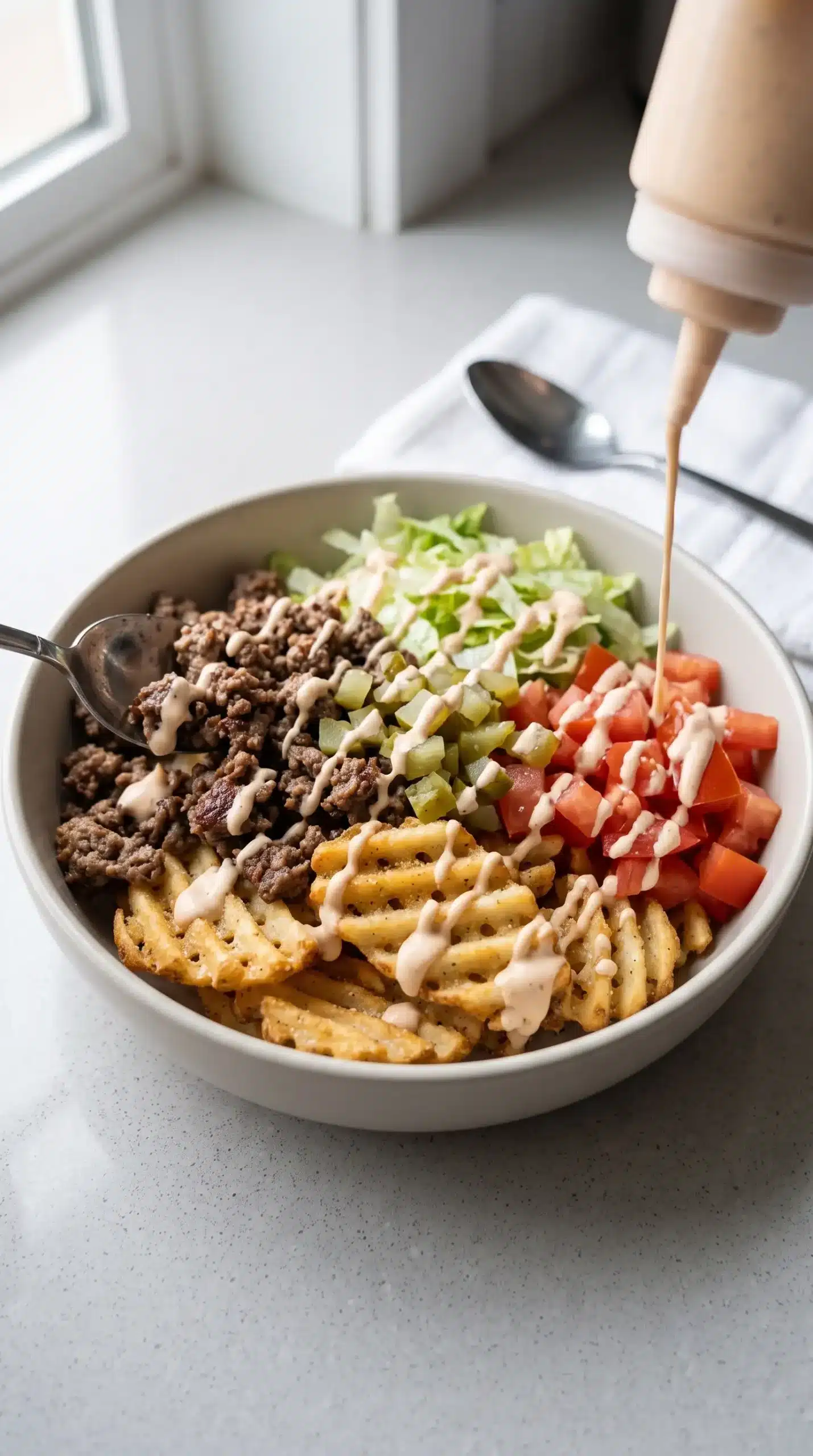
Layering matters because each component has a different role once the bowl is served. Starting with warm elements and adding fresh toppings afterward helps preserve the contrast between crisp fries, juicy beef, and cool vegetables.
Careful placement also makes every serving easier to customize. Sauce can be distributed evenly, toppings can remain visible, and each person can combine the portions they enjoy most.
Burger Bowls Depend On Contrast Between Crust Creaminess And Crunch
Browned beef creates the strongest foundation for burger bowls because the seared surface carries the savory flavor that connects with ranch fries and house sauce. Keeping control over heat and handling preserves the texture that defines the dish.
Balanced assembly brings together crisp potatoes, fresh toppings, and a creamy sauce without allowing one element to dominate. The result is a bowl where each bite keeps the recognizable appeal of a burger while offering a different way to enjoy those flavors.
Burger Bowls Questions About Searing Seasoning And Storage
Can burger bowls be made without cast iron?
Yes. A different pan can be used as long as it can become hot enough to encourage browning. The main adjustment is paying attention to surface contact and avoiding unnecessary stirring before the crust forms.
How can the beef stay juicy in burger bowls?
Keeping the beef in larger pieces during cooking helps maintain a more satisfying texture. Gentle handling and stopping once a good browned exterior develops help prevent the meat from becoming dry.
Can the ranch fries be seasoned differently?
Yes. The fries can be adjusted with different seasoning blends if a different flavor direction is preferred. Keeping the butter step helps any dry seasoning adhere well to the warm fries.
What sauce works best with ground beef burger bowls?
A creamy burger-style sauce works well because it connects the beef, fries, and toppings. The house sauce combines familiar burger flavors with added sharpness from horseradish and Worcestershire.
How should leftover burger bowls be reheated?
Store the parts separately when possible and warm the beef and fries before adding fresh toppings. This keeps the vegetables crisp and prevents the sauce from changing the texture of the fries during storage.
Burger Bowls with House Sauce and Ranch Fries with Beef
Burger bowls combine juicy browned beef, crispy ranch fries, fresh toppings, and creamy house sauce for a hearty meal with classic burger flavors. They are a comforting choice when you want an easy fork-friendly dinner with plenty of texture and flavor.
Ingredients
Method
Preparation
- Bake the fries according to the package directions.
- Add butter to the baked fries on the sheet pan and toss to coat, then season with ranch seasoning to your preferred level.
- Whisk together the sauce ingredients and adjust the seasoning with salt to taste.
Cooking
- Heat a well-seasoned cast iron pan over high heat without adding oil. Season one side of the ground beef with 1 teaspoon of burger seasoning, then place that side down in the hot pan.
- Leave the beef undisturbed for several minutes so it can develop a browned crust while the fat renders.
- Season the top side of the beef with the remaining 1 teaspoon of burger seasoning. After several minutes, flip the beef in large pieces and break it into fork-sized portions while keeping the pieces fairly large.
- Continue cooking until the beef is well browned, then remove it from the heat.
Assembly
- Build the bowls with the burger beef, ranch fries, lettuce, tomatoes, pickles, and house sauce.
Notes
Burger Seasoning: The recipe can use many burger seasoning blends. If using only salt and pepper instead, use 3/4 teaspoon of kosher salt per side on the beef. The goal is juicy, medium-large beef pieces with a browned crust. High heat helps create the sear quickly so the beef stays moist, and the beef can be removed from the heat while slightly pink inside if the exterior has developed a good crust. Cast iron is recommended because it gets very hot and helps create the sear, but other pans can also work.