From breakfast to dinner, from healthy meals to sweet desserts – Next Yum Recipes brings you quick, simple and tasty ideas for every occasion and every time.


Do you really need a long simmered sauce to get that glossy, restaurant-style pasta at home?
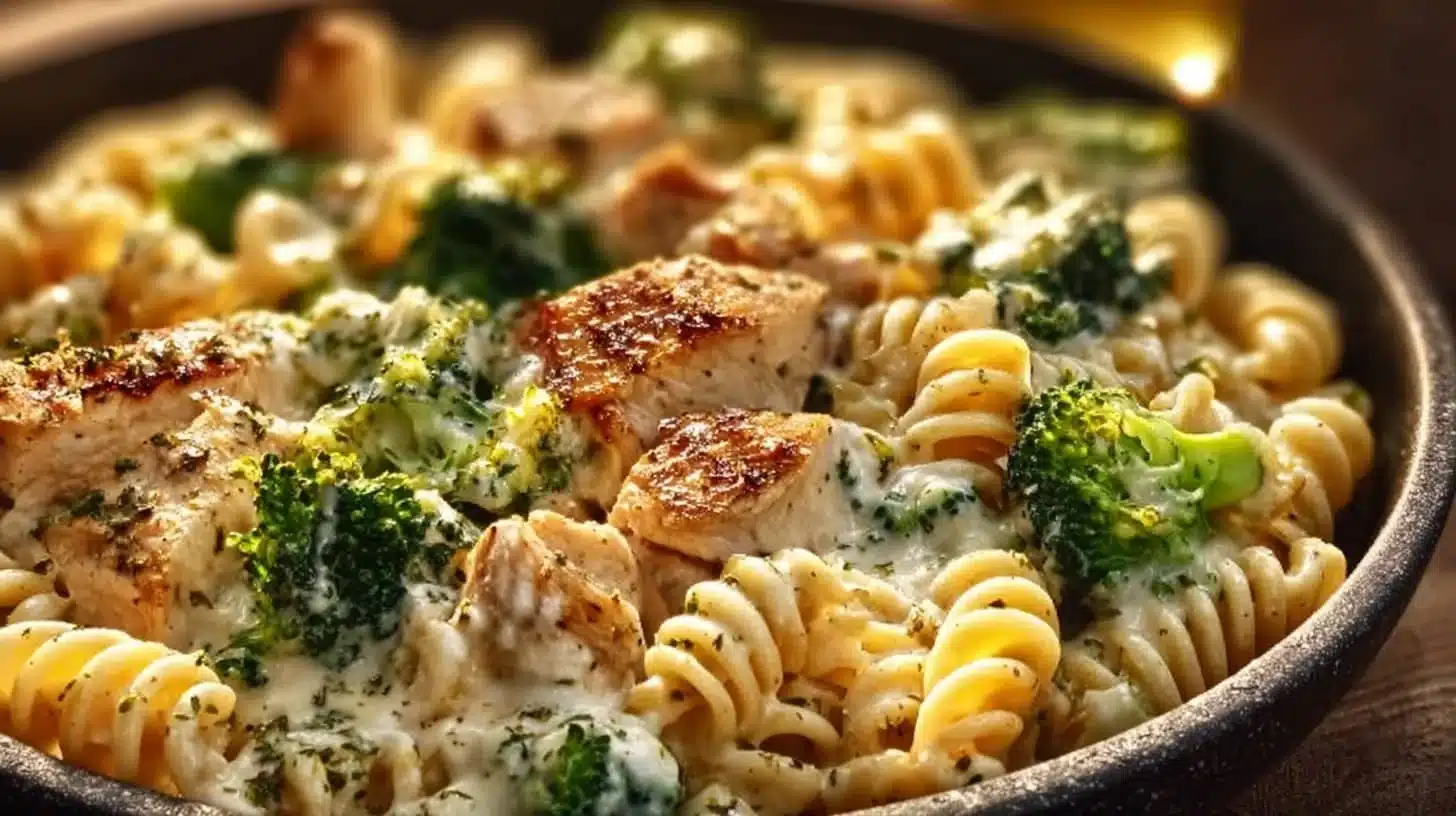
With Creamy Rotisserie Chicken Broccoli Pasta, you get a fast dinner that still tastes intentional. You lean on a store-bought chicken for speed, then build a quick cream sauce that clings to the pasta instead of pooling at the bottom.
Why Make This Recipe
You can pull this together on a busy night without feeling rushed. Cooking the broccoli in the same pot as the pasta saves time and keeps your sink from filling up with extra dishes.
The sauce comes together quickly, but it still feels balanced. You get savory chicken, a mild bite from Parmesan, and fresh green notes from broccoli that cut through the richness.
If you already like creamy chicken pasta dinners, you’ll probably enjoy the base method in this rotisserie chicken pasta recipe too. It’s a helpful comparison when you want to swap vegetables or adjust the sauce.
How to Make This Creamy Rotisserie Chicken Broccoli Pasta
You start by cooking pasta until it still has a little firmness, since it will finish in the sauce. Tossing broccoli in near the end keeps it bright and tender-crisp rather than soft and olive-green.
For the sauce, you gently cook onion and garlic until they smell sweet and mellow. Then you warm cream and broth just to a light simmer. Look for small bubbles at the edges, not a rapid boil.
Once the pan is off the heat, you whisk in cheese so it melts smoothly. If the sauce looks thick at first, that’s normal. A few spoonfuls of starchy pasta water usually turn it silky and glossy.
You fold the rotisserie chicken in last. That keeps it juicy, since it only needs to warm through. If you simmer it hard, it can tighten and taste stringy.
Ingredient Insights for Creamy Rotisserie Chicken Broccoli Pasta
Penne: Short pasta holds sauce in the tubes and along the ridges. If you cook it just to al dente, it stays springy when you toss it in the skillet.
Rotisserie chicken: This is your shortcut protein, but it also adds depth from slow roasting. Pull the meat into bite-size shreds so it spreads evenly and doesn’t clump in the sauce.
Broccoli: Broccoli brings freshness and texture. When you time it right, you’ll see the florets turn vivid green and smell slightly sweet, not cabbage-like.
Olive oil: Oil helps soften onion gently and carries flavor. It also keeps the butter from browning too fast while you build the base.
Butter: Butter adds roundness and helps the sauce feel velvety. A small cold piece stirred in at the end can make the surface look glossy.
Onion: Onion gives sweetness that balances salty cheese. You want it translucent and soft, with no sharp raw bite left.
Garlic: Garlic should smell fragrant within seconds. If it browns, it can turn bitter and show up harshly in a creamy sauce.
Heavy cream: Cream gives the sauce body and stability. Keeping it at a gentle heat helps it stay smooth instead of separating.
Chicken broth: Broth lightens the cream and adds savory flavor. It also helps you control thickness without relying only on more dairy.
Parmesan: Parmesan brings salty, nutty intensity. Freshly grated tends to melt more cleanly, while pre-shredded can make the sauce slightly grainy.
Mozzarella: Mozzarella adds stretch and softness. Used with Parmesan, it makes the sauce feel plush without overwhelming the chicken.
Italian seasoning: This adds a gentle herbal background. It’s most noticeable when the sauce is hot, then it softens as the dish rests.
Garlic powder: A small amount fills in savory flavor without needing extra fresh garlic. It helps the sauce taste rounded even after reheating.
Red pepper flakes: These give a light, warm finish rather than strong heat. A pinch can make the creamy sauce taste less heavy.
Texture & Flavor Experience
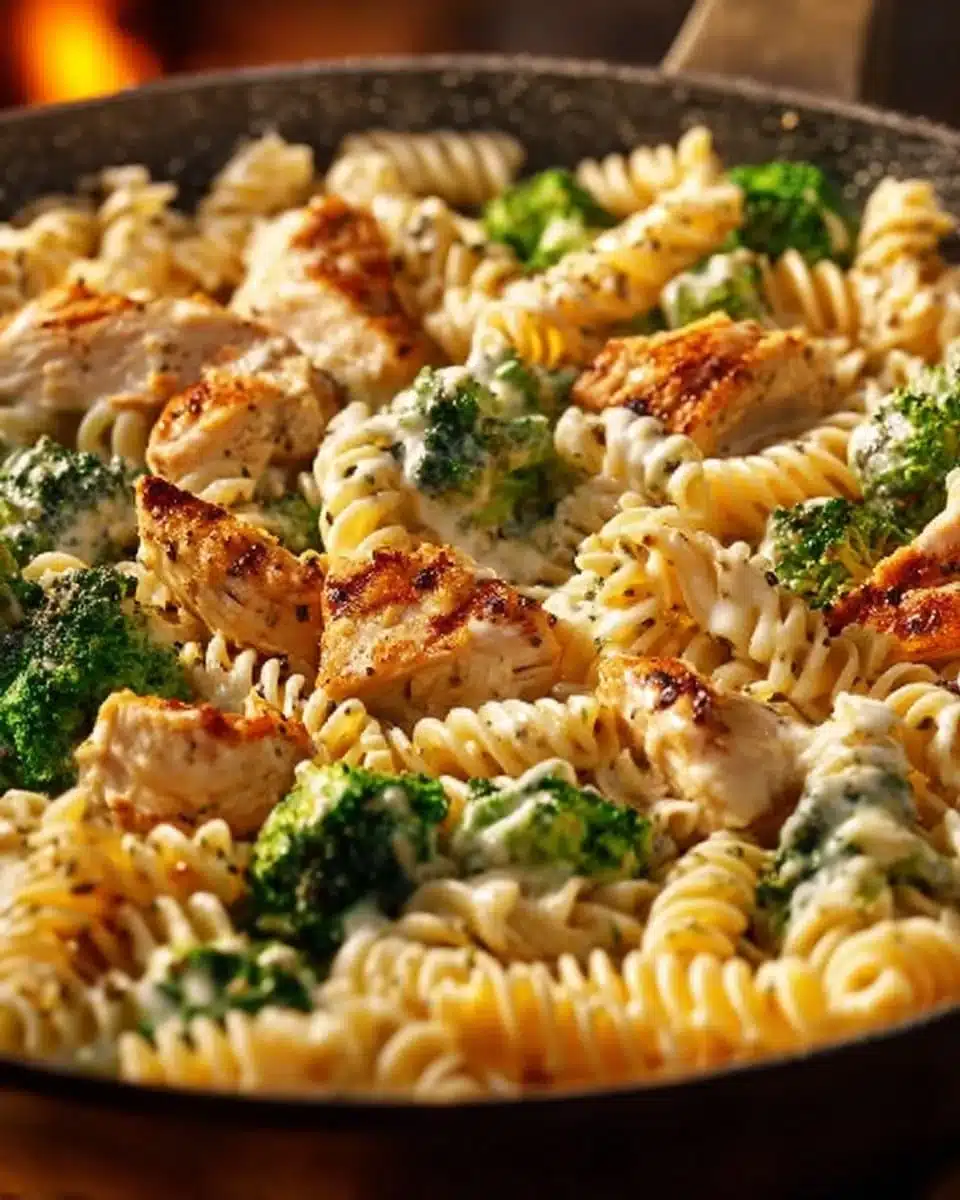
When it’s done right, the sauce coats the pasta in a thin, shiny layer that doesn’t slide off. You’ll smell Parmesan first, then a gentle garlic note as you stir.
The broccoli should still have a soft snap when you bite it. The chicken stays tender, and the whole dish tastes creamy but not flat.
How to Serve Creamy Rotisserie Chicken Broccoli Pasta
Serve it straight from the skillet while the sauce is at its glossiest. A little extra Parmesan on top makes the flavors pop, especially if your chicken is mildly seasoned.
For balance, pair it with something crisp and fresh, like a simple green salad. If you add bread, keep it plain so it soaks up sauce without competing with the cheese.
If you like brightness, a small amount of lemon zest or chopped parsley helps. You’ll notice it most in the first bite, before the creamy sauce settles on your palate.
Tips to Make Creamy Rotisserie Chicken Broccoli Pasta
- Salt your pasta water well so the noodles taste seasoned before they hit the sauce.
- Add broccoli late so it stays green and tender-crisp, not soft and dull.
- Keep the cream at a gentle simmer; you want edge bubbles, not a hard boil.
- Take the pan off the heat before adding cheese for a smoother melt.
- Add pasta water in small splashes so you stop at silky, not soupy.
- Shred the chicken into small pieces so every forkful gets a bit of protein.
- Let the pasta sit for one minute after tossing; the sauce thickens slightly as it clings.
Common Mistakes to Avoid
- Boiling the cream hard, which can cause separation; keep it at a gentle simmer instead.
- Adding cheese over high heat, which can turn the sauce grainy; whisk it in off the heat.
- Overcooking broccoli, which makes it mushy; add it near the end of pasta cooking.
- Skipping pasta water, which leaves the sauce heavy; use it to loosen and emulsify.
- Simmering the chicken too long, which dries it out; fold it in at the end to warm through.
Storing Tips
Store leftovers airtight in the fridge, and expect the sauce to thicken as it cools. That’s normal because the pasta keeps absorbing moisture.
When you reheat, go low and slow. Add a small splash of water or broth and stir until the sauce loosens and looks glossy again. High heat can make the dairy look slightly broken.
FAQs
Can you use frozen broccoli?
Yes. You’ll usually get the best texture if you add it near the end so it heats through without turning soft.
Why does pasta water help so much?
The starch helps the sauce cling and look smooth. It also thins the sauce without watering down the flavor the way plain water can.
What if your sauce looks grainy?
It often means the cheese went in while the pan was too hot. Lower the heat, add a splash of pasta water, and stir gently to smooth it out as much as possible.
Can you make it a little lighter?
You can swap part of the cream for half-and-half. The sauce will be a bit thinner, so you may rely more on Parmesan and pasta water for body.
Conclusion
You get a dependable, cozy dinner without a long cooking project. Once you understand the heat cues and how pasta water changes the sauce, you can adapt this method to what you have. For another take on the same idea, see Berry&Maple’s rotisserie chicken broccoli alfredo pasta and compare how they handle the creamy finish.

Creamy Rotisserie Chicken Broccoli Pasta
A saucy, comforting weeknight meal that combines rotisserie chicken, tender-crisp broccoli, and a silky Parmesan cream sauce, all ready in about 30-40 minutes.
Ingredients
Method
Preparation
- Bring a large pot of salted water to boil and cook penne pasta according to package directions until al dente.
- During the last 3 minutes of cooking time, add broccoli florets directly to the pasta water.
- Before draining, reserve 1 cup of starchy pasta water in a measuring cup.
Cooking
- Drain pasta and broccoli together and set aside.
- Heat olive oil and butter in your largest skillet over medium-low heat.
- Cook diced onion for 4-5 minutes until softened, then add minced garlic for 30 seconds until fragrant.
- Pour in heavy cream and chicken broth, bringing mixture to a gentle simmer for 2-3 minutes.
- Remove skillet from heat completely before adding cheese to prevent graininess.
- Whisk in Parmesan and mozzarella until completely smooth, then season with Italian seasoning, garlic powder, salt, pepper, and red pepper flakes.
- Add drained pasta and broccoli to the creamy sauce, tossing gently with tongs to coat everything evenly.
- Fold in shredded rotisserie chicken last.
- Add reserved pasta water 2 tablespoons at a time until you reach a creamy, glossy consistency.
- Stir in a cold knob of butter just before serving for a restaurant-quality finish.
Notes
Serve hot, offer extra grated Parmesan at the table, pair with a crisp green salad and crusty bread. Can be stored in the refrigerator for 3-4 days.


