From breakfast to dinner, from healthy meals to sweet desserts – Next Yum Recipes brings you quick, simple and tasty ideas for every occasion and every time.


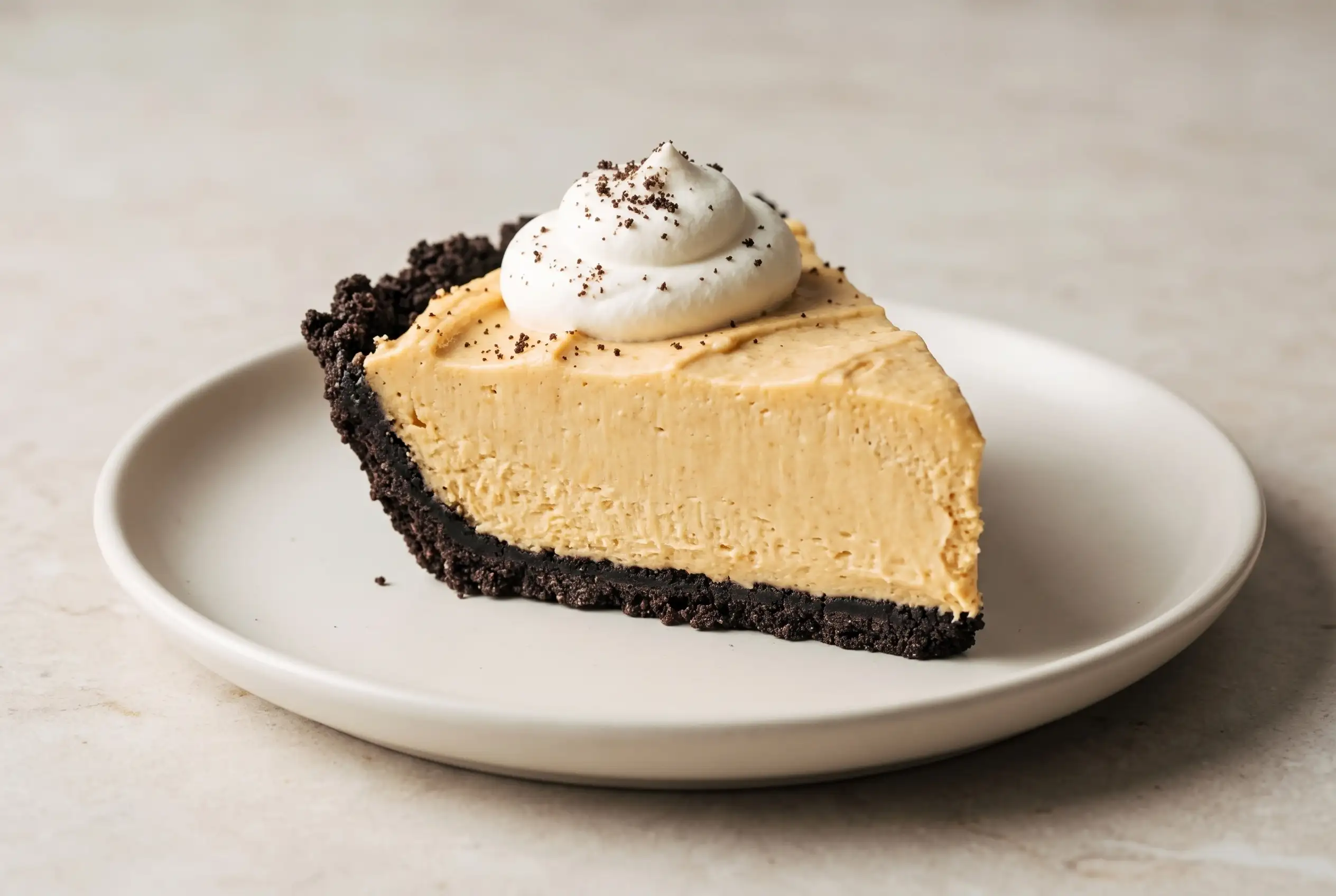 This Recipe
Easy peanut butter pie combines a dark Oreo crust with a creamy peanut butter and cream cheese filling that firms in the freezer without any baking. The contrast is the main attraction: crisp chocolate crumbs support a dense, smooth center, while whipped topping keeps the filling from becoming as heavy as a straight peanut butter and cream cheese mixture.
With no oven involved, success depends on texture control. The cookie crumbs need enough melted butter to hold together, the filling needs thorough but restrained mixing, and the assembled pie needs to become fully firm before slicing. Those details determine whether each piece comes out cleanly or slumps as soon as it leaves the plate.
Why Easy Peanut Butter Pie Stays Creamy Without Baking
What makes this frozen dessert work is the way several soft ingredients become more stable when chilled together. Peanut butter and cream cheese create a substantial base, while sugar sweetens and thickens that mixture slightly. Whipped topping lightens the texture enough that the frozen center remains creamy instead of becoming excessively dense.
Because the filling never passes through an oven, there is no baked custard structure to rely on. Firmness comes from cold temperature and the natural body of the peanut butter and cream cheese. That makes freezing an essential structural step, not simply a way to serve the pie colder.
A dense filling also needs contrast underneath it. Oreo crumbs provide a dark cocoa flavor and a crisp texture that keeps each bite from feeling uniformly soft. Melted butter binds those crumbs into a base sturdy enough to support the chilled filling when the crust has been pressed firmly into the plate.
Oreo Crumbs Need a Firm, Buttery Base
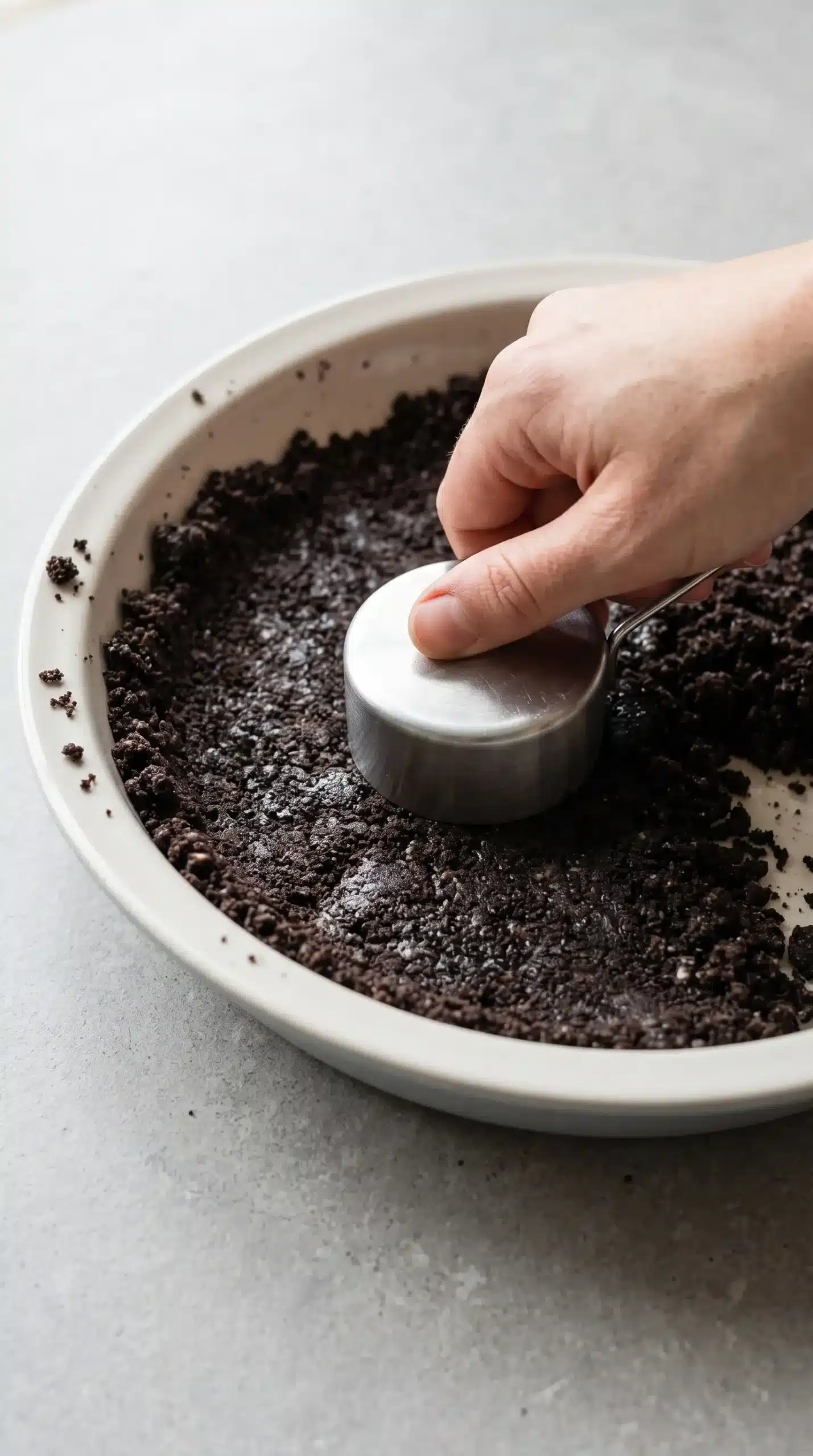
Finely crushed Oreos form a more cohesive crumb crust than irregular chunks because the small particles pack tightly when combined with melted butter. Pressing the mixture firmly across the bottom and up the sides of the pie plate reduces loose pockets that can break away during slicing, while chilling the crust before filling helps the butter begin to firm and hold the crumbs together.
Cream Cheese and Whipped Topping Control the Filling
Cream cheese supplies much of the structure in a peanut butter cream cheese pie, so its consistency matters during mixing. A smooth cream cheese base blends more evenly with peanut butter and sugar, reducing the chance of visible lumps remaining in the finished filling.
Granulated sugar needs to be distributed thoroughly enough that one portion of the pie does not taste noticeably sweeter than another. Since the filling is not heated, mixing is the only opportunity to spread that sugar evenly through the peanut butter and cream cheese base.
Whipped topping has a different job from the heavier ingredients around it. Its aerated texture softens the density of the filling, which is why aggressive mixing can work against the intended result. Once incorporated, the mixture should look uniform, thick, and spreadable without appearing loose.
Once the whipped topping meets the denser peanut butter mixture, gentle folding preserves air bubbles in the aerated component. Using broad, restrained strokes rather than vigorous stirring helps the filling retain the lighter texture the whipped topping contributes.
Gentle Mixing Protects the Creamy Texture
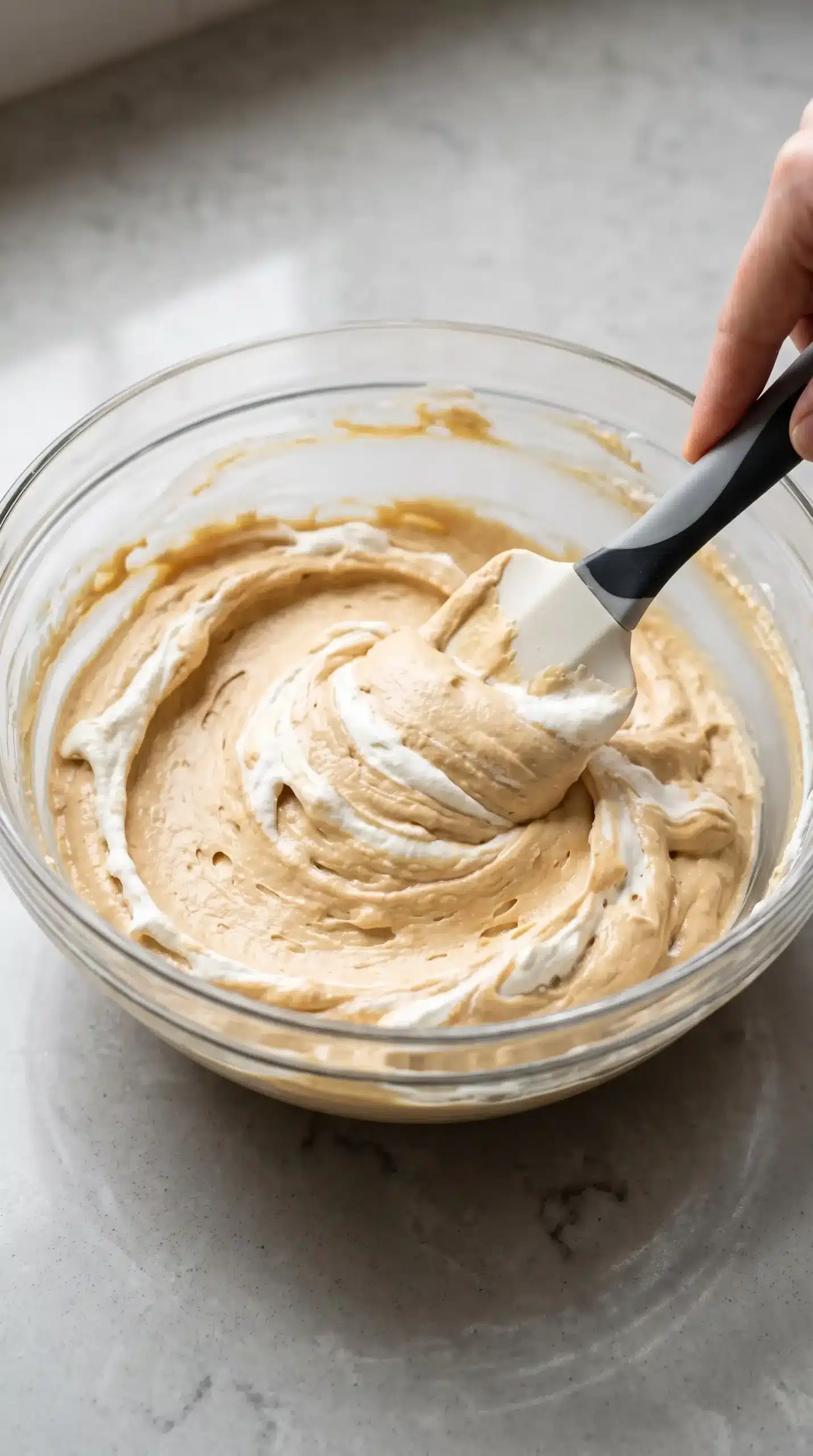
Mixing works best when the heavier peanut butter, cream cheese, and sugar are smooth before the whipped topping is fully incorporated. Excessive beating after the mixture is homogeneous can reduce some of the air in the topping, leaving the frozen peanut butter pie firmer and heavier than necessary.
Freezing Creates the Structure Needed for Slicing
A proper freeze allows the soft filling to become firm enough to support itself when removed from the pie plate. The supplied method calls for three to four hours, and the center should feel solid before cutting begins. A pie that remains soft in the middle will be much harder to portion cleanly.
During the freezing stage, the crust and filling also become more unified. Butter in the Oreo base firms, while the peanut butter and cream cheese mixture becomes substantially more stable. That combination helps the point of each slice stay intact instead of separating from the crust.
Once fully frozen, the pie should still retain a creamy character when eaten because the filling contains whipped topping and substantial fat from the peanut butter and cream cheese. If serving immediately from a very cold freezer makes cutting difficult, brief softening can make portioning easier without allowing the entire center to lose its shape.
Clean Slices Depend on Knife Control
Clean slices are easier when the pie is firm and the knife can move through both the frozen filling and compact cookie crust without dragging crumbs through the center. A warm, dry blade can help, especially when it is wiped between cuts so every slice begins with a clean edge.
- Warm blade: Run the knife under warm water, then dry it before cutting.
- Straight pressure: Press through the filling and crust instead of sawing aggressively.
- Clean reset: Wipe the blade between portions to prevent dark crumbs from streaking the filling.
Chocolate Crust Balances the Rich Peanut Butter Center
Texture changes the way the sweetness registers. A creamy filling made from peanut butter, sugar, cream cheese, and whipped topping is rich and smooth, while the Oreo base contributes crispness and a deeper cocoa note. That contrast keeps the peanut butter Oreo pie from tasting like one uninterrupted layer of sweetness.
Using the cookie crust as a defined base also gives each forkful a predictable balance of filling and chocolate crumbs. Pressing the crust evenly across the plate matters for more than appearance because unusually thick areas can dominate individual bites, while thin patches may crack when a slice is lifted.
Common Peanut Butter Pie Mistakes to Avoid
Most problems with easy peanut butter pie come from texture management instead of complicated technique. The ingredients are simple, but small handling errors can affect whether the crust stays attached, whether the filling freezes evenly, and whether the pie keeps its shape during serving.
- Coarse Oreo crumbs: Large pieces leave gaps in the crust and make clean slices more difficult.
- Loose packing: Lightly pressed crumbs are more likely to crumble away when portions are lifted.
- Overworked filling: Prolonged mixing after the whipped topping is incorporated can make the center denser.
- Premature slicing: Cutting before the middle is solid can produce soft, collapsing portions.
Another frequent issue is uneven filling thickness. Smoothing the top after the mixture enters the crust is useful because a level surface encourages consistent freezing from slice to slice and prevents one side of the pie from being substantially thicker than the other.
If the finished dessert is difficult to cut because it is extremely firm, forcing a knife through it can crack the crust. Allowing a small amount of softening and using a warm blade gives more control while preserving the frozen structure that the filling depends on.
Serve Peanut Butter Pie While the Center Is Cold
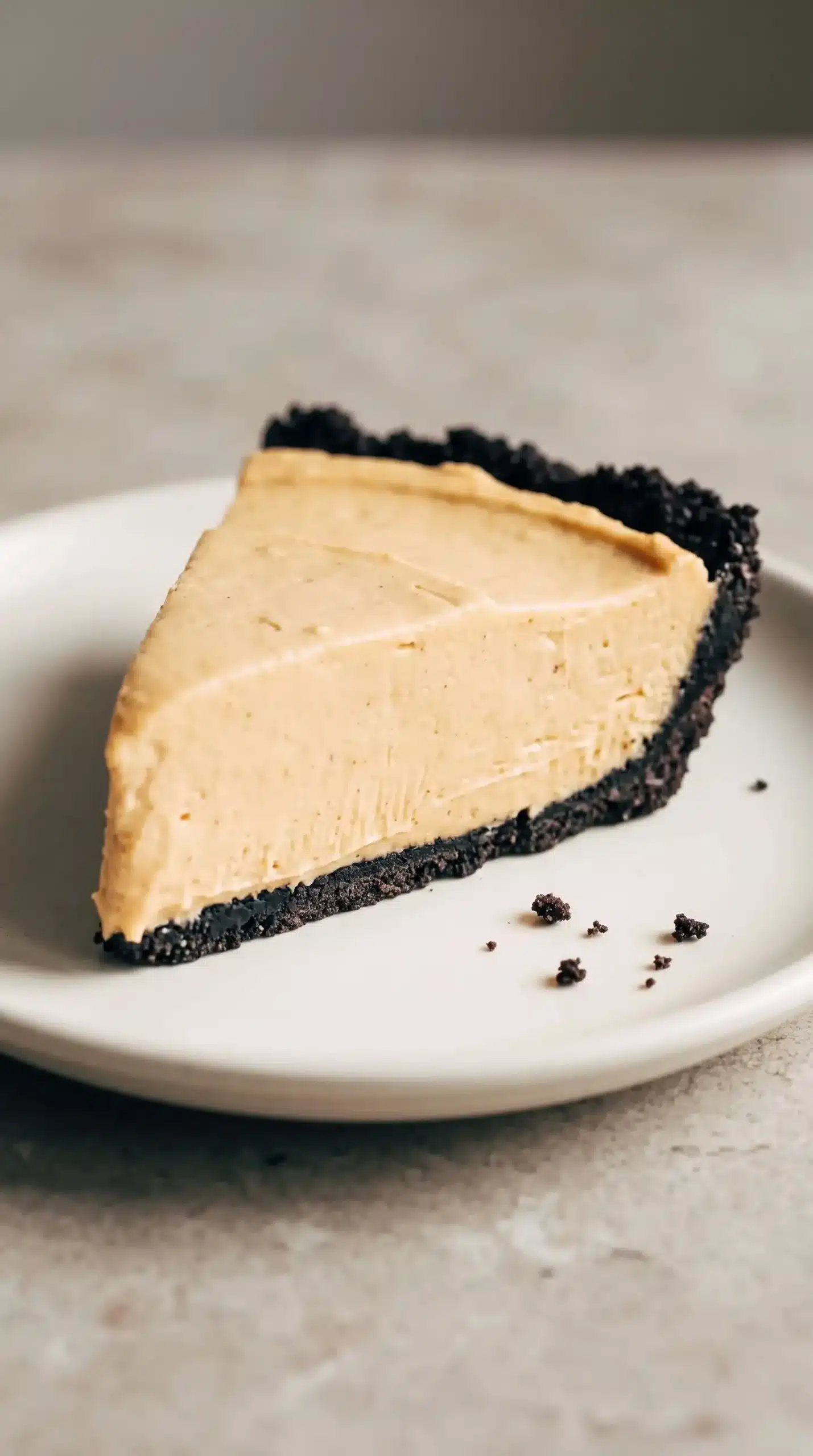
For serving, the pie is at its best when the center remains cold enough to hold a defined wedge but has softened just enough for a fork to pass through comfortably. Leaving it warm for an extended period works against the structure created by freezing, so portions are better cut as needed while the remaining pie stays cold.
Cold Storage Preserves Shape and Crust Texture
Cold storage matters because cream cheese and whipped topping form the bulk of the filling and because the pie depends on low temperature for firmness. Covering the dessert also protects the exposed surface and helps prevent the filling from picking up odors from surrounding foods.
| Condition | Expected texture | Best handling choice |
|---|---|---|
| Fully frozen | Firm center and crisp, compact crust | Use for storage and clean portioning |
| Briefly softened | Creamier bite with defined slice shape | Serve soon after cutting |
| Fully thawed | Much softer filling with less structural support | Return to cold storage before extended serving |
Once thawed substantially, the filling becomes softer because the cold-set structure relaxes. It may still taste pleasant, but it will not behave like the firmly frozen version when sliced or transferred from the pie plate.
For longer holding, keeping the pie frozen is the most consistent way to preserve its intended shape. Individual pieces can also be separated after the pie is firm, making it easier to remove only the amount needed while leaving the rest undisturbed.
A 10-Inch Pie Plate Keeps the Layers in Proportion
A 10-inch pie plate gives the supplied quantity of crust and filling enough surface area to form balanced layers. Using a noticeably smaller dish would create a thicker center and could change how evenly it firms, while a much larger plate would spread the filling and crust more thinly than intended.
A Firm Freeze Makes Easy Peanut Butter Pie Work
A firm center is the clearest sign that the dessert is ready for clean slicing. The Oreo crust provides support underneath, but the filling itself still depends on full chilling to hold the peanut butter, cream cheese, sugar, and whipped topping in a stable layer.
Careful mixing preserves creaminess, compact crumbs create a dependable base, and complete freezing brings those textures together. When those three conditions are in place, easy peanut butter pie cuts neatly while keeping the rich, smooth character that defines the dessert.
Questions About Freezing and Slicing Easy Peanut Butter Pie
Can I make the pie without freezing it until solid?
Chilling alone would leave the filling considerably softer because the supplied preparation depends on freezing for its structure. For defined wedges that hold their shape, the center should become solid before slicing.
Use a natural peanut butter or a conventional creamy one?
A standard creamy peanut butter is generally the more predictable choice because its oils remain evenly emulsified. Natural peanut butter can separate, so it should be stirred extremely well before measuring if used, and its looser consistency may produce a softer filling.
Can the Oreo crust be crushed without a food processor?
The cookies can be placed in a sturdy sealed bag and crushed very finely with a rolling pin or another heavy, smooth object. The important point is achieving small, even crumbs so the melted butter can coat them and the crust can pack tightly.
Why is my frozen peanut butter pie difficult to cut?
The pie may be extremely cold and firm straight from the freezer. Brief softening, combined with a warm dry knife, can make cutting easier while still keeping the filling structured enough to produce neat portions.
How can I keep the Oreo crust from crumbling when serving?
Keep the crumbs fine, distribute the melted butter evenly, and compress the crust firmly into the plate before adding the filling. A well-packed base that has chilled before filling is less likely to break apart when a slice is lifted.
Easy Peanut Butter Pie with Oreo Crust and Cream Cheese
Easy peanut butter pie features a creamy, rich peanut butter and cream cheese filling over a crisp Oreo crust. It is a simple frozen dessert with satisfying chocolate-peanut butter contrast.
Ingredients
Method
Preparation
- Process the Oreos until they become fine crumbs. Mix in the melted butter, then press the mixture firmly into a 10-inch pie plate.
- Place the prepared crust in the freezer while preparing the filling.
Filling
- Combine the peanut butter, sugar, whipped topping, and cream cheese until the filling is smooth and evenly blended.
- Transfer the filling to the chilled crust and smooth the surface.
Chilling
- Freeze the assembled pie for 3-4 hours, until the center is solid.
Serving
- Slice the firm pie into 10 portions and serve.
Notes
For clean slices, make sure the center is solid before cutting.