From breakfast to dinner, from healthy meals to sweet desserts – Next Yum Recipes brings you quick, simple and tasty ideas for every occasion and every time.


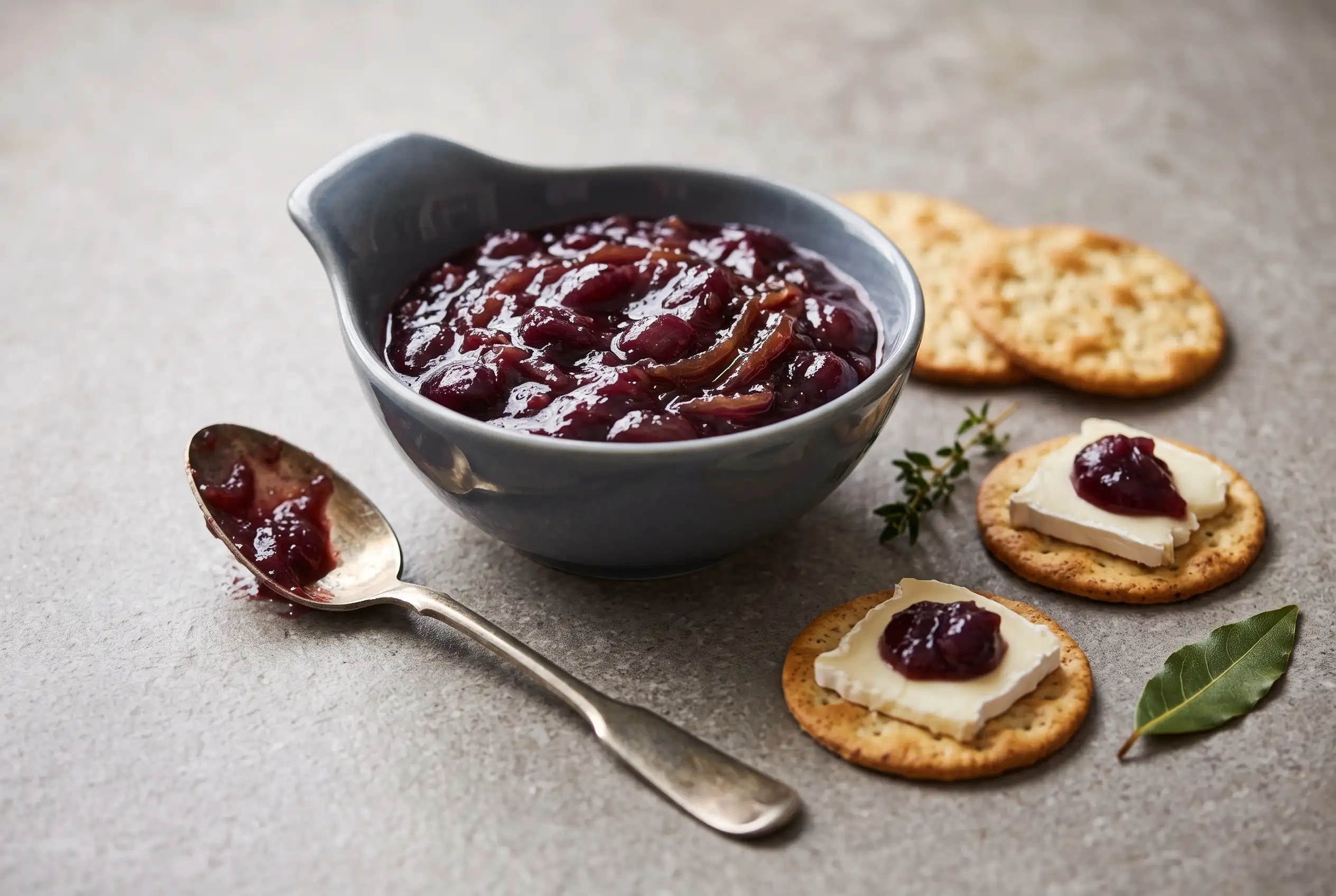 This Recipe
Caramelized Shallot and Grape Chutney Brings Savory Sweet Balance
Caramelized Shallot and Grape Chutney creates a meeting point between slow-cooked sweetness, gentle acidity, and rich savory notes. The combination of softened shallots, broken-down grapes, bourbon, vinegar, and wine produces a spreadable condiment that works especially well beside cheese, crackers, and other simple serving ideas. The finished grape chutney has enough depth to feel special while relying on a short list of carefully balanced ingredients.
Built around contrasting flavors, the chutney develops character as the shallots soften and the grapes release their juices. The fruit does not simply become sweet; it gains complexity from the browned pan flavors, warm cinnamon, herbal bay leaf, and the sharp lift of vinegar. Those layers make each bite useful as a companion for creamy, salty, or aged cheeses.
Shallots Create the Deep Base for Caramelized Shallot and Grape Chutney
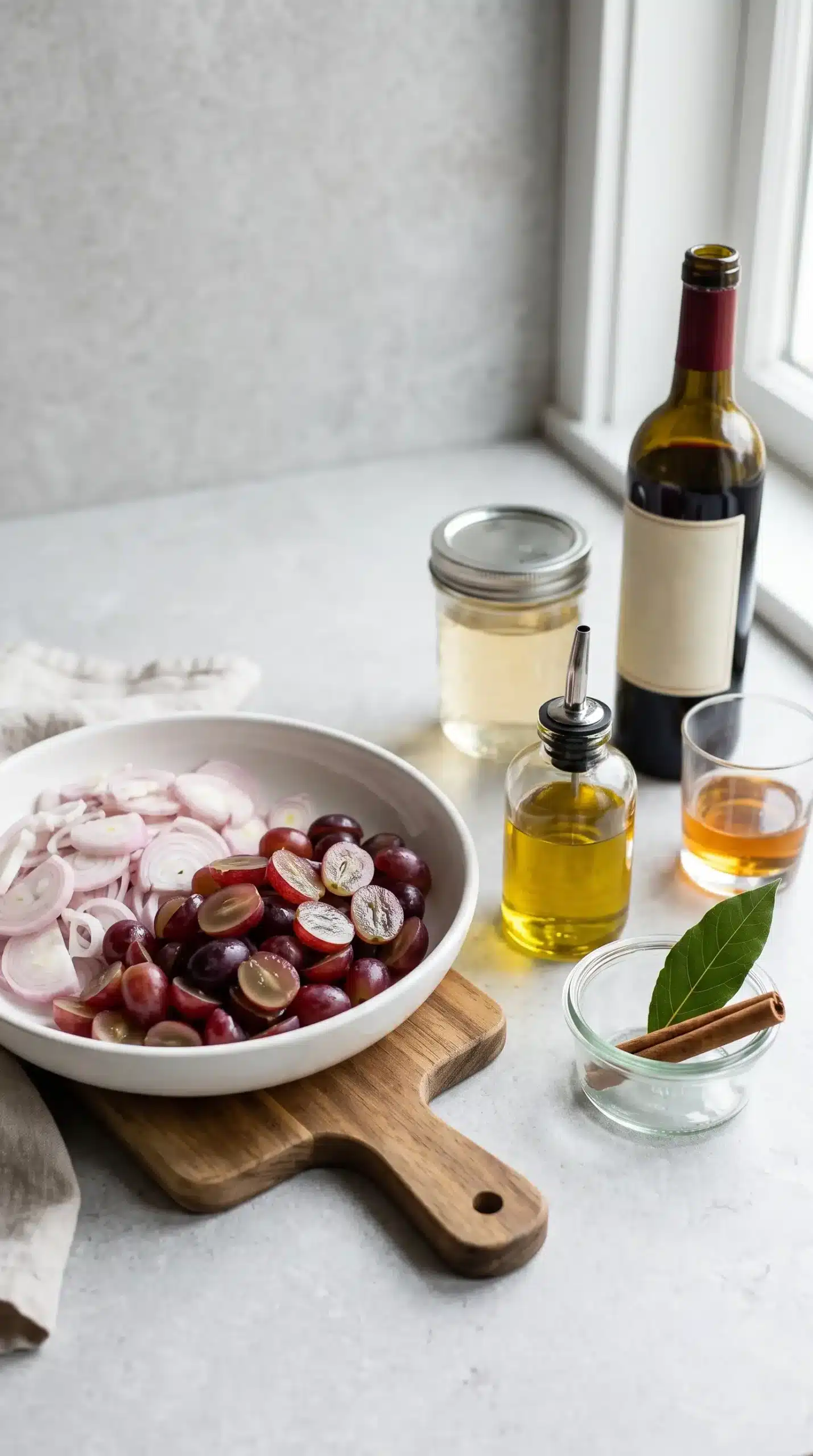
Slowly softened shallots provide the savory foundation that separates this condiment from a simple fruit preserve. Their natural sugars become more noticeable as they cook gently in olive oil, creating a mellow flavor that supports the grapes without overpowering them. Keeping the heat moderate helps the shallots become tender and fragrant before the liquids are added.
Fresh grapes bring another type of sweetness because their flavor changes as they heat. Red or purple grapes contain enough structure to hold their shape at first, then gradually collapse into a thicker mixture as their juices combine with the other ingredients. That transformation gives the red grape chutney recipe its recognizable texture.
Bourbon grape chutney gains much of its personality from the interaction between fruit and spirits. The bourbon contributes warmth, while the wine and rice vinegar prevent the sweetness from becoming heavy. Together, these additions create a condiment that feels balanced on a cheese board instead of tasting like a dessert topping.
Grapes Define the Texture of the Red Grape Chutney Recipe
Halved grapes determine how the chutney eats from the first spoonful to the last. Some pieces soften completely during simmering while others retain small pockets of fruitiness, giving the spread a homemade texture that works well with crisp crackers and firm cheese.
Bourbon and Wine Shape the Chutney Flavor
Bourbon’s flavor becomes integrated during cooking as the alcohol cooks away and the remaining notes blend with the fruit. Pouring the liquids into the hot pan also helps loosen the flavorful browned bits left from the shallots, adding another layer to the finished mixture.
Rice vinegar contributes brightness that keeps the condiment lively. Its clean acidity cuts through the richness of cheese pairings and helps the grape flavor remain noticeable after the longer simmering process. A small amount creates contrast without turning the chutney sharply sour.
Merlot brings a deeper fruit character that complements the grapes while adding a subtle wine-inspired background. Different red wines may change the personality slightly, but a smooth, fruit-forward choice fits naturally with the sweet and savory direction of the chutney.
| Ingredient choice | Main contribution | Effect on serving |
|---|---|---|
| Red or purple grapes | Fruit sweetness and body | Creates a spoonable spread with visible fruit character |
| Rice vinegar | Acid balance | Keeps cheese pairings from feeling too rich |
| Bourbon and red wine | Warm depth | Adds complexity beyond simple fruit preserves |
Cheese Pairings Highlight the Chutney Finish
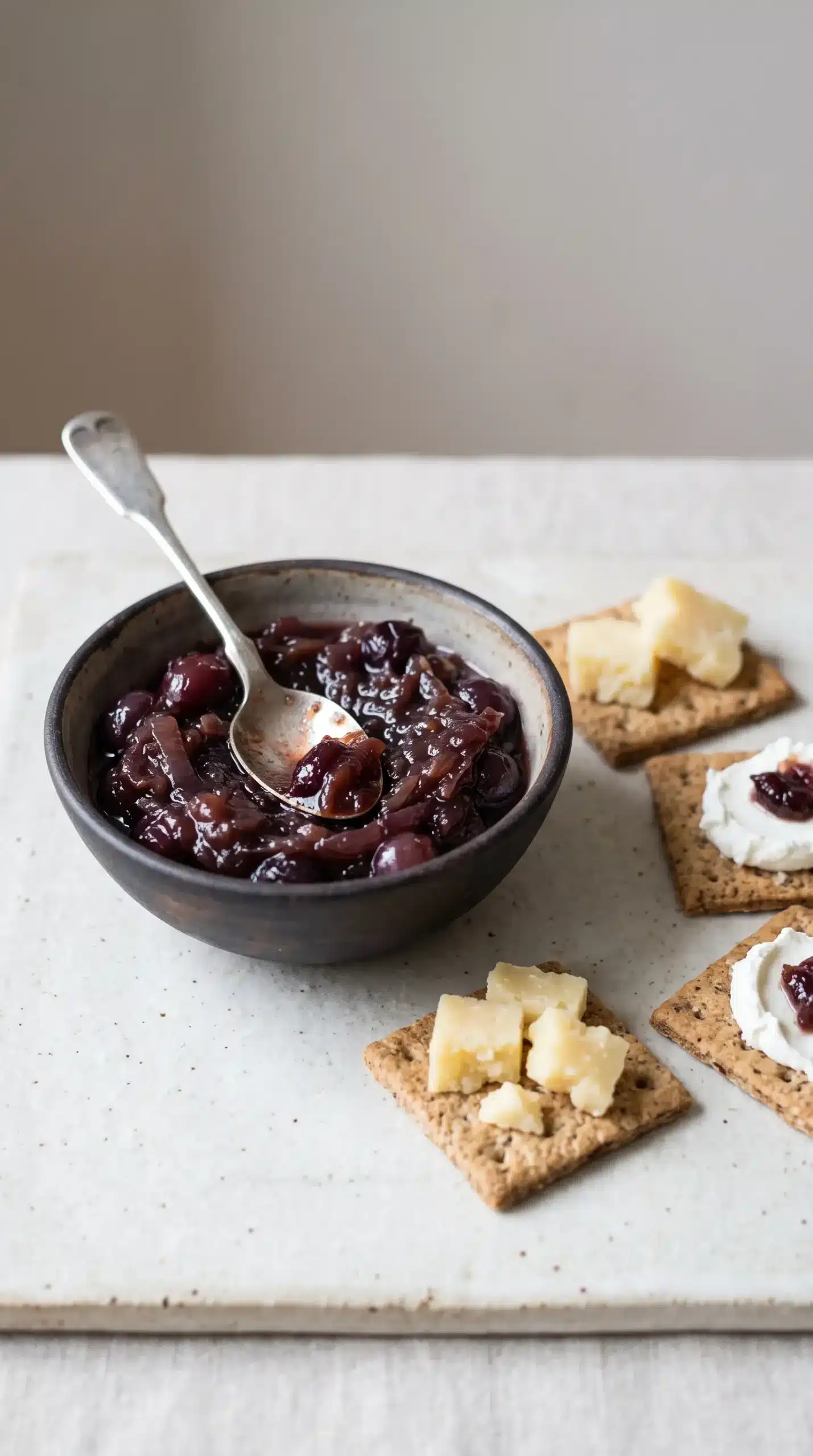
Manchego and goat cheese are especially suited to this grape chutney because their textures and flavors respond well to the sweet-tart spread. A serving board can include soft cheese appetizer pairings to add creamy contrast, allowing a small amount of cheese to become a complete bite when served with crackers.
- Manchego pairing: The firm, nutty character balances the fruit-forward sweetness.
- Goat cheese pairing: The tangy creaminess highlights the chutney’s acidity.
- Cracker selection: A sturdy cracker provides enough structure for the soft topping.
Gentle Simmering Controls the Chutney Texture
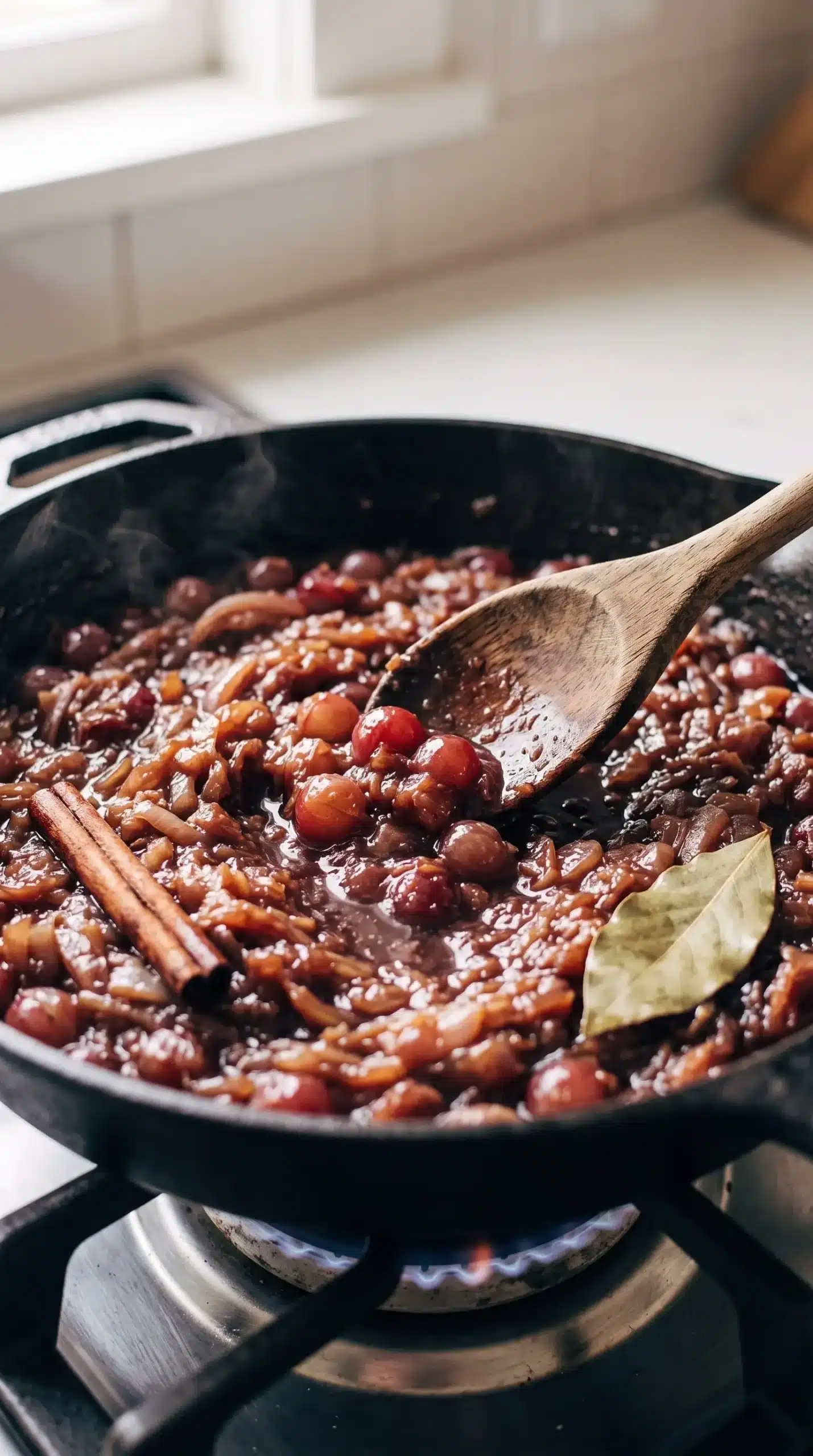
Slow simmering is the key cooking control that shapes the final consistency. The grapes need time to soften and release their juices while the liquids reduce into a concentrated mixture, following the same approach used when chutneys simmer until thick. Rushing this stage can leave the fruit less integrated and the flavor less developed.
Wooden spoon pressure offers another important texture decision. Smashing the softened grapes creates a jam-like consistency, but stopping before every piece disappears keeps some character in the chutney. The amount of pressing determines whether the finished spread feels rustic or smooth.
Cooling also affects how the chutney presents when served. Warm chutney will appear looser because the fruit juices are still active, while a cooled mixture settles into a thicker texture that spreads easily across crackers or cheese.
Serving Moments Where Grape Chutney Adds Contrast
Holiday boards, casual gatherings, and simple appetizers all benefit from the sweet-savory contrast of grape chutney. A small bowl alongside cheese and crackers turns familiar ingredients into a more layered snack experience.
Mistakes That Can Ruin Caramelized Shallot and Grape Chutney
Overheating the shallots too quickly is one common mistake because the base depends on gentle softening. Burned edges create bitterness that can compete with the fruit, so the shallots should become fragrant and tender before the grapes and liquids enter the pan.
Adding the liquids without allowing the pan to get hot enough can also limit flavor development. The brief sizzle helps release the browned flavors from the bottom of the pan, which become part of the bourbon grape chutney’s deeper taste.
Stopping the simmer before the grapes break down is another issue. A watery mixture lacks the concentrated texture expected from chutney, while properly softened fruit creates the cohesive spread that pairs naturally with cheese.
Storing and Reusing Leftover Chutney
Properly cooled grape chutney can be kept for later serving and used beyond a single appetizer plate. Its concentrated flavor makes it useful in small amounts when a meal needs sweetness, acidity, and savory depth.
Adjustments for Different Grape Chutney Uses
Small changes can shift how the condiment fits different occasions without changing its identity. Serving style often determines whether the texture should remain rustic or become smoother, and the cheese choice can influence how boldly the chutney is seasoned.
For a stronger savory presentation, pairings with aged cheeses emphasize the shallots and wine notes. Creamier cheeses bring attention to the fruit and vinegar balance, creating a softer contrast on the palate.
When using the chutney in other applications, consider its concentrated sweetness. A spoonful can complement sandwiches, roasted dishes, or appetizer plates where a bright accent is more useful than a large portion.
Cinnamon and Bay Leaf Guide the Aromatic Finish
Warm spices quietly shape the background of the chutney. The cinnamon stick adds gentle fragrance during the simmer, while the bay leaf contributes an herbal note that keeps the fruit flavor from feeling one-dimensional.
Building a More Balanced Bourbon Grape Chutney
Flavor balance comes from managing the relationship between sweetness, acidity, and savory depth. The grapes supply the fruit character, the shallots provide a cooked savory foundation, and the liquids create enough contrast to keep the spread lively.
Careful attention to each stage creates a more refined result. Soft shallots, concentrated grapes, and properly integrated spices work together because each element has time to influence the others during cooking.
Experienced cooks often look for visual cues instead of relying only on time. The chutney should show softened fruit, a thicker texture, and a glossy appearance that indicates the flavors have concentrated successfully.
Caramelized Shallot and Grape Chutney Delivers Concentrated Flavor Through Patience
Caramelized Shallot and Grape Chutney succeeds because the cooking process transforms simple ingredients into a condiment with multiple layers. Soft shallots, reduced fruit, wine, bourbon, vinegar, and warm aromatics create a spread where sweetness and savory notes remain in balance.
The most important judgment is recognizing when the grapes and liquids have developed enough texture and concentration. Once the mixture becomes cohesive and jam-like, the chutney is ready to provide the contrast that makes cheese and crackers feel complete.
Caramelized Shallot and Grape Chutney Questions About Storage and Serving
How should grape chutney be stored after cooling?
Grape chutney should be transferred to a clean covered container after it has cooled. Keeping it chilled helps maintain its texture and flavor so it remains ready for future cheese boards or appetizer servings.
Can grape chutney be made with other grape colors?
Other grape varieties can work if they provide a similar balance of sweetness and flavor. Red or purple grapes are especially fitting because they create the deep color and fruit profile associated with this chutney.
Why does the chutney need vinegar and wine?
The vinegar and wine provide acidity and depth that prevent the cooked fruit from tasting flat. Their flavors support the grapes and help the condiment pair successfully with richer foods.
What cheese works best with caramelized shallot grape chutney?
Manchego and goat cheese are strong choices because their textures and flavors create a clear contrast with the sweet, savory spread. Other cheeses can work when their character complements the chutney’s fruit and acidity.
How can the texture of grape chutney be adjusted?
The texture depends on how much the softened grapes are pressed after simmering. More pressure creates a smoother spread, while lighter pressing keeps a chunkier fruit texture.
Grape Chutney with Caramelized Shallots, Bourbon and Wine
Grape Chutney is a rich, spoonable condiment with a jam-like texture and a sweet-savory balance of fruit, aromatics, and warm depth. It is a flavorful addition to gatherings when paired with crackers and cheese.
Ingredients
Method
Cooking
- Warm the olive oil over medium heat. Add the shallots and cook, stirring occasionally, for 5-10 minutes until they become very soft and fragrant.
- Add the halved grapes and increase the heat until the mixture is hot. Pour in the bourbon, rice vinegar, and red wine, allowing the liquid to sizzle and loosen the browned bits from the pan. Add the cinnamon stick and bay leaf.
- Reduce to a simmer and cook for about 30 minutes, stirring occasionally, until the grapes begin breaking down.
- Press the softened grapes with the back of a wooden spoon until the mixture reaches a jam-like consistency. Remove from heat, cool, and serve with crackers and cheese.
Notes
Press the softened grapes to the desired jam-like texture before serving.