From breakfast to dinner, from healthy meals to sweet desserts – Next Yum Recipes brings you quick, simple and tasty ideas for every occasion and every time.


 This Recipe
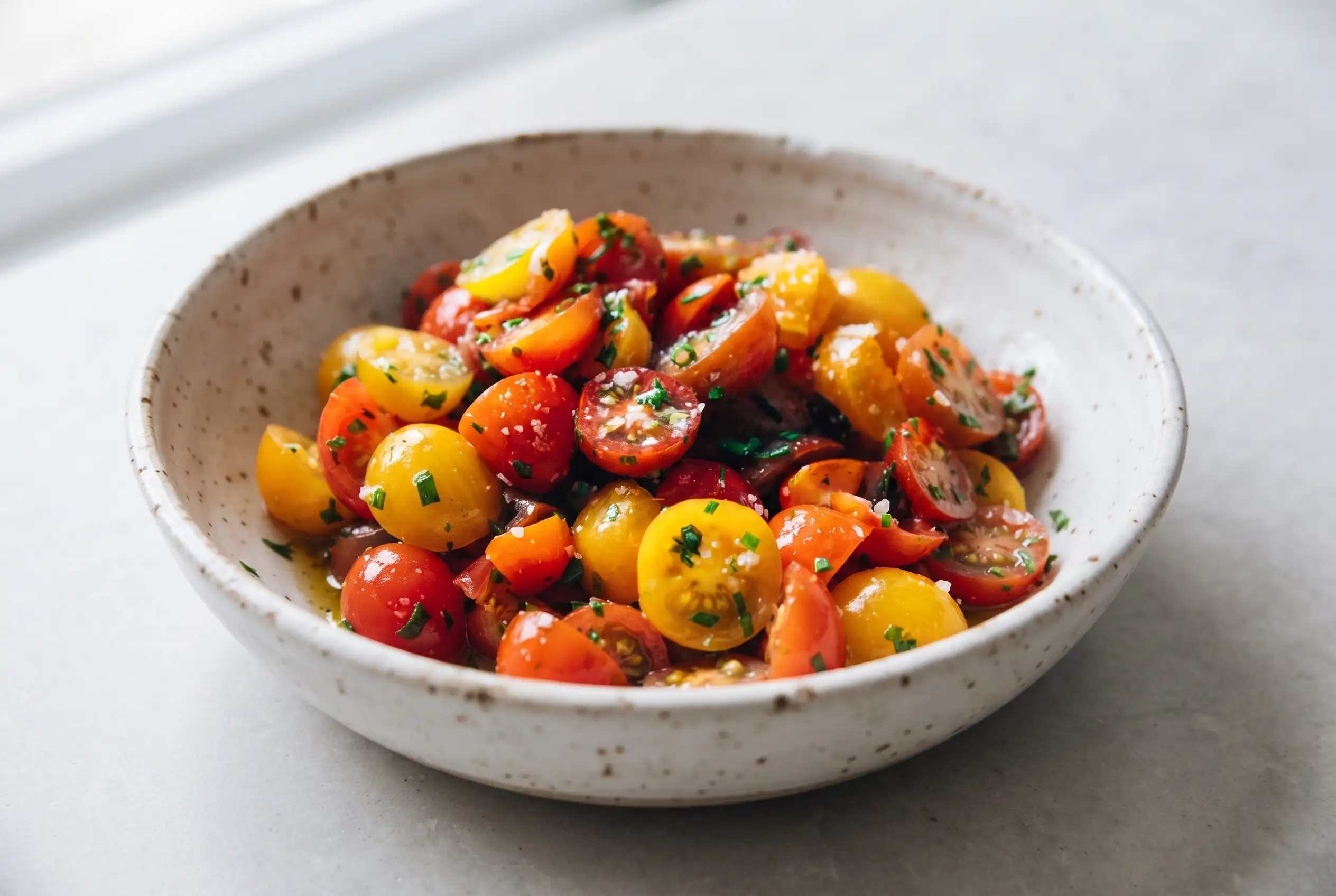
Marinated tomatoes bring together ripe tomato flavor, olive oil, acidity, garlic, and herbs in a simple preparation that transforms fresh produce into a versatile dish. These 5 ingredient marinated tomatoes rely on a short ingredient list and resting time to create a bright addition for salads, sandwiches, pasta dishes, or meals that need a fresh finish.
Why Marinated Tomatoes Work Beyond Fresh Slices
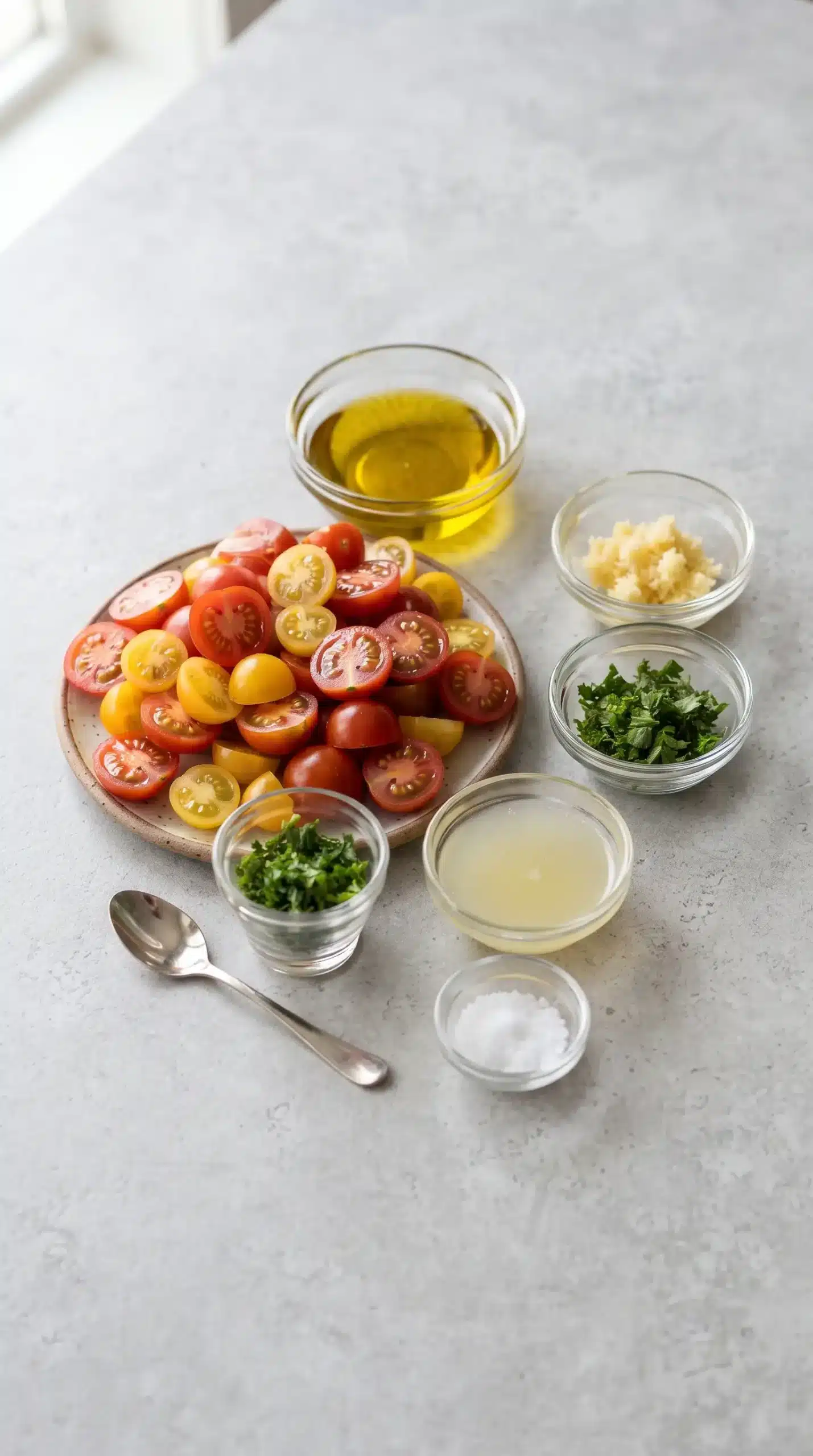
Marinated tomatoes develop their character through the interaction of simple ingredients. The tomatoes provide the foundation, while the oil, acid, garlic, herbs, and salt create a seasoned mixture that reaches more of the surface area after the pieces are cut.
Fresh tomatoes can taste completely different when they are allowed to rest with a dressing. The resting period gives the flavors time to combine, while the tomato pieces absorb some of the seasoning around them.
Unlike a complicated preparation, an easy marinated tomato recipe keeps attention on ingredient quality and handling. The dish works because each choice affects the finished texture, from the firmness of the tomatoes to the amount of time they spend soaking.
Choosing Tomato Texture for Marinated Tomatoes
Cherry or grape tomatoes are especially useful because their texture holds up well after being cut and seasoned, but sliced beefsteak tomatoes can also work when a softer, larger tomato style is preferred. Choosing firm tomatoes with good structure helps them maintain their shape as the flavors settle.
Acids and Herbs Shape the Cherry Tomato Marinade
Vinegar or lemon juice provides the bright acidic note that balances the richness of olive oil. Different acid choices create slightly different results, so the selection can match the meal where the tomatoes will appear.
Herbs bring freshness to the mixture, with minced parsley fitting naturally into the combination. The herb amount is small but noticeable because the tomatoes provide a mild background that allows fresh flavors to stand out.
Several acid options can suit the same cherry tomato marinade. White vinegar, red wine vinegar, and lemon juice are all appropriate choices when the cook wants to adjust the direction of the finished flavor without changing the basic preparation.
| Acid choice | Flavor direction | Useful pairing style |
|---|---|---|
| Lemon juice | Fresh and citrus-forward | Light salads and vegetable dishes |
| White vinegar | Clean and sharp | Everyday tomato toppings |
| Red wine vinegar | Deeper tang | Heartier Mediterranean-inspired plates |
Serving Ideas That Let Marinated Tomatoes Shine
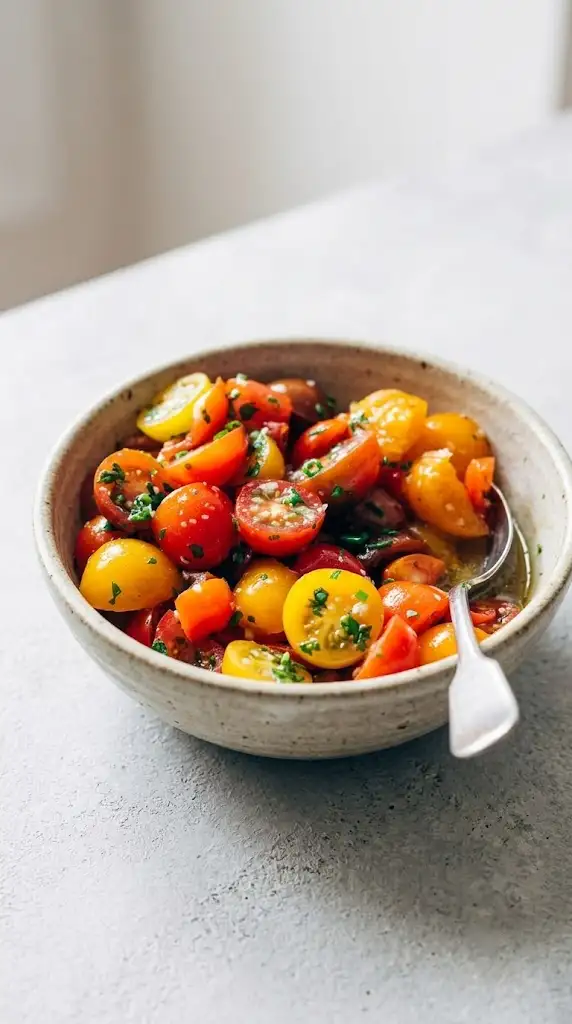
Marinated tomatoes can move beyond a side dish by adding moisture and seasoning to meals where fresh tomato flavor is useful, including a BLT Panzanella Salad that combines seasoned tomatoes with other fresh ingredients for a more complete meal.
- Salad addition: Use the seasoned tomatoes to bring extra flavor and moisture to leafy greens or grain-based combinations.
- Meal topping: Spoon them over dishes that benefit from a fresh, acidic contrast.
- Simple side: Serve them as a direct way to highlight ripe tomatoes with minimal preparation.
Timing Control Keeps Tomatoes Balanced
Resting time is one of the most important controls for marinated tomatoes. The mixture needs enough time for the flavors to combine, but the texture of the tomatoes should still match how they will be served.
Refrigeration helps the flavors settle together, especially when the tomatoes are being prepared ahead. Longer resting can be useful when firmer tomatoes are used or when the tomatoes will become part of another dish.
Temperature also affects the serving experience. Bringing the tomatoes back toward room temperature before serving helps the olive oil return to its normal consistency after chilling and allows the flavors to show more clearly.
Marinated Tomatoes Common Mistakes to Avoid
Overhandling delicate tomatoes can lead to a softer texture than intended, while choosing tomatoes that are already very fragile can make them break down during resting. Cutting pieces appropriately, using enough structure from the tomatoes, and allowing the mixture to rest without unnecessary stirring help preserve the finished texture.
Tomato Cuts Change How Marinade Settles
The way tomatoes are cut influences how quickly the seasoning reaches the inside surfaces. Halved or quartered small tomatoes expose enough flesh for the marinade to work while keeping recognizable pieces for serving.
Larger tomato varieties can be prepared differently because their size changes the relationship between the exterior surface and the interior flesh. Sliced beefsteak tomatoes offer a different presentation while still allowing the same flavors to develop.
Cut size should also reflect the intended use. Smaller pieces may blend easily into a salad, while larger slices can create a more prominent tomato element on a plate.
| Tomato style | Preparation approach | Texture consideration |
|---|---|---|
| Cherry tomatoes | Halve or quarter | Keeps bite-sized pieces intact |
| Grape tomatoes | Halve or quarter | Works well for longer resting |
| Beefsteak tomatoes | Slice into larger pieces | Requires gentler handling |
Storing Marinated Tomatoes Without Losing Texture
Prepared marinated tomatoes are best kept chilled when they are not being served immediately. If the olive oil becomes firm in the refrigerator, allowing the tomatoes to return to room temperature resolves the change before serving.
Variations That Fit Easy Marinated Tomato Recipe Ideas
Small adjustments can change how marinated tomatoes fit into different meals while keeping the core preparation recognizable. Switching the acid or choosing a different tomato style are simple ways to adapt the dish.
Extra creativity can come from deciding where the tomatoes will be used. A salad application may favor smaller pieces, while a topping application may benefit from slices or larger pieces that remain visually distinct.
Simple variations should keep the balance between tomato flavor and seasoning. The purpose of the marinade is to enhance the tomatoes, so changes work best when they support the natural freshness of the produce.
Pairings That Use Every Marinated Tomato Flavor
The seasoned tomatoes are especially useful when a meal needs freshness, acidity, or a burst of herb flavor. Their flexible texture makes them suitable for many serving situations without requiring additional preparation.
Fresh Preparation Choices Improve Serving Results
Good results begin with decisions made before the tomatoes meet the marinade. Choosing tomatoes with enough firmness, cutting them carefully, and considering the intended serving style all influence the finished dish.
Thoughtful preparation also means considering when the tomatoes will be enjoyed. A mixture prepared for immediate serving may be handled differently from one intended to rest longer before becoming part of another meal.
Small details create the strongest improvements in a dish built from a handful of ingredients. The combination of tomato quality, seasoning balance, and careful timing determines whether the finished tomatoes taste fresh and well integrated.
Marinated Tomatoes Capture Simple Flavor Decisions
Marinated tomatoes show how a few ingredients can create a finished dish through careful choices about texture, seasoning, and resting. The best results come from respecting the tomatoes themselves and allowing the marinade to complement their natural character.
Fresh tomato pieces, balanced acidity, and properly timed resting create a versatile preparation that can move easily from a simple side to a flavorful addition for many meals.
Garlic and Timing Questions About Marinated Tomatoes
Can garlic be adjusted in marinated tomatoes?
Garlic can be increased or reduced according to personal preference, but finely grated garlic spreads its flavor throughout the mixture and works well with the small amount used in the preparation.
How long should tomatoes rest before serving?
The tomatoes benefit from resting in the refrigerator before serving so the flavors can combine. Longer resting can work well when firmer tomatoes are used or when they will be mixed into another dish.
Can different tomatoes be used instead of cherry tomatoes?
Yes, larger tomatoes such as beefsteak varieties can be used by cutting them into slices. The larger pieces simply create a different texture and presentation.
Why does olive oil sometimes become firm after chilling?
Olive oil can become thicker or congealed when refrigerated. Bringing the tomatoes back to room temperature allows the oil to loosen before serving.
Which vinegar works best for the marinade?
White vinegar, red wine vinegar, and lemon juice can all work well. The best choice depends on the flavor direction desired for the finished tomatoes and the meal where they will be served.
Marinated Tomatoes with Olive Oil Garlic and Herbs
Marinated tomatoes are a fresh, easy recipe with juicy tomato texture, bright acidity, and herb flavor. This simple dish is perfect when you want a flavorful addition made with a short ingredient list.
Ingredients
Method
Preparation
- Add the tomatoes, garlic, olive oil, vinegar, herbs, and salt to a small bowl.
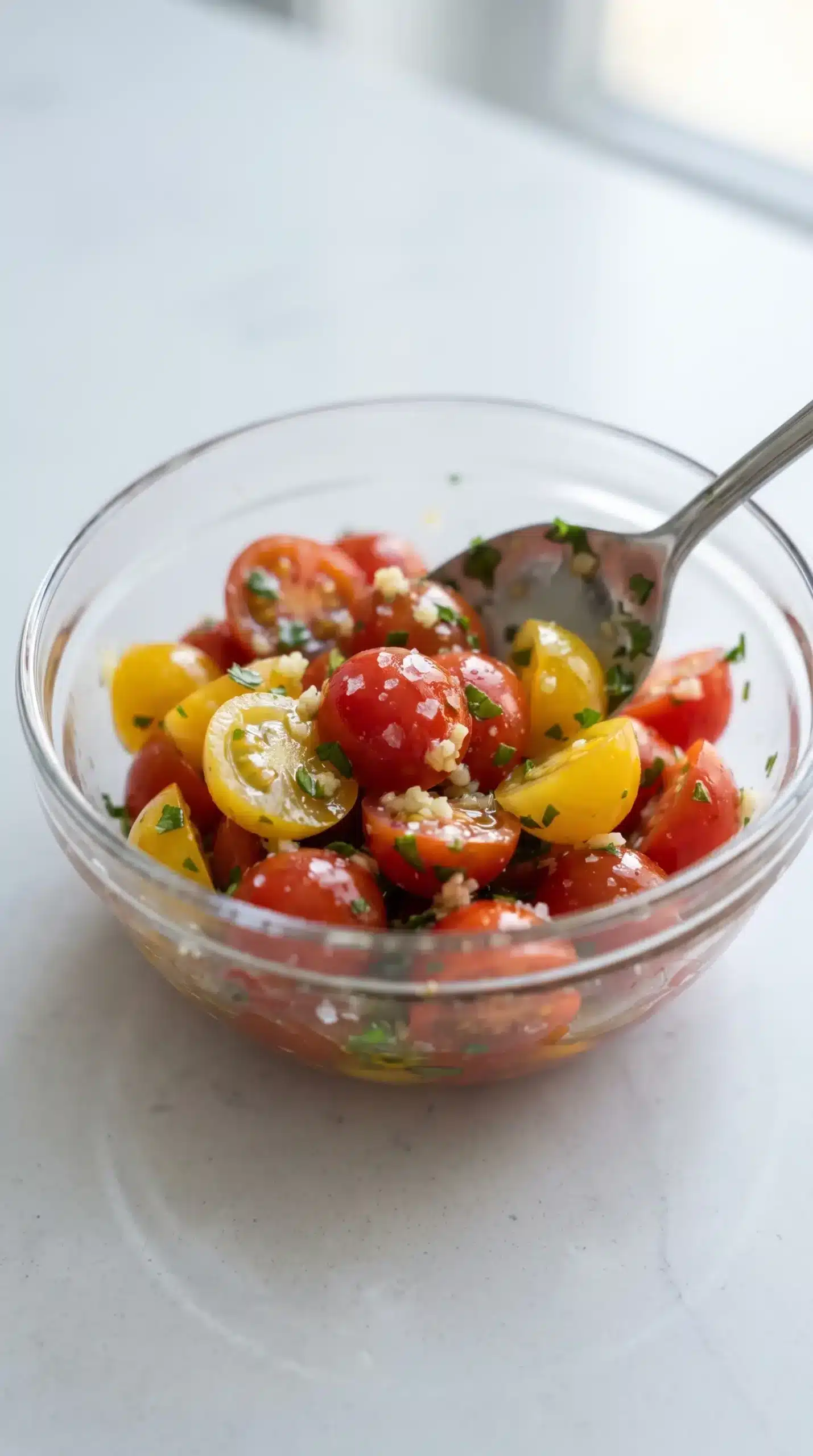
- Mix the ingredients together until the tomatoes are evenly coated with the marinade.
- Place the marinated tomatoes in the refrigerator to rest before serving.
- Bring the tomatoes back to room temperature before serving for the best texture and flavor.
Notes
Tomato Options: Whole beefsteak tomatoes can also be used by slicing them into pieces. Acid Options: White vinegar, red wine vinegar, and lemon juice all work well. Timing: When marinating for longer periods, the olive oil may become slightly firm in the refrigerator; bringing the tomatoes back to room temperature will restore the texture.