From breakfast to dinner, from healthy meals to sweet desserts – Next Yum Recipes brings you quick, simple and tasty ideas for every occasion and every time.


 This Recipe
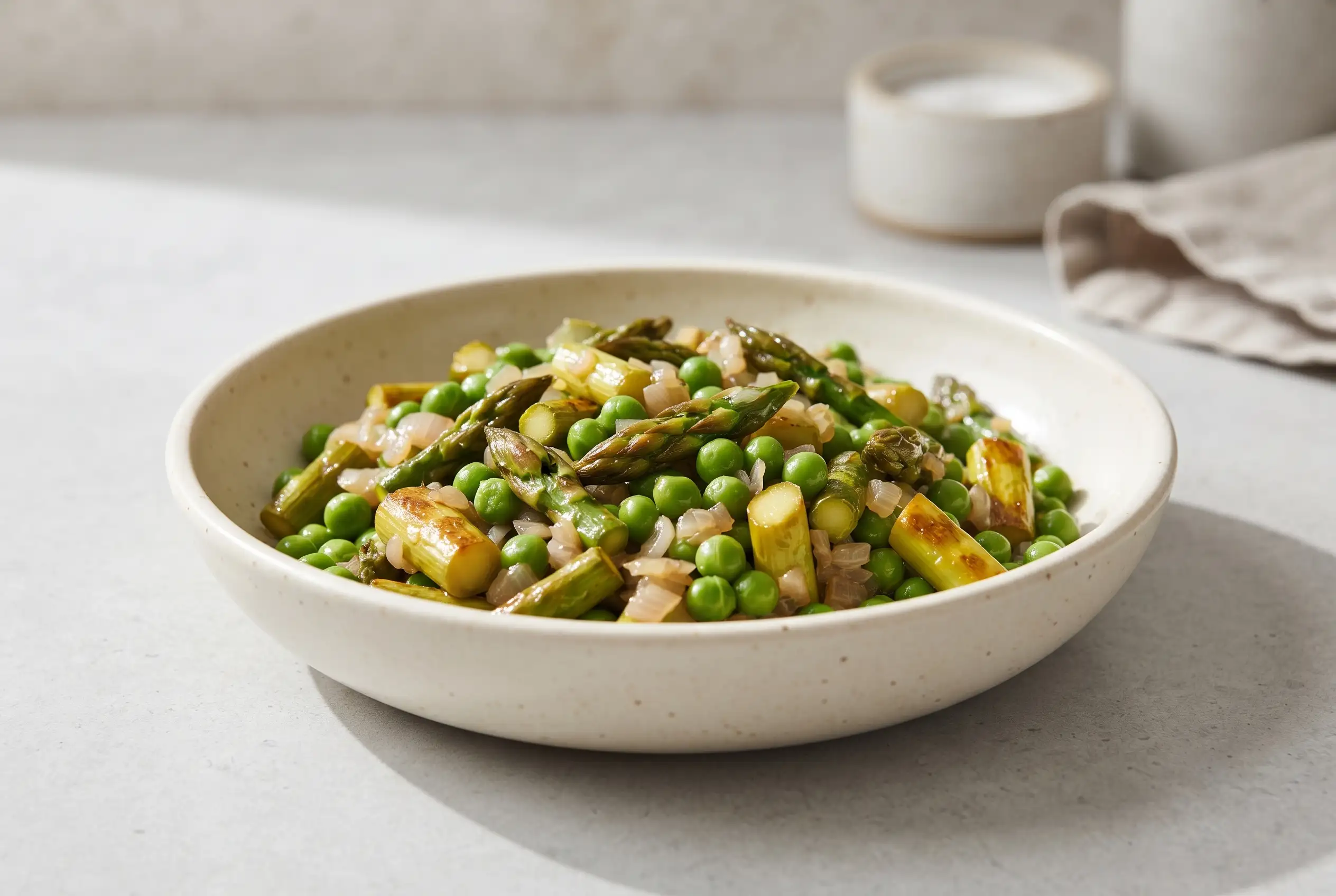
Asparagus pea saute brings together tender green vegetables, rich butter, and a lightly sweet finish in a simple skillet dish that highlights the natural character of spring produce. The combination of fresh asparagus, peas, minced shallot, and honey creates a vegetable side that feels vibrant while relying on a short ingredient list and careful cooking decisions.
Unlike heavier vegetable preparations, this asparagus and pea saute recipe depends on timing and texture. The asparagus needs enough heat to develop slight golden color while keeping its structure, and the peas need only a short stay in the pan to remain distinct. The result is a fresh asparagus saute with peas that works because each element keeps its own personality.
Asparagus Pea Saute Brings Spring Vegetables Together
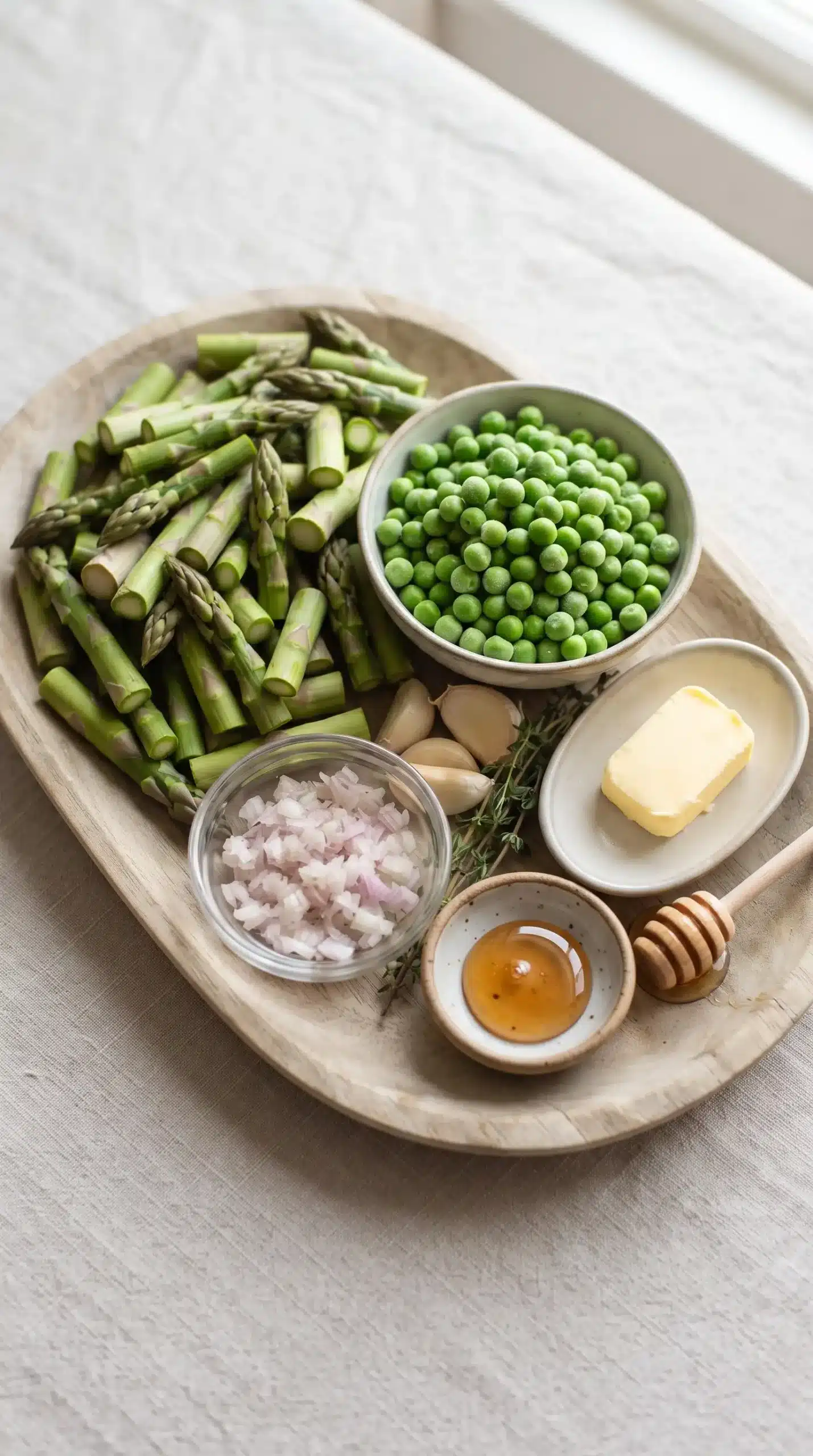
Seasonal vegetables often shine when they are handled with restraint. The asparagus provides the main structure of the dish, with pieces that move from crisp-tender to lightly browned during cooking. Peas add small bursts of sweetness and soften quickly, creating contrast against the firmer vegetable pieces.
Butter connects the vegetables while carrying the flavors of shallot and honey throughout the pan. The fat helps the vegetables cook evenly and gives the finished asparagus pea vegetable saute a smooth texture without requiring a heavy sauce or complicated preparation.
The simplicity also makes the dish adaptable at the table. It can accompany a main course, become part of a vegetable-focused meal, or add color to a plate where richer foods need a fresh counterpoint.
Fresh Asparagus Texture Shapes the Saute’s Balance
Asparagus determines much of the final texture, so preparation choices have a noticeable effect. Chopping the stalks creates smaller pieces that cook more evenly and allows the vegetable to mix naturally with the peas instead of leaving large sections with different levels of doneness.
Fresh asparagus works especially well here because it can develop slightly golden surfaces during sauteing. That browning creates a deeper flavor while the interior remains tender. The pieces should have enough contact with the pan to change color, but frequent attention helps prevent scorching.
- Stalk size: Thicker asparagus pieces may need more attention during cooking, while thinner pieces can soften faster.
- Cut shape: Similar-sized pieces help the asparagus and peas finish closer together.
- Pan contact: A hot cooking surface encourages light browning instead of a steamed texture.
Shallot Butter and Honey Create the Dish’s Flavor Base
The flavor foundation begins before the vegetables enter the pan. Shallot cooked in butter develops a soft, fragrant quality that spreads through the saute. This early step creates a savory background that supports the sweetness of the peas and the honey added later.
Honey is used as a finishing element that rounds out the vegetable flavors. Its sweetness does not need to dominate the dish; a small amount blends into the butter and vegetables, helping connect the earthy asparagus with the sweeter notes already present in peas.
The combination works because the ingredients serve different purposes. Shallot builds aroma, butter carries flavor, and honey provides a gentle contrast that keeps the vegetables from tasting one-dimensional.
Small Cooking Choices Keep Asparagus Pea Saute Bright
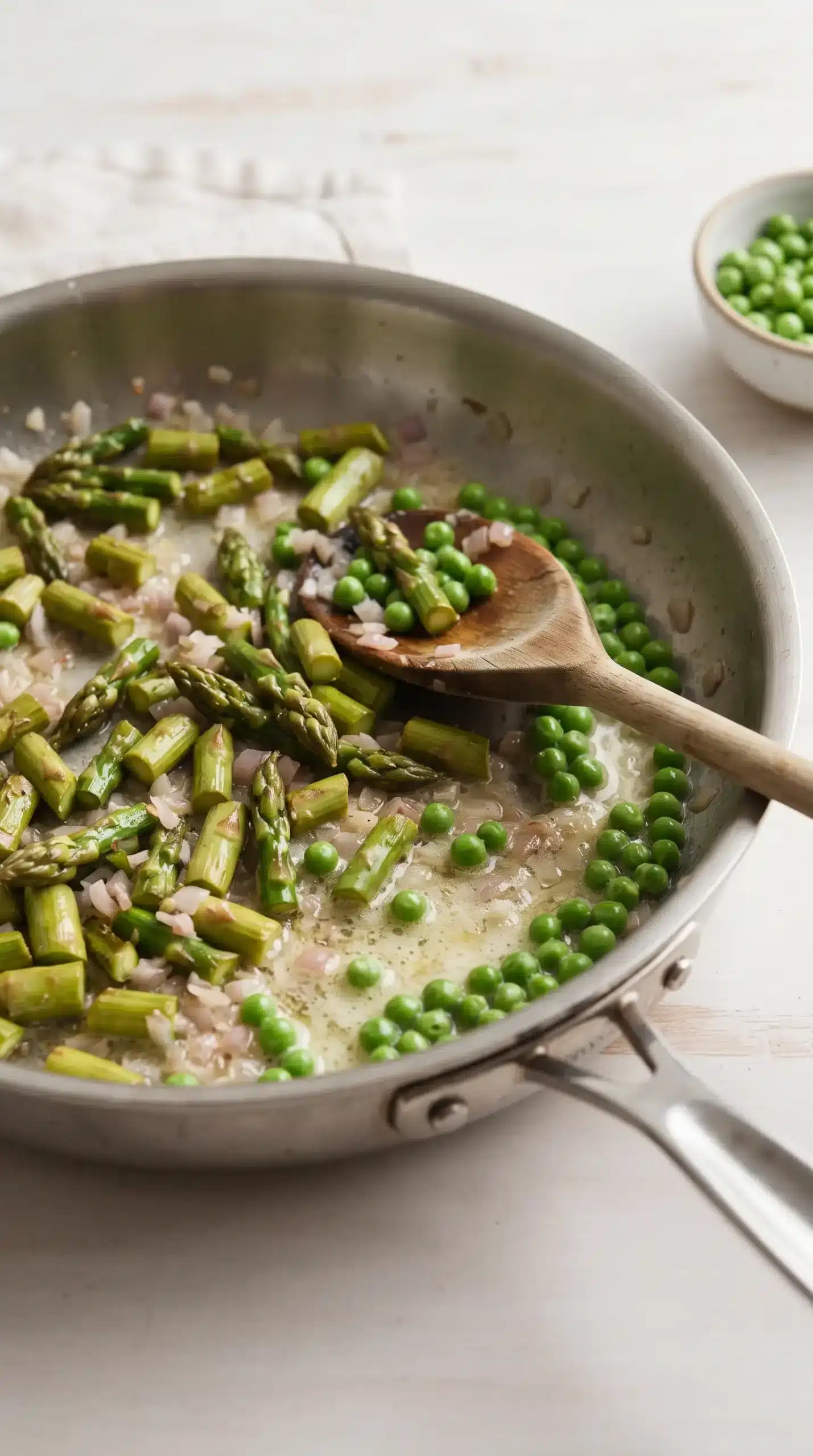
Control over heat and movement matters most during cooking. A medium-high setting allows the asparagus to cook through while developing color, but the pan still requires attention because vegetables with natural sugars can brown quickly.
A useful way to build flavor while protecting asparagus texture is skillet-charring asparagus, which uses direct pan contact to encourage browning while helping the vegetable stay tender inside.
Stirring at the right moments keeps pieces from burning while allowing enough time for contact with the hot surface. Constant movement can prevent browning, while ignoring the pan can leave unevenly cooked vegetables.
The peas enter after the asparagus has started to soften because they need less cooking time. Adding them later preserves their shape and keeps the finished dish from becoming overly soft.
| Cooking focus | Useful observation | Better result |
|---|---|---|
| Asparagus browning | Look for slight golden color on the outside | More developed vegetable flavor |
| Pan movement | Stir occasionally instead of constantly | Balanced cooking and surface color |
| Pea timing | Add after asparagus begins cooking | Peas stay tender and distinct |
Common Mistakes Can Flatten an Asparagus Pea Saute
Vegetable dishes with simple ingredients leave little room for hiding mistakes. The most common issues come from losing the texture contrast that makes asparagus and peas appealing together.
- Overcooking asparagus: Extended heat can make the pieces soft and reduce the contrast between the vegetables. Watch for tenderness while maintaining some structure.
- Adding peas too early: Peas cook quickly, so placing them in the pan at the same time as asparagus may leave them softer than desired.
- Skipping pan attention: The butter, shallot, and vegetables need occasional stirring to avoid unwanted burning.
- Using too much heat without control: A hotter pan can create color quickly but may brown the outside before the asparagus cooks evenly.
Fixing these problems usually comes down to observing the vegetables instead of relying only on time. Color, firmness, and aroma provide useful signals while the saute cooks.
Fresh and Frozen Peas Change the Vegetable Finish
Peas offer flexibility because either fresh or frozen options can fit the dish. Fresh peas bring a seasonal quality when available, while frozen peas provide convenience and can still contribute sweetness and color.
| Pea choice | Cooking consideration | Finished texture |
|---|---|---|
| Fresh peas | May require attention based on size and tenderness | Bright and seasonal |
| Frozen peas | Warm briefly after asparagus cooks | Soft, sweet, and convenient |
| Combination approach | Adjust timing to keep vegetables balanced | Flexible vegetable contrast |
The choice between fresh and frozen peas does not change the character of the dish as much as the timing does. Keeping the peas from staying in the pan too long helps preserve the difference between the asparagus pieces and the smaller vegetables.
Serving Ideas Highlight the Asparagus Pea Vegetable Saute
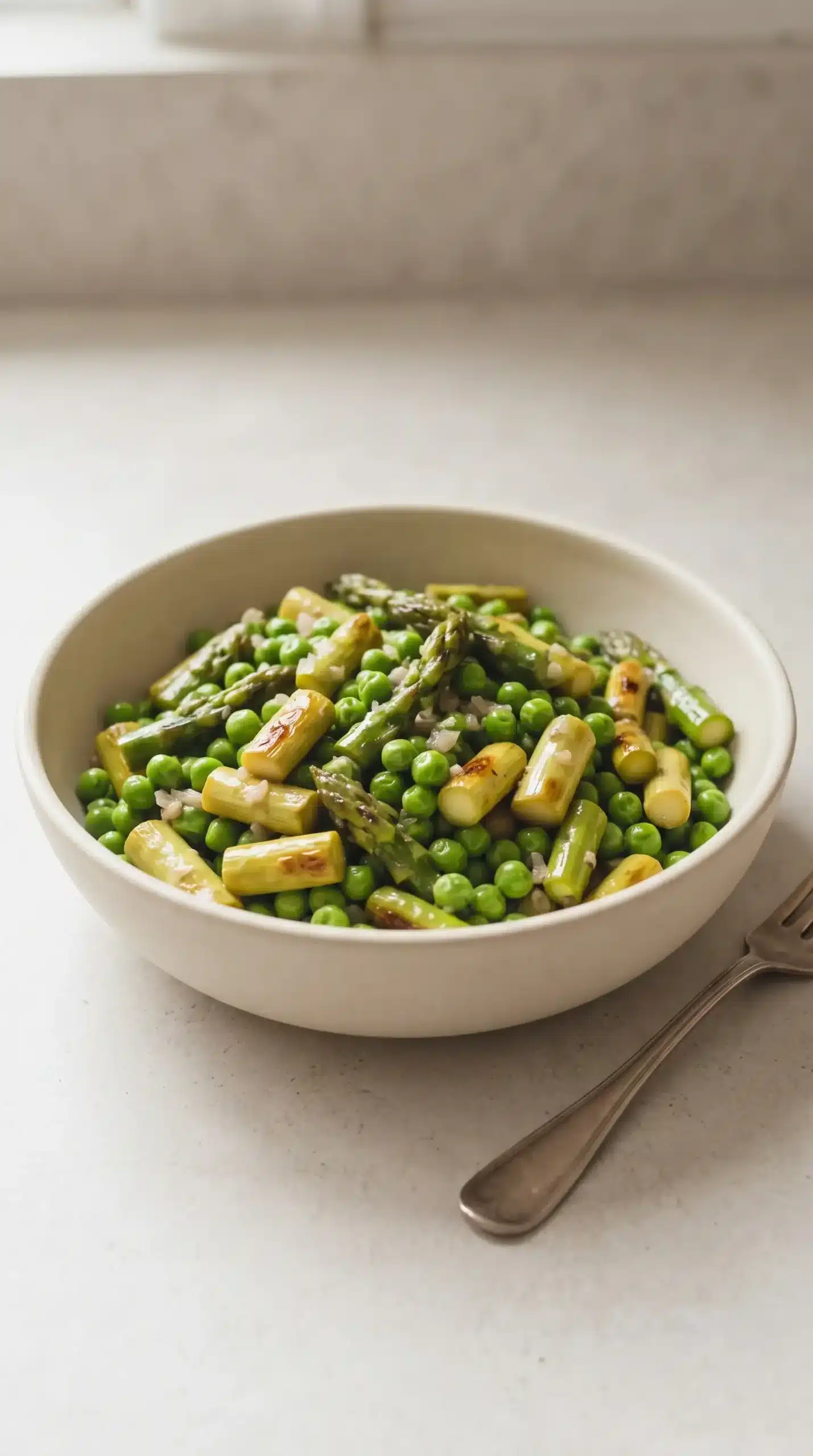
This vegetable saute works best when its fresh flavors remain noticeable alongside the rest of the meal. The buttery asparagus and peas can complement a protein-centered plate, including lemon chicken with asparagus, where the vegetables add color and a fresh contrast to the richer components.
Because the preparation is light, it can also serve as a way to introduce more vegetables without creating a complicated component. The combination of sweetness, savory aroma, and tender texture gives it enough character to stand beside simple meals.
- Side dish pairing: Serve alongside a main dish that benefits from a bright vegetable element.
- Plate contrast: Use the green colors and varied textures to add visual interest.
- Seasonal focus: Highlight fresh produce when asparagus is at its best.
Preparing Ahead Preserves the Vegetable Contrast
Advance preparation works best when the vegetables are handled carefully. Chopping asparagus and preparing the shallot before cooking can simplify the process while keeping the actual saute focused on texture and timing.
Cooked leftovers can soften as they sit because vegetables continue to lose some firmness after heating. Gentle reheating helps warm the dish without pushing the asparagus and peas beyond their ideal texture.
Storage decisions are most useful when they protect the qualities that define the saute. Keeping the vegetables from becoming overly soft helps maintain the contrast that makes the dish appealing.
Variations Keep the Saute Flexible
The basic combination leaves room for adjustments while keeping the central idea intact. Changes should support the relationship between vegetables, butter, and the light sweetness from honey instead of covering those flavors.
- Vegetable additions: Other seasonal vegetables can be considered when they cook at a similar pace.
- Sweetness adjustment: Honey can be balanced according to personal preference and the natural sweetness of the peas.
- Texture focus: Cutting vegetables consistently helps any variation cook more evenly.
These changes work because the dish is built around technique as much as ingredients. Maintaining proper vegetable texture is more important than adding many extra elements.
Asparagus Pea Saute Fits Simple Meal Planning
Vegetable sides are often most useful when they provide flavor without demanding complicated preparation. The asparagus pea saute achieves that balance by using a small group of ingredients that work together through careful timing.
The dish also shows how a few cooking choices can transform everyday produce. Browning the asparagus, adding peas at the appropriate stage, and finishing with honey create a result that feels intentional while remaining approachable.
Asparagus Pea Saute’s Vegetable Timing Defines Its Success
Asparagus develops its best character when the pan allows it to become tender while still holding some texture and gaining light golden edges. Peas complete that contrast by bringing softness and sweetness without needing extended cooking.
Balanced timing is the defining choice behind this saute. The vegetables, butter, shallot, and honey succeed together when each part contributes without overwhelming the others, creating a simple dish where careful attention produces the strongest result.
Questions About Asparagus Pea Saute Texture and Storage
How do I keep asparagus from becoming too soft?
Asparagus stays more appealing when it is cooked until tender but still has structure. Watching for slight browning and checking the texture during cooking helps prevent the pieces from becoming mushy.
Can I use frozen peas in an asparagus pea saute?
Frozen peas are suitable for this dish and provide a convenient option when fresh peas are unavailable. They should be added later in the cooking process because they need less time to become tender.
Why does my vegetable saute lack flavor?
The flavor depends on building the base with butter and softened shallot before combining the vegetables. Allowing the asparagus to develop some color also adds depth that supports the sweeter elements.
How should I store leftover asparagus pea saute?
Store leftovers in a covered container and reheat gently to protect the vegetable texture. Strong reheating can make the asparagus and peas softer than when first cooked.
Can fresh asparagus and frozen peas cook together successfully?
They work well together because they have different cooking needs. Starting with asparagus and adding peas later allows both vegetables to reach a pleasant texture at the same time.
Asparagus Pea Saute with Butter and Honey Vegetable Side
Asparagus pea saute is a fresh vegetable side with tender asparagus, sweet peas, buttery shallot flavor, and a light honey finish. It is an easy recipe for adding a vibrant, flavorful dish to a meal with minimal preparation.
Ingredients
Method
Cooking
- Melt the butter in a saucepan over medium-high heat. Add the minced shallot and cook for 1-2 minutes, stirring until softened and fragrant.
- Add the chopped asparagus and cook, stirring occasionally, until the pieces are cooked through and slightly golden on the outside.
- Add the peas and saute for a few minutes until they are cooked.
- Stir in the honey until evenly combined with the vegetables.
- Serve the asparagus pea saute as a finished vegetable side.
Notes
Cook the asparagus until tender while keeping some texture, and add the peas later so they remain distinct.