From breakfast to dinner, from healthy meals to sweet desserts – Next Yum Recipes brings you quick, simple and tasty ideas for every occasion and every time.


 This Recipe
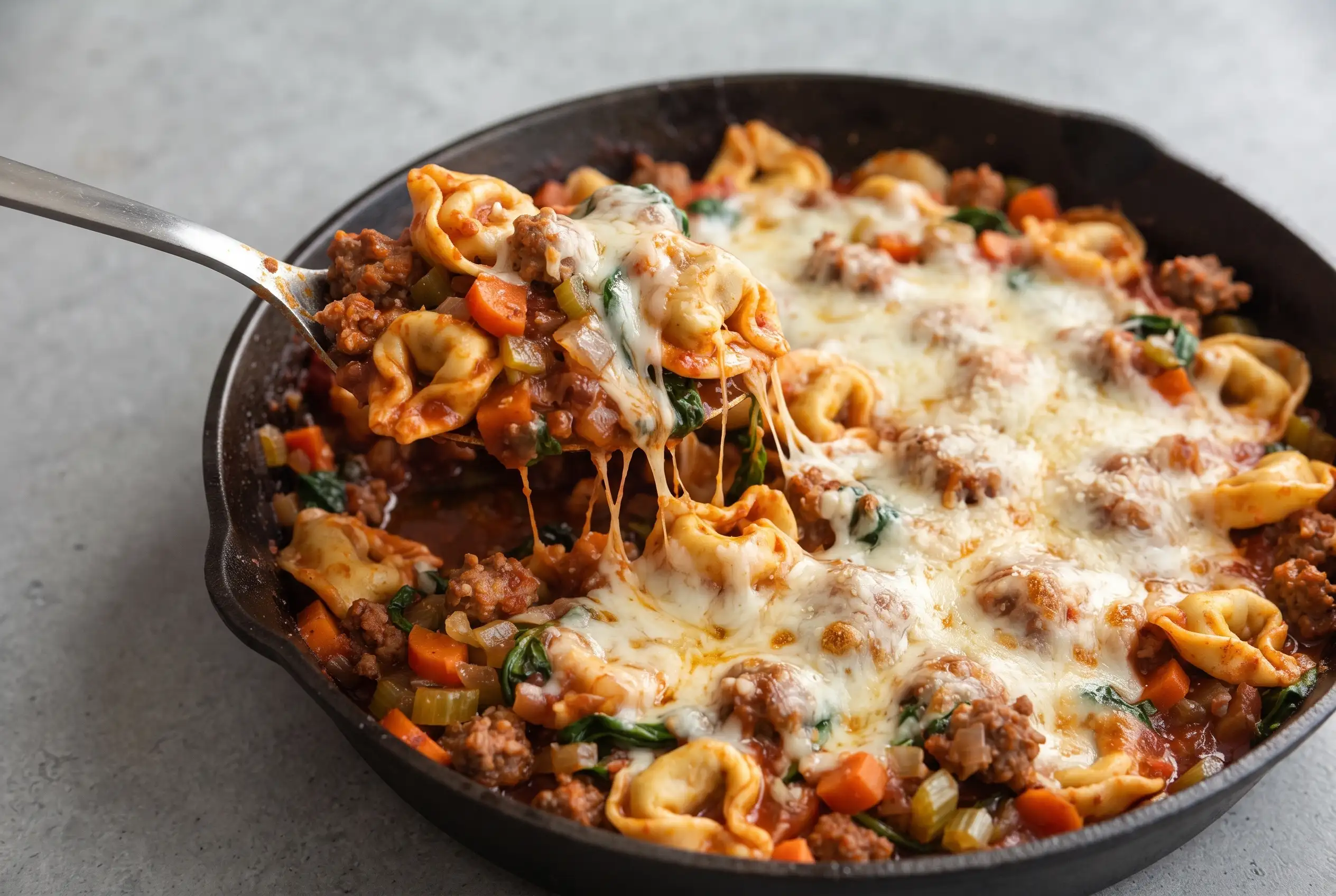
Baked tortellini with sausage brings together tender cheese-filled pasta, savory sausage, vegetables, and a rich tomato base in one comforting skillet meal. The combination works because the tortellini cooks directly with the sauce, allowing the pasta to absorb flavor before a layer of melted cheese finishes the dish in the oven.
Baked Tortellini with Sausage Brings Skillet Comfort to the Table
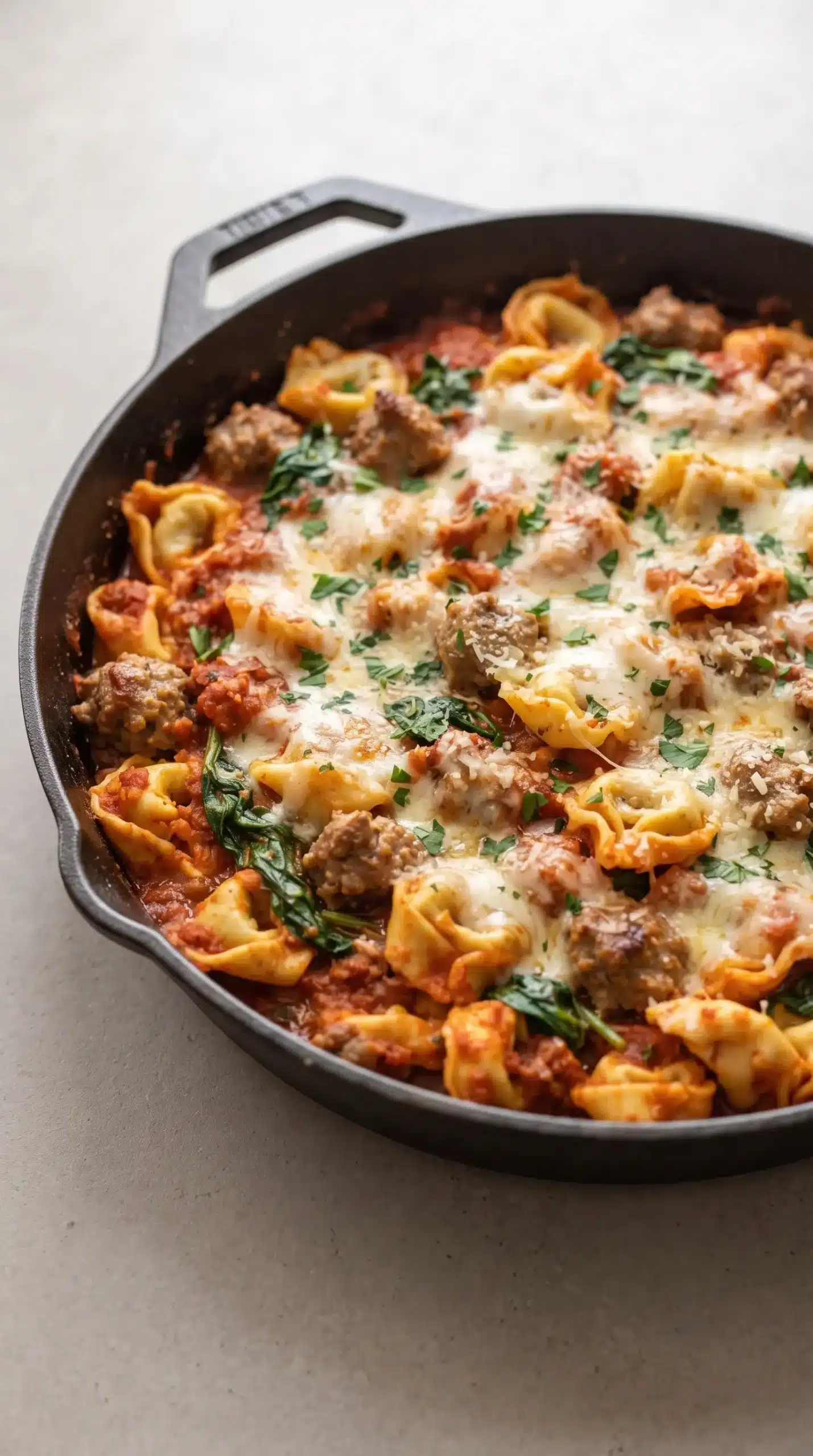
Warm flavors define this baked tortellini with sausage, where browned sausage creates a deeply savory foundation for the vegetables and tomato sauce. The oven step adds a finished layer of mozzarella and Parmesan that turns the skillet into a cheesy baked tortellini dish with a satisfying top.
Built around refrigerated cheese tortellini, the meal keeps preparation practical while still offering the feel of a slow-cooked pasta dinner. The pasta absorbs broth and tomato flavors during cooking, creating a sauce that clings closely to each piece.
Served with garlic bread, the sausage tortellini bake becomes a complete dinner built around familiar ingredients. The flexible tortellini amount also makes it easy to adjust based on the size of the pan and how much pasta fits comfortably.
Cheese Tortellini Choice Shapes the Sausage Bake
Choosing refrigerated cheese tortellini helps maintain the intended texture because the pasta cooks quickly while the sauce simmers. The amount used can vary depending on the skillet size, but the pasta should have enough space and liquid to soften without overcrowding the pan.
The Sausage and Tomato Balance Drives Flavor
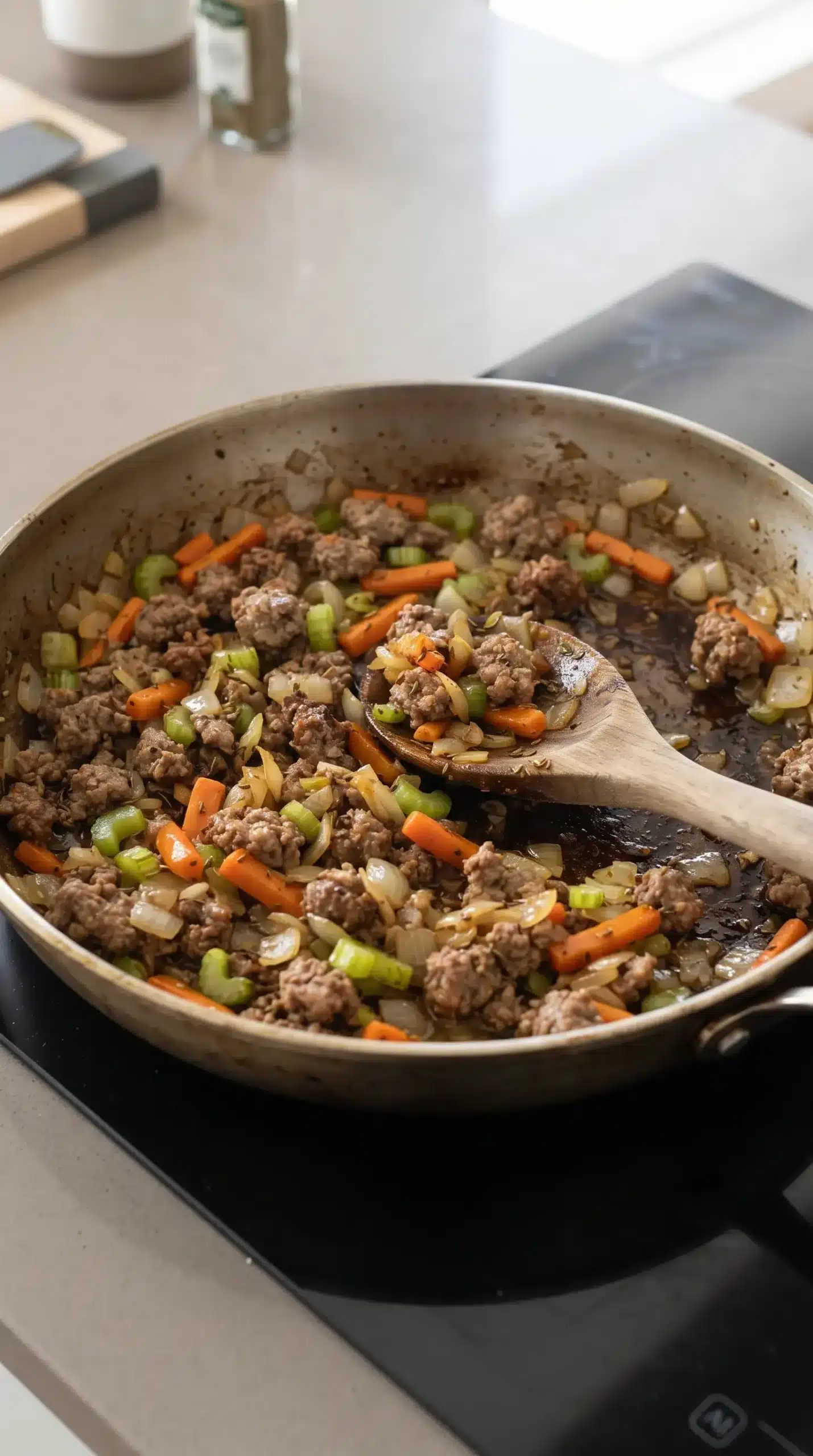
Italian sausage provides the seasoned base that carries through the entire dish after it is browned. Mild sausage creates a family-friendly version, while a spicy variety can bring more heat without changing the overall cooking approach.
Carrots, celery, onion, garlic, and crushed fennel seeds build the vegetable layer that supports the sausage and tomato combination. Sautéing the vegetables after browning the meat helps capture the flavorful browned bits left in the skillet.
Tomato sauce or San Marzano tomatoes can both work as the foundation, with seasoning adjusted depending on the choice. A jarred sauce may already contain salt and spices, while canned tomatoes may need additional seasoning after the flavors come together.
| Base choice | Flavor result | Helpful adjustment |
|---|---|---|
| Tomato sauce | Smoother and more seasoned | Taste before adding extra salt |
| San Marzano tomatoes | More direct tomato flavor | Adjust seasoning after simmering |
| Spicy sausage | More heat throughout the skillet | Pair with a balanced sauce amount |
A Large Skillet Prevents Tortellini Cooking Problems
Oversized cookware gives the tortellini room to move as it cooks with the sauce and broth. A large oven-safe skillet is useful because the same pan can handle browning, simmering, and the final cheese-melting stage.
Careful liquid control matters because tortellini needs enough broth and sauce to cook properly without leaving the dish watery. Adding broth gradually allows the cook to adjust based on how quickly the pasta absorbs moisture.
Gentle simmering keeps the pasta cooking evenly before the skillet moves into the oven. The cheese topping only needs enough oven time to melt and blend with the warm filling underneath.
- Pan size: Choose cookware that can hold the tortellini, sauce, vegetables, and sausage without spilling.
- Liquid check: Add broth as needed when the pasta requires more moisture during cooking.
- Cheese finish: Bake until the mozzarella melts and the surface looks ready to serve.
Baked Tortellini with Sausage Mistakes That Cause Setbacks
Crowded pans can make cooking uneven because the tortellini may not have enough contact with the simmering sauce. Using a larger skillet or Dutch oven helps keep the pasta surrounded by liquid.
Skipping the browning stage removes an important flavor-building step. Sausage develops deeper flavor when it gets color before being combined with the vegetables and tomato mixture.
The flavor developed during the sausage browning step comes from Maillard browning, a heat-driven reaction between proteins and sugars that creates deeper savory notes in browned foods.
Adding cheese before the filling is ready can lead to a melted topping over undercooked pasta. Allowing the tortellini to cook through first creates a better balance between the creamy cheese layer and the pasta underneath.
Tortellini Texture Depends on Liquid and Timing
Balanced cooking comes from watching the relationship between pasta, broth, and sauce. Refrigerated tortellini cooks quickly, so checking the texture during the simmer helps prevent overly soft pasta while still allowing the filling to warm through.
Cheesy Baked Tortellini Works Beyond Dinner
Dinner tables often favor this sausage tortellini bake because it combines pasta, protein, vegetables, and a baked cheese finish in a single dish. Serving a mix of pasta textures and vegetable combinations keeps baked dinners from feeling repetitive, and baked rigatoni with spinach, provolone, and turkey uses hearty ingredients in an oven-finished format.
Different occasions can call for small serving adjustments without changing the core preparation. Extra spinach can be stirred in for more greens, or the sausage choice can shift the overall flavor profile while keeping the same structure.
Creative additions should support the existing balance of tomato, pasta, and cheese. Keeping the sauce consistency intact is important because the tortellini relies on that flavorful mixture during cooking.
Storage Choices Keep Leftover Sausage Tortellini Ready
Remaining portions should be cooled and stored in a sealed container so the pasta and sauce stay together. Reheating gently helps maintain the texture of the tortellini and keeps the cheese topping enjoyable.
Garlic Bread Pairing Completes the Serving
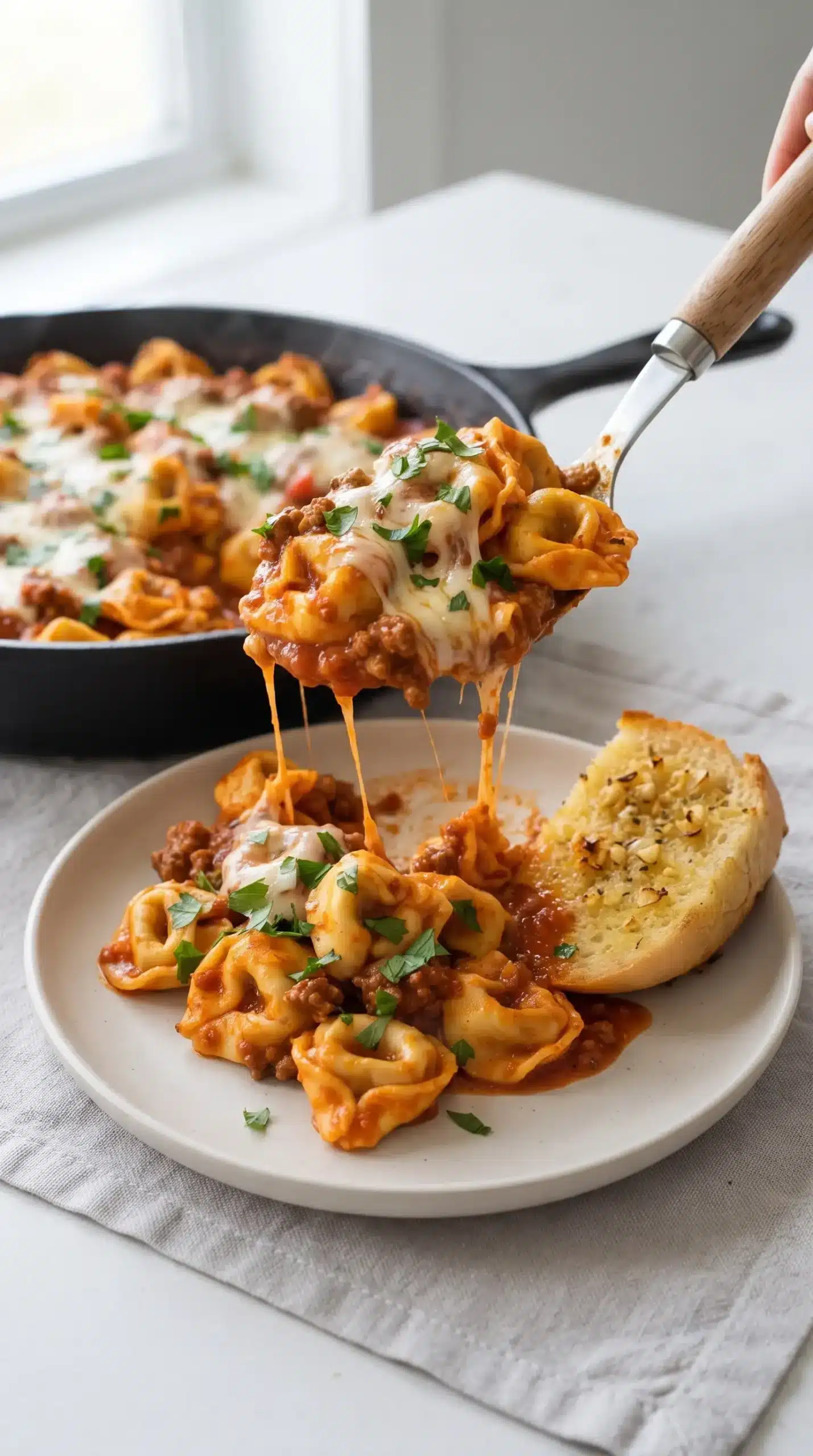
Crisp garlic bread provides a simple contrast to the soft tortellini and rich tomato sauce. Pieces can be used to scoop up the extra sauce, making the skillet-style presentation especially practical for sharing.
Sausage Tortellini Bake Adjustments for Different Tastes
Mild sausage creates a softer flavor profile, while spicy sausage adds a stronger kick throughout the dish. Either option works with the tomato base, vegetables, and cheese finish already built into the preparation.
Vegetable choices can be adjusted while keeping the original balance in mind. The carrots, celery, onion, garlic, and spinach contribute texture and freshness, so changes should still leave enough structure around the pasta.
Alternative pasta amounts are possible because refrigerated tortellini packages vary in size. The best approach is to use an amount that fits comfortably in the pan while leaving enough sauce available for cooking.
Baked Tortellini with Sausage Stays Best When the Sauce and Pasta Align
Tortellini reaches its best texture when the pasta cooks in a flavorful mixture that has enough liquid to soften it without overwhelming the dish. The sausage, vegetables, tomato base, and cheese topping work together when each stage receives the attention it needs.
A balanced skillet keeps the baked tortellini with sausage comforting and practical: enough sauce for tender pasta, enough space for even cooking, and enough cheese for a finished baked layer.
Baked Tortellini with Sausage Timing Questions
Can I prepare baked tortellini with sausage ahead of time?
Yes, the skillet can be assembled ahead when needed, but the pasta texture is best when it is not left sitting in excess sauce for too long before cooking. Preparing the sausage and vegetable mixture in advance can make the final assembly easier.
How do I know when the tortellini is cooked properly?
Refrigerated tortellini should become tender while still holding its shape. Checking a piece during the simmering stage helps confirm that the pasta has softened before the mozzarella topping goes on.
Can I add more vegetables to this tortellini bake?
Extra vegetables can be included as long as the pan still has enough room for the tortellini and sauce. Adding greens such as spinach fits naturally because it wilts into the warm filling.
How can I make the dish less spicy?
Spicy levels can be reduced by choosing mild Italian sausage and using a tomato base without additional heat-focused seasonings. The cheese and vegetables help keep the flavors balanced.
What is the best way to reheat leftover tortellini?
Leftover portions reheat well when warmed gently so the pasta does not become overly soft. Adding a small amount of moisture during reheating can help restore the sauce consistency.
Baked Tortellini with Sausage and Cheese Skillet Meal
Baked Tortellini with Sausage is a hearty skillet meal with tender cheese-filled pasta, savory sausage, vegetables, and a rich cheesy tomato finish. It is a comforting choice for easy weeknight dinners or casual gatherings.
Ingredients
Method
Preparation
- Heat a very large oven-safe skillet over medium-high heat. Add the oil and sausage, breaking it apart with a wooden spoon as it cooks. Brown the sausage, then transfer it to a bowl and drain excess oil from the skillet if desired, leaving about a tablespoon behind.
Cooking
- Add the carrots, celery, onion, garlic, and fennel seeds to the skillet. Cook until the vegetables become soft and fragrant, then return the browned sausage to the pan.
Simmering
- Stir in the tomato sauce, tortellini, and 1 cup of chicken broth. Bring the mixture to a low simmer and cook for about 5 minutes to soften the tortellini. Add some or all of the remaining broth if more liquid is needed while the pasta cooks.
Baking
- Stir in the spinach until wilted. Taste and adjust seasoning if needed, then cover the skillet with mozzarella cheese. Bake at 375°F (190°C) for 8-10 minutes, or until the cheese is melted.
Serving
- Finish with grated Parmesan and chopped parsley. Serve with garlic bread.
Notes
Tortellini package sizes vary, so the amount used can depend on the size of the skillet. A 20-ounce package may not fit fully, while a little more than 10 ounces may fit in some pans. A 3 quart sauté pan was used in the photos; if the pan feels too small, use a larger Dutch oven or similar cookware to provide enough space.