From breakfast to dinner, from healthy meals to sweet desserts – Next Yum Recipes brings you quick, simple and tasty ideas for every occasion and every time.


 This Recipe
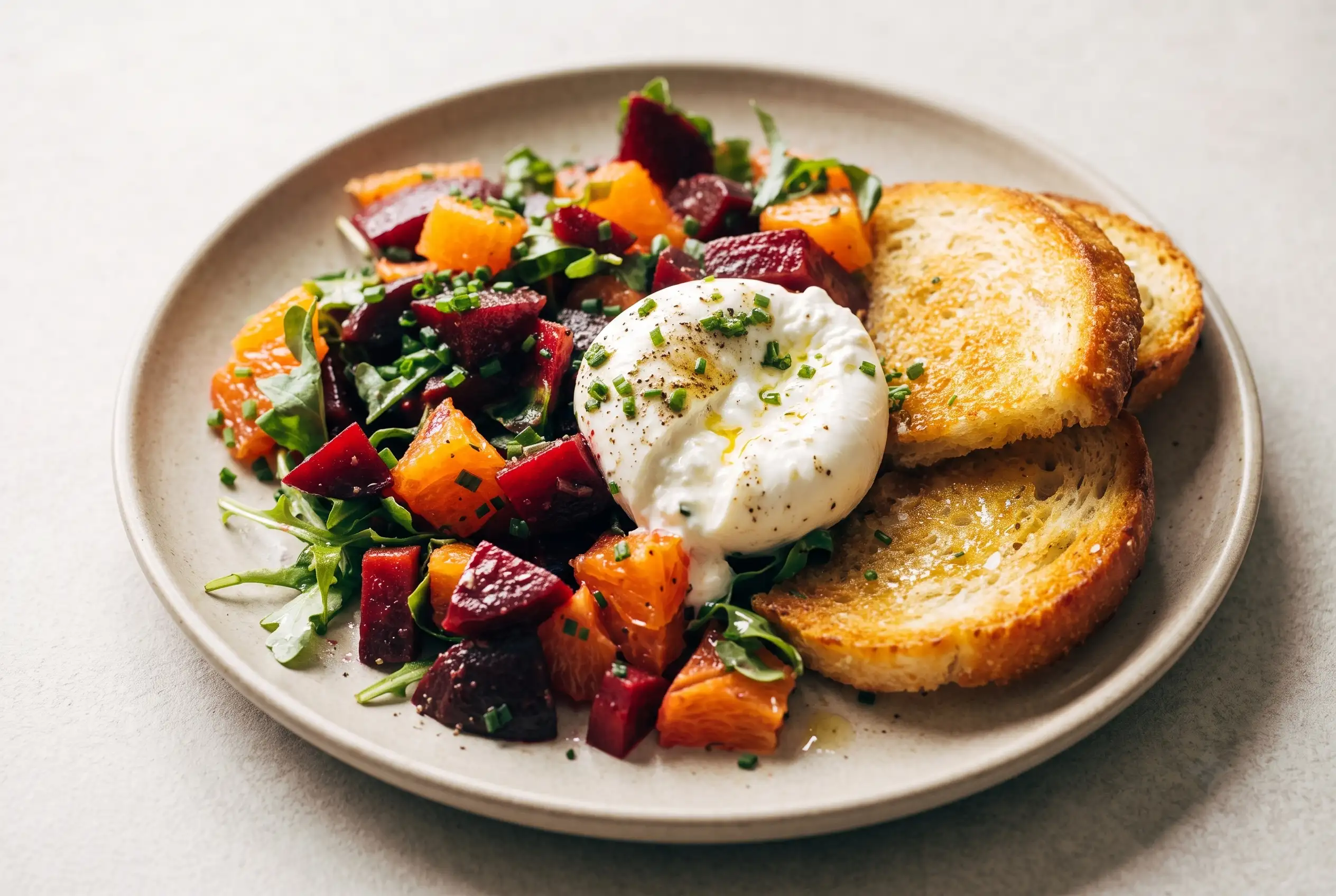
Beet and burrata salad brings together sweet cooked beets, creamy burrata, bright citrus, peppery greens, and crisp fried bread in a combination that feels both rustic and carefully balanced. The contrast between soft ingredients and golden bread creates a plate where texture matters as much as flavor, making each bite change depending on which elements meet.
Careful choices around moisture, seasoning, and texture help the components stay distinct. The beets need enough attention to avoid excess liquid, while the fried bread benefits from a surface that can hold up beside creamy cheese and juicy fruit. Small preparation decisions shape how the finished dish eats.
Beet and Burrata Salad balances earthy sweetness and creamy texture
Balanced portions of richness and freshness define the character of this beet burrata salad with fried bread. The mild sweetness of cooked beets works alongside the soft, milky center of burrata, while oranges introduce acidity that keeps the plate from feeling heavy. The combination creates a salad that can serve as a light meal or a memorable side.
Fresh contrast comes from ingredients that bring different sensations to the same forkful. Arugula adds a crisp leafy bite, chives provide a gentle onion-like note, and the fried bread introduces warmth and crunch. These elements allow the creamy cheese to remain the centerpiece without overwhelming the other flavors.
Simple assembly also protects the character of each ingredient. Keeping the burrata in generous pieces preserves its creamy texture, and arranging the bread alongside the salad lets it stay crisp longer. The result is a beet and burrata salad that feels composed without requiring complicated techniques.
Cooked beets and burrata shape the salad’s core decisions
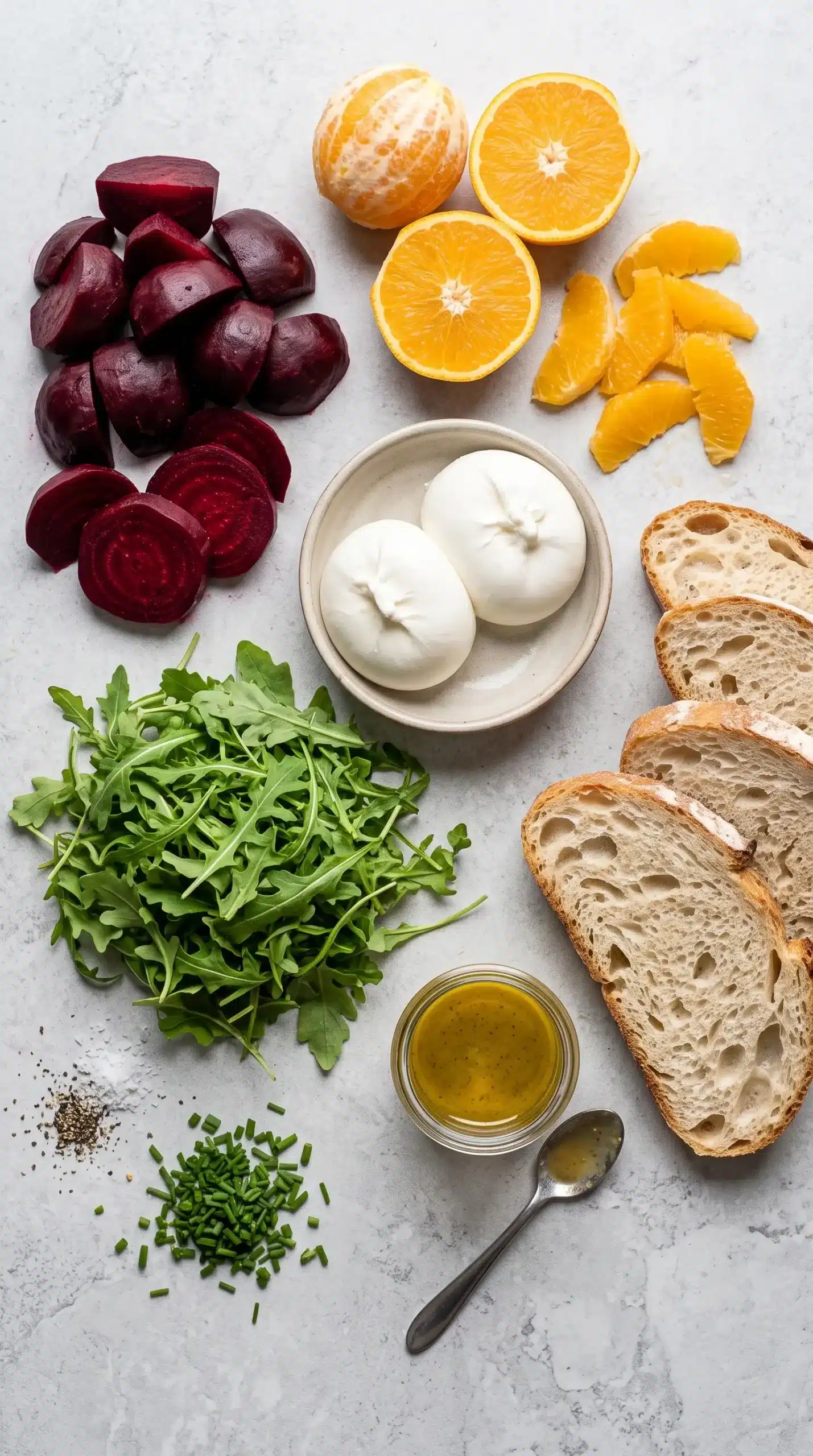
Ingredient choices have a noticeable effect on the finished dish because the main components each contribute a defining quality. Cooked beets provide the earthy foundation, and pressing away extra moisture before cutting helps prevent the dressing from becoming diluted. Their natural sweetness pairs especially well with the tang from vinegar and mustard in the dressing.
Burrata deserves attention because its texture changes how the entire plate is experienced. The outer cheese holds a soft center, creating creamy pockets that spread naturally when served. Keeping the cheese intact until plating helps maintain that contrast between the firmer salad ingredients and the rich interior.
Orange selection also influences the balance. Removing the peel completely leaves clean citrus pieces that blend more easily with the beets and greens. The fruit brings brightness that supports the other ingredients, giving the salad a fresher finish than a combination built only around vegetables and cheese.
Orange pieces and arugula keep the plate balanced
Citrus and greens provide the lighter notes that connect the sweet beets with the creamy burrata. Arugula can be added according to preference, offering a peppery layer that cuts through the richness while allowing the main ingredients to remain recognizable. A beet salad with oranges can use the same fresh combination of earthy vegetables and bright citrus to keep each bite balanced.
Fried bread turns the salad into a textural meal
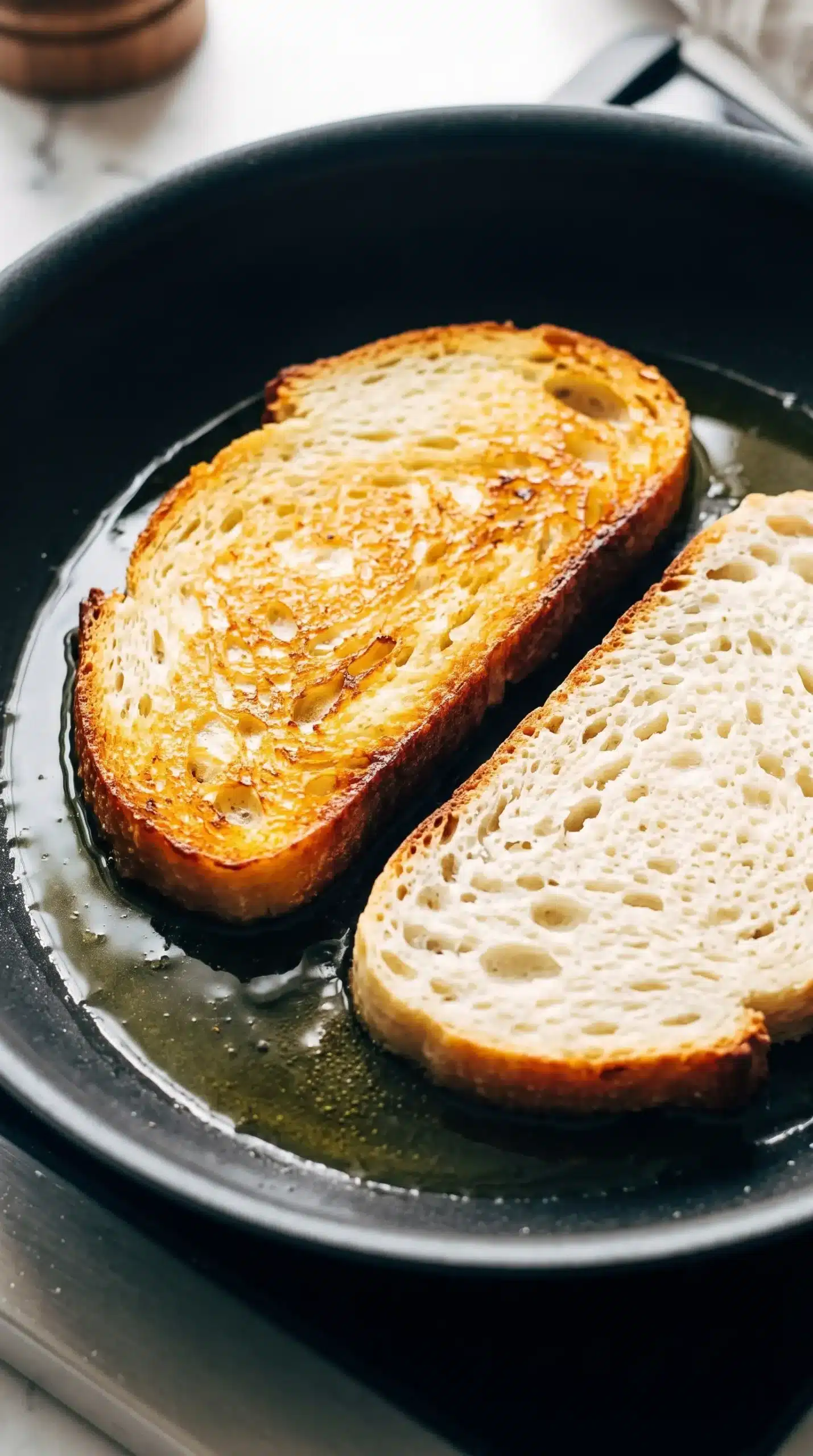
Golden bread is more than a topping because it changes the way the salad is enjoyed. Frying sourdough slices creates crisp edges and a sturdy center that can carry creamy cheese, dressing, and juices from the beets and oranges. This texture keeps the plate satisfying even with soft ingredients.
Using a generous amount of olive oil during frying helps the bread develop an appealing surface while adding flavor that matches the dressing. Medium-high heat allows the slices to brown without requiring a long cooking process, and turning them during cooking encourages even color on both sides.
Crisp bread works best when it meets the salad close to serving time. Leaving fried pieces exposed to moisture for too long can soften their texture, so placing them beside the salad preserves the contrast between crunchy and creamy components.
Jar-shaken dressing control keeps flavors connected
Shaking the olive oil, vinegar, Dijon mustard, garlic powder, chives, salt, and pepper together creates a dressing with a unified texture. The mustard helps bring the oil and vinegar together because mustard emulsifies vinaigrette, allowing the seasoning to coat the beets and oranges more evenly.
Common Beet and Burrata Salad mistakes change the final texture
Moisture and timing are the biggest areas where small errors can affect this dish. Several problems can be avoided by paying attention to how the ingredients are handled before serving.
- Wet beets: Excess liquid can thin the dressing and make the salad feel watery. Pressing the cooked beets before cutting helps maintain a better balance.
- Soft fried bread: Bread that sits too long with juicy ingredients may lose its crisp texture. Keeping it separate until plating protects the contrast.
- Covered citrus peel: Leaving too much peel attached can create uneven pieces. Cleanly cut orange segments blend more naturally with the other flavors.
Serving arrangements highlight the burrata salad with beets and oranges
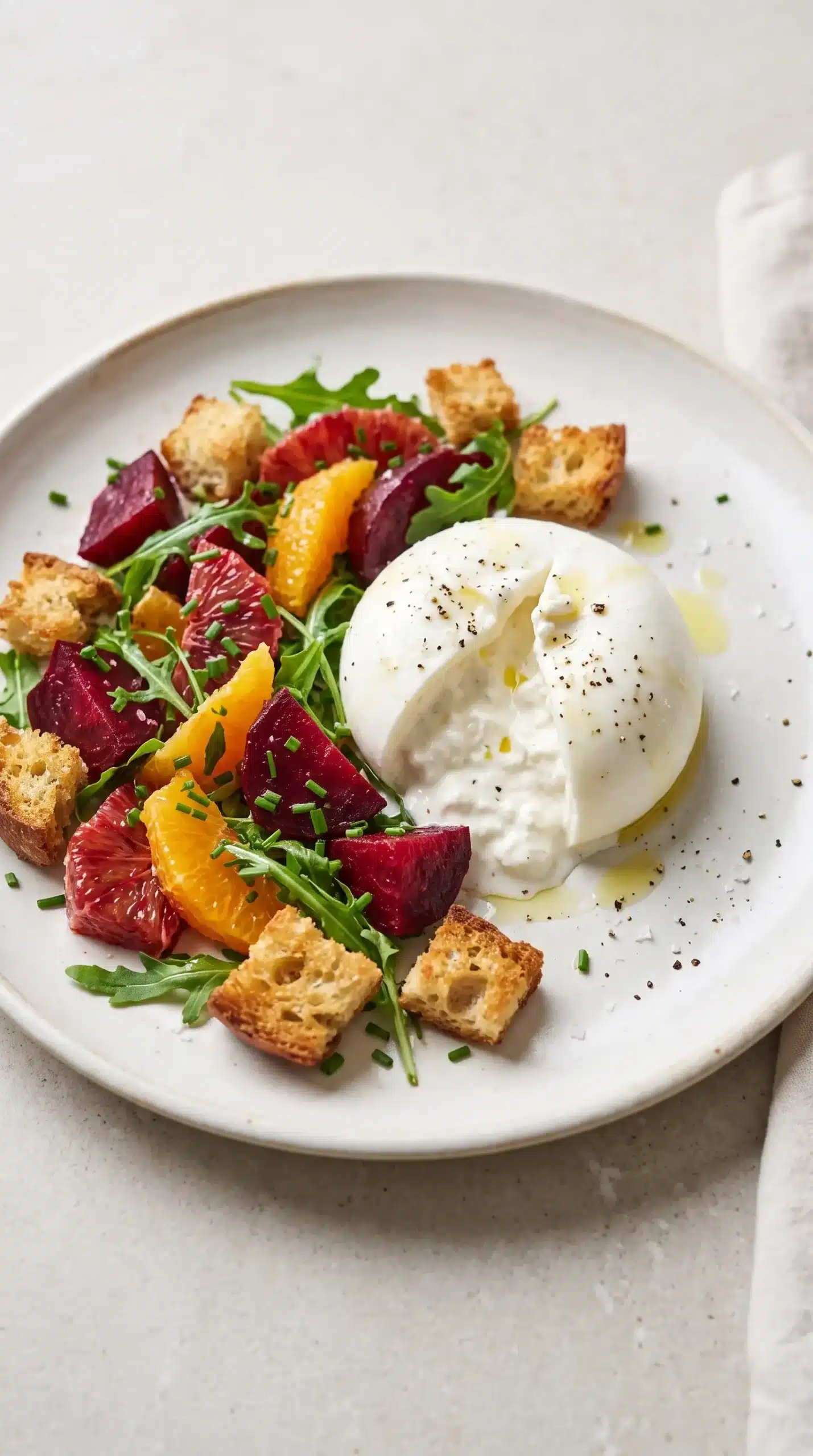
Presentation choices influence how diners experience the different textures in each serving. A portion with burrata placed visibly alongside the colorful salad ingredients makes the creamy center part of the meal instead of hiding it beneath other components.
Different serving approaches can suit different occasions while keeping the same flavor structure. The table below focuses on how individual elements behave when arranged in common ways.
| Element | Plated approach | Result for the diner |
|---|---|---|
| Burrata | Served in larger pieces beside the salad | Creamy texture remains noticeable with each portion |
| Fried bread | Placed next to or around the salad | Crisp texture lasts longer before absorbing moisture |
| Arugula | Mixed through or added lightly | Fresh peppery flavor can be adjusted to preference |
Thoughtful plating keeps the dish visually inviting without adding unnecessary decoration. The natural colors from beets, oranges, greens, and creamy cheese already create a strong presentation.
Storage choices protect leftover salad components
Separate storage works best when components remain after serving. Keeping fried bread away from moist ingredients helps preserve its texture, while the salad mixture and cheese can be handled independently for later use.
Simple variations give the fried bread salad new directions
Small adjustments can change the personality of the dish while keeping the main balance intact. Different greens, bread styles, or seasoning preferences can create variety without removing the contrast between earthy beets, creamy cheese, and crisp bread.
Preparation details improve every serving of this beet burrata salad
Reliable results come from observing the ingredients as they change during preparation. Beets should stay firm enough to hold their shape, bread should reach a golden crispness, and the dressing should coat the ingredients without pooling excessively at the bottom of the bowl.
Kitchen timing matters because some components respond quickly to their surroundings. Fried bread has its best texture shortly after cooking, while burrata is most enjoyable when its creamy center is allowed to remain prominent. Bringing these pieces together at the right moment improves the eating experience.
Useful habits for preparing the salad include:
- Check moisture: Remove extra beet liquid before combining ingredients so flavors remain concentrated.
- Watch color: Cook bread until it reaches a golden surface that signals a crisp exterior.
- Balance each serving: Include creamy cheese, seasoned vegetables, citrus, and bread for a complete bite.
Beet and Burrata Salad succeeds when textures stay distinct
Beets, burrata, oranges, and fried bread create their strongest impression when each ingredient keeps its own identity. The creamy cheese, juicy fruit, earthy vegetables, and crisp bread work together because their differences are preserved from preparation through serving.
A well-handled plate depends on managing moisture and texture at every stage. The salad becomes most satisfying when the bread remains crisp, the dressing stays balanced, and the burrata provides the creamy contrast that ties the flavors together.
Questions about beet moisture and serving choices
Can cooked beets be prepared ahead of time?
Cooked beets can be prepared in advance as long as they are kept chilled and handled so excess moisture does not affect the salad. Drying them before combining with other ingredients helps maintain the intended texture.
How can fried bread stay crisp beside the salad?
Fried bread stays crispest when it is added close to serving and not left soaking in dressing or vegetable juices. Keeping it alongside the salad instead of underneath helps protect its texture.
Can burrata be replaced with another cheese?
Burrata provides a unique creamy texture, but other fresh cheeses with a soft texture can create a different version of the dish. The replacement should complement the sweetness of the beets and brightness of the oranges.
What makes oranges work with beets?
Oranges add acidity and freshness that balance the earthy sweetness of cooked beets. Their juicy texture also connects the softer ingredients while keeping the salad lively.
Should arugula always be included?
Arugula is optional and mainly changes the flavor profile by adding a peppery green note. The salad remains centered on beets, burrata, citrus, and fried bread without it.
Beet and Burrata Salad with Fried Bread and Oranges
Beet and burrata salad combines earthy beets, creamy burrata, bright citrus, peppery greens, and crispy fried bread for a fresh, textural dish. It is an easy choice when you want a colorful salad with a balance of creamy, crunchy, and vibrant flavors.
Ingredients
Method
Preparation
- Combine the olive oil, red wine vinegar, Dijon mustard, garlic powder, chives, salt, and pepper in a jar and shake to make the dressing.
- Remove excess liquid from the cooked beets, then cut them into chunks. Peel the oranges and cut them into chunks.
- Toss the beets and oranges with the prepared dressing. Add arugula if desired.
Cooking
- Heat a generous amount of olive oil over medium-high heat. Fry the sourdough bread slices on both sides until crisp and golden.
Serving
- Divide the salad among bowls and serve each portion with a piece of burrata and fried bread.
Notes
Press excess moisture from the cooked beets before combining them with the dressing to help maintain the salad's texture.