From breakfast to dinner, from healthy meals to sweet desserts – Next Yum Recipes brings you quick, simple and tasty ideas for every occasion and every time.


 This Recipe
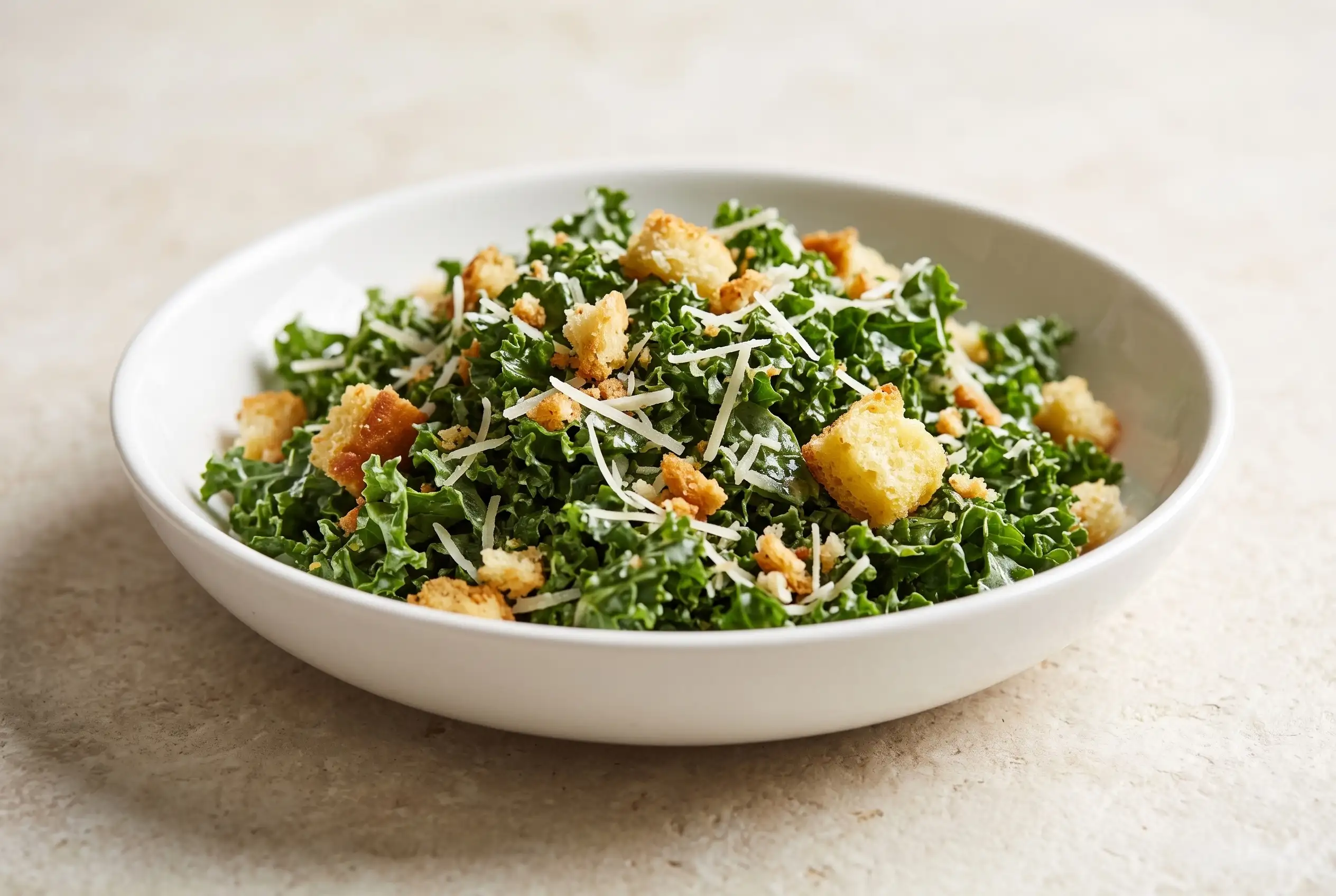
Kale parmesan salad gets its character from contrast: finely chopped kale, bright citrus dressing, salty Parmesan, and crisp toasted bread crumbs that bring a savory crunch to every forkful. The bread is dried first, turned into crumbs, coated with melted butter, and baked again until golden, giving this toasted bread kale salad a texture that holds up beautifully against the dressed greens.
Fine-cut kale gives this salad its best texture
Fresh kale works especially well here when it is chopped very finely. Smaller pieces are easier to coat with the olive oil, vinegar, lemon, and orange dressing, so the salad tastes balanced instead of having separate bites of greens and dressing.
Use sturdy fresh leaves and remove the stems before chopping. A fine cut also makes the crisp bread crumbs feel more integrated into the salad, since they can cling to the small pieces of kale instead of falling immediately to the bottom of the bowl.
Citrus and white wine vinegar keep the dressing lively

The dressing has several sources of acidity, with white wine vinegar joined by fresh lemon and orange juice. That combination gives the kale parmesan salad a bright flavor that works against the richness of olive oil, buttered crumbs, and Parmesan.
Minced shallot adds a mild savory sharpness throughout the dressing. Shaking everything together in a jar is useful because it distributes the shallot and salt through the liquid while bringing the oil and acidic ingredients together for serving.
A small taste before dressing the greens matters here. Citrus can vary in sweetness and acidity, so tasting lets you decide whether the mixture needs a little more salt, lemon, or another small adjustment to suit the particular orange and lemon you are using.
The double-baked bread creates the defining crunch
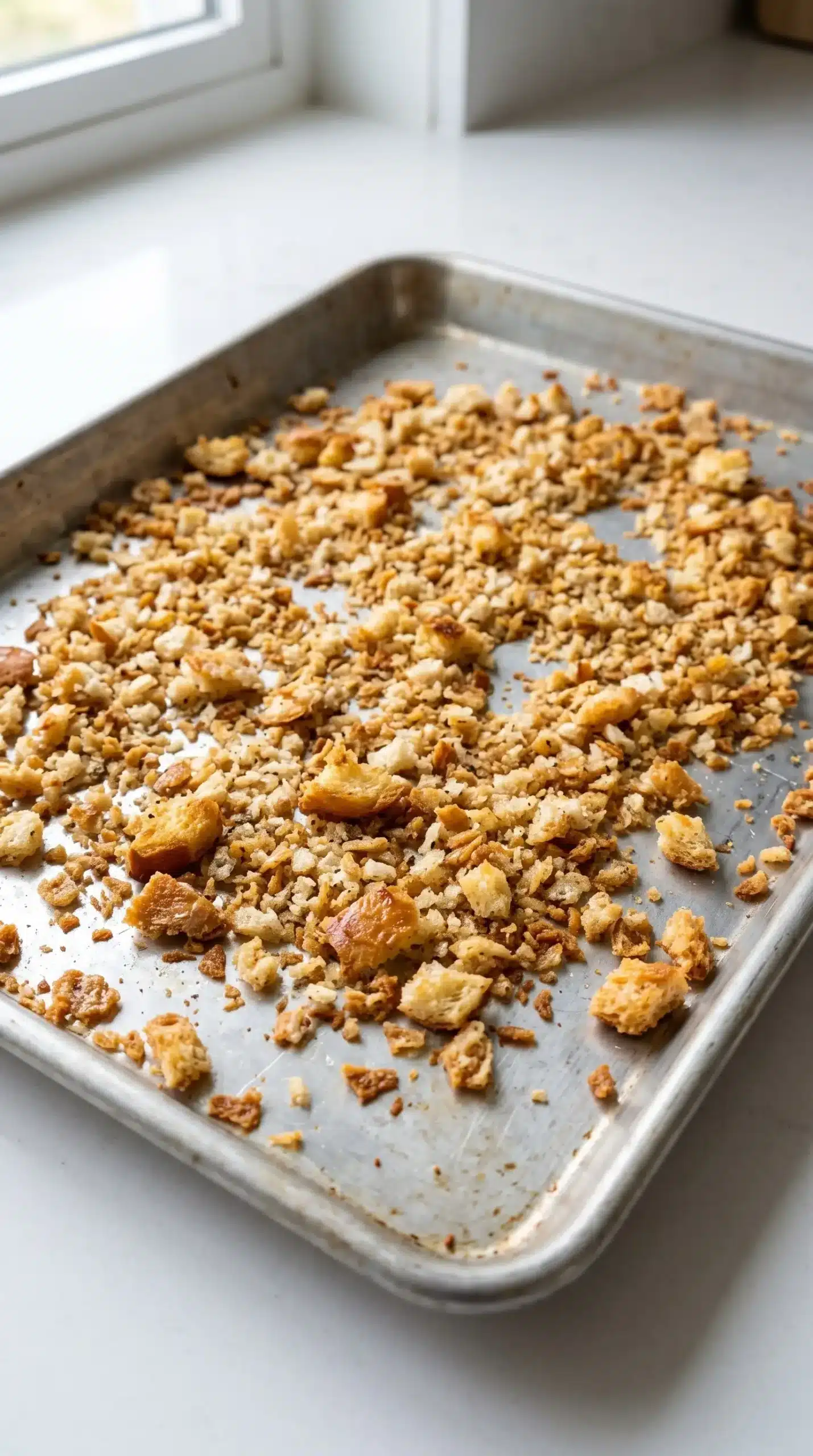
The bread goes through two separate baking stages for a reason. The first stage dries the French bread or baguette thoroughly, while the second stage transforms the butter-coated crumbs into the crisp golden pieces that make this kale salad with parmesan and breadcrumbs distinctive.
| Stage | What to look for | Why it matters |
|---|---|---|
| First bake | Very dry and crusty bread | Creates a firm base for processing into crumbs |
| After processing | Small, fairly even crumbs | Helps the crumbs distribute through the greens |
| Second bake | Golden brown and crisp | Adds the toasted, buttery texture to the finished salad |
Letting the bread cool after the first bake also makes it easier to break into pieces before processing. The crumbs do not need to be perfectly uniform; a mixture of smaller crumbs and tiny crisp pieces gives the salad a more interesting bite.
Parmesan works best when it meets the warm crumbs
Grated Parmesan is especially effective alongside the buttered bread crumbs because both ingredients bring concentrated savory flavor. The cheese also adds a slightly salty quality that helps connect the crisp bread with the fresh greens and acidic dressing.
Freshly grated Parmesan can be distributed easily through finely chopped kale. Add it with the crumbs and dressing so that the cheese becomes part of the overall coating instead of sitting only on the surface.
Butter changes the crumb from dry to crisp
Melted butter gives the processed bread a richer flavor and helps it develop a golden exterior during the second bake. A good pinch of salt and pepper seasons the crumbs directly, so they contribute flavor even in small amounts.
Spread the buttered crumbs across the baking sheet in a reasonably even layer. Crowding them unnecessarily can make it harder to judge their browning, while an open layer makes the change from pale crumbs to golden crisp pieces easy to see.
Chopping and drying determine how the crumbs behave
The food processor should be used in short pulses so the bread can be reduced to crumbs without turning every piece into an identical fine powder. Some variation in size is useful because tiny crumbs coat the kale while slightly larger pieces provide distinct crunch.
- Fine chop: Cut the kale small enough that dressing and crumbs can reach most of the leaves.
- Short pulses: Process the dried bread gradually so the crumbs retain some textural variation.
- Even spread: Arrange the buttered crumbs across the baking sheet so browning can be monitored easily.
Good texture comes from controlling both sides of the contrast. The kale should remain fresh and substantial, while the bread crumbs should be thoroughly dry and crisp before they are tossed into the bowl.
Fresh kale benefits from a strong dressing balance
Kale can handle a flavorful dressing because its leaves are sturdier than many delicate salad greens. The olive oil provides richness, while vinegar and citrus keep the mixture sharp enough to cut through the Parmesan and buttered crumbs. A Brussels and kale Caesar with avocado dressing uses the sturdy greens in a richer salad format, making it useful to consider when choosing how boldly to dress kale.
Orange juice brings a softer citrus note that rounds out the sharper lemon and vinegar. That combination is particularly useful in a salad where the dressing needs enough personality to season a substantial amount of finely chopped greens.
Once the dressing has been shaken, avoid treating it as a fixed formula that cannot be adjusted. A quick taste gives you useful information about the balance before it reaches the kale, where making changes becomes less convenient.
A few kale parmesan salad mistakes are easy to prevent
Overbaking the bread during either stage can turn useful crunch into a hard, overly dark texture. Watch the appearance closely during the second bake and remove the crumbs once they are golden and crisp.
Under-dried bread creates a different problem. If the pieces are not very dry and crusty after the first bake, processing them can produce less distinct crumbs, and the second baking stage will have more work to do.
Heavy dressing can also overwhelm the finished salad. Start with enough dressing to coat the finely chopped kale and allow the citrus, Parmesan, and toasted crumbs to remain recognizable in the finished bite.
Serve the toasted crumbs while they are at their crispest
The contrast between tender dressed kale and crunchy bread is strongest when the crumbs have just reached their crisp finish. Tossing the components together immediately before serving preserves that contrast as much as possible.
For a meal where the salad will sit for a while, keep the toasted crumbs separate until serving. This simple separation protects their texture and lets each person combine them with the dressed greens when ready to eat.
Small adjustments can change the finished bite
The salad has enough flexibility to accommodate modest changes without losing its central character. A baguette can stand in for French bread, and the same basic drying and crisping approach can be used with either option.
Additional Parmesan can make the salad more savory, while a little extra lemon can brighten a dressing that tastes too rich. Olive oil can also help loosen the mixture when the greens need more moisture without introducing another strong flavor.
Keep substitutions focused on ingredients already serving a clear role. The appeal of this baked bread crumb kale salad comes from the interaction between fresh kale, citrus dressing, Parmesan, and crisp buttered crumbs, so unnecessary additions can distract from that balance.
Pair the salad with foods that welcome its acidity
The bright dressing and crisp topping make this salad useful beside richer main dishes. Its acidity can provide contrast on a plate where the other foods have deeper, buttery, roasted, or savory flavors.
It can also function as a substantial side for a casual lunch because the finely chopped kale makes each forkful easy to combine with the crunchy crumbs and cheese. Keeping the components balanced makes the salad feel intentional instead of simply being a bowl of dressed greens.
Leftover dressed kale needs a texture reset
Once the salad has been dressed, the bread crumbs gradually absorb some of the liquid. The result is still usable, but the crisp texture that defines the freshly served kale parmesan salad becomes softer with storage.
A small squeeze of lemon juice can refresh the flavor and moisture balance when leftovers seem dry. A little olive oil can also help loosen the greens, especially if the dressing has been absorbed by the bread.
Keeping extra crumbs separate is the better approach when you know the salad will not be eaten immediately. Add them at serving time so the topping retains the texture created during the second bake.
The best serving point is when crisp crumbs meet dressed greens
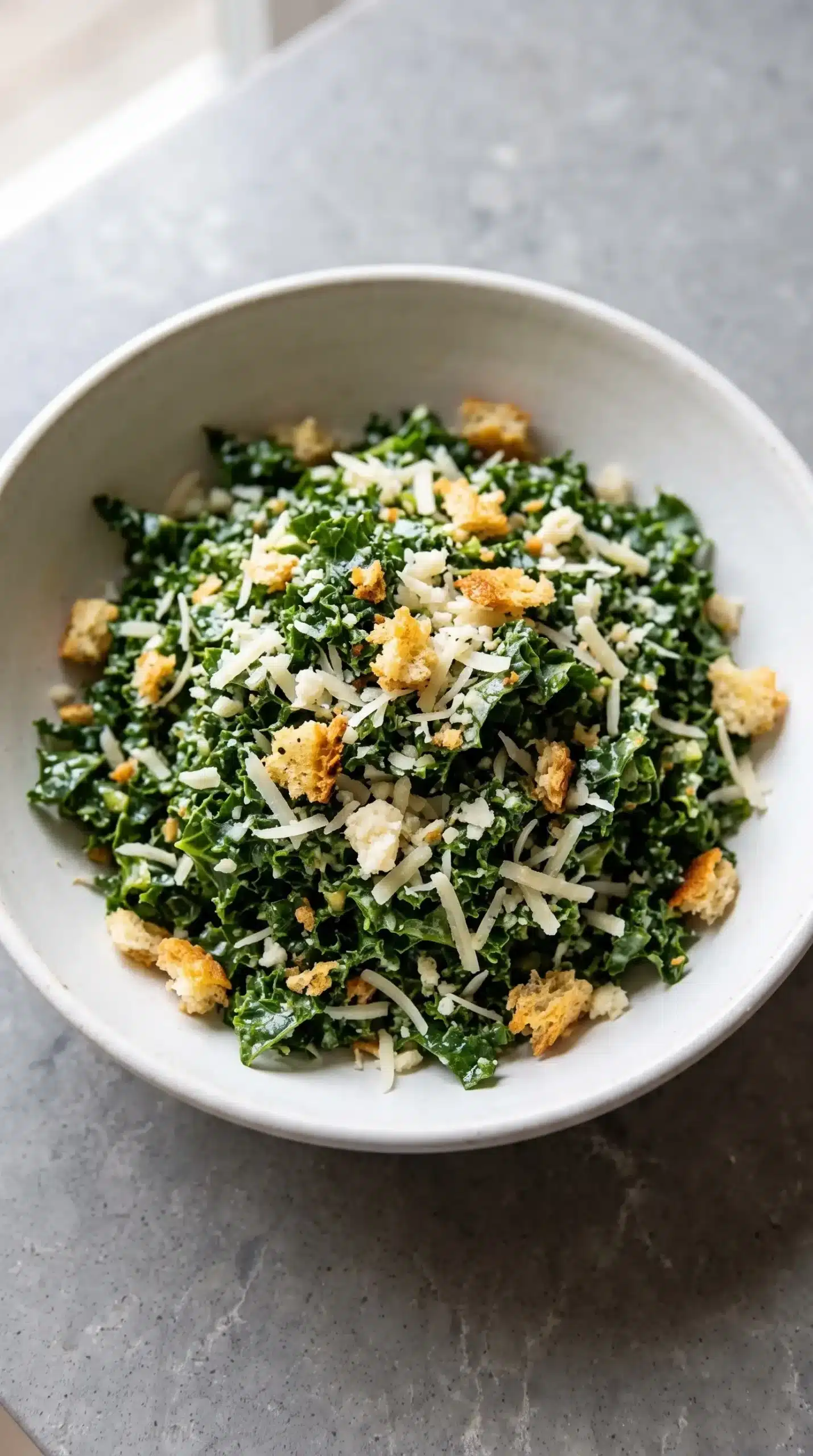
Crisp bread crumbs, finely chopped kale, Parmesan, and bright dressing work because each element contributes a different texture or flavor. The most important judgment is protecting that contrast: dry the bread thoroughly, bake the buttered crumbs until crisp, and combine them with the dressed greens close to serving.
That balance is what gives the kale parmesan salad its character. The dressing should make the kale lively without drowning it, while the Parmesan and toasted crumbs should remain distinct enough to provide savory depth and crunch in every bite.
Kale parmesan salad questions about crunch and storage
Can the bread crumbs be made ahead of time?
Yes. The bread can be dried, processed, coated with butter, and baked until crisp before the salad is assembled. Keeping the finished crumbs separate from the dressed kale helps preserve their texture until serving.
Why does my kale salad taste too sharp?
A dressing containing white wine vinegar, lemon juice, and orange juice has several acidic elements, so an overly sharp result can usually be softened by adjusting the balance with a little more olive oil and seasoning. Taste the dressing before adding it to the greens so changes are easier to control.
Can I use baguette instead of French bread?
Yes. Baguette is specifically suited to the preparation because it can be dried until crusty, broken into pieces, processed into crumbs, and baked again with melted butter.
How finely should I chop the kale?
The kale should be very finely chopped rather than left in large leafy pieces. Small pieces allow the dressing, Parmesan, and toasted crumbs to distribute more evenly, giving the salad a cohesive texture.
How can I keep leftover kale salad from becoming soggy?
Store the toasted crumbs separately whenever possible and combine them with the dressed kale just before eating. If the salad has already been tossed, refreshing it with a little lemon juice or olive oil can restore moisture and brightness, although the bread will not remain as crisp as it was initially.
Kale Parmesan Salad with Citrus Dressing and Bread Crumbs
Kale Parmesan salad combines finely chopped kale with bright citrus dressing, savory Parmesan, and crisp buttery bread crumbs. It is a fresh, crunchy salad with plenty of flavor and texture for a flavorful side dish.
Ingredients
Method
Dressing
- Add the olive oil, white wine vinegar, lemon juice, orange juice, minced shallot, and salt to a jar. Seal and shake until combined, then taste and adjust as desired.
Breadcrumbs
- Preheat the oven to 300°F (149°C). Arrange the bread slices on a baking sheet and bake for 15-20 minutes, turning them halfway through.
- Remove the dry, crusty bread from the oven and let it cool. Break it into pieces, transfer them to a food processor, and pulse until crumbs form.
- Combine the bread crumbs with the melted butter and a good pinch of salt and pepper. Spread them over the baking sheet and bake again for 5-10 minutes, until golden brown and crisp.
Assembly
- Combine the finely chopped kale, bread crumbs, Parmesan, and dressing in a bowl. Toss until evenly mixed and serve immediately.
Notes
For leftover salad that has already been tossed with the dressing, the bread may absorb some of the dressing. An extra squeeze of lemon juice or a little olive oil may be needed to re-moisten the salad.