From breakfast to dinner, from healthy meals to sweet desserts – Next Yum Recipes brings you quick, simple and tasty ideas for every occasion and every time.


 This Recipe
Why the LA Chop Works as a Complete Salad
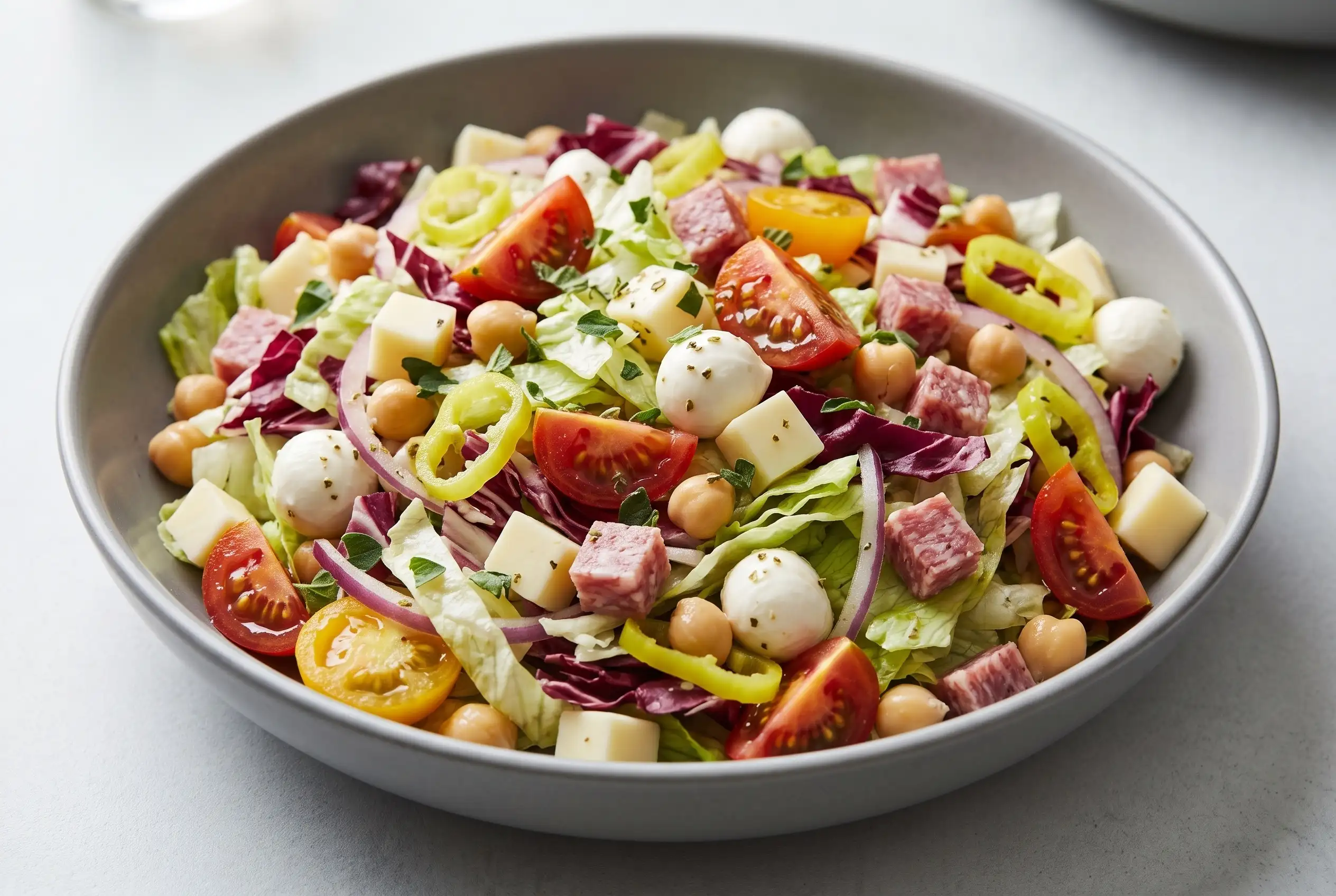
LA Chop brings together crisp lettuce, bitter radicchio, juicy tomatoes, creamy cheeses, chickpeas, salami, and pepperoncini under a lemony oregano vinaigrette. The combination has enough contrast to feel substantial while keeping the fresh, crunchy character expected from a well-built chopped salad.
Built around iceberg and radicchio, the salad has a sturdy base that can carry the richer ingredients without becoming soft immediately. Salami and provolone add savory depth, pearl mozzarella contributes a mild creaminess, and chickpeas make each serving more filling without changing the salad’s bright character.
With lemon juice, red wine vinegar, garlic, shallot, olive oil, and dried oregano in the dressing, every bite gets a sharp, herbaceous finish. That balance makes the LA Chop especially useful when you want an Italian chopped salad that feels generous without relying on a heavy dressing.
Iceberg and Radicchio Set the Right Texture
Iceberg lettuce needs to be cut into narrow strips so it mixes evenly with the other chopped ingredients and provides a crisp bite throughout the bowl. Radicchio is sliced in the same manner, giving the salad a finer texture while distributing its pleasantly bitter flavor instead of leaving large, dominant pieces.
Oregano Vinaigrette Gives the LA Chop Its Character
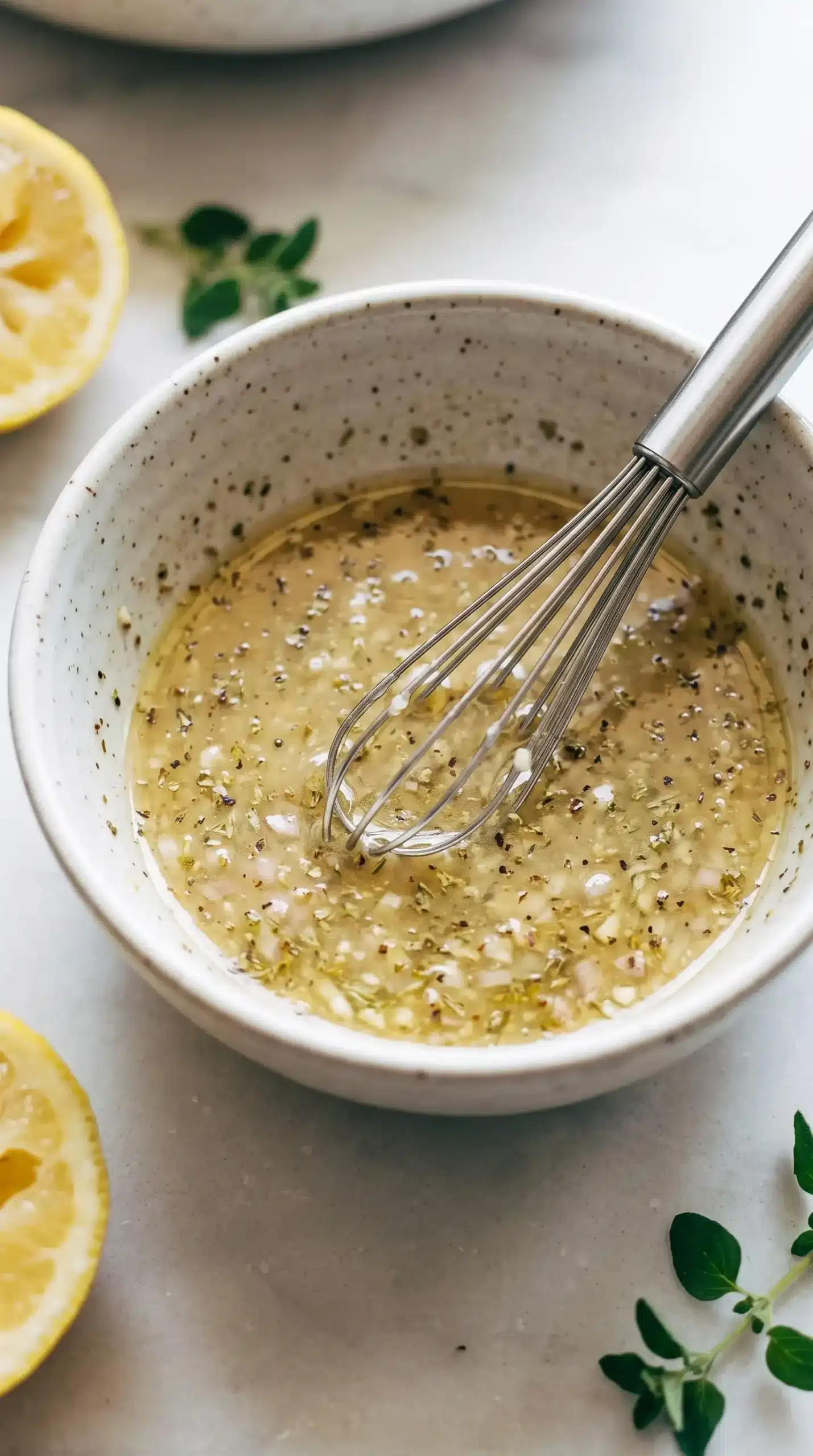
Oregano is unusually important here because it appears in both the dressing and the finishing garnish. The dried oregano goes directly into the vinaigrette, where it has time to disperse through the lemon, vinegar, garlic, shallot, and olive oil. Chopped fresh oregano at the end supplies a separate, fresher herbal note.
Whisking the vinaigrette thoroughly matters because the olive oil and acidic ingredients need to be distributed before the dressing reaches the salad. A quick taste at this stage is useful: salt and pepper should sharpen the lemon and oregano without making either one taste harsh.
As the dressing is whisked, the oil breaks into tiny droplets throughout the lemon-and-vinegar phase, forming a temporary emulsion that gives the vinaigrette a more uniform texture for tossing through the salad.
Seasoning the salad itself before dressing also gives the vegetables and chickpeas a more even baseline of flavor. After the first portion of vinaigrette is tossed through, another taste tells you whether the leaves need additional dressing, seasoning, or both.
Salami and Pepperoncini Keep Every Bite Lively
Genoa salami is cut into small cubes so its salty, savory flavor appears in small bursts instead of overwhelming the greens. Pairing salami and pepperoncini throughout the bowl keeps the richer cured meat balanced by bright, tangy bites, especially when the peppers are sliced thinly after the stems are discarded.
- Small salami cubes: distribute the cured-meat flavor without creating oversized bites.
- Thin pepperoncini slices: bring acidity and a mild peppery lift across the salad.
- Medium provolone dice: provide a firmer cheese texture that contrasts with the softer mozzarella.
Chickpeas Make the Chopped Salad More Substantial
Rinsed and drained chickpeas contribute a soft, creamy texture that contrasts with the crisp lettuce and radicchio. Their mild flavor also gives the vinaigrette somewhere to cling, helping the lemon and oregano character carry into the heartier parts of the salad.
Draining them thoroughly is worth the small amount of attention it requires. Excess liquid can dilute the dressing and make the finished salad feel wetter, especially when combined with the natural juices from quartered heirloom cherry tomatoes.
Tomatoes should remain large enough to retain their juicy texture after being quartered. Their acidity works with the lemon and red wine vinegar, while their sweetness helps soften the sharper edges of radicchio, pepperoncini, and the vinaigrette.
A wide mixing bowl makes the combination easier to handle because the ingredients can be tossed without being compressed. That matters for iceberg, whose crisp leaves can lose some of their appeal if the salad is repeatedly pressed or stirred too aggressively.
Cheese Cuts Shape the Texture of the LA Chop
Pearl mozzarella and diced provolone perform different jobs even though both are mild Italian-style cheeses. The small mozzarella pieces stay soft and creamy, while the provolone cubes bring a firmer, more pronounced cheese bite.
| Component | Preparation | Texture in the salad | Flavor role |
|---|---|---|---|
| Iceberg | Thin strips | Crisp and juicy | Fresh, clean base |
| Radicchio | Thin slices | Firm and crisp | Gentle bitterness |
| Pearl mozzarella | Used fresh and whole | Soft and creamy | Mild richness |
| Provolone | Medium dice | Firm and chewy | Savory cheese depth |
| Salami | Small cubes | Dense and meaty | Salty, cured flavor |
Cutting the Vegetables Evenly Improves Every Forkful
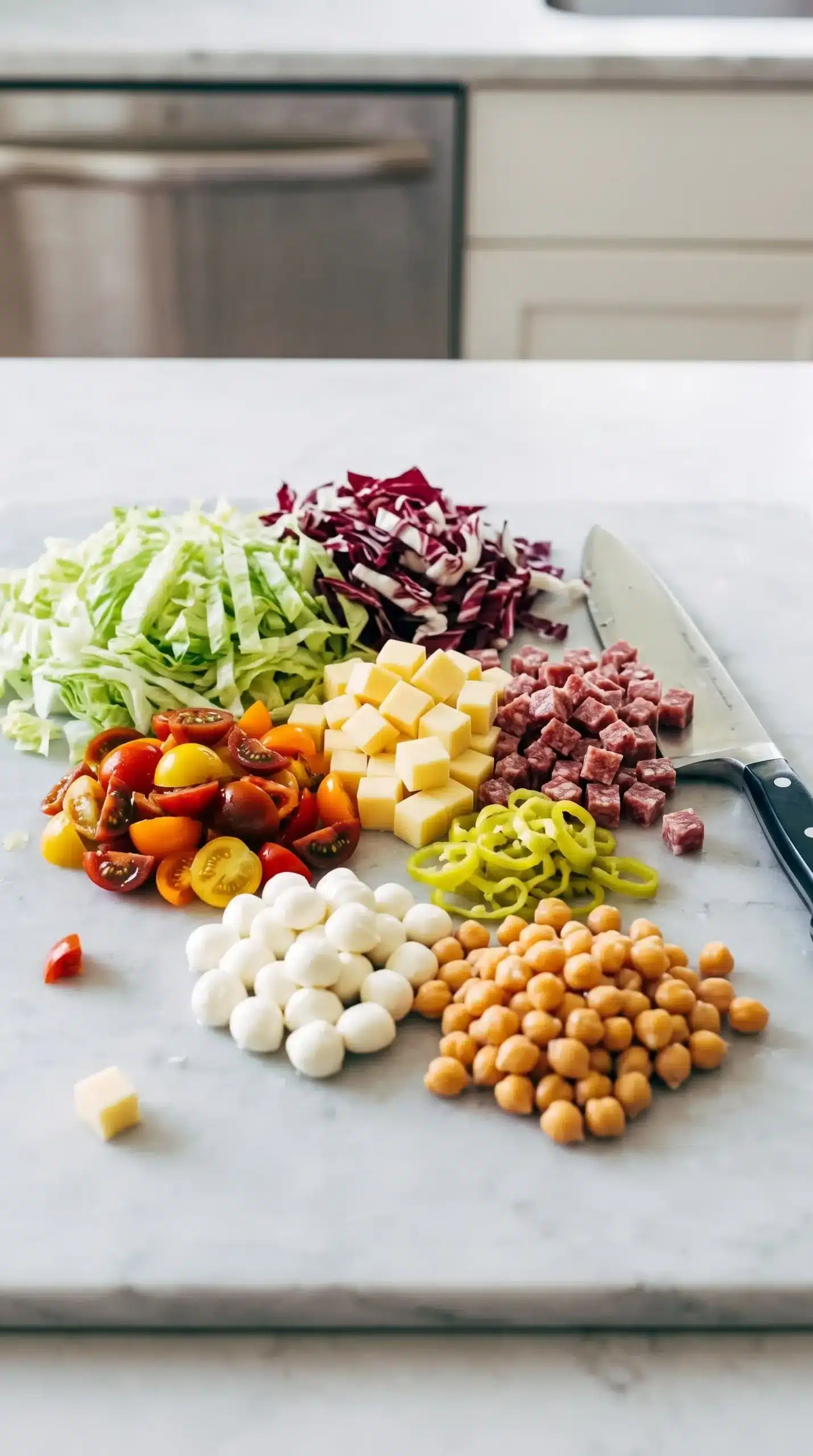
The most useful knife decision is consistency. Narrow strips of lettuce and radicchio should be small enough to mingle with the diced cheese, salami, chickpeas, and tomato pieces, while the tomatoes and cheese remain substantial enough to be noticed.
Vinaigrette Control Keeps the Leaves Crisp
Using the dressing in stages gives you much more control than coating the entire bowl heavily at once. The specified six tablespoons provide the initial coating, after which the salad can be tasted and adjusted according to how the leaves and other ingredients are carrying the vinaigrette.
Gentle tossing is especially useful once the mozzarella and tomatoes are in the bowl. Vigorous mixing can break softer ingredients and squeeze additional liquid from the tomatoes, changing the texture of an otherwise crisp salad.
A wide platter is useful for serving because it spreads the ingredients into a shallow layer. The extra oregano can then be scattered over the surface, where its aroma and appearance remain noticeable without requiring more dressing.
Common LA Chop Mistakes to Avoid
Overdressing is one of the easiest ways to lose the contrast that makes the salad work. Adding more vinaigrette before tasting can leave the lettuce saturated and mute the distinctions between the salty, creamy, bitter, and acidic components.
Uneven cuts create another problem. Very large pieces of salami, cheese, or lettuce can dominate individual bites, while tiny pieces can disappear among the greens. Keeping the cuts appropriate to each ingredient helps the finished salad eat as one composed mixture.
Mixing too forcefully can also work against the intended texture. The mozzarella and tomatoes are more delicate than the iceberg, so a gentle toss is enough to distribute the dressing without turning the bowl into a soft mixture.
Serving the LA Chop at Its Best
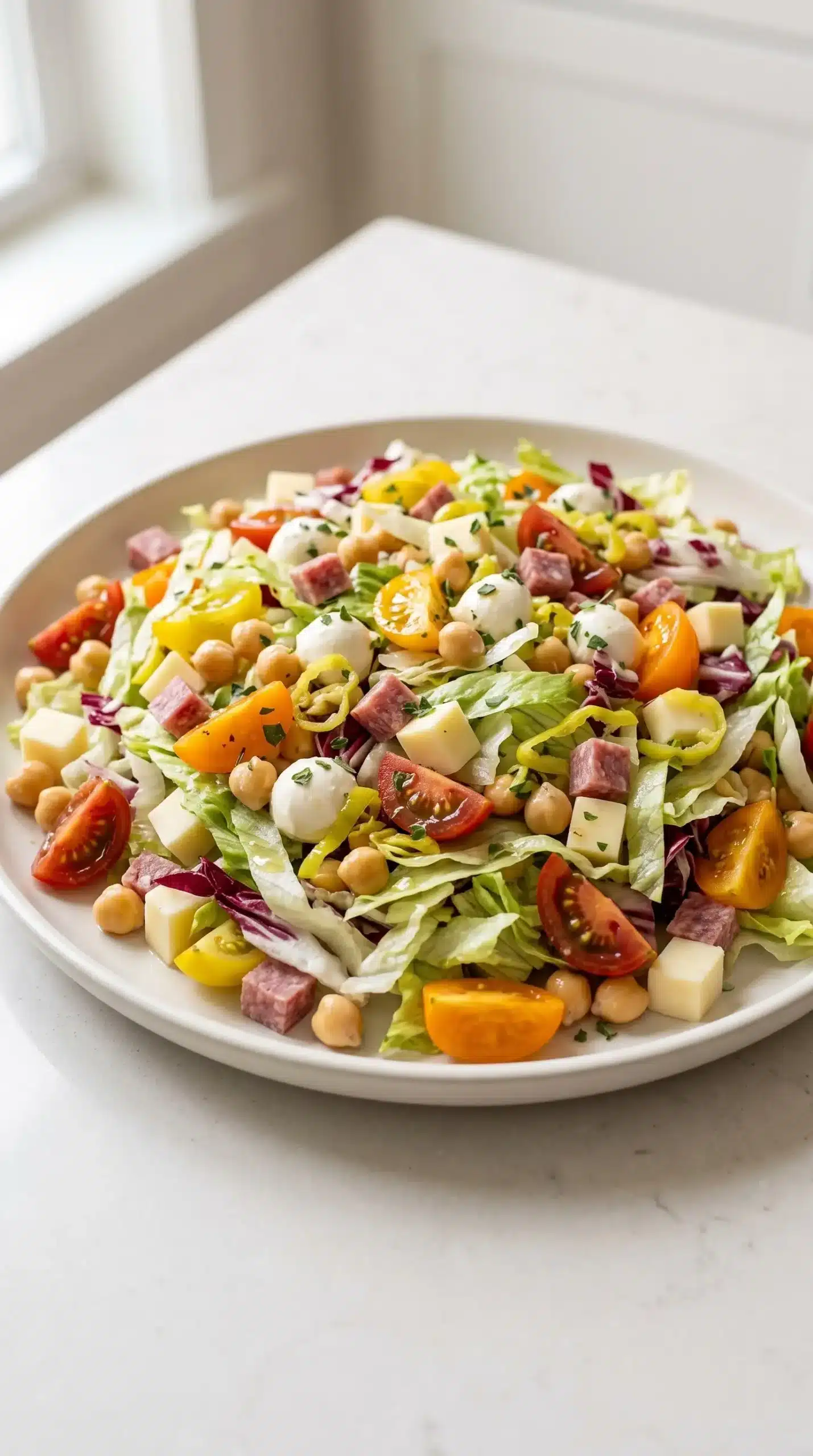
The LA Chop is most appealing when the vegetables remain crisp and the vinaigrette is evenly distributed without pooling at the bottom. Moving the dressed salad onto a large platter also makes the contrasting ingredients easier to see and allows the fresh oregano garnish to sit visibly across the top.
For a meal built around the salad, keep the accompanying food relatively simple so the salami, cheeses, chickpeas, and bright vinaigrette remain prominent. The combination already supplies substantial savory and creamy elements, so additional richness is not necessary for the salad to feel complete.
How the LA Chop Balances Acid, Salt, and Richness
Lemon juice and red wine vinegar establish the acidic backbone of the dressing, while olive oil rounds out that sharpness. Garlic and shallot add savory aromatic depth, and oregano connects the dressing to the Italian-inspired ingredients in the bowl.
Salt deserves a measured approach because several ingredients already contribute savory intensity. Salami, provolone, pepperoncini, and the vinaigrette all influence the overall seasoning, so tasting after the salad has been dressed is more informative than trying to predict the exact balance beforehand.
Freshly cracked black pepper adds another layer without changing the fundamental character of the salad. Used alongside the lemon and oregano, it helps keep the richer cheese and salami flavors from feeling flat.
LA Chop Texture Depends on the Last Toss
A successful toss leaves the dressing distributed across the leaves while allowing the individual ingredients to remain recognizable. The iceberg should still feel crisp, the radicchio should retain its bite, and the tomatoes, chickpeas, cheeses, salami, and pepperoncini should remain distinct instead of becoming a compact mixture.
Serving immediately after dressing also preserves the strongest contrast between crunchy greens and softer ingredients. If additional vinaigrette is needed, adding it gradually is easier to control than trying to correct an overly dressed bowl.
Fresh Cuts and Measured Dressing Define the LA Chop
Crisp lettuce, evenly sliced radicchio, juicy tomatoes, and carefully cut savory ingredients give the LA Chop its essential structure. The lemon-oregano vinaigrette then ties those textures together, but its quantity is best guided by tasting so the greens stay lively and the other ingredients remain distinct.
That balance is what separates a satisfying chopped salad with salami and mozzarella from a bowl where the dressing or one strong ingredient takes over. Keep the cuts consistent, toss gently, and let the acidity, herbs, cheese, salami, and vegetables remain individually recognizable in each bite.
LA Chop Questions About Dressing, Storage, and Texture
Can the LA Chop be made ahead of time?
The vegetables and other salad components can be prepared ahead, but keeping the vinaigrette separate until serving gives the iceberg and radicchio the best chance of staying crisp. Combine the components close to the time you plan to eat, then dress gradually and adjust after tasting.
Can another lettuce replace iceberg?
A sturdy crisp lettuce can work if iceberg is unavailable, but the change will affect the texture. Iceberg is particularly useful here because its firm leaves hold up well against chickpeas, cheese, salami, pepperoncini, and vinaigrette.
Why use both mozzarella and provolone?
The two cheeses create different textures and levels of savory flavor. Pearl mozzarella is soft and mild, while diced provolone is firmer and more pronounced, giving the salad more variety than using only one cheese.
How can the salad be kept from becoming too salty?
Season cautiously at the beginning because salami, provolone, pepperoncini, and the vinaigrette can all contribute intensity. Taste after the first dressing addition before adding more salt, and remember that extra vinaigrette can change the perceived seasoning as well.
What should be done if the salad tastes too sharp?
Check the overall balance before adding more acid. The olive oil and mild ingredients such as mozzarella, chickpeas, and lettuce help soften the dressing’s lemon and vinegar character, while a little additional seasoning can make the acidity feel more integrated.
La Chop Italian Chopped Salad with Oregano Vinaigrette
La Chop Italian Chopped Salad combines crisp lettuce and radicchio with creamy cheeses, chickpeas, salami, and a bright oregano vinaigrette. Its fresh, crunchy texture and lively savory-tangy flavor make it an appealing choice for a generous salad.
Ingredients
Method
Vinaigrette
- Place the vinaigrette ingredients in a small bowl and whisk until evenly combined. Season with kosher salt and freshly cracked black pepper as needed.
Preparation
- Halve the iceberg lettuce through the core. Remove the outer leaves and core, then separate the remaining leaves. Stack 2 or 3 leaves at a time and slice lengthwise into 1⁄4-inch-wide (6 mm) strips. Repeat with the remaining lettuce, then slice the radicchio in the same manner.
Assembly
- Place the iceberg, radicchio, tomatoes, chickpeas, mozzarella, provolone, salami, and pepperoncini in a large, wide bowl. Season with salt and toss to distribute the ingredients.
- Pour 6 tablespoons (90 ml) of the vinaigrette over the salad and gently toss until the dressing is evenly distributed. Taste and add more vinaigrette, salt, and pepper as needed.
- Transfer the salad to a large platter, finish with the chopped oregano, and serve.
Vinaigrette
- In a medium bowl, whisk all the vinaigrette ingredients together until combined. Taste and adjust the salt and pepper as needed.
Notes
Add the vinaigrette gradually and taste after tossing so the crisp lettuce and radicchio remain distinct.