From breakfast to dinner, from healthy meals to sweet desserts – Next Yum Recipes brings you quick, simple and tasty ideas for every occasion and every time.


 This Recipe
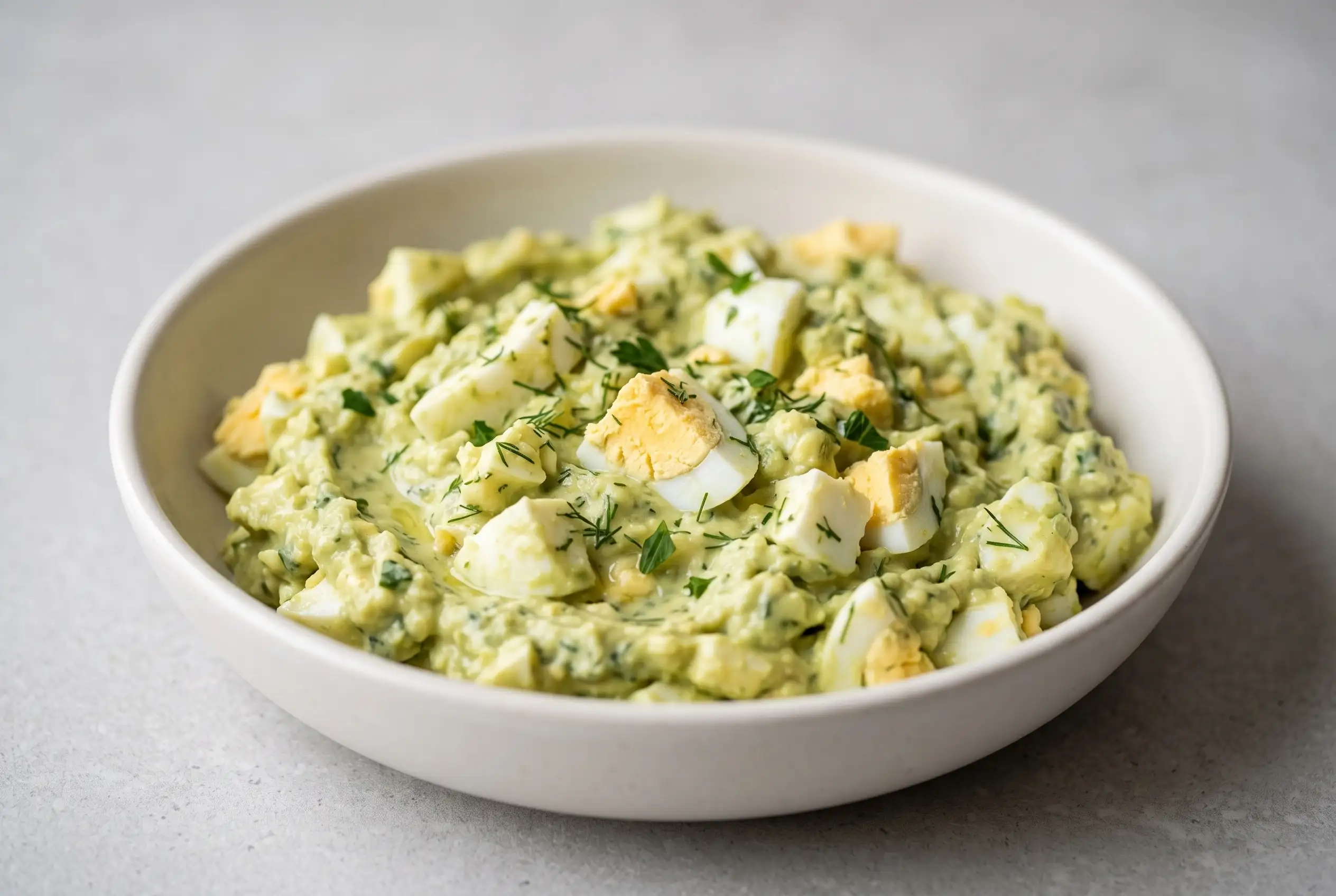
Avocado egg salad combines tender chopped eggs with mashed avocado, fresh herbs, lemon juice, and salt for a creamy mixture that still has plenty of texture. The avocado replaces the heavier dressing often associated with classic egg salad, while dill and parsley keep the flavor bright enough for serving on an everything bagel or enjoying chilled on its own.
Creamy avocado works best here when it surrounds distinct pieces of egg instead of becoming completely smooth. Lemon provides the sharp edge needed to balance the richness, and the optional drizzle of olive oil can loosen a mixture that feels unusually thick. Small texture and seasoning decisions have a noticeable effect because the ingredient list is so focused.
Avocado Egg Salad Works Best with Two Textures
What makes the salad distinctive is the contrast between a soft avocado base and clearly visible pieces of cooked egg. Mashing both components into the same consistency would flatten that contrast and produce something closer to a uniform spread. Leaving the eggs chopped gives each bite a firmer structure against the creamy avocado.
Gentle mixing matters once those two textures meet. The avocado needs to coat the egg pieces, but prolonged stirring can continue breaking them down. Folding just until everything looks evenly distributed keeps the mixture cohesive without losing the character of the chopped eggs.
A balanced bowl should look creamy enough to scoop while still showing pieces of white and yolk throughout. That visual cue is more useful than trying to achieve a perfectly smooth appearance, since the slight irregularity is part of what makes an easy avocado egg salad satisfying.
Avocado Ripeness Determines the Creamy Base
Ripe avocados should yield gently when pressed and mash easily with the back of a spoon without feeling watery or fibrous. Fruit that is too firm will leave hard chunks that do not coat the eggs well, while severely overripe avocado can contribute an overly soft texture and dull flavor. A mostly smooth mash with a few small avocado pieces gives the egg salad with avocado enough body to hold together.
Egg Doneness Controls Firmness and Clean Flavor
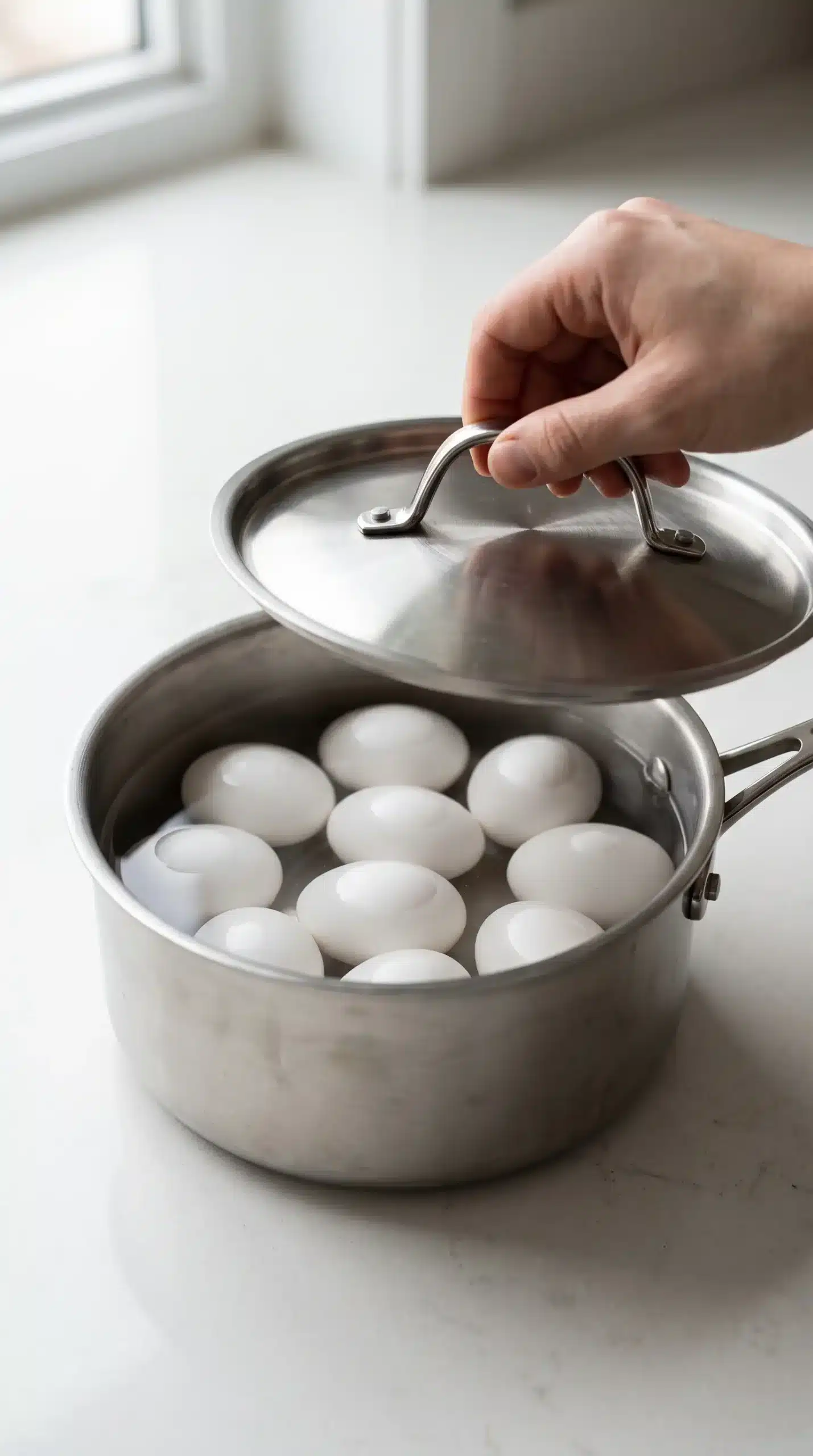
Egg texture depends heavily on what happens after the water reaches a boil. Turning off the heat, covering the saucepan, and allowing the eggs to finish in the retained heat cooks them more gently than maintaining an aggressive boil throughout the entire cooking period.
Residual heat continues moving inward after the burner is switched off, so the covered resting stage should be treated as active cooking. Properly cooked yolks should be set enough to chop cleanly, while the whites should stay tender enough to blend comfortably with mashed avocado.
Cold water stops that residual cooking and also makes the eggs more comfortable to handle before peeling. Once shelled, cutting them into small pieces creates enough surface area for the avocado and herbs to distribute evenly without requiring vigorous mixing later.
A Coarse Avocado Mash Preserves Better Texture
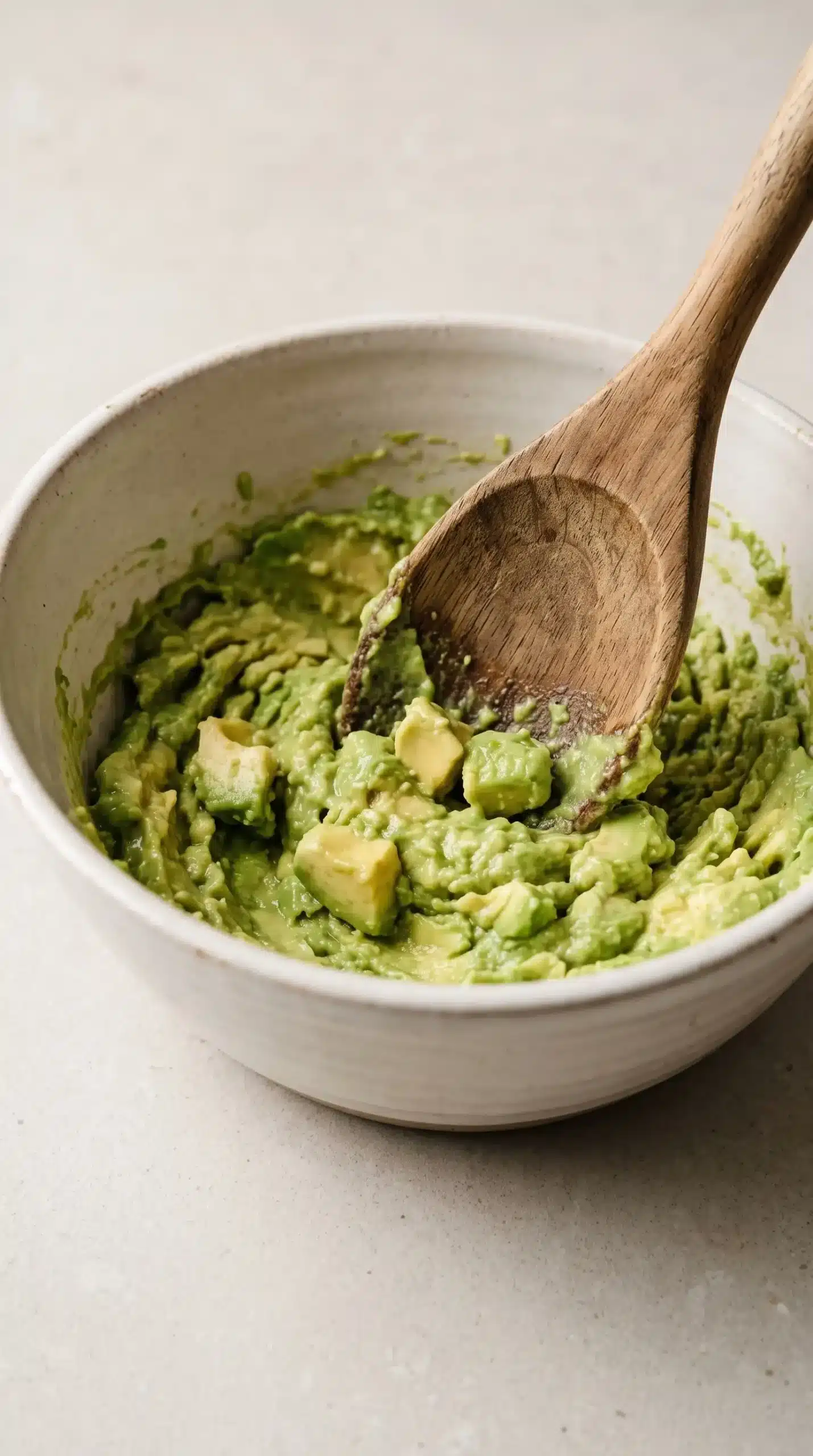
A mostly smooth avocado mash is preferable to a completely puréed one because tiny pieces provide additional texture and help the finished salad feel substantial. Using the back of a large wooden spoon gives enough control to crush the avocado gradually and stop once the consistency becomes creamy but not liquid.
Dill and Parsley Keep the Richness in Check
Fresh dill has a strong aromatic character that pairs naturally with eggs and lemon, so even modest adjustments can noticeably change the finished bowl. Anyone who enjoys a sharper herbal profile can lean more heavily on dill without changing the underlying structure of the salad.
Parsley plays a quieter role alongside the dill. Its fresh, grassy character broadens the herb flavor without competing strongly with the avocado, which makes the combination feel more balanced than relying on a single dominant herb.
Chopped herbs should be distributed evenly enough that every scoop includes some green flecks. Mixing them in after the avocado has been mashed makes that distribution easier to judge and reduces the need for excessive stirring.
Olive Oil Is a Texture Adjustment, Not a Requirement
Olive oil is most useful when the avocado mixture feels denser than expected and needs a little extra looseness. A small drizzle can make the salad easier to fold and scoop, but naturally creamy avocados may provide all the richness needed, so adding oil automatically can make the mixture softer than necessary.
Lemon and Salt Need to Be Adjusted Together
Lemon juice provides acidity that cuts through the richness of both avocado and egg. In creamy avocado preparations with lemon juice, acidity should be added gradually because too much can overpower the rich base. Because individual lemons vary in intensity and avocados vary in richness, tasting after the first thorough mixing is more dependable than assuming the initial balance will always be ideal.
Salt works alongside the lemon by sharpening the flavors already present. Too little can make the avocado and egg seem muted, while additional lemon without enough salt can taste sharply acidic instead of bright. Adjusting them in small increments keeps either one from dominating.
Taste adjustment is especially important for avocado egg salad with dill because extra dill and extra lemon can reinforce one another. A cook who prefers more bite can increase those elements gradually, tasting between additions so the salad stays balanced.
| What You Notice | Likely Cause | Useful Adjustment |
|---|---|---|
| Flavor seems flat | Not enough salt or acidity | Add a small amount of salt or lemon, then taste again |
| Lemon dominates | Acidity is ahead of the richer ingredients | Fold through more of the existing avocado-and-egg mixture before adding anything else |
| Mixture feels very dense | Avocado is especially thick | Add a light drizzle of olive oil and fold gently |
| Herbs seem too subtle | Dill and parsley are not prominent enough | Add a little more chopped herb and reassess |
Everything Bagels Give the Salad a Strong Serving Partner
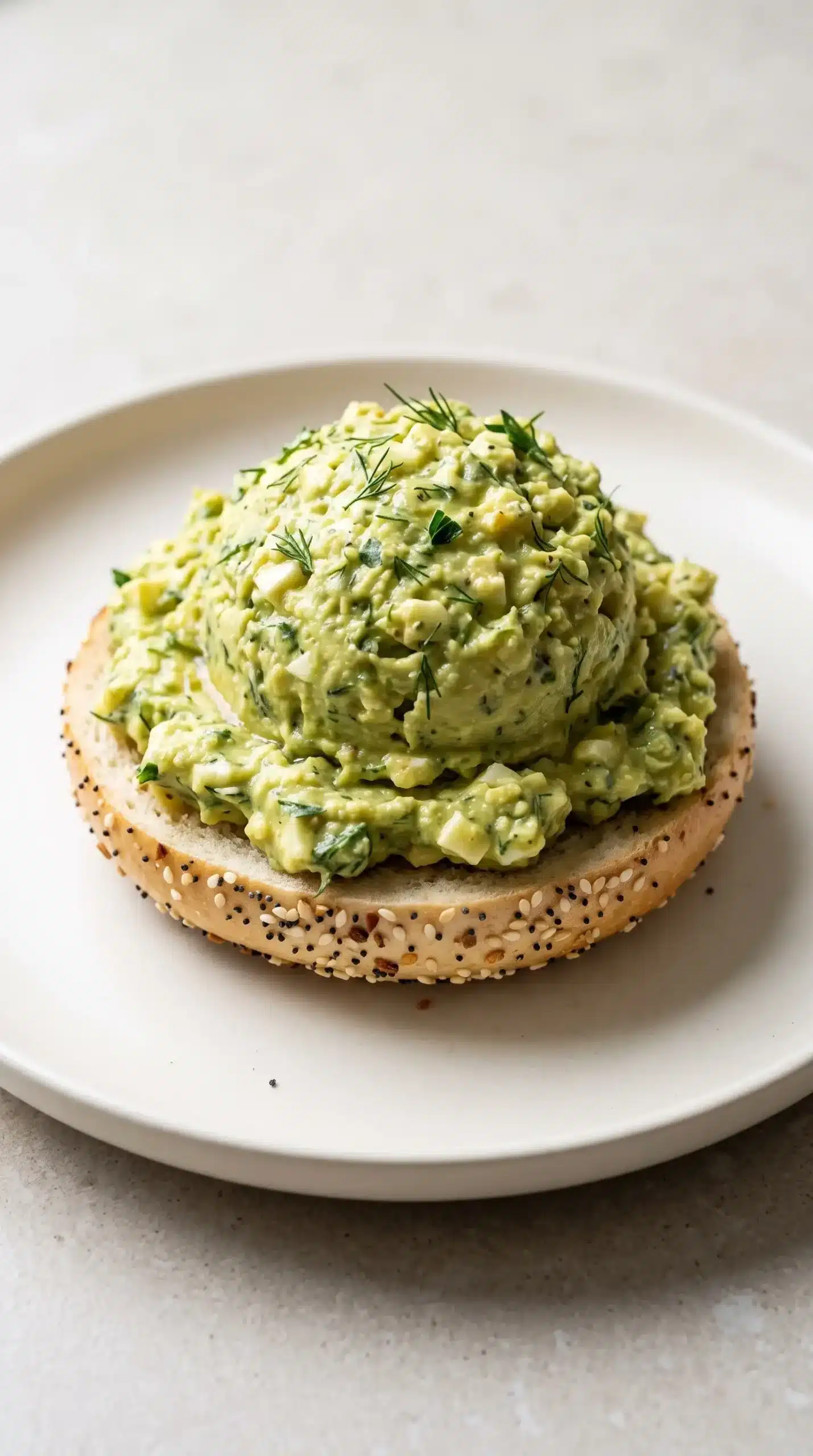
Everything bagels suit the creamy filling particularly well because their chewy texture provides contrast while the seasoned exterior brings additional savory flavor. Spreading the salad generously over a sliced bagel also gives the chunky egg pieces enough support to stay in place.
For other serving styles, the mixture benefits from something that can handle its creamy consistency without requiring it to be completely smooth. The following options keep the focus on texture instead of adding complicated preparations.
- Bagel topping: Spoon it over an everything bagel for a substantial open-faced serving.
- Simple sandwich: Use a sturdy bread that can hold the creamy filling without compressing it too heavily.
- Cold plate: Serve a scoop chilled when the fresh herb and lemon flavors are meant to stay especially prominent.
Common Avocado Egg Salad Mistakes to Avoid
Most problems with avocado egg salad come from texture moving too far in one direction. Overworked avocado becomes loose, overworked eggs disappear into the base, and unnecessary liquid can make the entire mixture difficult to scoop. Gentle handling prevents all three issues.
Overcooked eggs create another avoidable problem because firm, dry yolks can make the salad feel heavier and more crumbly. Using the covered residual-heat technique and cooling the eggs after cooking helps preserve a tender texture that blends more naturally with avocado.
Excess seasoning can also be difficult to reverse in such a simple mixture. Lemon, salt, and dill should be increased gradually because each addition becomes more noticeable when there are few other flavors competing with it.
- Do not purée the eggs: Distinct pieces provide the structural contrast the salad needs.
- Avoid automatic oil additions: Check the avocado consistency before deciding whether extra richness is useful.
- Season in stages: Small additions of lemon, salt, and dill are easier to control than one large correction.
- Cool before chopping: Handling the eggs after cold-water cooling helps stop further cooking and makes preparation cleaner.
Room-Temperature and Chilled Servings Feel Different
Serving the salad soon after mixing emphasizes the softness of the avocado and the aroma of the herbs, while chilling firms the mixture slightly and makes the lemon-dill character feel especially crisp. Both approaches fit the dish, so the choice can be based on whether a softer scoop or a cooler, firmer texture suits the meal.
Cold Storage Protects Quality but Changes the Avocado
Storage changes the appearance of avocado more quickly than it changes many traditional egg-salad mixtures. Exposure to air encourages browning, so pressing the salad into a tightly covered container with minimal open space helps slow visible oxidation.
For best quality, refrigeration should begin promptly if the salad is not being served immediately. Egg-based salads are perishable, and keeping the mixture consistently cold is important whenever it is being stored for later use.
Once refrigerated, egg salad should generally be used within 3 to 4 days.
If holding leftovers, expect the avocado to lose some of its fresh green color even when properly covered. A little surface darkening does not automatically mean the mixture has spoiled, but any salad with an unusual odor, excessive separation, or questionable storage history should be discarded instead of tasted for testing.
Creamy Avocado and Firm Egg Pieces Make the Salad Work
Small egg pieces held in a mostly smooth avocado base create the contrast that gives the salad its strongest texture. Keeping the eggs tender, stopping the avocado mash before it becomes puréed, and folding everything gently allow those two components to stay distinct while still forming a cohesive mixture.
Balanced acidity completes that structure by keeping the richness from feeling heavy. Lemon, dill, parsley, and salt can all be adjusted to preference, but the most dependable bowl comes from making those changes gradually while protecting the creamy-and-chunky texture at the center of the dish.
Avocado Egg Salad Texture and Lemon Questions
Why does the texture turn watery?
A watery consistency can develop when very soft avocado is combined with more olive oil or lemon juice than the mixture needs. Add liquid gradually and stop as soon as the salad becomes easy to fold and scoop.
Can the lemon juice be reduced?
Less lemon can be used when a milder flavor is preferred, although some acidity is useful for balancing the avocado and egg. Start modestly, mix thoroughly, and taste before deciding whether another small addition is needed.
Can only dill or only parsley be used?
Either herb can stand alone if necessary. Dill will create the more assertive herbal character, while parsley produces a gentler, fresher result, so the choice depends on which flavor should be more noticeable.
Why are the eggs chopped instead of mashed?
Chopping preserves distinct pieces that contrast with the creamy avocado. Mashing the eggs too thoroughly would make the mixture more uniform and remove much of the texture created by combining the two components.
Can avocado egg salad be prepared ahead for a bagel?
Preparing it ahead is possible when it is refrigerated promptly in a tightly covered container. For the freshest appearance and best bagel texture, keep the salad cold and spread it onto the bagel close to serving so the bread does not sit under the moist filling for an extended period.
Avocado Egg Salad with Fresh Herbs and Lemon Juice
Avocado egg salad is a creamy, fresh mixture with tender chopped eggs, ripe avocado, dill, parsley, and lemon juice. It is an easy choice when a bright, satisfying salad is wanted for a simple meal or snack.
Ingredients
Method
Cooking
- Place the eggs in a saucepan and cover them with water. Bring the water to a boil, then turn off the heat, cover the pan, and leave it on the hot burner for 8-10 minutes.
- Transfer the eggs under cold running water, peel away the shells, and chop the eggs into small pieces.
Assembly
- Place the avocados in a bowl and mash them with the back of a large wooden spoon until mostly smooth.
- Add the chopped eggs, dill, parsley, lemon juice, salt, and olive oil as needed. Mix gently until combined.
Serving
- Serve immediately at room temperature, or chill and serve cold.
Notes
I love this avocado egg salad on an everything bagel. Taste and adjust as you go; for a sharper bite, use more lemon juice and dill.