From breakfast to dinner, from healthy meals to sweet desserts – Next Yum Recipes brings you quick, simple and tasty ideas for every occasion and every time.


 This Recipe
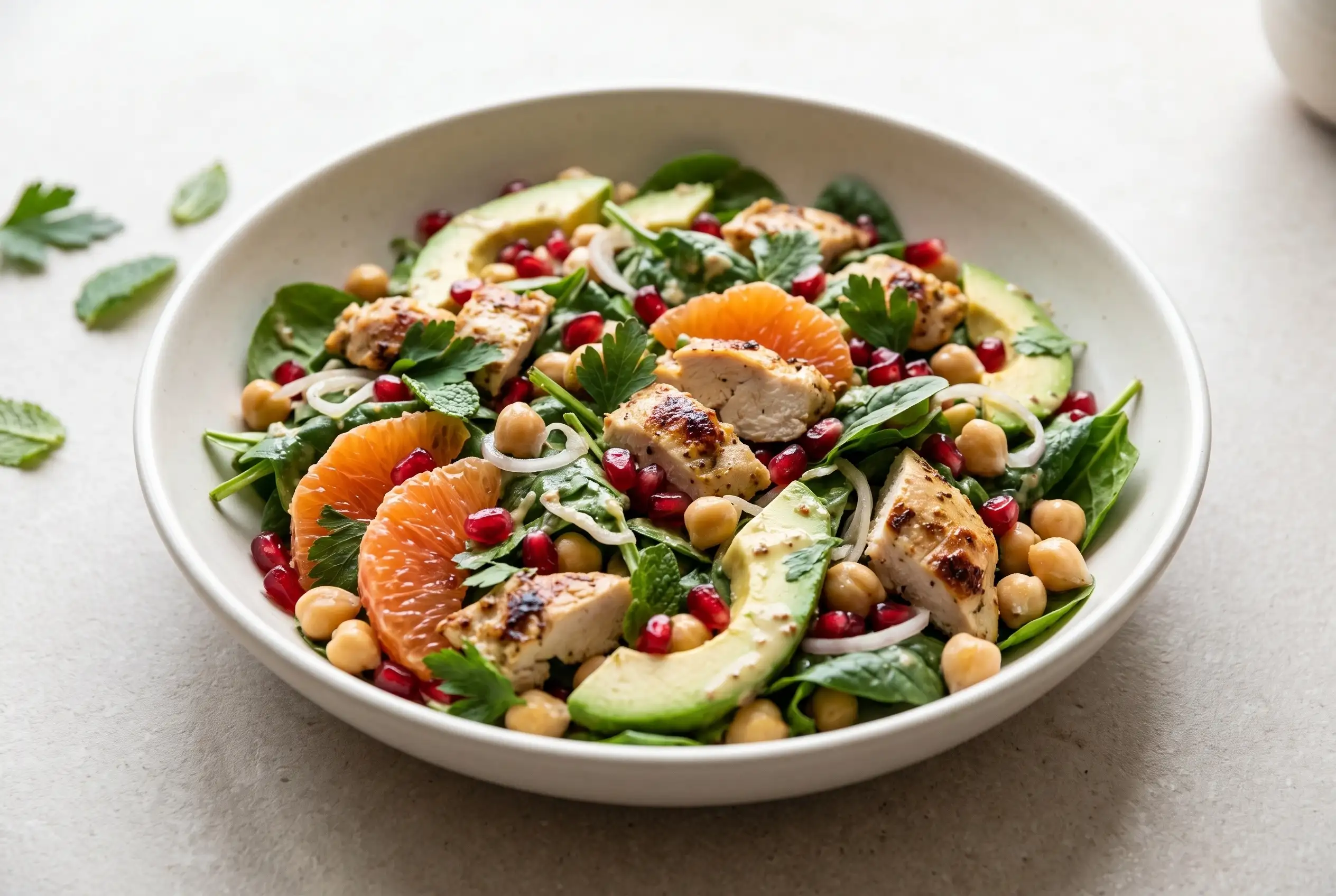
Winter spa salad brings together lemon-marinated chicken, sweet Cara Cara oranges, jewel-like pomegranate arils, creamy avocado, chickpeas, spinach, fresh herbs, and a tangy mustard dressing in a bowl that feels bright even on a cold day. The combination has enough substance for lunch or dinner while keeping the flavors crisp, citrusy, and fresh.
The chicken gives the salad a savory center, while citrus and pomegranate keep every bite lively. Chickpeas make the bowl more substantial, and avocado softens the sharper notes from the vinegar and mustard. A lemon chicken salad like this also benefits from contrast: juicy fruit, tender chicken, creamy avocado, and crisp shallot all show up at different moments.
Cara Cara oranges set the flavor direction
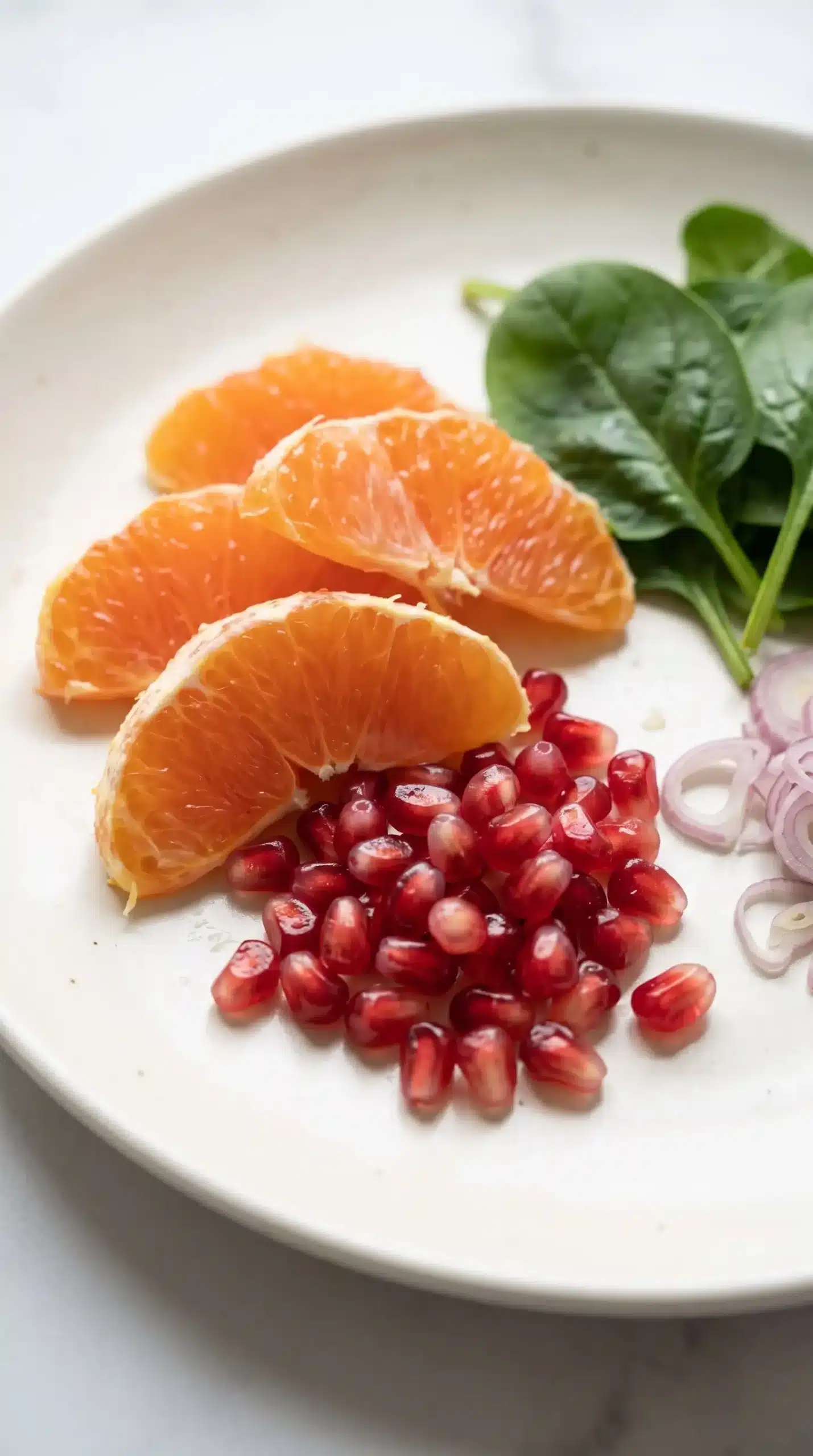
Cara Cara oranges are especially useful here because their sweet citrus character works naturally with lemon, Dijon mustard, and pomegranate. Peel them thoroughly and cut them into manageable pieces so the salad is easy to eat with a fork. Removing excess peel and tough membrane also keeps the fruit from distracting from the tender greens.
Pomegranate arils bring a sharper fruit note and a pleasant textural contrast. Their acidity helps balance the creamy dressing, while the orange keeps that acidity from becoming too dominant.
Lemon chicken needs a short, even marinade
The chicken marinade has a practical job beyond seasoning the surface. Allowing the chicken to sit in the mixture gives the lemon and other marinade flavors time to coat the meat before cooking. Thirty minutes is enough for the planned preparation, while the chicken can remain refrigerated longer within the stated two-hour window.
Use chicken breasts of reasonably similar thickness so the pieces cook at a similar rate. If one section is substantially thicker, it can lag behind the thinner portions during grilling or pan cooking. Keeping the pieces uniform makes it easier to judge doneness without leaving some portions overcooked while waiting for others.
Once the chicken comes off the heat, a short rest makes slicing easier. Cutting immediately can release more of the hot juices onto the cutting surface, while a brief pause gives the meat a chance to settle before it joins the greens.
Chickpeas turn the salad into a substantial meal
Rinsed and drained chickpeas give the winter spa salad more staying power without changing its fresh character. Drain them well before tossing so excess liquid does not thin the dressing or collect at the bottom of the serving bowl.
- Drain well: Remove as much surface moisture as practical after rinsing.
- Keep them intact: Gentle tossing helps the chickpeas remain whole among the fruit and greens.
- Season at the bowl: Let the dressing, salt, and pepper bring the chickpeas into the overall flavor instead of heavily seasoning them separately.
The dressing should balance tang with creaminess
Mayonnaise or Greek yogurt changes the character of the dressing in a noticeable way. Mayonnaise gives the mixture a richer, rounder texture, while Greek yogurt creates a brighter and more tangy finish. Either works with the mustard, olive oil, lemon, and vinegar already present in the salad.
Champagne vinegar and Dijon mustard are powerful enough to vary the perceived sharpness from batch to batch. Start with the stated amounts, whisk thoroughly, then taste before adding more vinegar. If the dressing feels too assertive, a little honey can soften the acidity without requiring a completely different sauce.
| Dressing adjustment | When it helps | What to change |
|---|---|---|
| Less tang | The vinegar and mustard dominate | Reduce vinegar or mustard |
| More sweetness | The dressing tastes sharply acidic | Add honey to taste |
| More richness | The dressing feels too lean | Use mayonnaise as the creamy base |
| Brighter finish | You prefer a more pronounced tang | Use Greek yogurt and keep the vinegar level measured |
Spinach and avocado need gentle handling
Fresh spinach provides the leafy base, but its small leaves can become compressed quickly under a heavy dressing. Add the greens to a roomy bowl and toss with enough movement to distribute the dressing without aggressively pressing everything together.
Avocado is more delicate than the chickpeas and pomegranate. Slice it into pieces that can survive a gentle toss, and avoid vigorous mixing after it goes into the bowl. The salad should remain visually varied, with the orange, avocado, pomegranate, and chicken still recognizable.
Fresh herbs sharpen the winter spa salad
Parsley or mint can change the finish of the winter spa salad without requiring a different dressing. Parsley keeps the flavor clean and savory, while mint gives the citrus and pomegranate a cooler, more aromatic edge.
Use the herbs sparingly enough that they support the orange, lemon, and mustard instead of masking them. Chopped herbs are easiest to distribute when added with the other salad components before the dressing is incorporated.
Grilling the chicken is about heat control
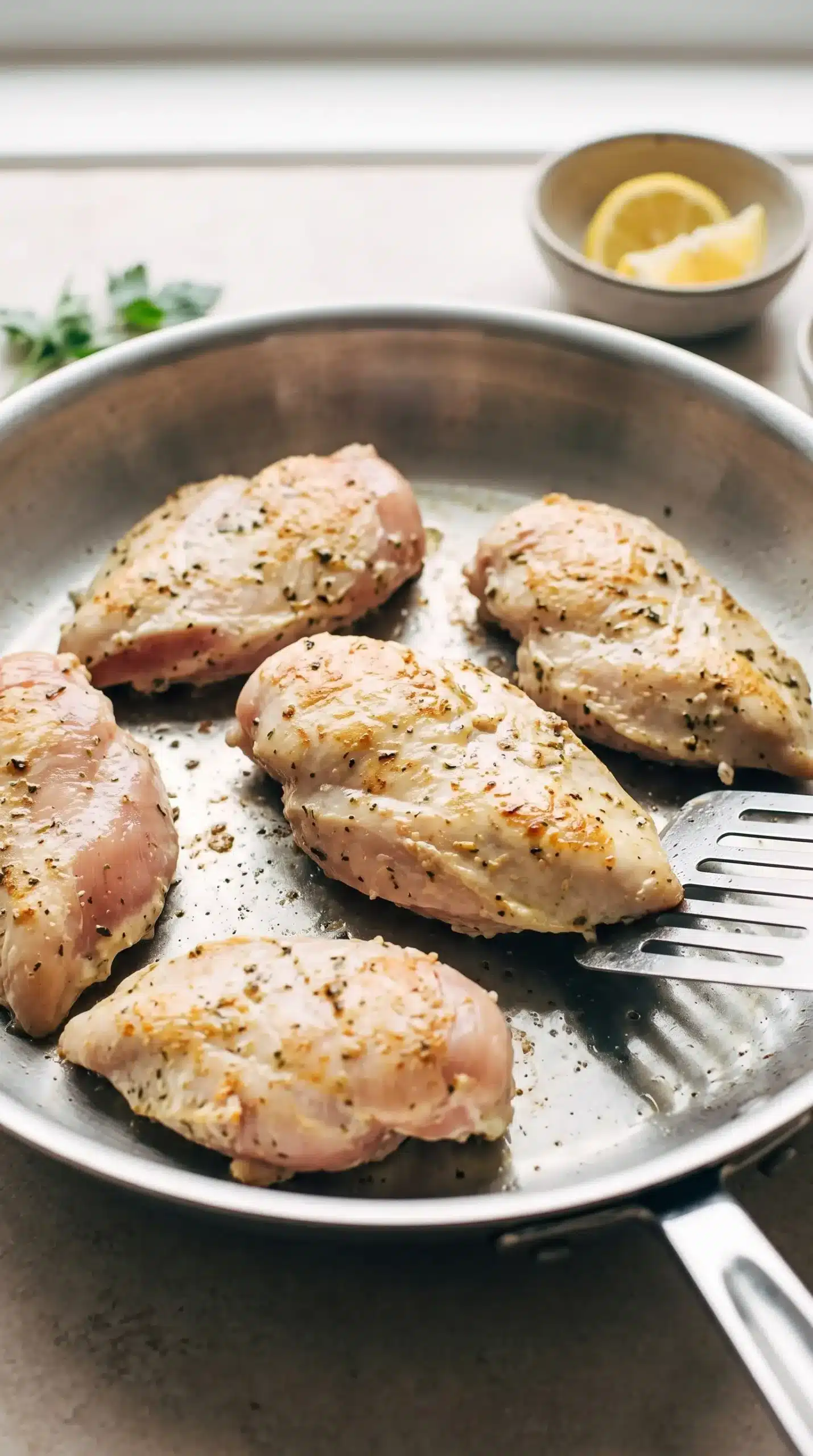
Chicken breasts can dry out when their exterior cooks much faster than the center. A properly heated pan or griddle should give the chicken enough direct heat to cook through without requiring excessive time on the surface.
Discard the extra marinade before the chicken reaches the cooking surface. The marinade has already served its seasoning purpose, and removing the excess keeps the cooking surface cleaner and allows the chicken to make direct contact with the heat.
Watch the thickest part of the chicken as cooking progresses. The useful cue is fully cooked meat throughout, followed by a brief rest before slicing. Once cut, the chicken should be tender enough to mix comfortably with the greens rather than becoming a dry, dominant element.
For a concrete doneness check, chicken breasts should reach a safe 165°F internal temperature when measured with a food thermometer in the thickest part. This gives you a more reliable endpoint than judging the chicken by appearance alone.
Winter spa salad works through contrasting textures
Every major component contributes a different texture: spinach is tender, chickpeas are firm and creamy, avocado is soft, pomegranate arils are juicy and crisp, oranges are succulent, and cooked chicken is substantial. For a meal-sized salad, keeping the chicken and chickpeas distributed through the greens prevents any single component from dominating, as seen in a chicken quinoa salad built around protein, vegetables, and greens.
| Component | Texture in the bowl | Best handling choice |
|---|---|---|
| Spinach | Tender and leafy | Toss gently with the dressing |
| Avocado | Creamy and delicate | Use careful tossing after slicing |
| Chickpeas | Firm and creamy | Drain thoroughly before combining |
| Pomegranate | Juicy and crisp | Fold in without crushing |
| Chicken | Tender and substantial | Rest briefly before cutting |
Orange and pomegranate keep the chicken balanced
A chicken salad can become heavy when savory ingredients dominate every bite. Here, the fruit provides a different direction. Cara Cara oranges bring sweetness and acidity, while pomegranate adds a more pronounced tartness that works especially well with the creamy dressing.
The fruit also gives the lemon chicken salad a useful contrast in temperature and texture when everything is served together. Keeping the chicken from becoming the only prominent element makes the finished bowl feel lighter without removing its substantial components.
These winter spa salad mistakes are easy to prevent
Overdressing is one of the easiest ways to lose the fresh character of the bowl. Add enough dressing to coat the ingredients, then stop and reassess before adding more. The spinach, fruit, and avocado should remain distinct instead of sitting in a pool of sauce.
Another problem occurs when chicken goes directly from the heat to aggressive slicing. A short rest helps keep the pieces more manageable and makes it easier to distribute them through the salad.
Excess acidity can also overwhelm the fruit. Champagne vinegar, Dijon, and lemon all contribute sharpness, so increasing several of them at once can push the dressing out of balance. Taste after whisking and make one adjustment at a time.
A few ingredient choices can change the finished bowl
Greek yogurt is a useful option when you want a tangier, lighter-feeling creamy dressing, while mayonnaise produces a richer mouthfeel. The choice matters because the dressing already contains multiple acidic ingredients, so Greek yogurt may require more careful balancing.
For a sugar-free approach, check the mustard label instead of assuming every mustard has the same formulation. If the dressing tastes especially tart, honey can be added to taste when it fits your preferences.
Serve the salad while its textures are distinct
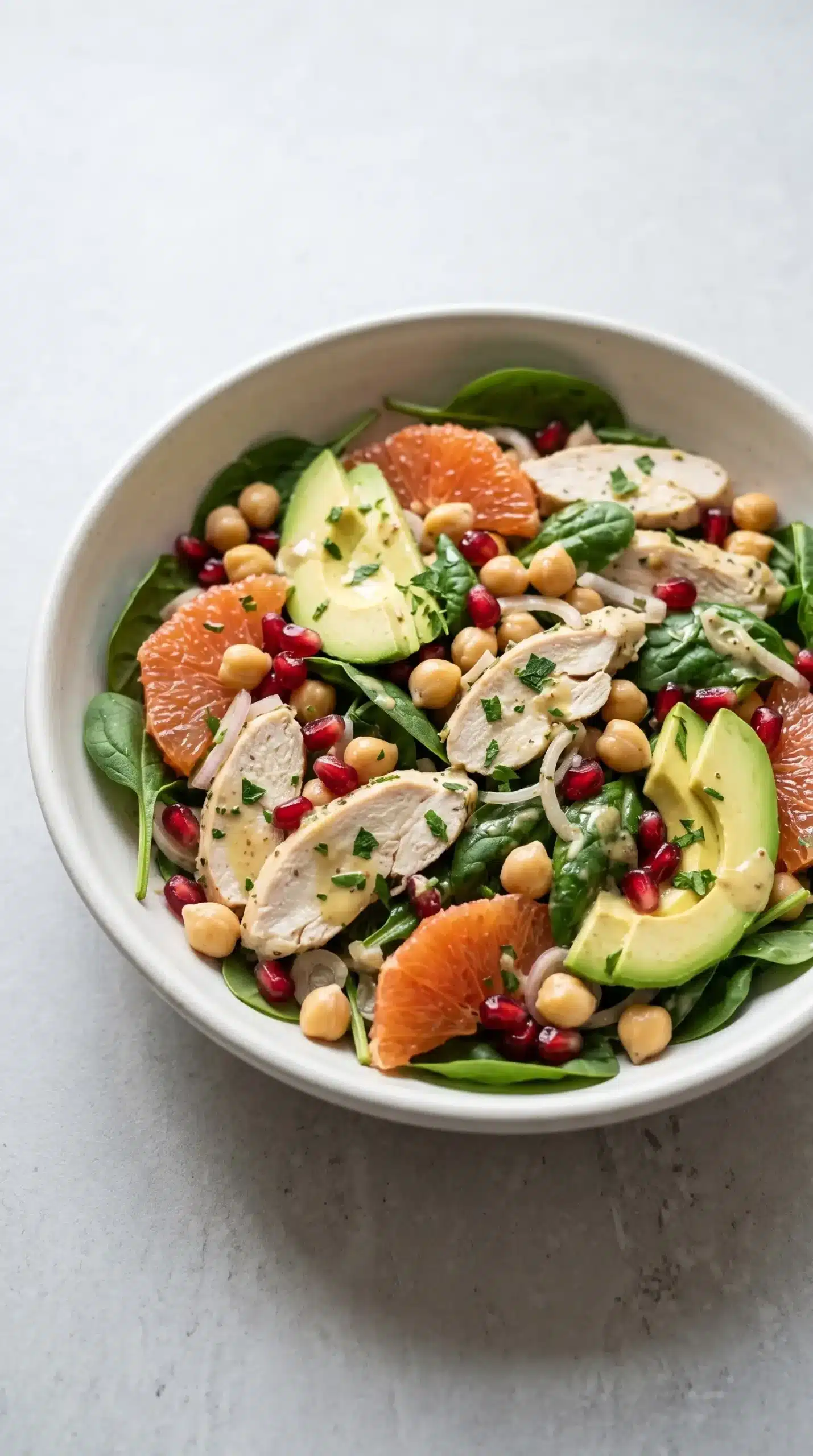
The strongest presentation comes when the orange pieces, pomegranate arils, avocado, chicken, chickpeas, and greens remain visually identifiable. Toss only enough to distribute the dressing, then season with additional salt and pepper if needed.
A small drizzle of good olive oil can be useful at the end when the finished salad needs a little more richness. Add it sparingly because the dressing already contains olive oil and a creamy component.
Lemon chicken makes this bowl substantial without heaviness
The chicken and chickpeas provide enough substance to make the winter spa salad work as a meal, while the citrus, pomegranate, spinach, and herbs keep the overall flavor lively. The balance depends on restraint: cook the chicken until done without drying it out, keep the dressing tangy but controlled, and handle the delicate produce gently.
Winter spa salad comes together through balance
Juicy oranges and pomegranate bring brightness to the savory chicken and chickpeas, while avocado and the creamy dressing soften the sharper notes from lemon, vinegar, and mustard. That balance is what gives the orange pomegranate chicken salad its appeal without requiring complicated cooking.
The best bowl keeps those contrasts intact from the first toss to the last bite. When the chicken is tender, the greens remain fresh, and the dressing has enough acidity without becoming harsh, every component has room to contribute.
Questions about tangy dressing and serving
Can Greek yogurt make the dressing too tangy?
Yes, it can make the dressing noticeably sharper because Greek yogurt joins the lemon, champagne vinegar, and mustard already present. If the flavor feels too tart, reduce the vinegar or mustard slightly, or add honey to taste.
Can the chicken be marinated for longer?
The supplied preparation allows the chicken to remain refrigerated for as long as two hours in the marinade. Keeping within that window gives the chicken time to take on the seasoning without extending the acidic marinade unnecessarily.
What should I do if the salad dressing tastes too acidic?
Adjust one acidic ingredient at a time instead of adding more ingredients indiscriminately. Reducing the vinegar or mustard is the most direct correction, while a little honey can add sweetness that rounds out the sharper flavors.
Which herbs work best with the oranges and pomegranate?
Parsley and mint are both suitable. Parsley keeps the flavor more savory and straightforward, while mint creates a fresher aromatic note that pairs particularly well with the citrus and pomegranate.
How can I keep the avocado from becoming mashed?
Cut the avocado into sturdy slices or pieces and use gentle movements when tossing the salad after it is added. Avoid repeatedly stirring the bowl, since the avocado is softer than the chickpeas, chicken, spinach, and fruit.
Can the mustard be sugar-free?
Yes. If avoiding added sugar is important, check the mustard label for a sugar-free option. Mustard formulations vary, so the label is the reliable way to confirm the choice.
Winter Spa Salad with Lemon Chicken, Chickpeas and Avocado
This winter spa salad combines tender lemon-marinated chicken with juicy citrus, creamy avocado, chickpeas, spinach, and pomegranate for a fresh, hearty bowl with bright, tangy flavor. It is an easy choice when you want a satisfying meal that still feels light and crisp.
Ingredients
Method
Marinating
- Whisk the marinade ingredients together in a bowl. Add the chicken, cover, and refrigerate for 30 minutes while preparing the remaining ingredients, or for up to 2 hours.
Dressing
- Combine the dressing ingredients and whisk until evenly blended.
Cooking
- Heat the oil in a pan or pre-heat a griddle.
- Remove and discard the excess marinade from the chicken, then grill the chicken pieces until cooked through.
- Transfer the cooked chicken away from the heat and let it rest for a few minutes before cutting.
Assembly
- Combine the spinach, oranges, avocado, pomegranate arils, chickpeas, shallot, fresh herbs, and chicken with the dressing.
- Toss gently until the ingredients are coated, then season with additional salt and pepper as needed. Add a small drizzle of olive oil if desired.
Notes
For a sugar-free option, choose a mustard labeled sugar-free. If the dressing, particularly when made with Greek yogurt, tastes too tangy, use less vinegar or mustard, or add honey to taste for more sweetness.