From breakfast to dinner, from healthy meals to sweet desserts – Next Yum Recipes brings you quick, simple and tasty ideas for every occasion and every time.


 This Recipe
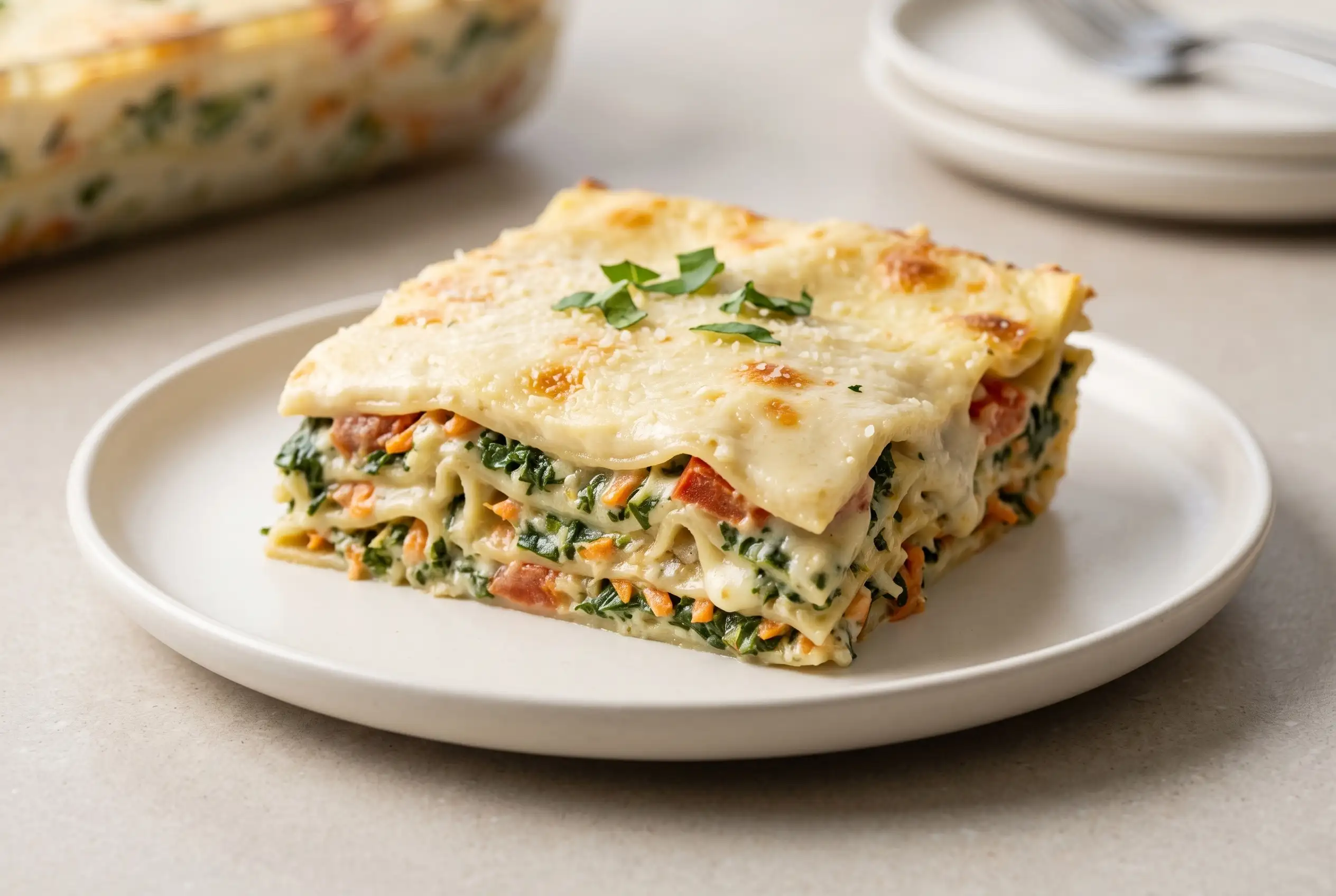
Veggie Alfredo Lasagna brings together tender vegetables, layered noodles, melted cheese, and a remarkably smooth cauliflower Alfredo sauce. The sauce starts with cauliflower cooked until fork-tender, then blends with sautéed garlic, butter, milk, seasoning, and some of the cooking liquid until creamy. That gives the baked veggie lasagna a rich texture while keeping the vegetable filling at the center of the dish.
What makes this combination work is the contrast between the soft sauce and the more distinct texture of chopped greens, carrots, and tomatoes. Each vegetable layer gets seasoning as it goes into the dish, while the cheese melts between the layers and over the top. Careful handling of the tomatoes and noodles matters because excess moisture can turn a neatly layered lasagna into a watery one.
Cauliflower Alfredo gives the lasagna its creamy structure
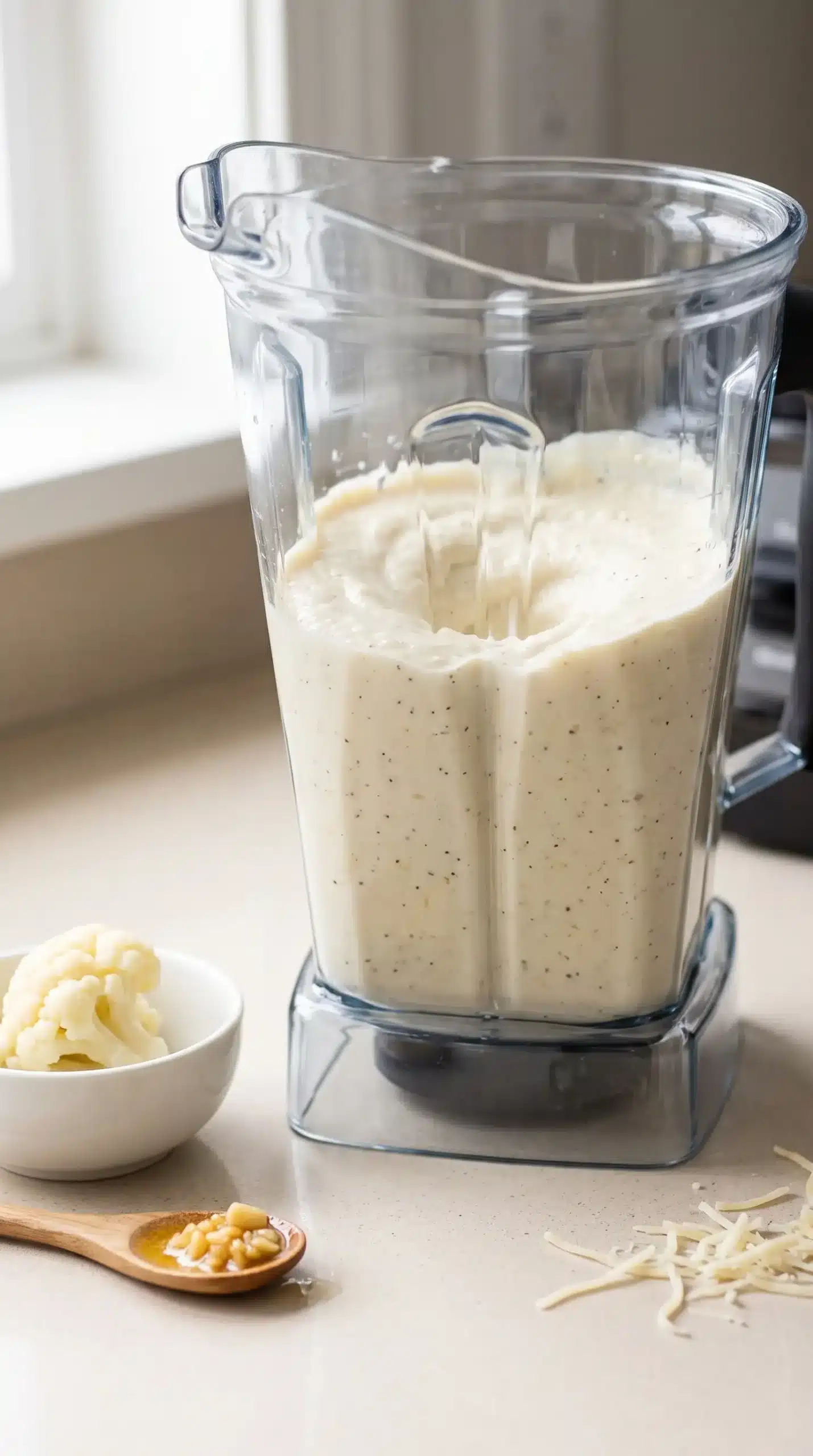
Cauliflower forms the body of the Alfredo sauce, but its success depends on how thoroughly it is cooked and blended. The florets need to become fork-tender before they go into the blender or food processor. Starting with undercooked cauliflower can leave small pieces behind and make the sauce feel grainy instead of smooth.
Sautéed garlic and butter are blended directly into the cooked cauliflower, along with one cup of the cooking liquid, milk, salt, and pepper. Keeping some of that vegetable broth or water available gives the blender enough liquid to create a cohesive sauce without requiring a large amount of milk.
Several minutes of blending are useful here because the desired texture is especially smooth. If the sauce seems unusually thick while processing, a little additional cooking liquid can help it move through the blades. The finished sauce should be easy to spread across the noodles and vegetables without becoming watery.
Vegetable choices need moisture control more than variety
Fresh greens, grated carrots, and tomatoes create a colorful filling, and the combination can be adjusted according to what is available. The important consideration is moisture. Tomatoes release liquid during baking, so diced fresh tomatoes and canned diced tomatoes both need to be drained well before they are layered into the lasagna.
- Tomatoes: Drain visible excess liquid before they reach the baking dish so the vegetable layers do not contribute unnecessary water.
- Fresh greens: Chop them into manageable pieces so they distribute across the noodles instead of forming dense pockets.
- Grated carrots: Spread them evenly with the other vegetables so their sweetness and texture are present throughout the layers.
Seasoning the vegetables as they are layered also matters because the filling is distributed across several layers. A small amount of salt placed over each vegetable layer helps prevent the vegetables from tasting bland beneath the sauce and cheese.
Cheese selection changes how each layer holds together
A mixed shredded cheese combination works especially well because the layers contain both a creamy vegetable sauce and a substantial amount of produce. Mozzarella can provide a familiar melted texture, while provolone and Parmesan bring different savory qualities to the blend.
Using the cheese across the layers instead of concentrating nearly all of it on top helps connect the noodles, vegetables, and sauce as the lasagna bakes. A layered dish such as a Parmesan and ricotta lasagna benefits from keeping the cheese distributed through the filling, while the upper layer can still receive the largest visible finish and brown during baking.
| Cheese placement | Purpose in the lasagna | What to watch for |
|---|---|---|
| Between vegetable layers | Helps bind the filling with the noodles and sauce | Spread it evenly so no section becomes cheese-heavy |
| Mixed with several varieties | Combines different melting and savory qualities | Keep the total distribution consistent from layer to layer |
| Over the top sauce layer | Creates the browned, melted surface | Watch the uncovered bake so the cheese reaches your preferred color |
Partially softened noodles are easier to layer cleanly
Lasagna noodles only need to begin softening before assembly. Keeping them slightly stiff makes them easier to handle without turning them into fragile pieces that tear as they are moved into the baking dish.
Cooling the noodles enough to handle them comfortably also makes the assembly more controlled. The sauce can then be spread beneath and above the vegetable filling without forcing the noodles to slide around the dish.
Layering works best when sauce reaches both sides of the vegetables
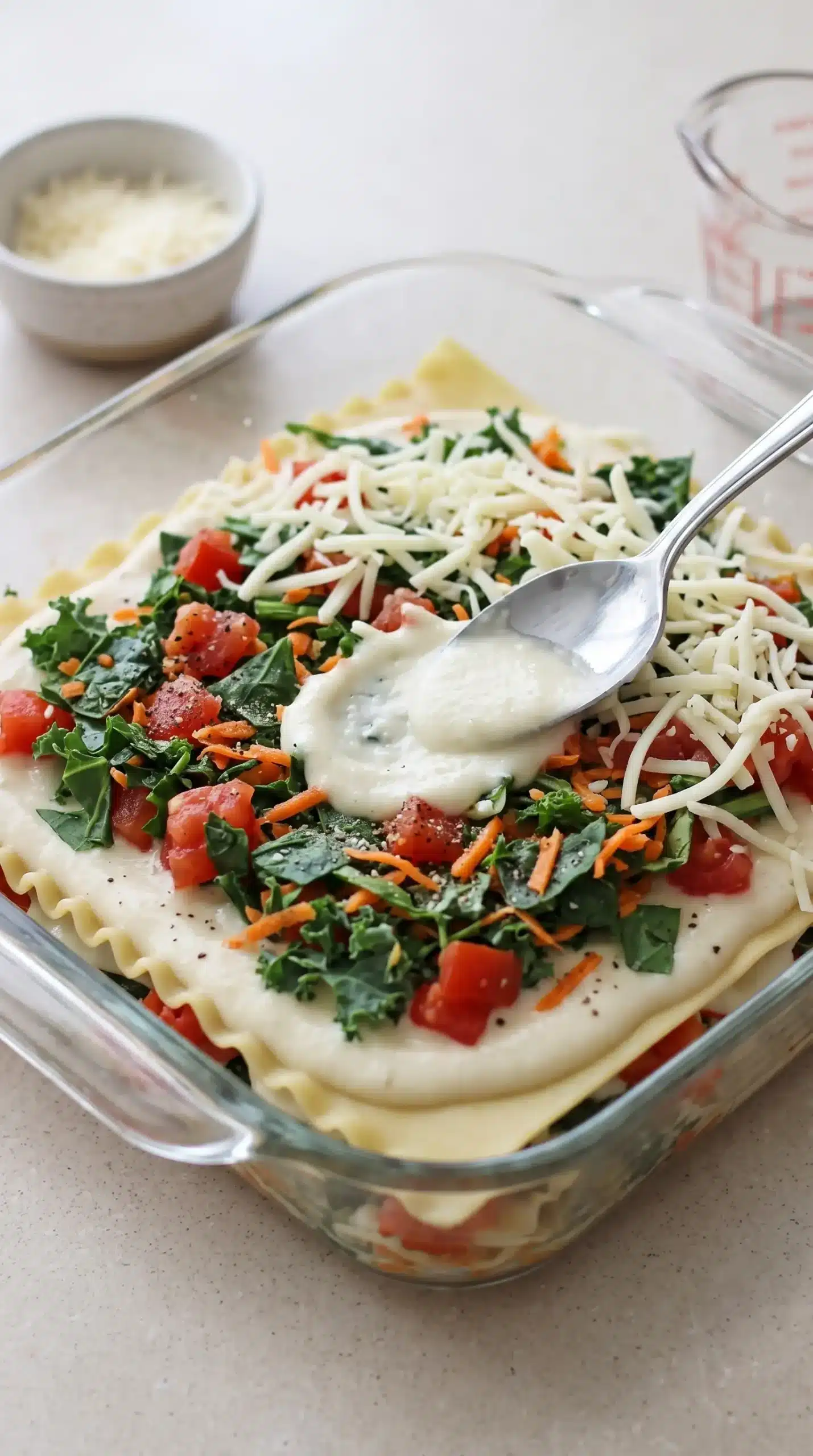
Each vegetable portion benefits from sauce beneath it and another layer of sauce above it. That arrangement keeps the vegetables surrounded by moisture while preventing the filling from sitting directly against a dry noodle surface.
- Start with sauce: Coat the bottom of the baking dish lightly before adding the first noodles.
- Build upward: Add noodles, sauce, vegetables, seasoning, cheese, and another portion of sauce in the established sequence.
- Finish with noodles: Place the remaining noodles on top, then cover them with sauce and the remaining cheese.
Keeping the portions reasonably even is more useful than trying to make every layer visually perfect. Consistent distribution helps the finished lasagna cut into recognizable layers while giving each serving some noodles, vegetables, sauce, and cheese.
Oven baking needs bubbling edges before the uncovered finish
The covered portion of baking protects the surface while the interior heats through. Greased foil can be placed over the dish before it goes into the oven, leaving the cheese underneath protected from direct heat during the initial bake.
Visible bubbling around the edges is a useful cue that the layered center is heating. Once that happens, removing the foil allows the cheese on top to brown. The uncovered stage is flexible enough to suit your preferred level of browning, so the surface can be taken out once it has developed the color you want.
Moisture is the key control point for a clean slice
Excess liquid is the most important texture issue to manage because several ingredients naturally contain water. Tomatoes are the clearest example, but the cauliflower sauce also contains cooking liquid, and the vegetables contribute moisture as they heat.
Draining diced tomatoes before assembly gives the sauce and cheese more control over the final consistency. Adding liquid only as needed while blending the cauliflower sauce serves the same purpose: the sauce needs to spread easily, but it should still have enough body to remain between the layers.
Allowing the baked lasagna to rest at least 30 minutes before cutting gives the hot layers more time to settle, making the portions easier to lift cleanly from the baking dish.
Veggie Alfredo Lasagna mistakes usually begin with excess liquid
Watery tomatoes can loosen the entire dish. Canned diced tomatoes in particular should be drained before they are added, while fresh diced tomatoes should also be checked for excess juice. This small preparation step has a direct effect on how firmly the finished slices hold together.
Another problem comes from treating the cauliflower sauce as though more liquid is always better. The blender needs enough cooking liquid and milk to process the cauliflower smoothly, but adding substantially more than needed can make the sauce too loose for layered assembly.
Uneven vegetable portions create a different issue. A dense mound in one area can make neighboring sections feel mostly like noodles and sauce. Spreading the vegetables across each layer gives the finished dish a more consistent texture from edge to edge.
Garlic and cauliflower need a smooth transition into the sauce
Softening the minced garlic gently in butter gives it time to become fragrant before it joins the cooked cauliflower. Low heat is appropriate because the garlic needs to soften without becoming heavily browned.
Meanwhile, the cauliflower cooks in vegetable broth or water until a fork can pass through the florets easily. A slotted spoon transfers the cooked cauliflower to the blender while the cooking liquid remains available. That retained liquid is useful because it carries the cooking process directly into the sauce without requiring the cauliflower to be completely dry before blending.
Vegetable Alfredo Lasagna balances richness with fresh ingredients
The dish feels substantial because several rich elements work together: butter and milk in the sauce, Parmesan in the Alfredo mixture, and melted cheese throughout the layers. The vegetables provide a contrasting texture and keep the filling from becoming one continuous creamy layer.
Tomatoes are particularly useful within that balance because their acidity and freshness stand apart from the softer cauliflower sauce. Greens and carrots add their own textures, giving each forkful more variation than a cheese-and-sauce-only filling would provide.
A few assembly decisions make leftovers more flavorful
Seasoning each vegetable layer is more effective than expecting the sauce and cheese to season every bite equally. The vegetables are separated by noodles and sauce, so distributing salt as the layers are assembled gives the filling more even seasoning.
That detail becomes especially noticeable after the lasagna has rested and the layers have settled together. Portions can then be cut through several distinct vegetable layers instead of collecting all the vegetables in a single section of the dish.
Cauliflower Alfredo Lasagna is defined by texture, not imitation
The cauliflower sauce does not need to behave exactly like a traditional cream-heavy Alfredo to work here. Its main job is to create a smooth, spreadable layer that connects the noodles, vegetables, and cheese while bringing garlic, butter, Parmesan, and seasoning into the dish.
Blending the cauliflower thoroughly is therefore more important than trying to make the sauce exceptionally rich. A smooth puree gives the lasagna a cohesive interior, while the vegetables and cheese supply the textural contrast that keeps the baked layers interesting.
Veggie Alfredo Lasagna comes together when moisture stays controlled
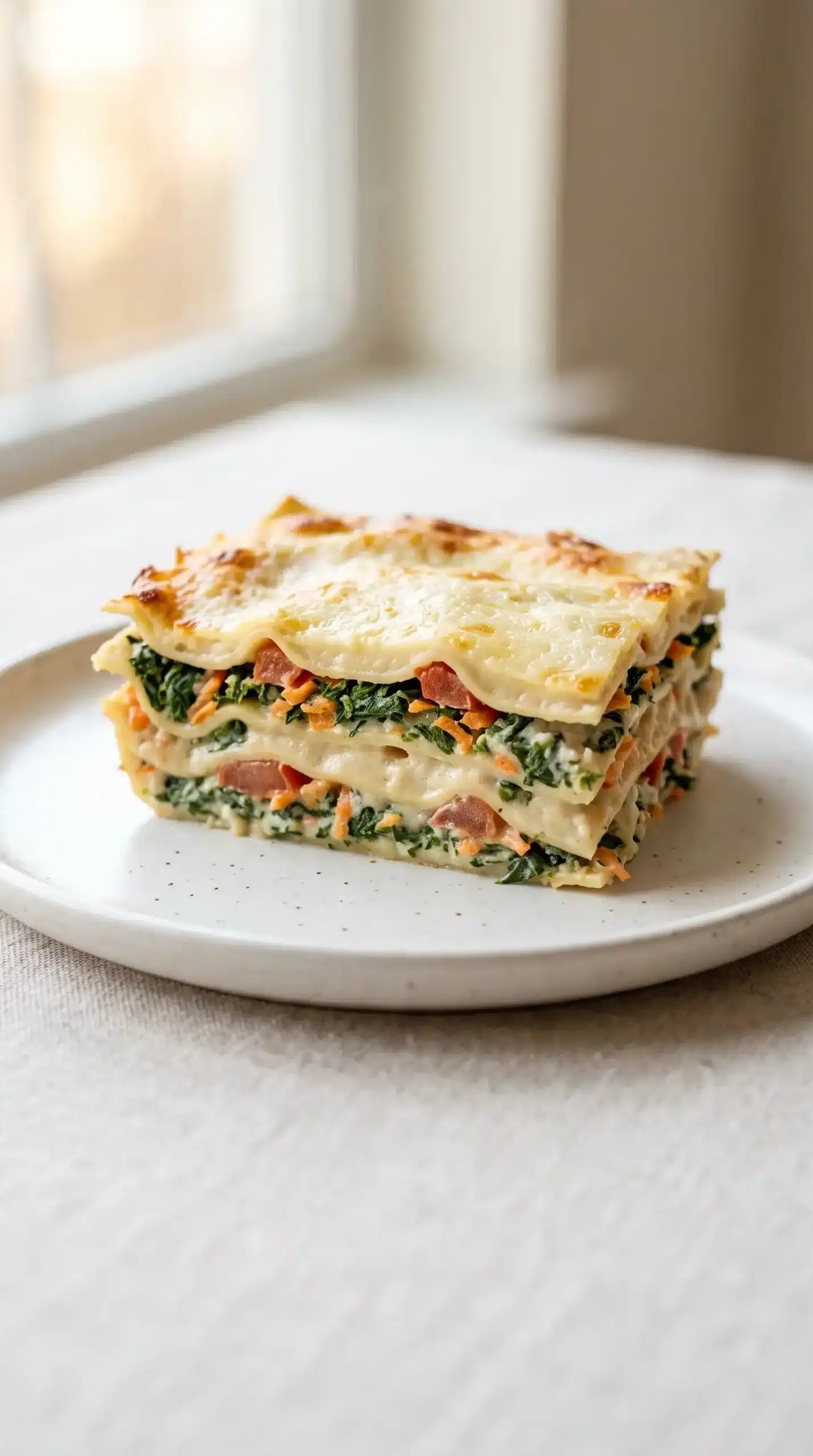
Drained tomatoes, a smooth but not overly loose cauliflower sauce, evenly distributed vegetables, and partially softened noodles all point toward the same cooking judgment: moisture needs to be managed at every stage. The lasagna has enough creamy and vegetable-rich components to stay tender without extra liquid becoming necessary.
Once the edges are bubbling and the cheese has browned to your liking, a short cooling period makes the layers easier to cut. That combination of controlled moisture, balanced layering, and gradual browning is what allows the sauce to remain creamy while the vegetables stay recognizable.
Veggie Alfredo Lasagna questions about moisture and layering
Can canned tomatoes be used in the vegetable layers?
Yes. Canned diced tomatoes fit the vegetable mixture, but their excess liquid should be drained before assembly. Using them without draining can add enough moisture to make the baked layers watery.
Why does the cauliflower sauce need cooking liquid?
The reserved vegetable broth or water helps the cooked cauliflower blend into a smooth sauce. One cup is incorporated with the cauliflower, garlic and butter, milk, salt, and pepper, while additional liquid can be used cautiously if the blender needs help processing the mixture.
Can the vegetables be changed?
The vegetable combination can be adapted because the supplied filling already combines greens, carrots, and tomatoes rather than relying on one fixed vegetable. When changing the mixture, keeping moisture under control is still important, particularly with vegetables that release substantial liquid during baking.
How can the lasagna be cut without the layers sliding apart?
Let the baked dish cool for a few minutes before cutting. That brief pause allows the hot sauce, melted cheese, vegetables, and noodles to settle together, making portions easier to lift from the baking dish.
What should the top look like when it is finished?
The cheese should be melted and browned according to your preference, while the edges should show bubbling from the heated layers underneath. Removing the foil for the uncovered portion of baking provides the direct heat needed to brown the cheese surface.
Veggie Alfredo Lasagna with Cauliflower Alfredo Sauce
Veggie Alfredo Lasagna is a creamy, comforting layered lasagna with tender vegetables, noodles, melted cheese, and smooth cauliflower Alfredo sauce. It is a satisfying choice for a hearty weeknight meal or a cozy gathering.
Ingredients
Method
Cauliflower Alfredo Sauce
- Cook the minced garlic with the butter in a large nonstick skillet over low heat until softened and fragrant.
- Cook the cauliflower in the vegetable broth or water for 7-10 minutes, until the florets are fork tender. Keep the cooking liquid.
- Transfer the cooked cauliflower to a blender or food processor with a slotted spoon. Add 1 cup of the cooking liquid, the sautéed garlic and butter, salt, pepper, and milk. Blend for several minutes until the sauce is very smooth.
Preparation
- Preheat the oven to 375°F (190°C).
- Boil the lasagna noodles for a few minutes, just until they begin to soften while remaining somewhat firm. Cool them enough to handle.
Assembly
- Lightly coat the bottom of a 9 inch square glass baking dish with a spoonful of cauliflower sauce and a drizzle of olive oil to help prevent sticking.
- Arrange lasagna noodles over the sauce. Add 1/2 cup sauce, one fourth of the vegetables, a sprinkle of salt, 1/2 cup cheese, and 1/4 cup sauce. Repeat this layering sequence 4 times, finishing with noodles.
- Spread 1/2 cup sauce over the top noodle layer and finish with the remaining 1 cup of cheese.
Baking
- Cover the dish with greased foil and bake for 25 minutes, until the liquid is bubbling around the edges.
- Remove the foil and continue baking uncovered for another 10-20 minutes, until the cheese reaches your preferred golden-brown color.
- Allow the lasagna to cool for a few minutes before cutting and serving.
Notes
For the vegetable filling, drain excess liquid from both fresh and canned diced tomatoes before adding them to the lasagna to help prevent a watery result. Sprinkling salt over each vegetable layer also helps the filling taste more flavorful, especially when served as leftovers.