From breakfast to dinner, from healthy meals to sweet desserts – Next Yum Recipes brings you quick, simple and tasty ideas for every occasion and every time.


 This Recipe
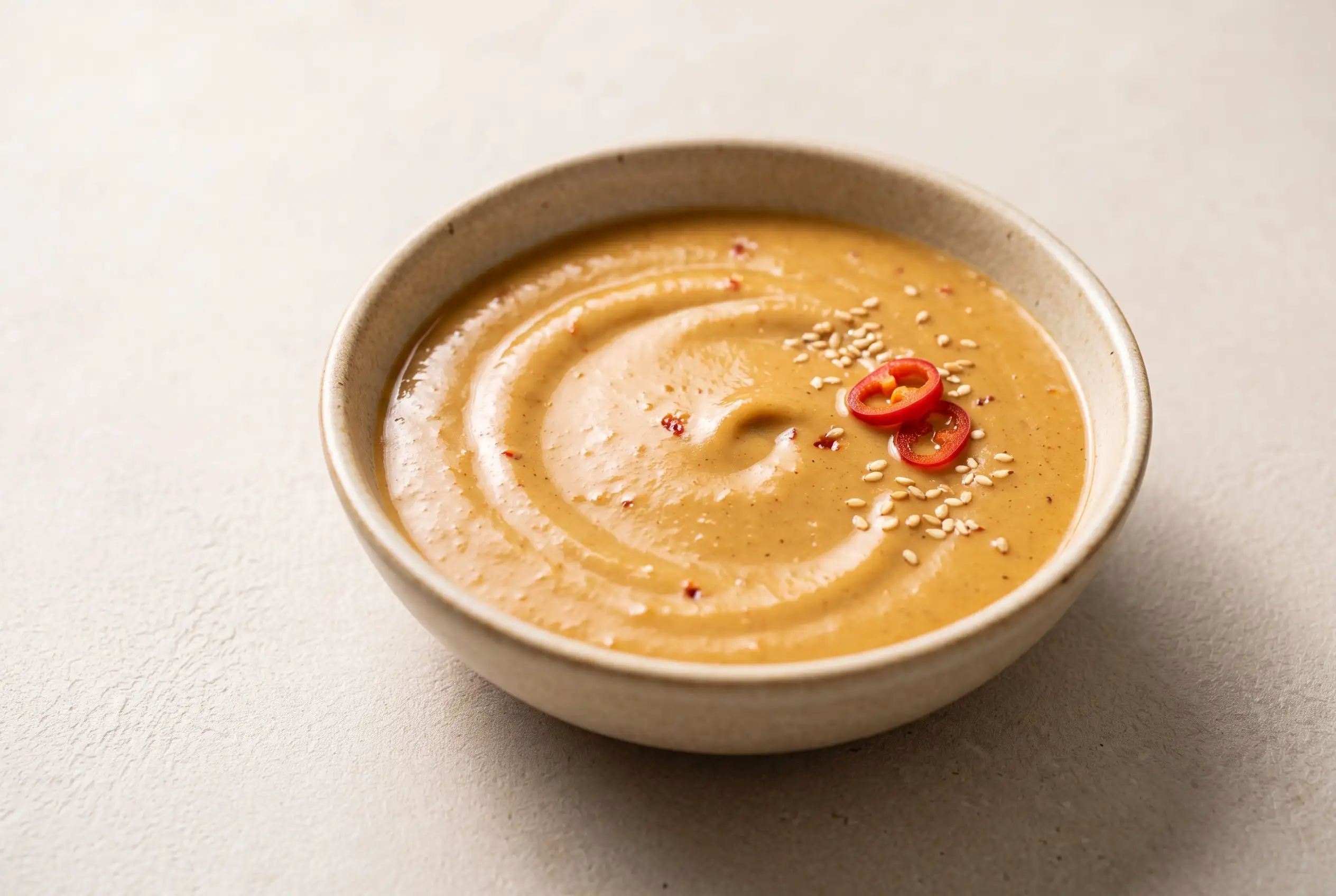
Peanut sauce is one of those small kitchen staples that can turn an ordinary meal into something deeply satisfying, creamy, salty, tangy, sweet, and spicy all at once. This easy peanut sauce comes together in a blender with peanut butter, soy sauce, sesame oil, rice vinegar, fresh ginger, garlic, and a little sweetener, creating a smooth sauce with enough personality for noodles, vegetables, bowls, wraps, and anything that deserves a dunk.
What makes the flavor balance work
Peanut butter supplies the rich, creamy foundation, while low sodium soy sauce brings savory depth without making the mixture overwhelmingly salty. Rice vinegar cuts through that richness with a bright acidity, and sesame oil gives the sauce its distinctive toasted aroma.
Sambal oelek or another chili paste brings the heat, but its role is broader than simply making the sauce spicy. It adds another layer of flavor that keeps the creamy base from tasting flat. Because chili pastes vary in intensity, adding the heat gradually gives you more control over the finished sauce.
A little sugar, honey, or agave rounds out the sharper flavors. Fresh ginger and garlic provide a lively aromatic edge that makes the peanut sauce taste fresh instead of heavy. Water then loosens everything into a spoonable consistency without adding another strong flavor.
Peanut butter determines the starting texture
Natural peanut butter can produce a slightly looser sauce, while a thicker conventional peanut butter may need a little more blending to become completely smooth. Either can work, but stir separated natural peanut butter thoroughly before measuring so the mixture is consistent from the start.
Fresh aromatics keep the sauce lively
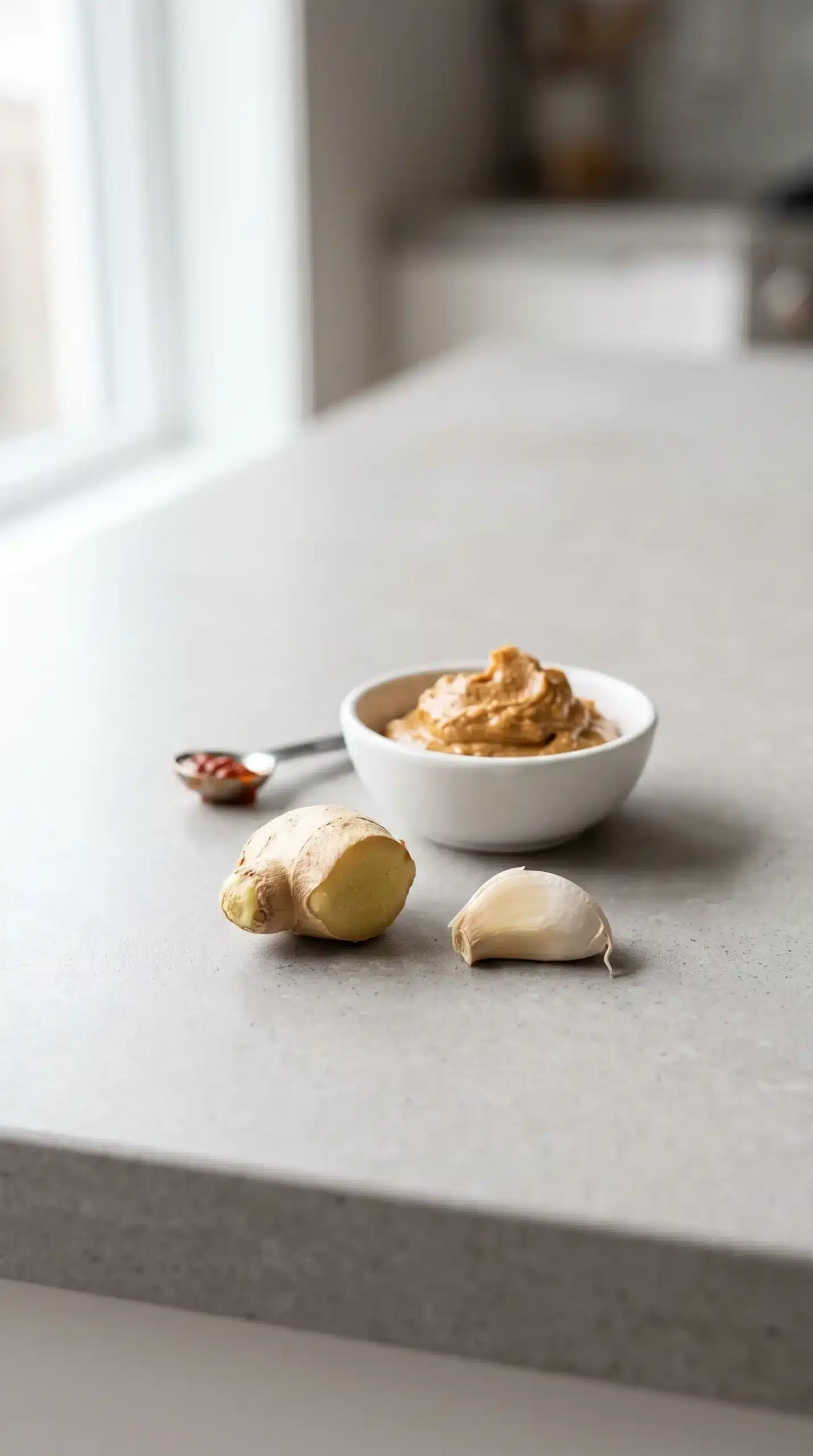
Fresh ginger and garlic matter because they are blended directly into the sauce instead of being cooked first. Their sharp, aromatic character stands out against the creamy peanut base and gives the finished mixture a more vibrant flavor.
For the smoothest result, peel both before blending and use small pieces if your blender or food processor is modest in size. Larger chunks can take longer to break down, leaving little pockets of ginger or garlic instead of an evenly seasoned sauce.
Almond butter can replace the peanut butter when desired. The substitution changes the nutty character, but the same supporting flavors still work with it, including sesame oil, rice vinegar, ginger, garlic, and chili paste.
Heat should be adjusted before serving
Sambal oelek provides the defining spicy element, so its amount is best treated as adjustable. Start with a restrained amount if you are unsure of the chili paste’s strength, blend, and taste. More can be incorporated afterward if the sauce needs additional heat.
- Gentle heat: Use less chili paste for a milder sauce that works well with delicate vegetables or simple noodles.
- More intensity: Increase the sambal gradually when the sauce will accompany hearty bowls, roasted vegetables, or strongly seasoned foods.
- Balanced spice: Keep the sweetener and acidic element in proportion when increasing the chili so the sauce remains rounded.
Blending turns separate flavors into one sauce
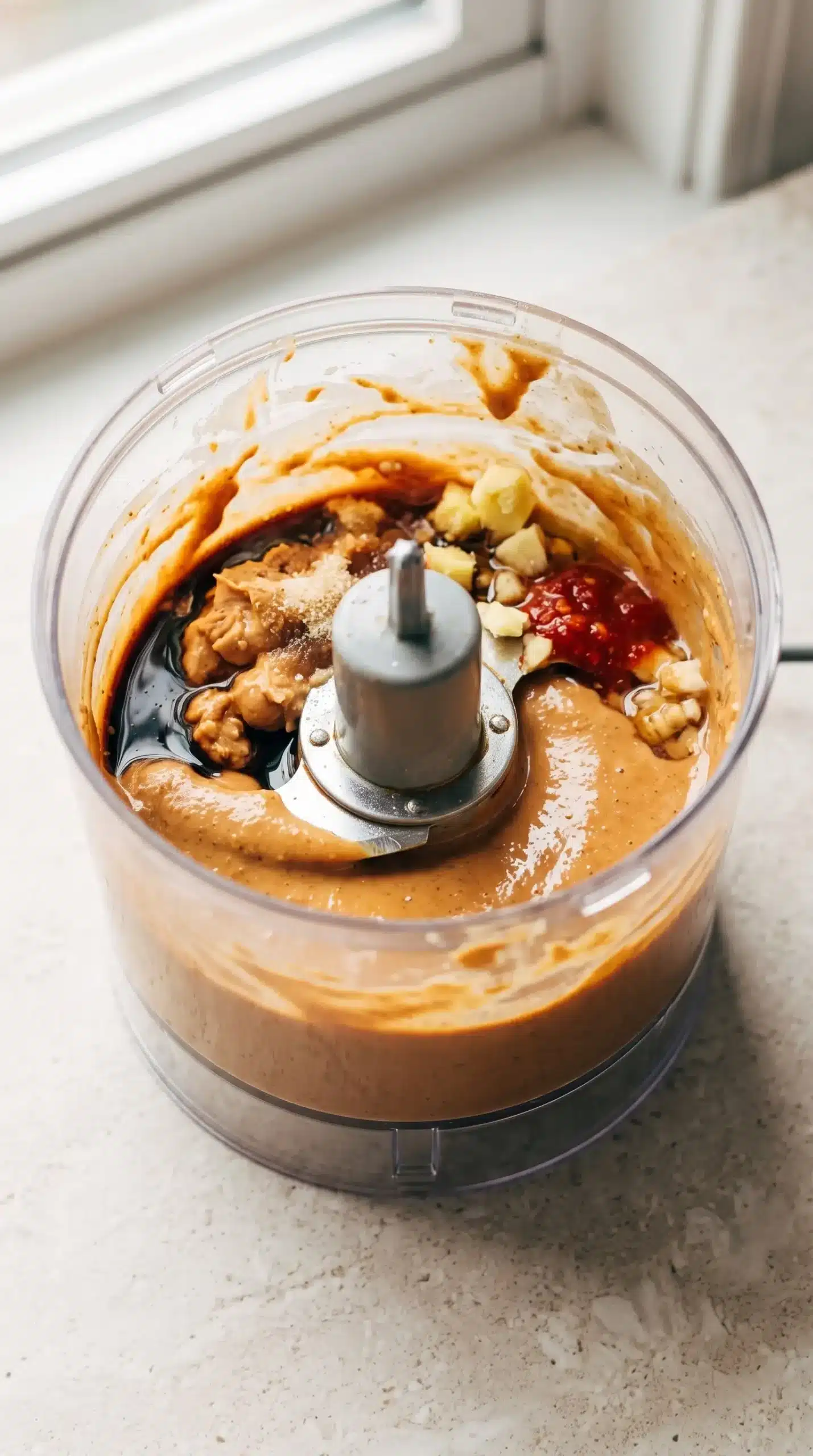
Because the ingredients begin with very different textures, thorough blending is what transforms them into a cohesive peanut sauce. Peanut butter is dense, while the soy sauce, vinegar, sesame oil, and water are fluid; the aromatics add small solids that need to disperse throughout the mixture.
A small blender or food processor is especially useful because it can pull the ingredients together quickly. Scrape down the sides if peanut butter or aromatics collect above the blade, then continue until the mixture looks uniformly creamy.
Watch the texture as you blend. The sauce should move easily enough to pour or drizzle, yet remain thick enough to cling to noodles, vegetables, or other foods. If it feels too dense, a small addition of water can loosen it without changing the flavor profile dramatically.
Water controls the pourable consistency
The water is more than a filler; it determines how easily the peanut sauce moves from a spoon onto food. Since peanut butter varies in thickness, the sauce can sometimes need a little adjustment after blending. Add water cautiously if the finished texture is thicker than you want, blending again until it reaches the consistency that suits your intended use.
Rice vinegar prevents a heavy finish
Rich nut butter can coat the palate, which is why acidity is especially useful here. Rice vinegar adds a clean tang that gives the sauce lift and keeps the combination of peanut butter, sesame oil, and sweetener from becoming overly rich.
That balance becomes particularly noticeable when the sauce is paired with a large amount of food. A coating of creamy peanut sauce can taste much heavier when there is nothing acidic to offset it. The vinegar gives each bite a sharper edge and helps the savory, sweet, spicy, and nutty notes remain distinct.
Sweetener rounds the sharper edges
Sugar, honey, or agave can be used to soften the sharper notes from soy sauce, rice vinegar, ginger, garlic, and chili paste. The sweet element does not need to dominate; its job is to bring the flavors into better alignment.
Ways to use peanut sauce beyond noodles
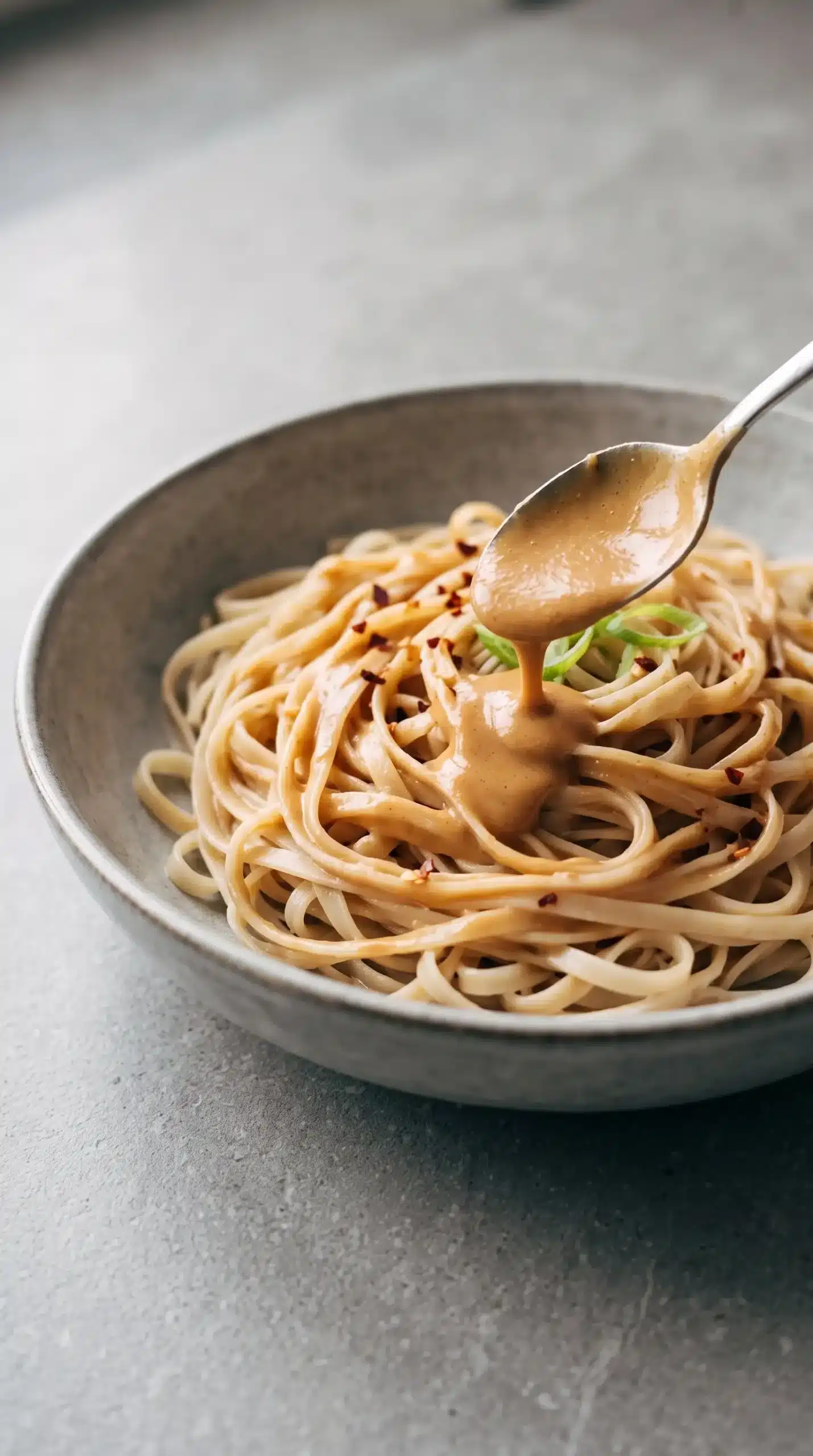
Peanut sauce is naturally versatile because its thick, creamy texture works as both a coating and a dip. It can become part of a composed meal or simply sit beside food for dunking. The flavor is assertive enough to make simple ingredients more interesting without requiring another complicated preparation.
For noodles, toss the sauce through while they are still easy to coat, adding a little water if needed for a looser finish. When using the sauce in sesame noodle bowls, thin it gradually so it coats the noodles without settling heavily at the bottom. For vegetables, drizzle it over roasted or steamed pieces, or serve it alongside raw vegetables as a dip.
Wraps and grain bowls also benefit from a spoonful of the sauce because it adds richness and moisture in one step. It can be especially useful when the other ingredients are simply seasoned and need a concentrated savory element.
| Use | Best texture | Practical approach |
|---|---|---|
| Noodles | Loose and creamy | Thin slightly so the sauce coats evenly. |
| Vegetable dip | Thick and scoopable | Keep the sauce concentrated for dipping. |
| Grain bowls | Pourable | Drizzle over the finished bowl for moisture and flavor. |
| Wraps | Spreadable | Use a moderate layer so it stays inside the wrap. |
Simple pairings make the sauce especially useful
The easiest way to use peanut sauce is to match its richness with foods that have contrasting textures. Crisp vegetables, tender noodles, grains, and fresh greens can all provide a useful counterpoint to the creamy sauce.
- Crunchy vegetables such as carrots, cucumber, or bell pepper can be dipped directly into the sauce.
- Cooked noodles can be coated for a quick meal with a creamy, savory finish.
- Fresh greens and grain bowls can use a drizzle of sauce as a concentrated dressing.
Peanut sauce mistakes that change the balance
Overloading the sauce with chili paste can make the heat obscure the peanut and sesame flavors. Since the chili is adjustable, add it gradually and taste before deciding whether more is needed.
Too much water can make the sauce thin and dilute its flavor. Add liquid conservatively, especially if the peanut butter is already naturally loose. A thicker sauce can always be loosened, while an overly diluted mixture is harder to correct without changing its balance.
Incomplete blending can leave uneven pieces of ginger or garlic and pockets of concentrated seasoning. Continue processing until the texture looks creamy and consistent, scraping the container when necessary.
Storage keeps the texture ready for another meal
Refrigerated peanut sauce can be kept for about one week. Store it in a clean, covered container and give it a good stir before using, especially if the mixture has thickened during chilling.
Gluten-free and vegan adaptations stay straightforward
For a fully vegan version, remember that honey is not considered vegan, so choose sugar or agave as the sweetener instead. For a gluten-free version, use tamari or coconut aminos instead of soy sauce. These substitutions preserve the sauce’s sweet and savory balance while accommodating different dietary needs.
Almond butter is another practical variation when peanut butter is unavailable or when a different nutty flavor is preferred. The rest of the flavor structure can remain intact, so the adjustment does not require rebuilding the sauce around a new method.
One smooth blend creates the right finishing balance
Peanut butter, soy sauce, sesame oil, vinegar, chili, aromatics, sweetener, and water become most useful when their individual strengths remain recognizable without one overpowering the others. A smooth blend, gradual heat adjustment, and careful control of the water are the small decisions that determine whether the finished sauce is thick, balanced, and easy to use.
Once blended, the peanut sauce should be judged by how it behaves with the food beside it. A thicker version works as a dip or spread, while a slightly looser consistency is better for coating noodles or drizzling over a bowl. That simple adjustment makes the same sauce adaptable without changing its core flavor.
Peanut sauce questions about storage and texture
Can peanut sauce be made without sugar?
Yes. The sugar, honey, or agave can be omitted, although the flavor will be less rounded and the tangy, spicy, and savory notes will stand out more clearly. If you skip the sweetener, taste the blended sauce before serving so you know whether its sharper flavors suit the food you are pairing with it.
How can I make peanut sauce less spicy?
Reduce the amount of sambal oelek or chili paste before blending. If the sauce has already been blended and tastes too hot, adding more peanut butter and a little water can help spread the heat across a larger volume, while a modest amount of sweetener can soften the overall impression.
Why is my peanut sauce too thick?
Peanut butter can vary considerably in consistency, so a thick sauce is not unusual. Blend in a small amount of water at a time until the mixture reaches the texture you need. Use less added liquid when the sauce is intended as a dip and more when it needs to coat noodles or drizzle easily.
Can I use almond butter instead of peanut butter?
Almond butter works as a direct alternative for the nut-butter portion. It gives the sauce a somewhat different nutty flavor while keeping the creamy structure that makes the mixture useful as a dip, dressing, spread, or noodle sauce.
How long does homemade peanut sauce last in the refrigerator?
Keep the sauce covered and refrigerated for about one week. Before serving it again, stir thoroughly to restore an even texture, particularly if the sauce has become firmer after chilling.
What can I use peanut sauce for besides noodles?
Try it with raw or cooked vegetables, grain bowls, wraps, or as a dip for foods that benefit from a creamy savory sauce. Its combination of peanut richness, acidity, sweetness, garlic, ginger, sesame, and adjustable chili makes it useful anywhere a concentrated sauce can add moisture and flavor.
Peanut Sauce with Ginger, Garlic, Sesame Oil and Chili
This easy peanut sauce is smooth, creamy, and packed with savory, tangy, sweet, and spicy flavor. Peanut sauce is a versatile choice when a rich, flavorful dip, drizzle, or coating is needed.
Ingredients
Method
Preparation
- Place all the sauce ingredients in a small blender or food processor.
- Process until the mixture is completely smooth and creamy.
- Serve with foods of your choice for dipping or coating.
Notes
VEGAN: No adaptations needed. GLUTEN FREE: Use tamari or coconut aminos in place of soy sauce. SUB FOR PB: Almond butter can be used instead of peanut butter. FREEZABLE: Yes. KEEPS IN THE FRIDGE: About 1 week. CAN I SKIP THE SUGAR: Yes. The sweetener can be omitted, although the preferred version includes it.