From breakfast to dinner, from healthy meals to sweet desserts – Next Yum Recipes brings you quick, simple and tasty ideas for every occasion and every time.


 This Recipe
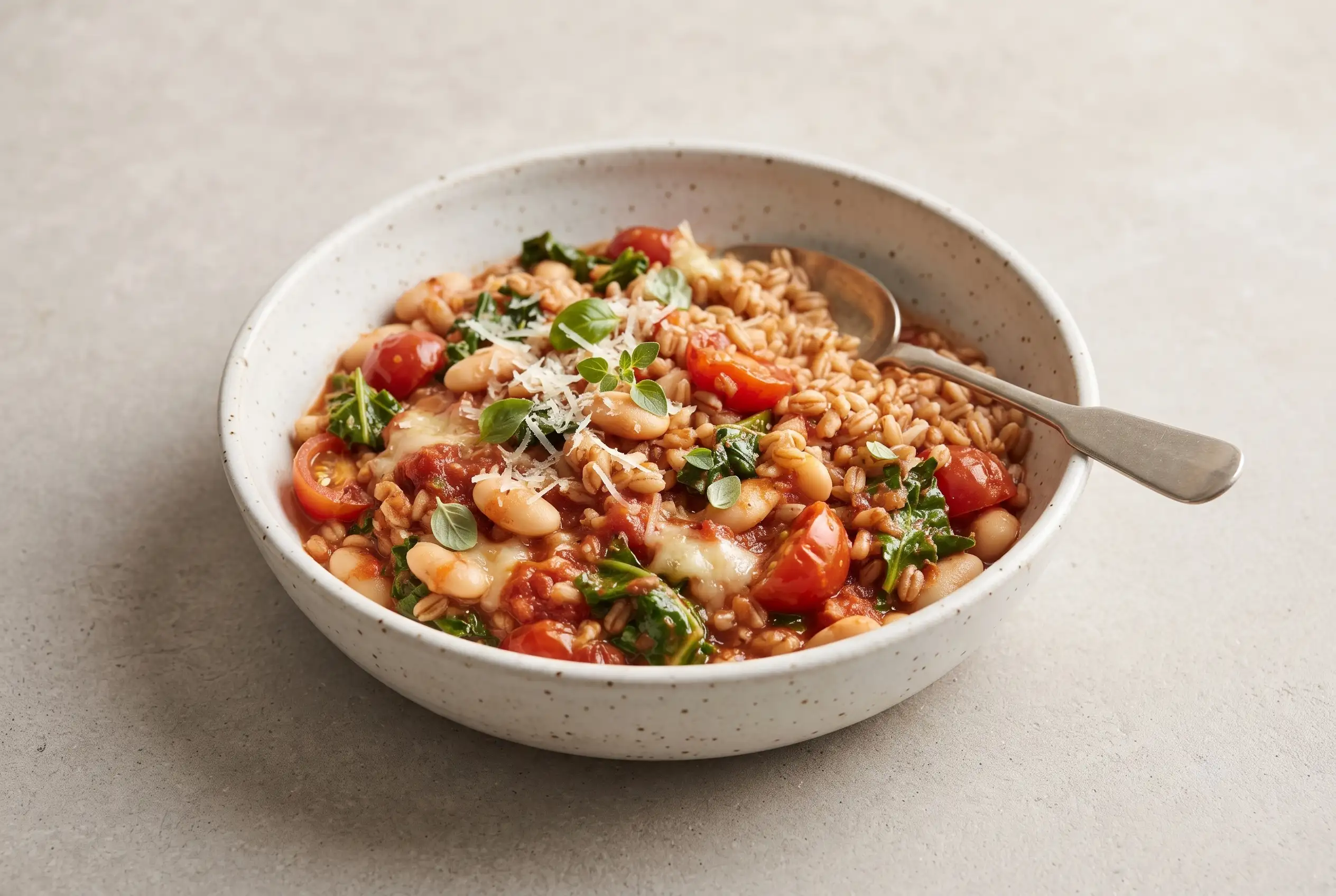
Asiago white beans bring together creamy beans, chewy farro, tender greens, and bright tomatoes in a satisfying bowl built around simple pantry ingredients. The combination creates a hearty vegetarian-friendly meal with enough texture and flavor contrast to feel complete without complicated preparation.
Warm grains, savory cheese, and a tomato-based sauce give this bowl a comforting character while fresh kale keeps the flavors lively. White beans with farro and kale work especially well because the ingredients hold their individual textures while blending into a cohesive dish.
Farro Gives Asiago White Beans Their Chewy Foundation
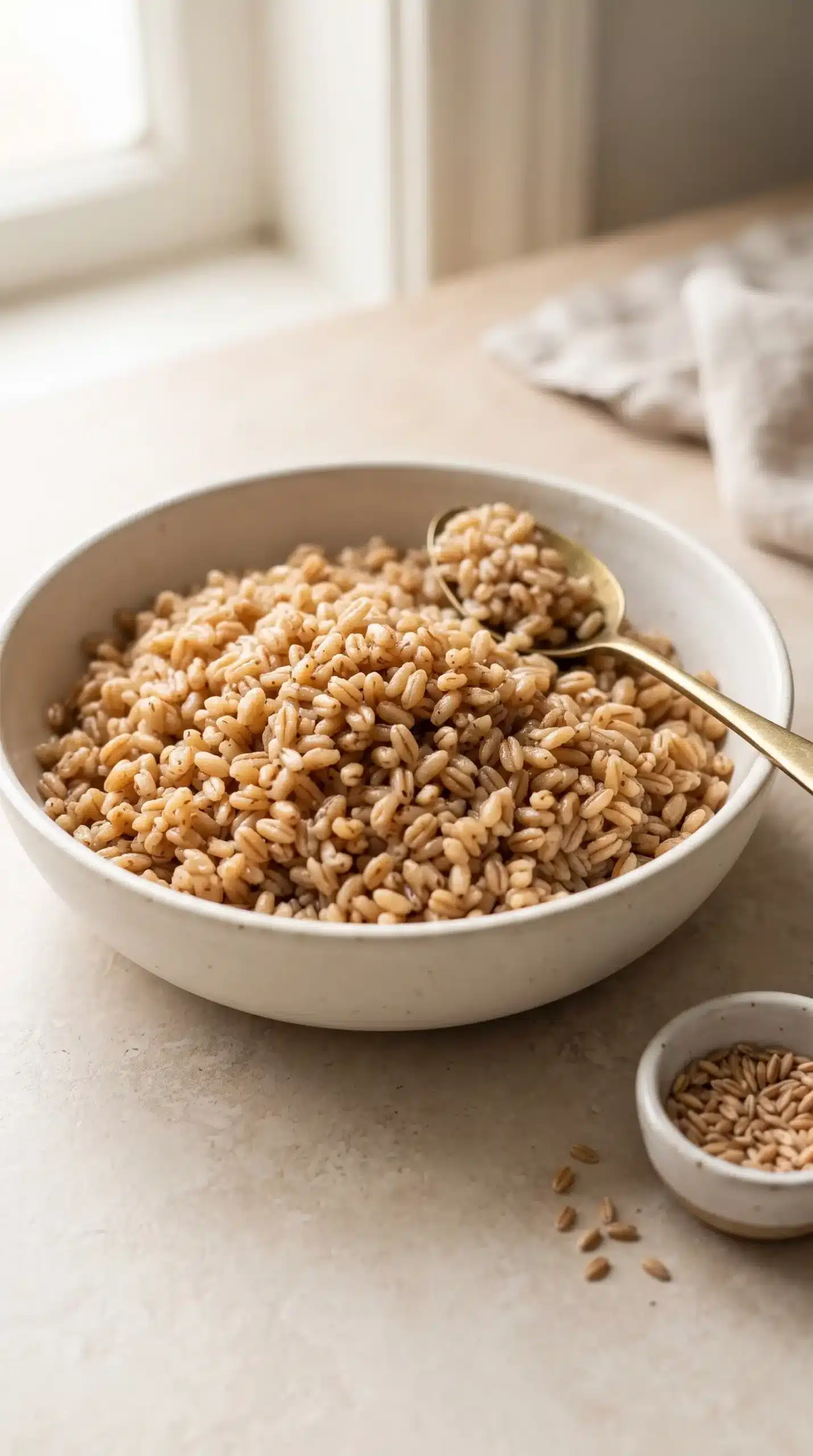
Farro provides the structure that makes this bowl feel substantial. The ancient grain has a naturally firm, chewy texture that stands up well when combined with beans, sauce, and melted cheese. Cooking the farro until tender is important because undercooked grains can distract from the softer ingredients surrounding them.
Many grains become softer as they absorb cooking liquid, and farro follows that same principle while keeping more bite than rice or pasta. Using broth for cooking helps the grain develop a deeper savory character before the remaining ingredients are added.
Cooked farro also gives the dish flexibility at the table. It can be served warm as a comforting bowl, packed for lunch, or prepared ahead and gently reheated when the flavors have had more time to combine.
Asiago and Tomato Choices Shape the Dish
Ingredient decisions make the asiago white bean recipe distinctive. Asiago or Parmesan adds salty richness, while tomato sauce and grape tomatoes create a balance of acidity and sweetness that keeps the beans and farro from feeling too heavy. White beans with tomatoes and farro benefit from using ingredients that bring different textures and flavors into the same bite.
White Beans with Farro and Kale Fit Weeknight Cooking
Simple pantry staples make white beans with farro and kale a practical option when a filling meal is needed without a long ingredient list. Canned white beans reduce preparation time, while baby kale or spinach can be stirred in quickly to soften with the heat of the dish.
For a lighter serving style, drained white beans can be paired with fresh toppings and crisp bread when a smaller meal format is preferred, such as white bean artichoke toasts. The creamy texture of the beans remains a useful foundation when adjusting portions while keeping the flavors bright.
Rice Cooker Timing Keeps Farro Texture Consistent
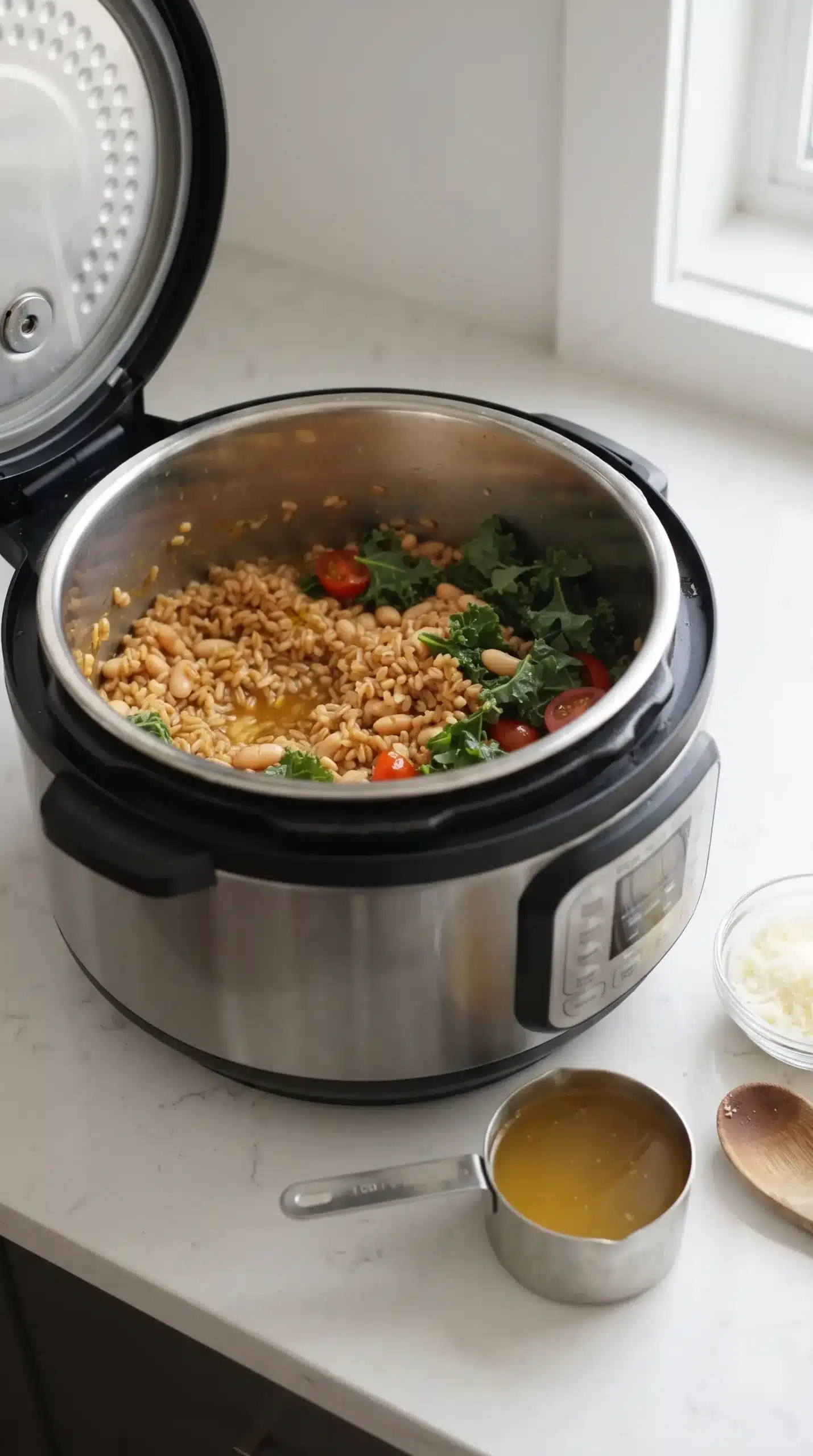
Cooking farro in a rice cooker can simplify the process because the appliance handles the steady simmer needed for a tender grain. The brown rice setting is useful when available because farro generally requires a longer cooking period than white rice.
Stovetop preparation follows the same basic principle: the farro needs enough time to absorb the broth and become pleasantly chewy. soaking farro overnight can shorten cooking time, but it is not required when the grain is cooked until tender.
Adding the remaining ingredients after the farro is ready helps protect the texture of the beans, vegetables, and cheese. The warm grain creates enough heat to bring everything together without requiring separate cooking steps for each component.
| Ingredient element | Texture contribution | Flavor role |
|---|---|---|
| Farro | Chewy grain base | Nutty, savory foundation |
| White beans | Creamy contrast | Mild richness |
| Grape tomatoes | Juicy pieces | Fresh acidity and sweetness |
| Kale or spinach | Tender greens | Fresh vegetable flavor |
| Asiago or Parmesan | Melting richness | Salty cheese depth |
Mistakes That Affect Asiago White Beans with Farro
Overcooking farro can change the character of Asiago white beans with farro by removing the pleasant chew that makes the grain stand out. The best texture comes from cooking until tender while still allowing the individual grains to remain noticeable.
Adding too much seasoning too early can also make the finished bowl harder to balance. Broth, cheese, tomato sauce, and canned beans may already contribute salt, so tasting after combining the ingredients allows for more accurate seasoning adjustments.
Rinsed beans are important for the overall flavor and texture. Excess liquid from canned beans can dilute the sauce, while draining them first helps the tomato flavors and cheese remain more concentrated throughout the dish.
- Farro texture: Cook until tender but still pleasantly chewy.
- Bean preparation: Drain and rinse canned beans before combining.
- Seasoning check: Taste after the cheese and sauce are incorporated.
Serving Ideas for White Beans with Tomatoes and Farro
Fresh herbs, an extra sprinkle of cheese, or a simple garnish can brighten each serving without changing the core character of the bowl. The combination works well as a standalone meal or as a hearty side alongside roasted vegetables or a simple protein.
Storing and Reheating Asiago White Beans Successfully
Prepared portions of Asiago white beans can be stored when cooled properly and kept in a covered container. The flavors often become more blended after resting, with the tomato sauce and cheese seasoning the farro and beans more evenly.
Reheating gently helps maintain the texture of the grain and prevents the cheese from becoming separated. A small amount of added liquid can help loosen the mixture if it becomes thicker after chilling.
Separate storage of individual portions can make future meals easier to manage. Keeping the ingredients together works well for convenience, while storing components separately gives more control over texture when reheating.
Variations Keep the Asiago White Bean Recipe Flexible
The asiago white bean recipe can adapt to different preferences while keeping its main structure intact. Baby kale can be replaced with spinach, and Parmesan can be used when that is the preferred cheese flavor. Fresh herbs can also add a brighter finish when available.
Kale Handling Preserves the Bowl’s Fresh Texture
Green vegetables need careful handling because their texture changes quickly with heat. Baby kale and spinach are well suited for this dish because they soften into the warm farro mixture without requiring a separate cooking process.
Adding greens after the main grain is cooked keeps them from becoming overly soft. The remaining heat from the farro, sauce, and beans is enough to wilt the leaves while maintaining some freshness.
Balanced greens help the bowl feel lighter alongside the creamy beans and melted cheese. Their color and texture create contrast against the warm, savory ingredients that make up the rest of the dish.
Asiago White Beans Balance Comfort and Texture in Every Bowl
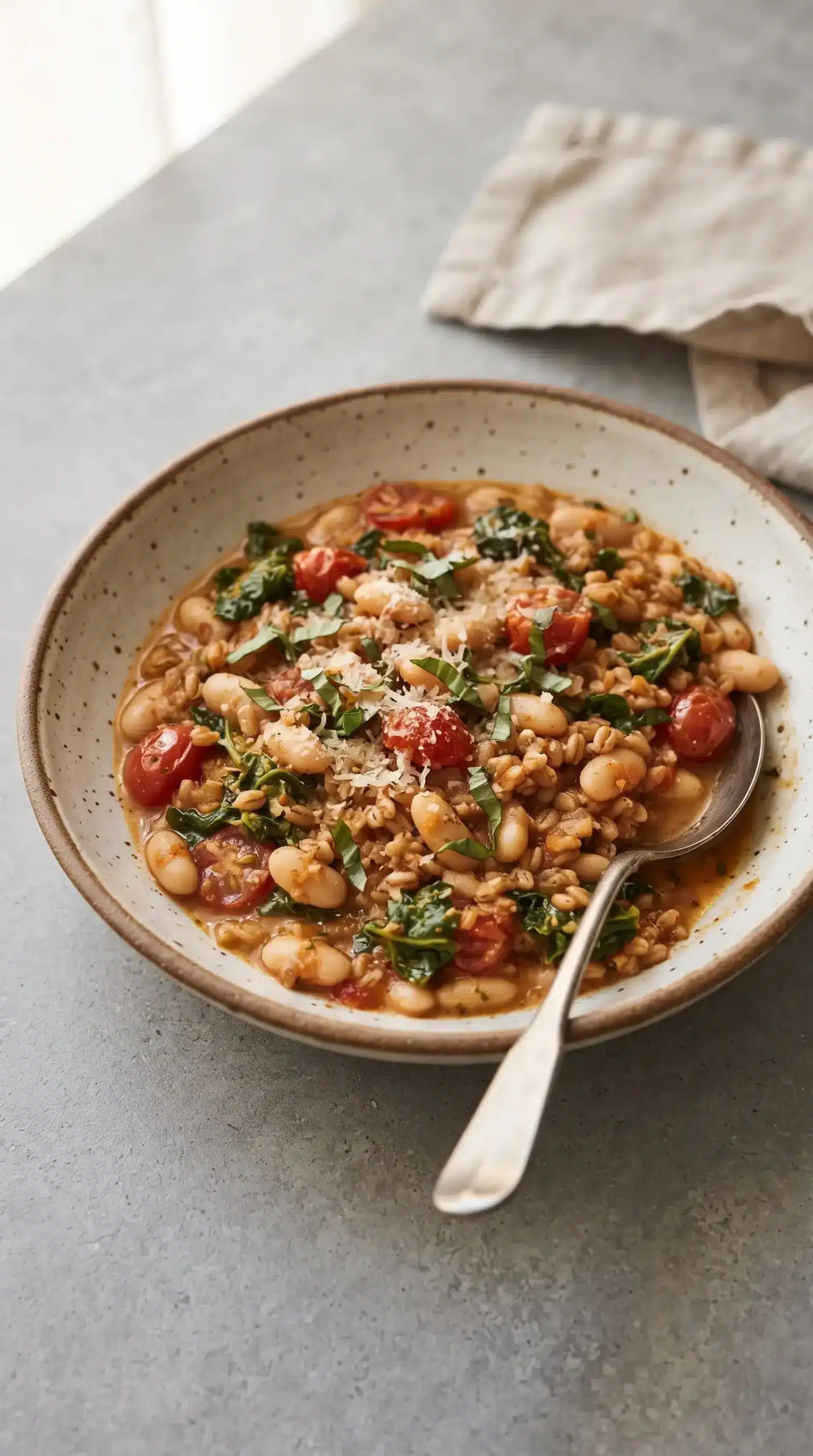
Asiago white beans succeed because chewy farro, creamy beans, tender greens, and tomato flavors each contribute a different quality to the finished dish. Careful cooking decisions around grain texture and seasoning create a bowl where simple ingredients feel thoughtfully combined.
The strongest results come from respecting the texture of each element while allowing the broth, sauce, and cheese to connect everything together. That balance is what makes this asiago white bean recipe a dependable meal built from familiar ingredients.
Asiago White Beans Questions About Storage and Preparation
Can Asiago white beans be made without a rice cooker?
Yes, the farro can be cooked on the stovetop according to package directions using broth as the cooking liquid. The important factor is allowing enough time for the grain to become tender before combining it with the other ingredients.
How can the texture of farro be kept from becoming too soft?
Cook farro until it reaches a tender texture with some chew remaining. Avoid extending cooking longer than needed, and add the softer ingredients after the grain has reached the desired consistency.
Can frozen greens replace baby kale in this dish?
Frozen greens can work when adjusted for excess moisture. Thawing and draining them first helps maintain the intended consistency so the tomato sauce and farro are not watered down.
What is the best way to make leftovers taste fresh?
Reheat gently and adjust the texture with a small amount of liquid if needed. A fresh herb garnish or additional cheese can also refresh the flavors after storage.
Can another cheese be used instead of Asiago?
Parmesan is a natural substitute because it provides a similar salty, savory quality. Choosing a hard grating cheese with a strong flavor keeps the balance of the beans, farro, and tomato sauce intact.
Asiago White Beans with Farro, Kale and Tomatoes Bowl
Asiago white beans with farro is a hearty bowl with chewy grains, creamy beans, tender greens, and savory tomato flavors. It is an easy, comforting recipe made from simple ingredients for a satisfying meal.
Ingredients
Method
Cooking
- Place the farro and broth in a rice cooker and start the cooking cycle. Alternatively, cook the farro in a small saucepan on the stovetop according to package directions until soft and chewy.
- Add the white beans, grape tomatoes, kale, Asiago, and tomato sauce to the cooked farro in the rice cooker or pot.
- Stir the ingredients together and season with additional salt and pepper as needed.
Notes
Cook the farro until it is tender while keeping a pleasant chewy texture before adding the remaining ingredients.