From breakfast to dinner, from healthy meals to sweet desserts – Next Yum Recipes brings you quick, simple and tasty ideas for every occasion and every time.


 This Recipe
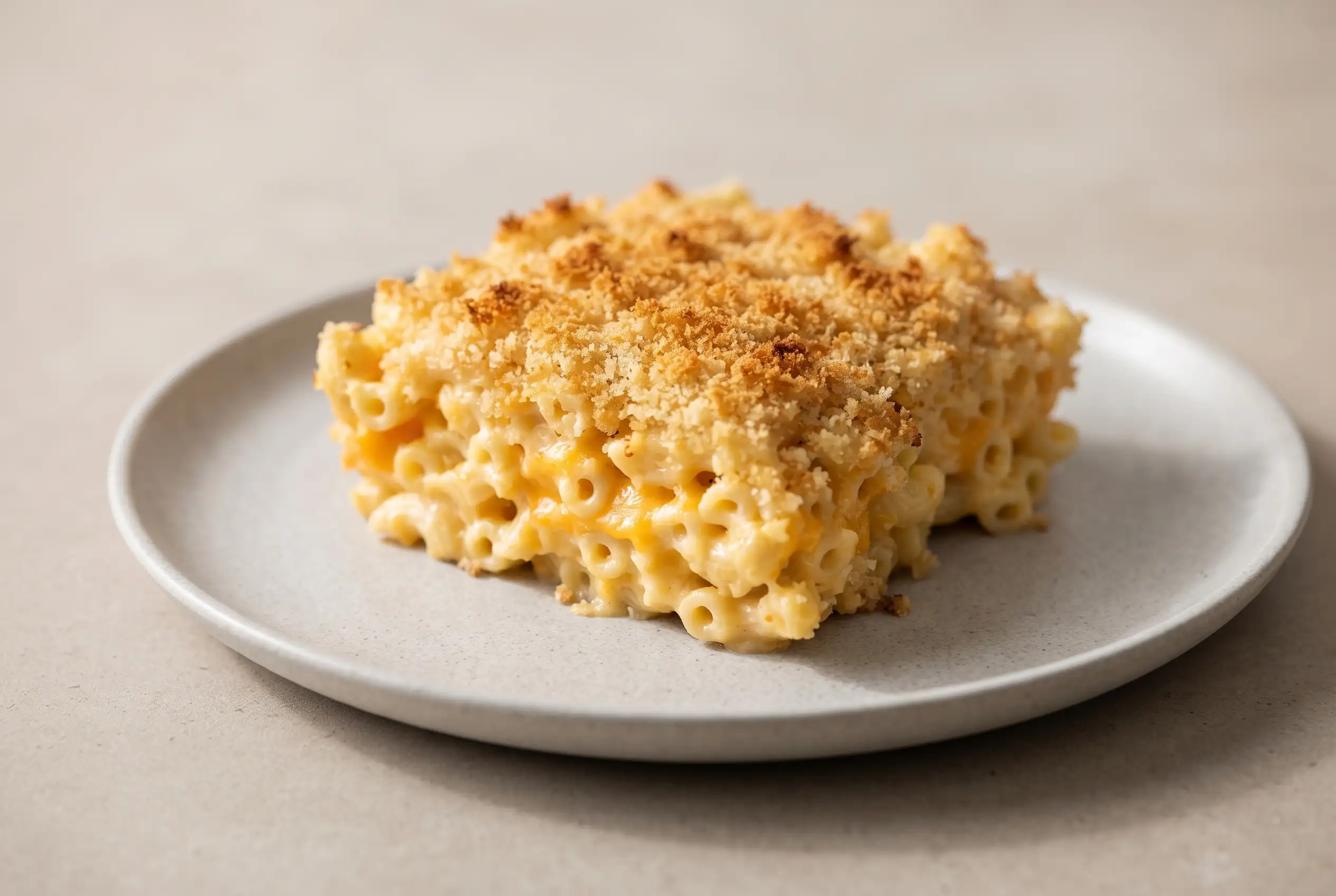
Baked mac and cheese turns a familiar pasta favorite into a casserole-style dish with a golden breadcrumb crust, a rich cheese sauce, and a texture that can be served in neat portions. The combination of tender elbow macaroni, sharp cheddar, smooth melting cheese, and a gently set sauce creates a homemade dinner that feels both comforting and carefully prepared.
The character of this baked macaroni and cheese recipe comes from the balance between creamy sauce and a firm baked structure. Instead of relying only on a loose cheese coating, the dish uses eggs and a thickened sauce to create a finished texture that holds together while still delivering plenty of cheesy flavor.
Baked Mac and Cheese Creates a Sliceable Comfort Dish
The oven changes the personality of baked mac and cheese by bringing the ingredients together into a cohesive casserole. The noodles absorb the cheese sauce while the surface develops a toasted layer from the buttered breadcrumbs, creating contrast between the soft interior and crisp topping.
Many versions of macaroni and cheese focus on a flowing sauce, but this style is designed for a more structured serving. The eggs help the cheese mixture set during baking, giving each portion enough stability to be lifted from the dish without losing its creamy character.
Cheddar and Melting Cheeses Shape the Creamy Finish
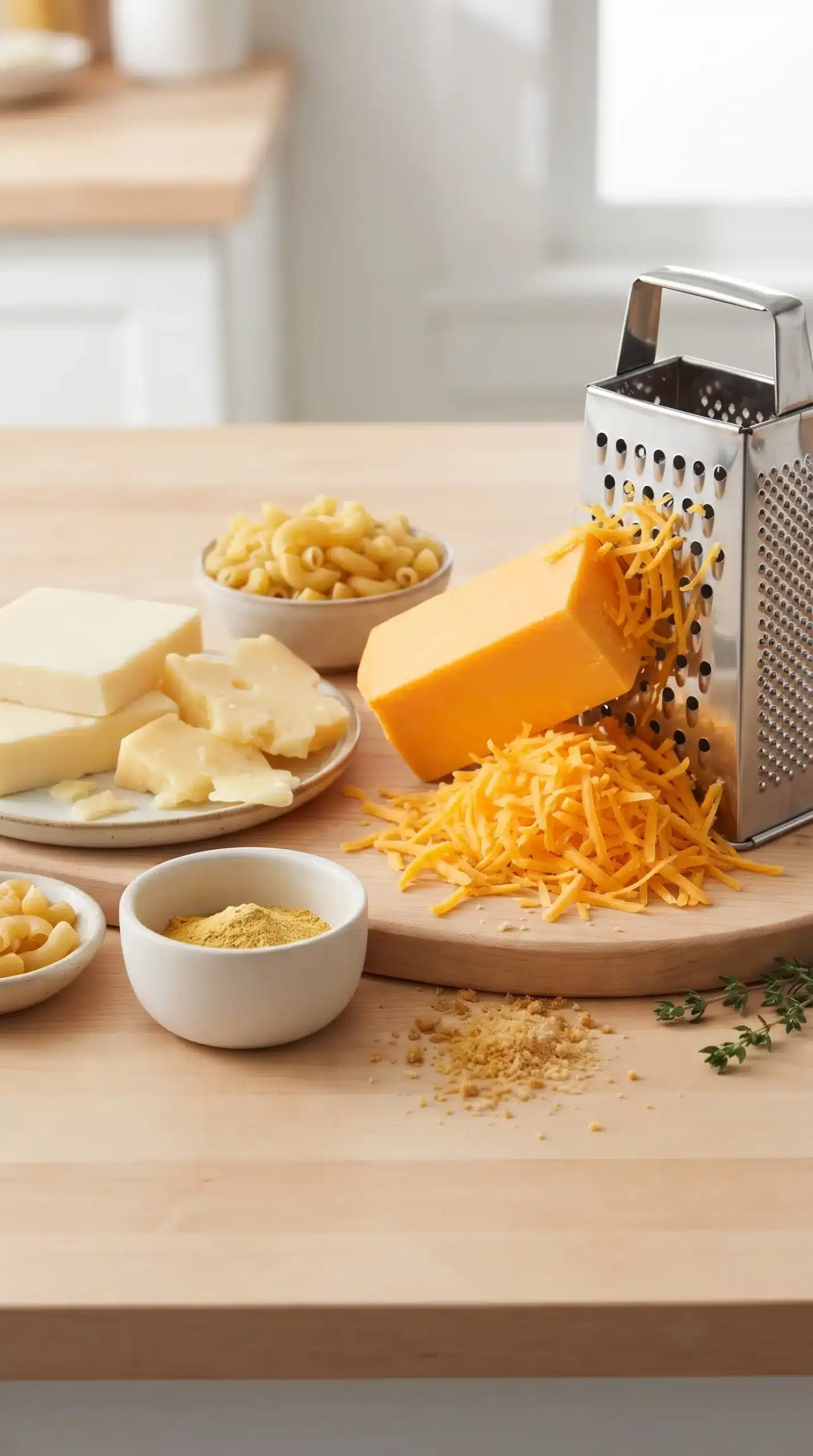
The cheese selection determines much of the flavor and texture in baked mac and cheese. Sharp cheddar provides the recognizable savory cheese taste, while a smoother melting cheese such as American or Gruyere helps create a sauce that stays cohesive after baking.
- Sharp cheddar: Brings bold flavor and the classic cheese profile expected from this dish.
- Smooth melting cheese: Helps the sauce stay creamy and blend evenly with the pasta.
- Ground mustard: Adds a subtle savory note that supports the cheese without overpowering it.
The combination works because each cheese has a different role in the finished dish. A single cheese can create a good sauce, but blending varieties gives the casserole more depth and a better balance between flavor and melt.
Soaking Pasta Changes the Texture Before Baking
Preparing the macaroni through soaking allows the noodles to begin absorbing water before they meet the cheese sauce. This approach helps the pasta reach a tender texture while leaving the oven stage focused on combining flavors and finishing the casserole.
The process also protects the final texture by avoiding an overly soft noodle structure after baking. Since the macaroni continues cooking in the oven, starting with properly prepared pasta helps it remain pleasant in the finished dish.
Breadcrumb Topping Brings the Casserole Its Crisp Surface
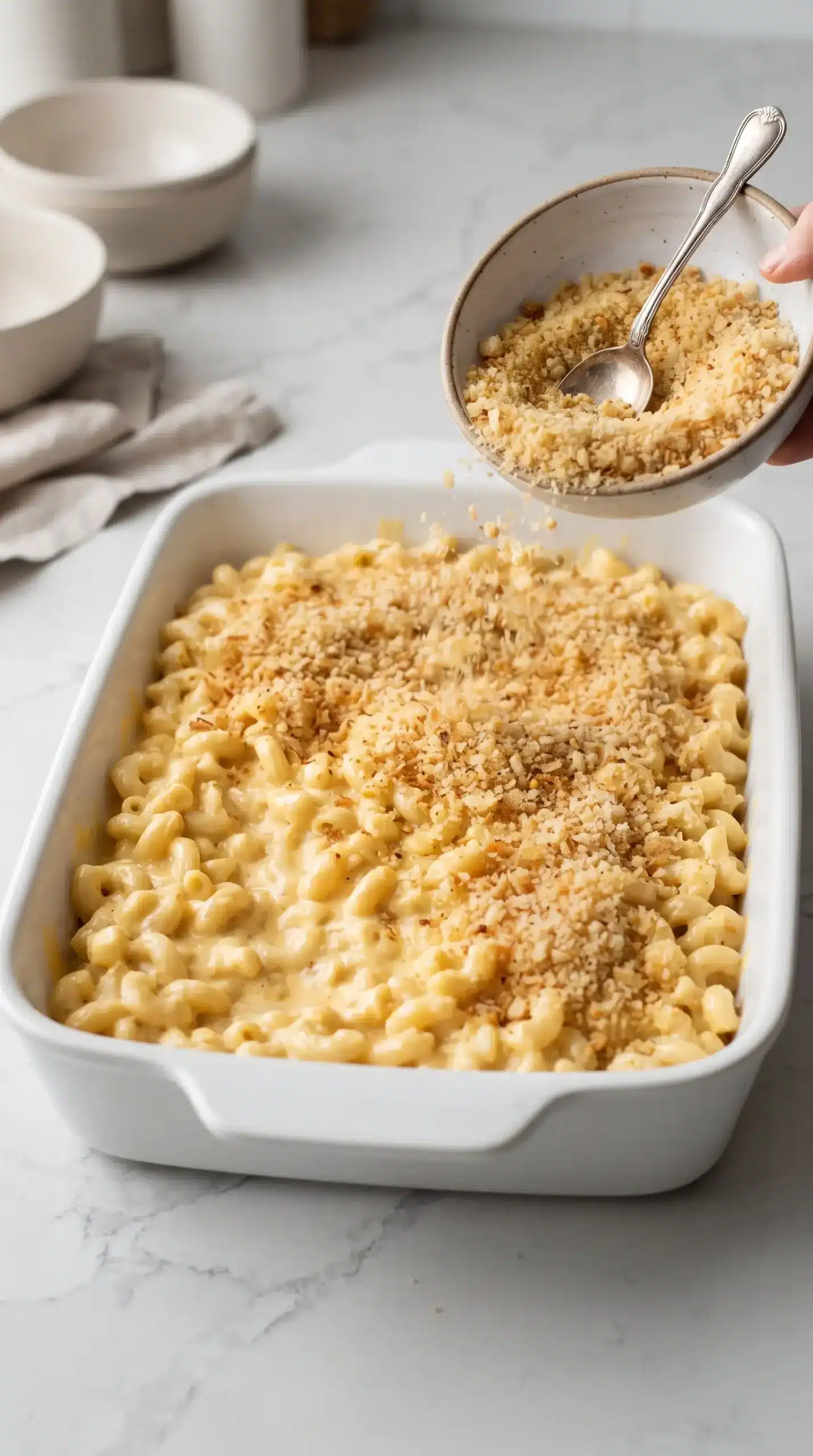
The buttered breadcrumb layer creates the contrast that separates baked mac and cheese from stovetop versions. Toasted bread crumbs provide a crisp finish that complements the rich cheese underneath.
| Element | Purpose in the dish | Texture result |
|---|---|---|
| Macaroni | Carries the sauce through the casserole | Tender pasta base |
| Cheese sauce | Binds pasta and creates richness | Creamy interior |
| Breadcrumb topping | Adds a toasted finishing layer | Crisp surface |
Keeping the topping simple allows the cheese flavor to remain the focus. The bread should enhance the dish with crunch instead of becoming a separate layer that competes with the creamy pasta.
Egg Tempering Keeps Homemade Baked Mac and Cheese Set
Eggs are an important structural element in homemade baked mac and cheese. They help the sauce transition from a loose mixture into a casserole that can be portioned cleanly after baking.
The key detail is gradually combining the eggs with warm sauce before adding them back into the larger mixture. Slowly raising the egg temperature prevents sudden cooking and allows the sauce to remain smooth.
This technique creates the signature baked texture of the dish. The result is a cheesy casserole with enough firmness for serving while maintaining the rich flavor associated with classic macaroni and cheese.
Cooking Controls That Improve Baked Mac and Cheese
Successful baking depends on controlling how heat moves through the dish. Covering the casserole first protects the surface while the interior warms, then uncovering it allows the breadcrumb topping to become toasted.
- Build the sauce carefully: Whisk the milk into the flour mixture slowly so the sauce develops a smooth consistency.
- Handle the eggs gently: Combine them with warm sauce gradually to maintain a stable mixture.
- Watch the topping: Remove the cover near the end so the breadcrumbs can brown without becoming overly dark.
Small choices during preparation have a major effect on the final result. A smooth sauce, properly combined eggs, and controlled browning create the balance expected from a baked macaroni casserole.
Choosing the Right Baking Dish for Even Results
A greased rectangular or square baking dish provides enough surface area for the breadcrumbs while allowing the pasta and sauce to bake together evenly.
The shape of the dish influences the ratio between creamy center and toasted edges. A wider dish creates more topping area, while a deeper dish emphasizes the soft interior portions.
Baked Mac and Cheese Mistakes That Lead to Dry or Loose Texture
Several problems can change the intended texture of baked mac and cheese. Avoiding these mistakes helps preserve the creamy interior and structured finish.
- Skipping the egg tempering step: Adding eggs directly to very hot sauce can affect the smoothness of the mixture.
- Using too much baking time: Excess heat can reduce moisture and make the casserole firmer than intended.
- Ignoring the breadcrumb preparation: Untoasted or dry toppings may lack the crisp surface that completes the dish.
The correction for each issue comes from respecting the balance between sauce, pasta, and baking time. The dish should finish with a set center and a topping that adds texture without overwhelming the creamy layers below.
Serving Ideas That Balance the Rich Cheese Flavor
Baked mac and cheese pairs well with simple additions that bring contrast to its rich profile. Fresh vegetables, crisp salads, or lightly seasoned proteins can provide a lighter element alongside the casserole.
Seasonings such as black pepper or hot sauce can also adjust the serving experience. These additions should complement the cheese rather than hide the carefully developed sauce.
Storing and Reheating Baked Mac and Cheese Successfully
Proper storage helps maintain the texture of leftover baked mac and cheese. Keeping portions covered protects the pasta from drying out and preserves the balance between sauce and noodles.
After serving, refrigerate leftover baked mac and cheese within two hours and use leftovers within 3 to 4 days to keep the casserole ready for safe reheating.
Gentle reheating works best because strong heat can tighten the sauce. Adding a small amount of milk while warming can help restore moisture if the casserole has become firmer after chilling.
Adjustments for a Different Cheesy Baked Mac and Cheese Style
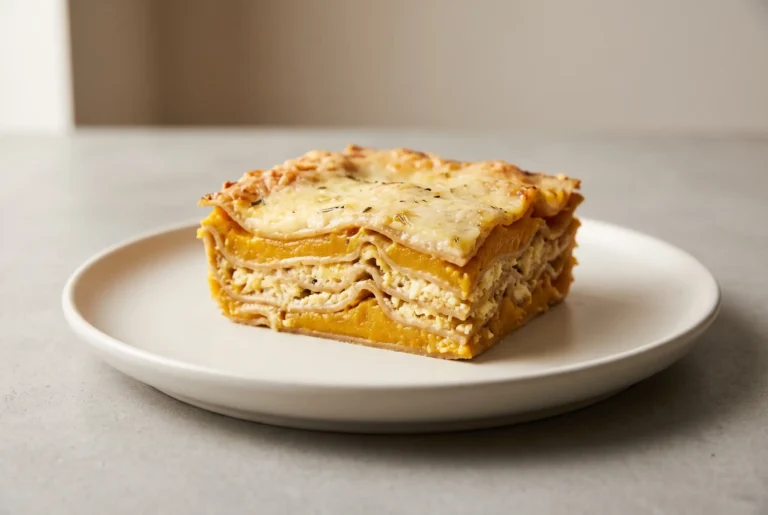
The recipe can be adapted while keeping its core structure; roasted vegetables or different cheese combinations can shift the flavor balance, with butternut squash mac and cheese adding squash for sweetness and a fuller texture alongside the creamy sauce.
| Adjustment | Changes | Best reason to use it |
|---|---|---|
| Gruyere substitution | Creates a nuttier cheese flavor | For a more complex cheese profile |
| Extra milk in sauce | Makes the mixture looser | For a softer, creamier style |
| Different breadcrumbs | Changes the topping character | For varied crunch and flavor |
These changes should match the texture you want from the finished casserole. The original structure depends on the relationship between thick sauce, pasta, cheese, and eggs.
Preparing Components Ahead Without Losing Texture
Some preparation can be completed before baking, making the cooking process easier when serving later. The cheese mixture and breadcrumb topping can be organized ahead so the final assembly remains simple.
Careful timing matters because the pasta continues interacting with the sauce as it rests. Preparing too far in advance may change the texture, so the dish benefits from thoughtful planning.
Baked Mac and Cheese Delivers a Structured Comfort Finish
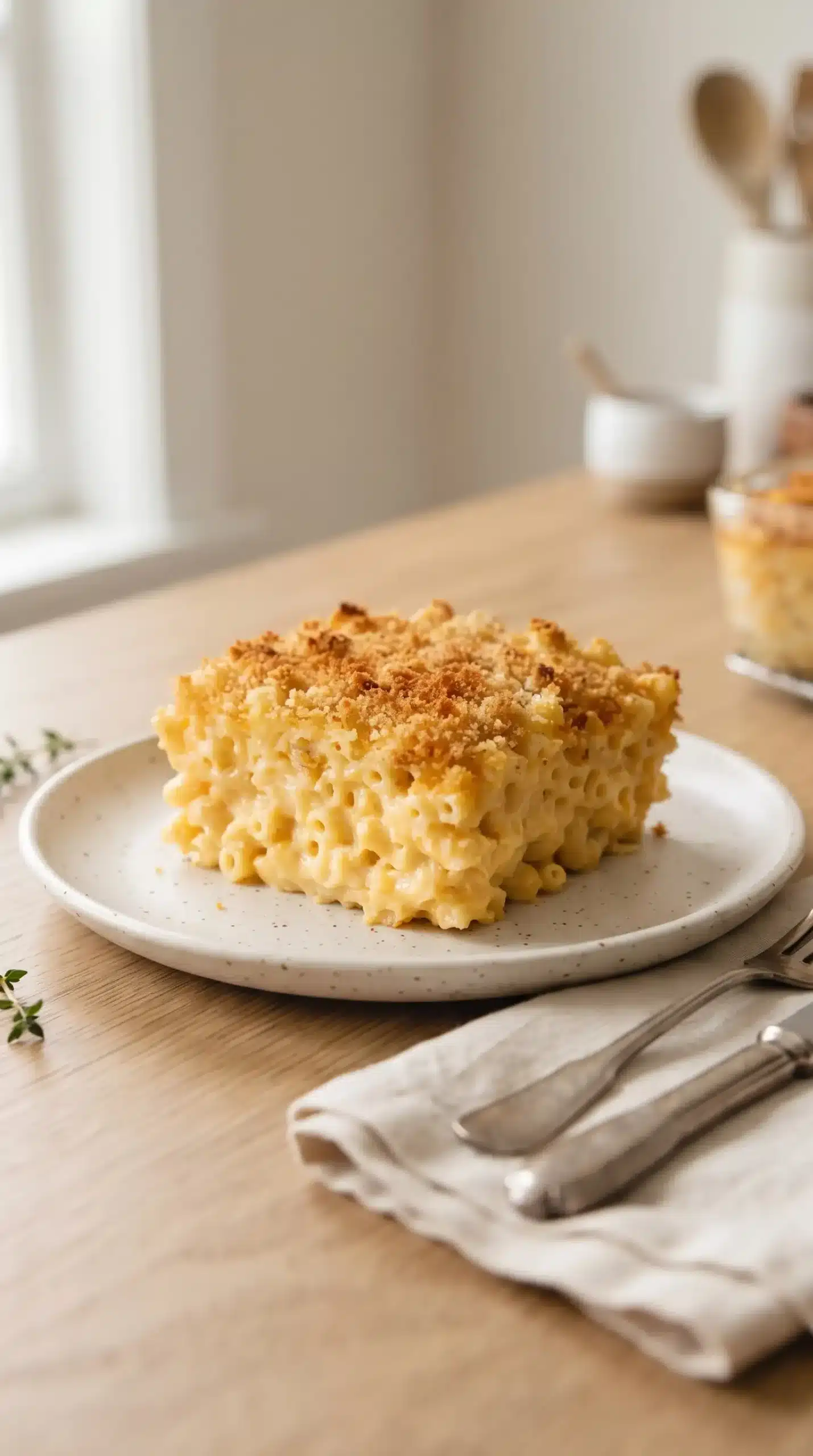
The baked macaroni casserole succeeds because its ingredients work toward one clear texture: creamy enough to feel rich, but firm enough to serve in satisfying portions. The cheese sauce provides the foundation, while the breadcrumb topping creates the finishing contrast that defines the dish.
A well-prepared baked mac and cheese depends on patience during sauce preparation, careful egg handling, and controlled baking. Those choices create a casserole that feels familiar while offering a more complete texture than a simple stovetop version.
Baked Mac and Cheese Texture Questions and Answers
Why does baked mac and cheese become firm instead of creamy?
The eggs and baking process help the casserole set, which creates a sliceable texture. For a softer result, the sauce can be made slightly looser before baking and the casserole should not be baked longer than needed.
Can I make baked mac and cheese without eggs?
Yes, eggs can be omitted if a looser, more sauce-focused texture is preferred. The finished dish will be less structured because the eggs are responsible for helping the casserole hold together.
How can I keep the breadcrumb topping crisp?
The topping stays crisp when it is coated with melted butter and exposed during the final stage of baking. Covering the dish for too long after baking can soften the surface.
What cheese combination works best for this style?
A mixture of cheddar and another smooth melting cheese creates a balanced result. Cheddar contributes strong flavor, while the second cheese supports a smoother sauce texture.
Can baked mac and cheese be reheated successfully?
Yes, gentle reheating helps maintain the sauce texture. Adding a small splash of milk while warming can improve moisture if the pasta has absorbed much of the sauce.
Baked Mac and Cheese with Cheddar and Breadcrumb Crust
Baked mac and cheese with a creamy, structured cheese filling and crispy breadcrumb crust. This comforting casserole is perfect when you want a hearty homemade dish with classic cheddar flavor and a satisfying baked texture.
Ingredients
Method
Preparation
- Preheat the oven to 375°F (190°C). Place the macaroni in a large bowl, cover with hot water, add a generous pinch of salt, and soak for about 30 minutes while preparing the remaining ingredients.
- Melt 2 tablespoons of butter. Process the toasted bread in a food processor, combine with the melted butter, and set the breadcrumb mixture aside.
Cooking
- Melt the remaining butter in a large saucepan. Add the flour and cook while stirring until the mixture reaches a light golden color.
- Gradually whisk in the evaporated milk and whole milk until the sauce becomes smooth and thick. Stir in the mustard, bring the mixture to a simmer over medium heat, then remove from heat.
- Add the cheeses to the warm sauce and stir until melted. Adjust seasoning as desired.
- In a separate bowl, whisk about 1 cup of the sauce with the beaten eggs to slowly warm them. Stir the egg mixture back into the remaining sauce.
- Drain the macaroni and mix it into the sauce until evenly combined. Transfer the mixture to a greased rectangular or square baking dish.
Baking
- Spread the breadcrumbs over the top of the macaroni mixture, cover the dish with foil, and bake for 30 minutes.
- Remove the foil and continue baking for another 5 minutes to toast the breadcrumb topping.
- Serve with salt, pepper, hot sauce, or other preferred additions.
Notes
Because this is a baked mac and cheese with eggs, it sets into a casserole-style texture rather than a very loose, sauce-heavy dish. The finished result is cheesy and sliceable with a crisp topping. For a softer, more flowing style, the eggs can be omitted, a little extra milk can be added to the sauce, and the dish can be baked only until the breadcrumbs are toasted.