From breakfast to dinner, from healthy meals to sweet desserts – Next Yum Recipes brings you quick, simple and tasty ideas for every occasion and every time.


 This Recipe
Butternut Squash Ravioli Brings Autumn Flavor Into Pasta Pockets
Butternut squash ravioli creates a comforting pasta dish built around a creamy squash filling, tender wrappers, and a bright kale pesto finish. The combination works because the sweet roasted squash is balanced with ricotta, Parmesan, herbs, and the fresh green flavor of pesto.
Autumn flavors come forward through the naturally rich squash center, which becomes smooth enough to spread inside large pasta-style pockets. A careful approach keeps the filling thick so the ravioli holds its shape while cooking and delivers a satisfying contrast between the delicate wrapper and the creamy interior.
A well-balanced butternut squash ravioli recipe depends on decisions made before assembly. The squash texture, seasoning level, and sealing technique all influence whether each piece feels refined or difficult to handle.
Squash Filling Texture Depends on Roasted Balance

Roasting the squash develops a concentrated texture that supports the creamy filling. Cooked squash contains natural moisture, so removing excess water before blending helps create a mixture that stays inside the wrappers instead of spreading into the cooking water.
Moisture control begins with the way the squash is prepared. Removing excess moisture from squash helps create a thicker puree that blends more successfully with ricotta and Parmesan because the dairy components can add richness without making the center loose. The finished mixture should feel dense and scoopable, with enough structure to sit in the middle of each wrapper.
Different squash preparations can influence the final texture. A roasted squash brings deeper caramelized notes, while a convenient cooked squash option can still work when its consistency is suitable for shaping. The important factor is creating a filling that behaves like a soft paste instead of a sauce.
| Squash preparation | Texture effect | Helpful adjustment |
|---|---|---|
| Roasted cubes | Concentrated and thick | Blend after cooling slightly for a smooth filling |
| Steam-cooked squash | Soft with more moisture | Check thickness before adding wrappers |
| Very wet puree | Loose center that can leak | Reduce moisture before assembly |
Ricotta and Parmesan Shape the Ravioli Center
Ricotta brings the creamy structure that makes the squash filling feel luxurious without overpowering the vegetable flavor. Whole milk ricotta creates a soft texture that blends smoothly with pureed squash.
Parmesan helps sharpen the center with a savory note that balances the natural sweetness of butternut squash. The cheese also contributes body, allowing the filling to remain cohesive when placed inside each wrapper.
The filling becomes more expressive when seasonings are added thoughtfully. Garlic, herbs, pepper, salt, and a small touch of nutmeg can shape the overall flavor, but delicate ingredients should support the squash instead of masking it.
Wonton Wrappers Create a Homemade Ravioli Approach
Wrapper choices make homemade butternut squash ravioli approachable because wonton or gyoza wrappers provide a ready-made surface that cooks quickly and folds easily. Their thin structure allows the filling flavor to remain the focus.
Square wrappers provide simple edges for sealing, while round wrappers create a naturally curved shape. Both styles can hold the squash mixture when the edges are pressed firmly and kept free of excess filling.
- Wrapper size: Choose pieces large enough to surround the filling without stretching the dough too thin.
- Edge moisture: Use egg wash carefully so the layers bond without becoming slippery.
- Filling amount: Leave enough open space around the center for a secure seal.
Kale Pesto Adds Fresh Contrast to Squash Ravioli
Kale pesto gives squash ravioli with kale pesto a fresh counterpoint to the creamy interior. The green sauce brings a savory vegetable character that keeps the dish from feeling overly rich. A balanced kale pesto can be prepared with greens, herbs, and nuts blended into a sauce that coats the ravioli while preserving the flavor of the squash filling.
Fresh herbs can shift the personality of the ravioli. Sage, thyme, and rosemary each create a different aromatic direction, especially when briefly warmed with olive oil before being combined with the filling.
Sealing Technique Protects Butternut Squash Ravioli During Cooking
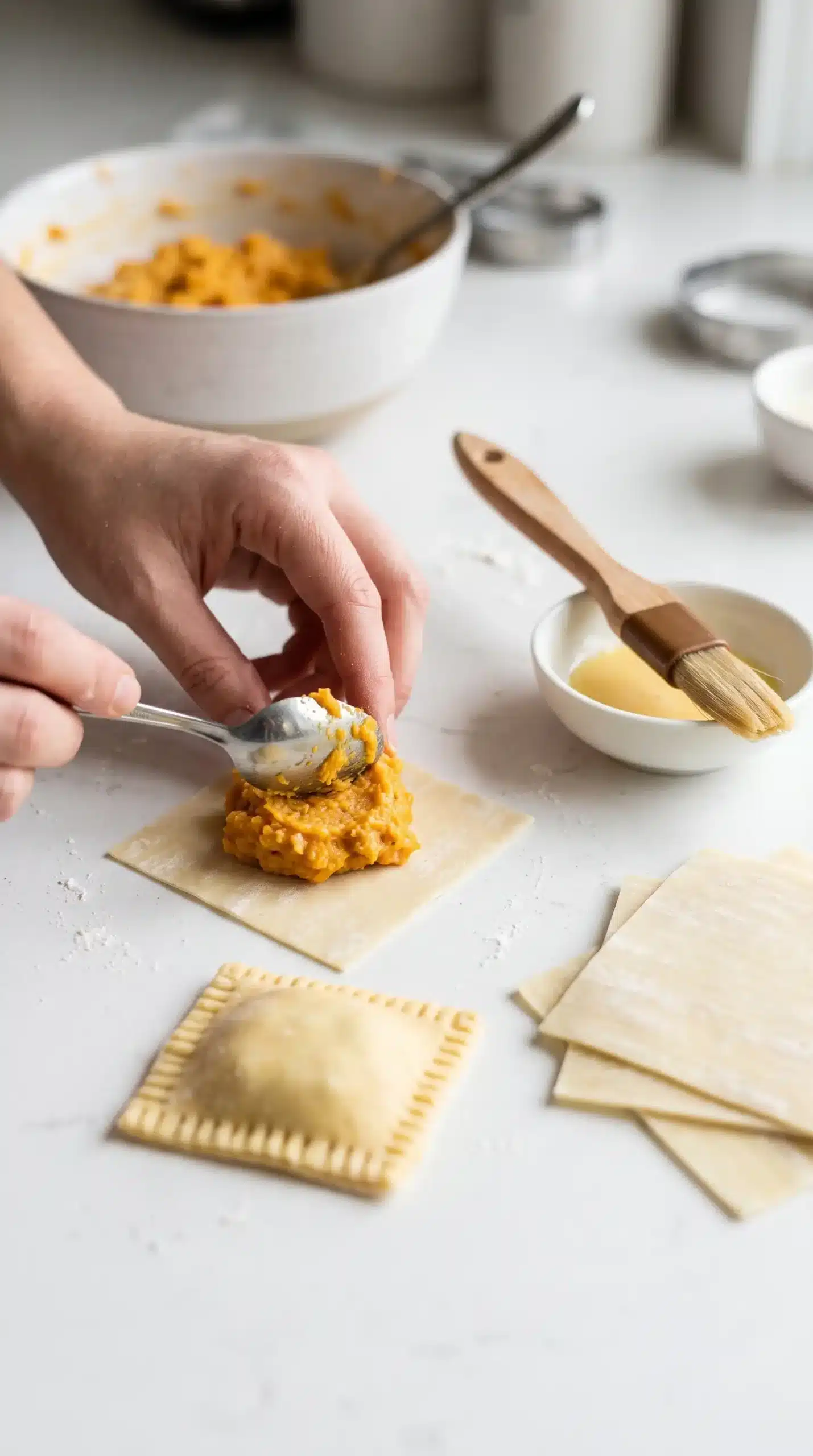
Sealing each ravioli carefully is the difference between intact pasta pockets and filling lost in the cooking water. Pressing around the edges removes trapped air and creates a stronger bond between the wrapper layers.
Firm edges require attention to placement. Keeping the filling centered and avoiding moisture around the outside border allows the egg wash to work as a connection point.
Cooking Control Keeps Large Ravioli Tender and Intact
Cooking control matters because large ravioli need enough time for the wrapper to soften while still protecting the delicate filling. A gentle boil provides movement without creating unnecessary force against the sealed edges.
Large ravioli benefit from careful handling after cooking. Removing them gently prevents tears, and tossing them with a small amount of olive oil helps prevent the pieces from sticking together before serving.
Gentle boiling also preserves the contrast that makes this dish appealing. The outside should remain tender while the inside stays creamy and flavorful.
- Prepare the cooking water so the ravioli can move freely.
- Add pieces carefully to avoid damaging the wrappers.
- Transfer cooked ravioli gently before finishing with sauce.
Butternut Squash Ravioli Mistakes That Cause Leaks and Breaks
Common mistakes with butternut squash ravioli usually come from filling consistency, wrapper handling, or rushed sealing. Recognizing the signs early helps prevent problems before cooking begins.
Leaky pockets often happen when the filling is too loose or reaches the wrapper edge. Thickening the squash mixture and keeping the border clean creates a better surface for sealing.
Overfilling creates pressure inside the ravioli and makes the wrapper harder to close securely. A smaller mound in the center allows the top layer to meet the bottom layer without stretching.
Uneven sealing can allow water to enter during boiling. Pressing around the entire edge and checking for open sections improves the chance of keeping each piece intact.
Serving Choices Highlight Squash Ravioli with Kale Pesto
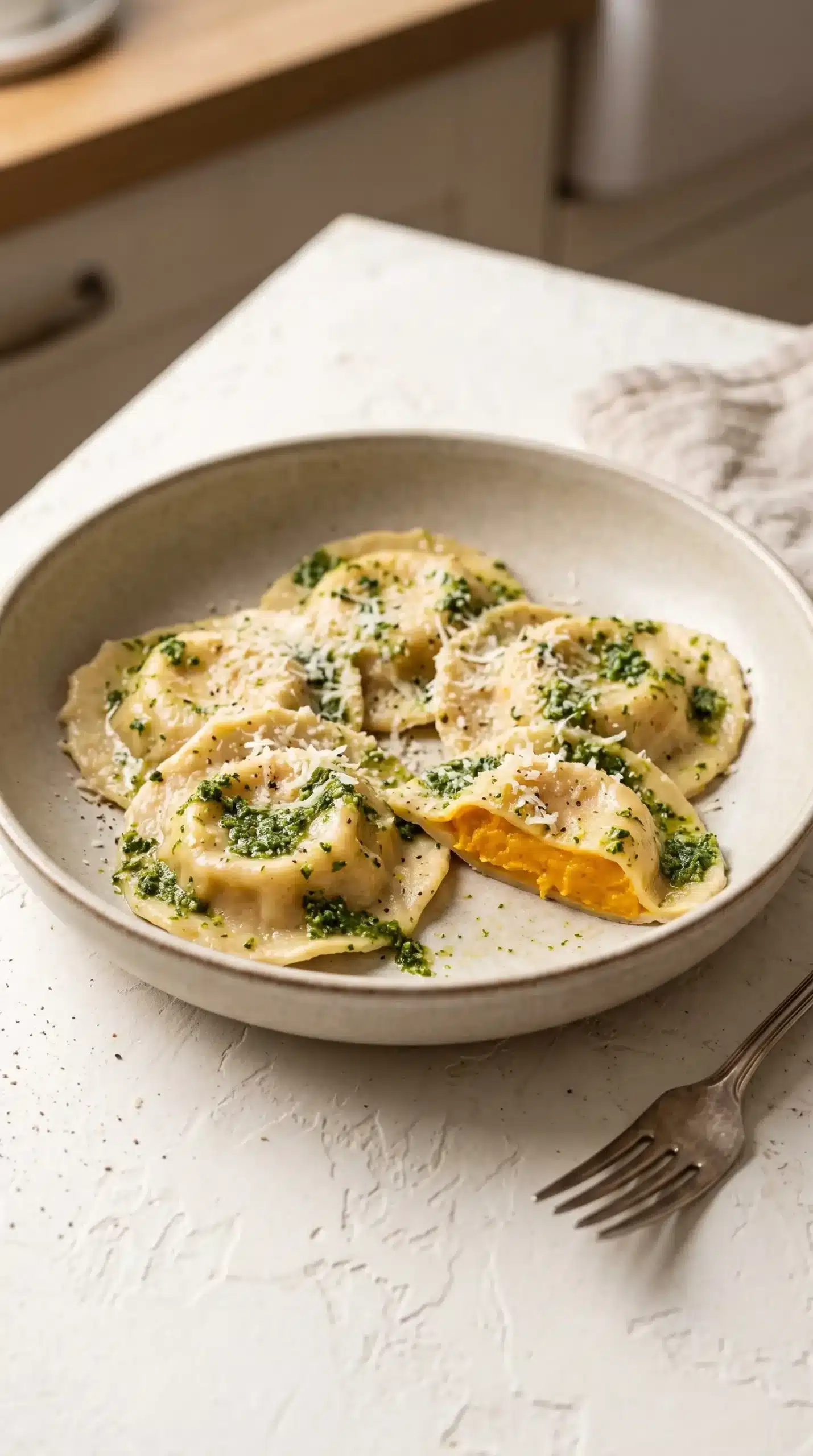
Serving options can emphasize the natural sweetness and savory balance of squash ravioli. The kale pesto provides enough flavor to coat each piece while still allowing the filling to remain recognizable.
Plate presentation benefits from keeping the ravioli visible. A light coating of pesto, extra Parmesan, and a simple arrangement allows the handmade shape to remain part of the experience.
Extra Parmesan adds a finishing layer of salty richness, especially when paired with the mellow squash center. A small amount is enough to enhance the dish without covering the pesto and herb flavors.
Storing and Reheating Preserve Ravioli Texture
Storage methods should protect the delicate wrapper and creamy filling. Cooked ravioli can become softer over time, so gentle handling helps maintain the intended texture.
Chilled leftovers are best treated carefully because the wrappers can stick together as they cool. Keeping pieces separated and using a gentle reheating method helps preserve their shape.
Reheating works best when the ravioli is warmed without aggressive stirring. Excessive movement can break the wrappers before the filling is heated evenly.
Ingredient Details That Improve Butternut Squash Ravioli Flavor
Ingredient choices influence the character of butternut squash ravioli beyond basic measurements. Small adjustments to aromatics and seasoning can make the filling feel warmer, brighter, or more savory.
Several details deserve attention when building the flavor profile:
- Garlic treatment: Sautéing garlic gently in olive oil can soften its sharpness and spread its flavor through the filling.
- Herb selection: Thyme, sage, or rosemary can each guide the aroma in a different direction.
- Nutmeg amount: A restrained touch adds warmth, while too much can dominate the squash.
Roasted squash remains the central flavor anchor, so seasonings work best when they add dimension without replacing the vegetable character. The creamy cheese mixture gives these accents a smooth base that carries through every bite.
Herb selection can also depend on the pesto pairing. Since kale pesto already contributes a green, fresh element, the filling seasonings can remain gentle and balanced.
Butternut Squash Ravioli Gains Its Best Texture Through Careful Handling
Careful handling keeps butternut squash ravioli balanced from the first blend to the finished plate. A thick squash filling, secure wrapper seal, and gentle cooking approach allow the creamy center and tender pasta exterior to work together.
Well-managed texture becomes the defining feature of this dish. The squash should remain rich, the ravioli should stay intact, and the kale pesto should provide contrast that highlights every component without overwhelming it.
Butternut Squash Ravioli Troubleshooting Questions and Answers
Why does my ravioli filling become too watery?
A watery filling usually comes from excess moisture in the cooked squash. Adjusting the squash consistency before blending helps create a thicker mixture that stays inside the wrappers during cooking.
Can I prepare butternut squash ravioli ahead of time?
Yes, the ravioli can be assembled ahead when handled carefully. Keep the pieces separated so the wrappers do not stick together before cooking.
How do I stop ravioli from breaking while boiling?
Use a gentle boil and avoid rough stirring. Large ravioli need enough space in the pot and careful movement when transferring them after cooking.
What herbs pair well with the squash filling?
Sage, thyme, and rosemary all complement the sweet squash flavor. Each herb creates a slightly different aroma, so the best choice depends on the flavor direction you prefer.
Can another sauce be used with squash ravioli?
Yes, other light sauces can work when they allow the squash filling to remain noticeable. Sauces with too much intensity may hide the creamy center and delicate wrapper.
Butternut Squash Ravioli with Kale Pesto Jumbo Recipe
Butternut Squash Ravioli with Kale Pesto features creamy squash-filled pasta pockets with a rich, balanced flavor and fresh pesto finish. It is a comforting homemade-style dish that is perfect when you want an impressive meal with approachable preparation.
Ingredients
Method
Preparation
- Add cooked squash, ricotta, Parmesan, olive oil, seasonings, salt, and pepper to a food processor. Pulse until mostly smooth and thick enough to hold its shape like a dense dough.
- Bring a large pot of water to a boil.
Assembly
- Arrange half of the wonton wrappers on a work surface and place 1-2 tablespoons of filling in the center of each one.
- Brush the wrapper edges with beaten egg, add a second wrapper on top, seal the edges firmly, and gently shape the ravioli with your palm.
Cooking
- Cook the ravioli in batches in boiling water for about 5-8 minutes.
- Remove the ravioli carefully, drain gently, and toss with olive oil to prevent sticking.
Serving
- Serve the ravioli with kale pesto and additional Parmesan cheese.
Notes
Garlic and herbs such as fresh rosemary or thyme can be sautéed in the oil to deepen the herb flavor and soften the garlic. Add only a tiny amount of nutmeg to warm the filling, or adjust gradually if you enjoy a stronger nutmeg flavor, since too much can overpower the dish.