From breakfast to dinner, from healthy meals to sweet desserts – Next Yum Recipes brings you quick, simple and tasty ideas for every occasion and every time.


 This Recipe
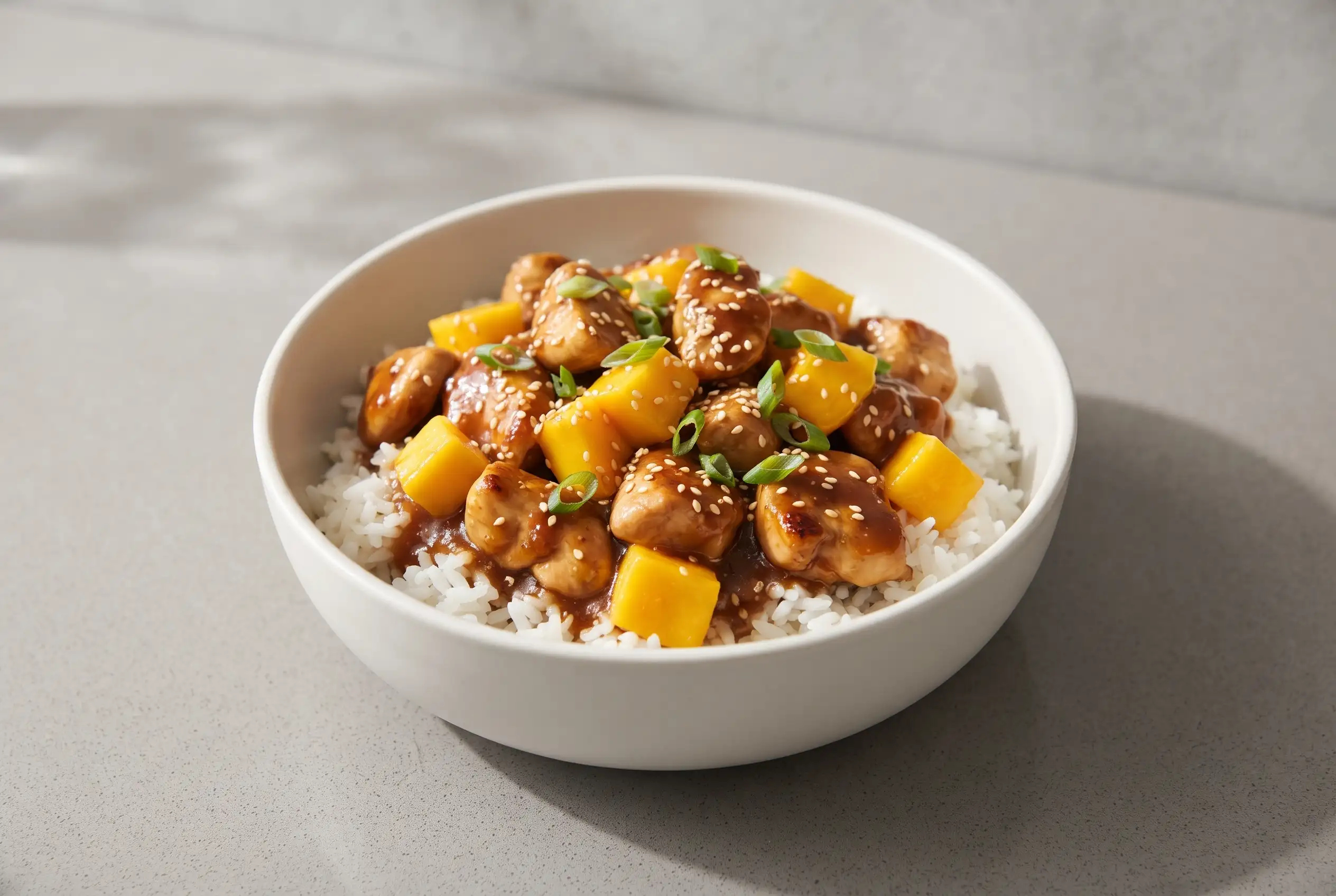
Mango chicken teriyaki brings together tender chicken, a smooth date-sweetened sauce, and juicy mango for a dinner that balances savory, sweet, and bright flavors in one skillet. The combination works because each element has a clear role: the chicken provides a hearty base, the blended sauce creates a glossy coating, and the fruit adds a fresh contrast that keeps the dish from feeling heavy.
Date Blended Sauce Shapes the Teriyaki Character
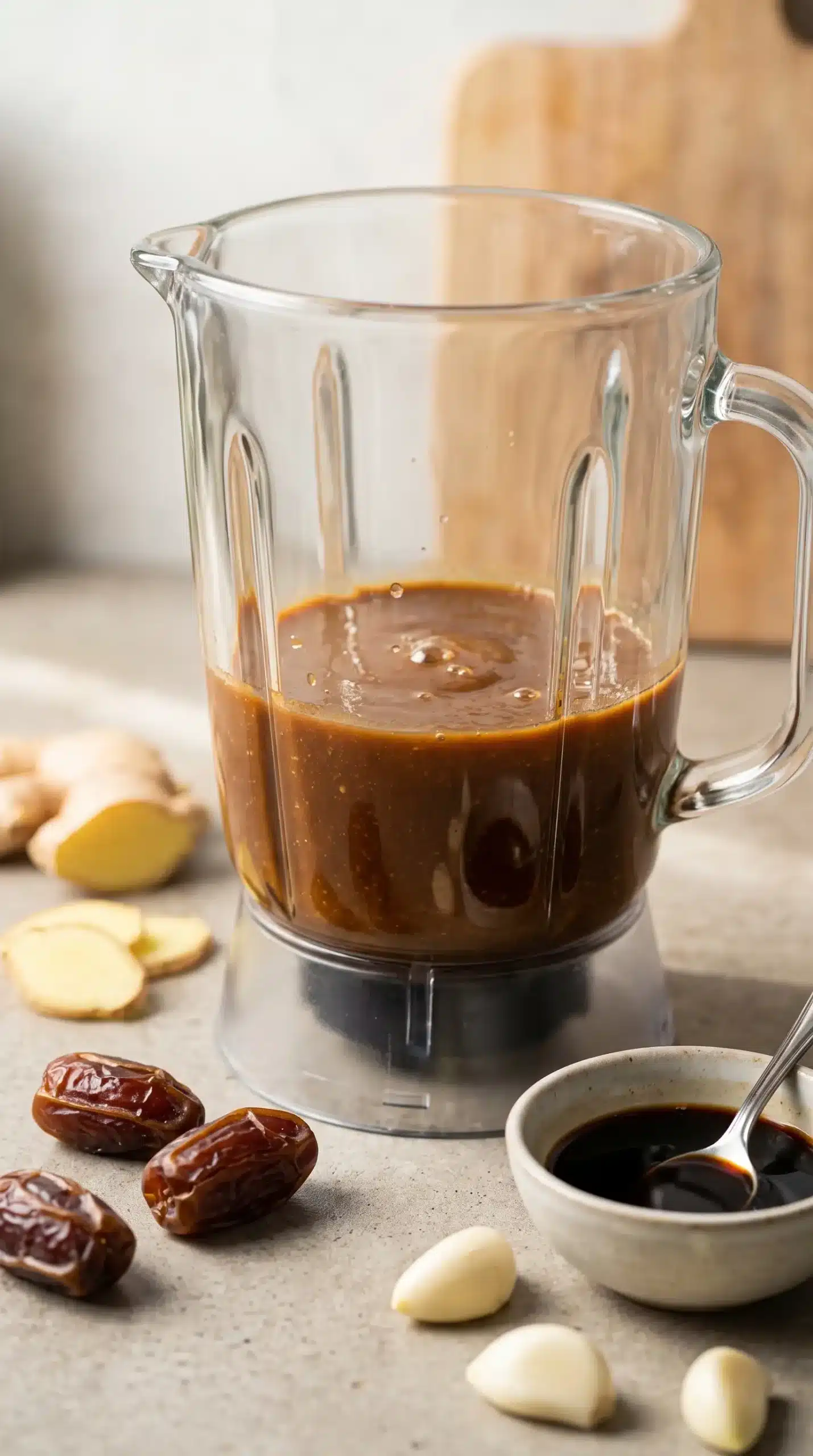
Date blending creates the signature sweetness in this chicken mango teriyaki recipe while keeping the sauce smooth and naturally rich. Soaked medjool dates blend with soy sauce, rice vinegar, garlic, and ginger to create a concentrated mixture that coats every piece of chicken.
The sauce develops its character from the balance between salty soy sauce, mild sweetness from the dates, and the sharp notes of vinegar and aromatics. That combination gives the dish a teriyaki-style flavor without requiring a separate bottled sauce.
Fruit-forward sauces can balance sweetness with savory ingredients, and sesame apricot chicken uses a glazed chicken preparation built around those contrasting flavors.
Smooth puree consistency matters because the sauce needs to move easily around the chicken and mango pieces. A well-blended mixture creates an even coating, and preparing the dates into a smooth date purée helps create the right texture for the finished sauce. A thicker texture can be adjusted with chicken broth during cooking.
Mango Selection Changes the Chicken Finish
Ripe mango adds a soft texture and bright fruit flavor that changes the way the savory sauce tastes with each bite. Frozen mango chunks work well because they are convenient and hold their shape during the final simmer, while fresh mango can provide a slightly lighter fruit texture.
Flour Coating Controls the Skillet Texture
Flour coating gives the chicken a light surface layer that helps the pieces brown before the sauce is added. The seasoned flour mixture also helps the sauce cling to the chicken instead of sliding away during serving.
Light coatings work best for mango chicken teriyaki because a heavy layer of flour would compete with the smooth sauce. A thin dusting allows the chicken to develop color while still letting the teriyaki flavors remain the focus.
Chicken pieces should be coated shortly before they reach the pan so the flour stays dry enough to support browning. Extra flour can make the sauce thicker than intended once the liquid ingredients are introduced.
Cooking Control Keeps Mango Chicken Teriyaki Balanced
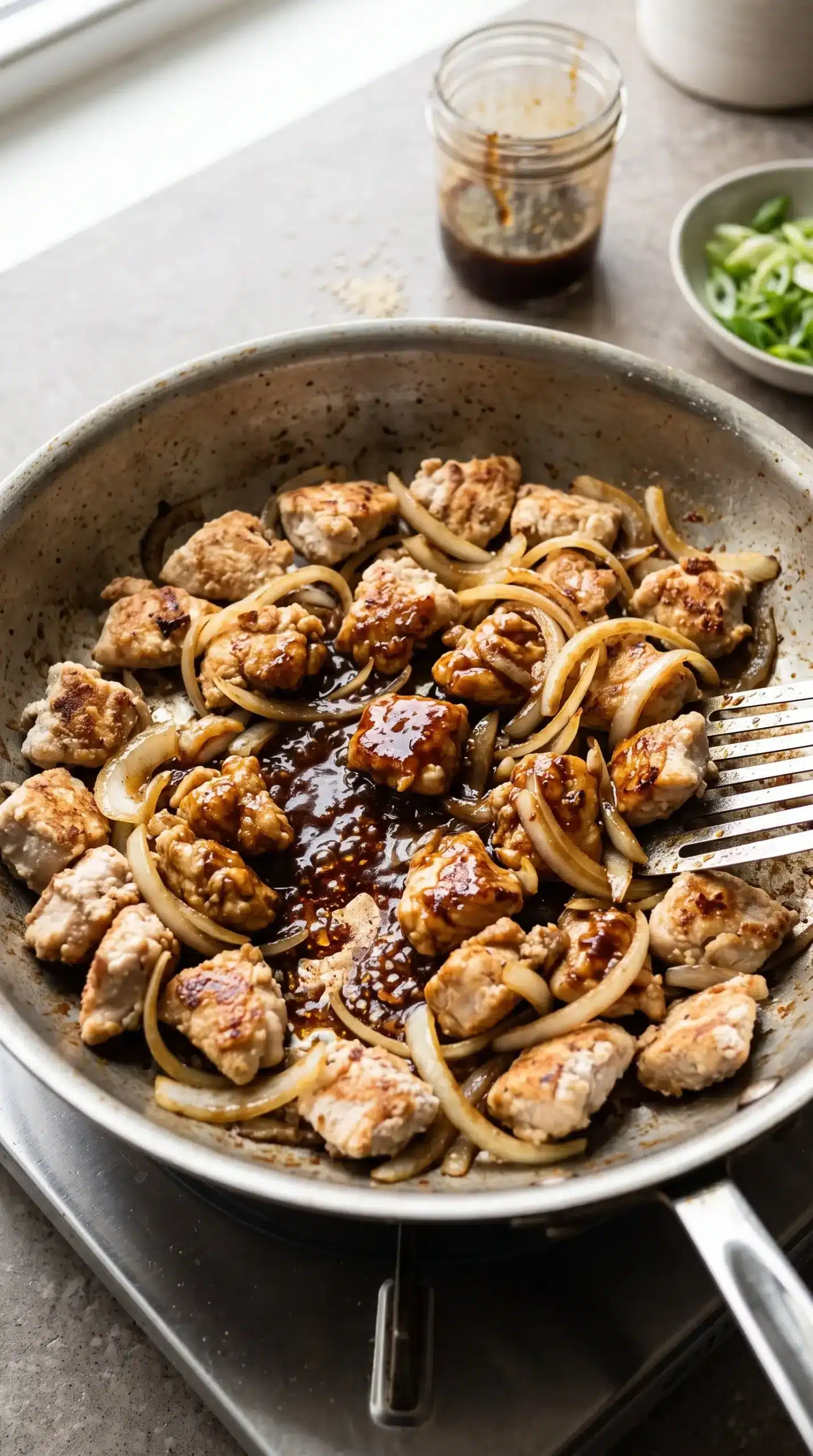
Medium-high heat helps the onions and chicken develop a flavorful surface before the sauce covers the pan. Keeping attention on the first stage of cooking improves the texture because the chicken has a chance to brown before simmering.
Sauce control becomes important once the blended mixture enters the skillet. Lowering the heat prevents splattering, and adding broth as needed keeps the sauce loose enough to surround the chicken without becoming overly dense.
A balanced simmer allows the chicken to absorb the teriyaki flavors while the mango warms through at the end. Adding the fruit later protects its texture and keeps the pieces recognizable in the finished dish.
Serving Bowls Turn Chicken Mango Teriyaki Recipe Into a Meal
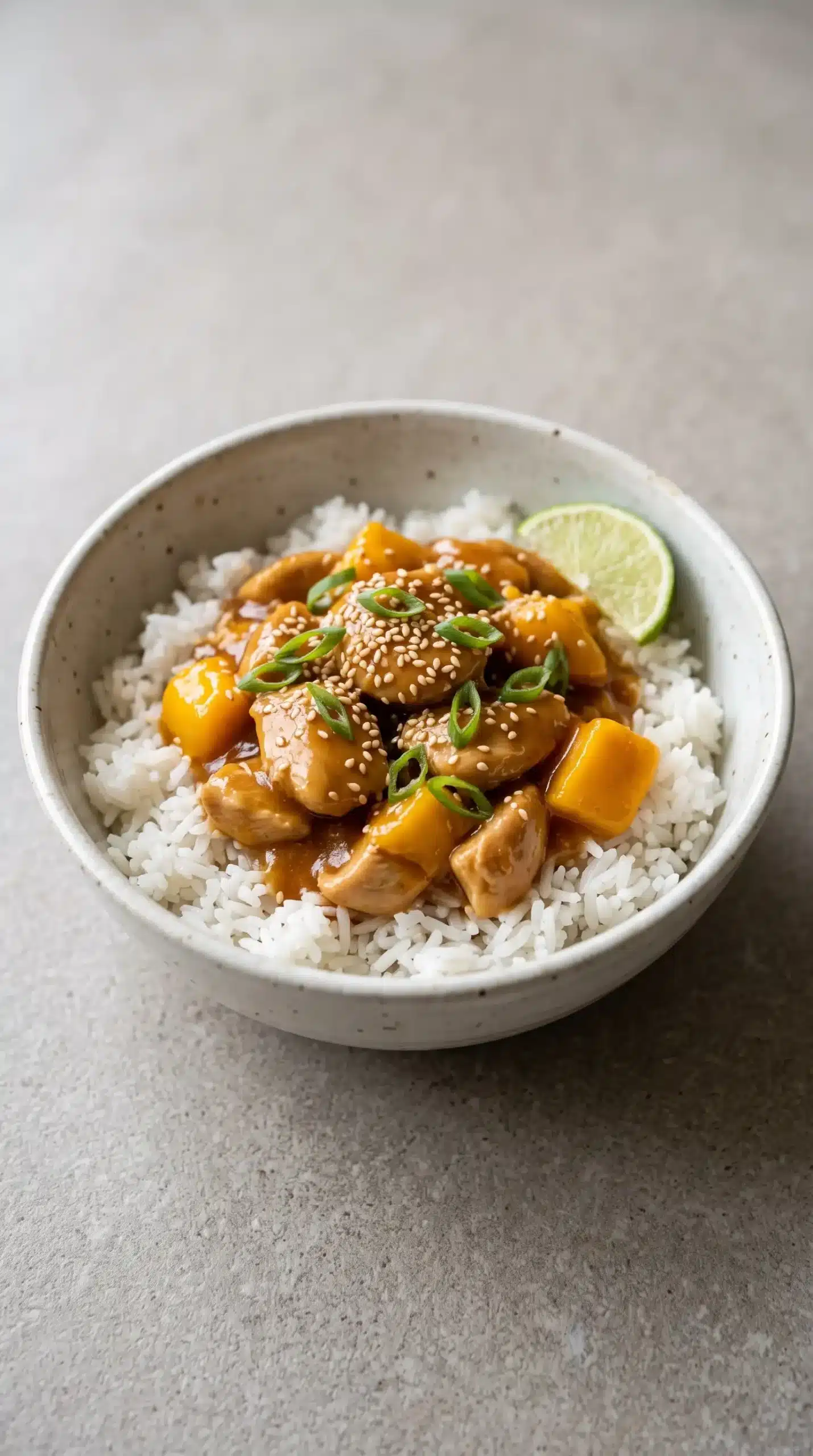
Serving bowls built around cooked rice create a simple base for the saucy chicken and mango combination. Sesame seeds, green onions, sesame oil, fish sauce, or lime juice can be used selectively to add extra aroma, freshness, or savory depth.
Mistakes That Affect Sesame Mango Chicken Results
Many cooks focus only on the sauce flavor and overlook the small handling choices that shape sesame mango chicken. The most common issues come from texture control, sauce thickness, and timing decisions.
- Overloading the chicken: Too much chicken for the available sauce can reduce the coating effect, so adjust the amount based on whether extra vegetables or toppings will be included.
- Skipping sauce blending: Incomplete blending can leave uneven pieces of dates, garlic, or ginger that prevent the smooth teriyaki texture.
- Adding mango too early: Extended cooking can soften the fruit too much, so adding it near the end helps preserve its presence.
Another issue occurs when the sauce becomes thicker than expected. A small amount of chicken broth can loosen the mixture while maintaining the savory and sweet balance created by the blended ingredients.
Careful simmering also prevents the chicken from becoming dry. The covered cooking stage allows the sauce to surround the pieces while gently finishing their texture.
Sauce Adjustments Give More Control Over Sweetness
Small changes can tailor the teriyaki flavor to different preferences. Using sugar instead of dates is possible, but the sauce needs time to simmer so the sugar dissolves and the mixture develops the desired consistency.
Meal Prep Decisions Preserve the Dish's Texture
Separate storage keeps the strongest textures intact when preparing mango chicken teriyaki ahead of time. Storing chicken, sauce, and rice independently allows each part to be reheated more effectively.
| Component | Storage approach | Best handling choice |
|---|---|---|
| Chicken and sauce | Keep together in a sealed container | Warm gently so the sauce remains smooth |
| Cooked rice | Store separately | Reheat with care to avoid drying |
| Mango pieces | Keep with the dish if already cooked | Warm briefly to protect texture |
Reheated chicken benefits from gradual warming because high heat can tighten the meat and reduce the silky texture of the sauce. Adding a small splash of broth can help restore the consistency if needed.
Stored portions are also easier to customize when toppings are kept separate. Fresh lime, green onions, or sesame seeds can be added just before eating for a brighter finish.
Fresh Toppings Add Contrast to the Bowl
Fresh toppings create a useful contrast against the rich teriyaki sauce. Sesame seeds add texture, while green onions and lime bring sharper notes that balance the sweetness of the mango.
Understanding Chicken Cuts Improves the Stir Fry
Boneless chicken breasts are used here because they provide a lean option that works well with a flavorful sauce. Cutting the chicken into smaller pieces helps the sauce reach more surface area and creates a more consistent bite.
Different sizes of chicken pieces can change the cooking experience. Smaller pieces absorb the sauce quickly, while larger chunks may need more attention to reach the same texture throughout.
Chicken pieces benefit from even cutting because the skillet cooks them more predictably. Consistent shapes also make it easier to combine the chicken with rice and toppings when serving.
Mango Chicken Teriyaki Depends on Sauce and Timing Decisions
Balanced sauce and careful timing define the success of mango chicken teriyaki. The date-based teriyaki blend, light flour coating, and late addition of mango all work together to create a dish where sweetness, texture, and savory flavor stay connected.
Mango chunks become most effective when they remain distinct while the sauce stays smooth enough to coat the chicken and rice. Small choices during blending, browning, and simmering determine how naturally those elements come together.
Mango Chicken Teriyaki Questions About Storage and Substitutions
How should leftover mango chicken teriyaki be stored?
Refrigerated leftovers should be placed in sealed containers and kept separate from rice when possible. This makes reheating easier and helps the sauce maintain its texture.
Can dates be replaced with sugar in the teriyaki sauce?
Date sweetening can be replaced with sugar by adjusting the sauce preparation so the sugar has time to dissolve during a gentle simmer. The flavor will be slightly different because dates also contribute body to the blended mixture.
Can fresh mango be used instead of frozen mango chunks?
Fresh mango works well when it is ripe and cut into pieces that can hold their shape during the short finishing stage. The fruit should still be added near the end to preserve its texture.
What vegetables pair well with sesame mango chicken?
Extra vegetables can be added when a lighter chicken-to-sauce ratio is preferred. The available sauce can coat additions such as stir-fried vegetables while keeping the main flavors of the dish intact.
What type of rice works best with mango chicken teriyaki?
Cooked rice with a mild flavor makes a practical pairing because it absorbs the sauce without competing with the sweet and savory profile. The rice can be used as a base for catching the extra sauce from each serving.
Mango Chicken Teriyaki with Date Blended Sauce Recipe
Mango chicken teriyaki is a quick, flavorful skillet meal with tender chicken, a smooth glossy date-blended sauce, and sweet mango pieces. It is an easy weeknight dinner with a balanced sweet and savory appeal.
Ingredients
Method
Preparation
- Begin cooking the rice if serving the dish with rice.
- Blend the soaked dates with their soaking water, soy sauce, rice vinegar, garlic, and ginger in a food processor or blender until the mixture is completely smooth. Set the sauce aside.
- Thinly slice the onion and cut the chicken breasts into bite-sized pieces. Mix the flour, salt, pepper, and chili powder in a shallow dish, then coat each chicken piece lightly with the seasoned flour.
Cooking
- Heat the oil in a large pan over medium-high heat. Add the onions and stir-fry for a few minutes.
- Add the coated chicken and stir-fry for a few minutes until the pieces are browned.
- Reduce the heat to help prevent splattering, then add the blended sauce and chicken broth. Add more broth if needed to thin the sauce. Cover and simmer for 10 minutes.
- Add the mango chunks, stir to combine, then cover and simmer for another 5-10 minutes.
Serving
- Serve the mango chicken teriyaki over cooked rice with desired toppings such as sesame seeds, green onions, sesame oil, fish sauce, or lime juice.
Notes
For a stronger sauce-to-chicken balance, use 1 1/2 or 2 pounds of chicken. If adding vegetables and keeping extra sauce for coating, 1 pound of chicken can work. To replace the dates with sugar, use about 1/2 cup and simmer the blended sauce until the sugar dissolves and the sauce thickens before adding it to the pan with the chicken. About 15 minutes of simmering should be enough.