From breakfast to dinner, from healthy meals to sweet desserts – Next Yum Recipes brings you quick, simple and tasty ideas for every occasion and every time.


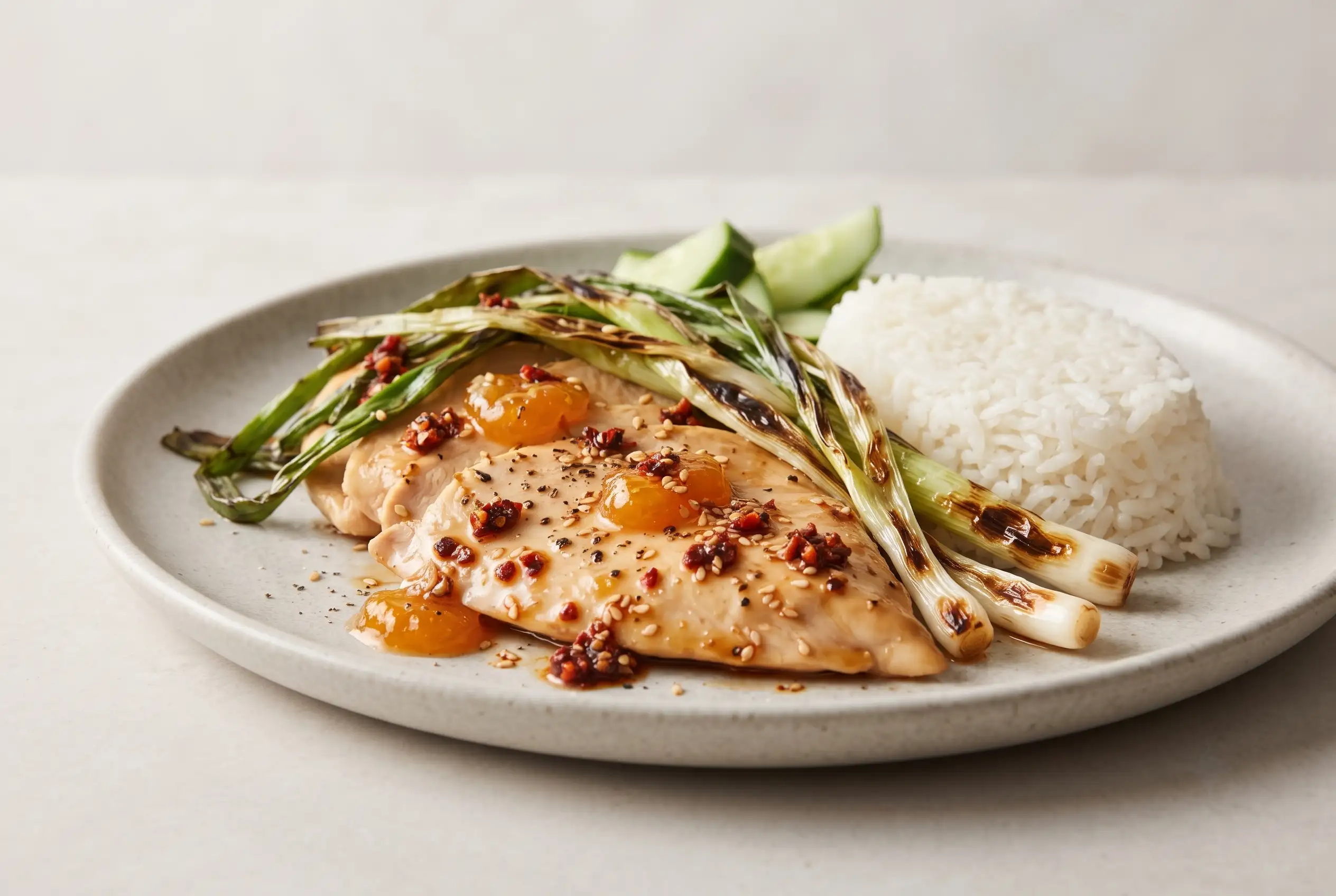 This Recipe
Sesame Apricot Chicken Balances Sweet Heat and Savory Depth
Sesame apricot chicken brings together tender baked chicken, glossy fruit sweetness, nutty sesame flavor, and the bright bite of charred scallions in a sheet pan dinner built around contrast. The combination works because each element arrives at a different point: seasoned chicken develops a savory base, scallions pick up smoky edges, and apricot preserves melt into the hot surface with chili crisp.
Sweet apricot flavors can easily become heavy when they stand alone, but reduced-sodium soy sauce and toasted sesame oil keep the dish grounded. The result is a balanced plate that feels bold without requiring a long ingredient list or complicated preparation.
Sesame Oil and Apricot Preserves Shape the Dish’s Signature Finish
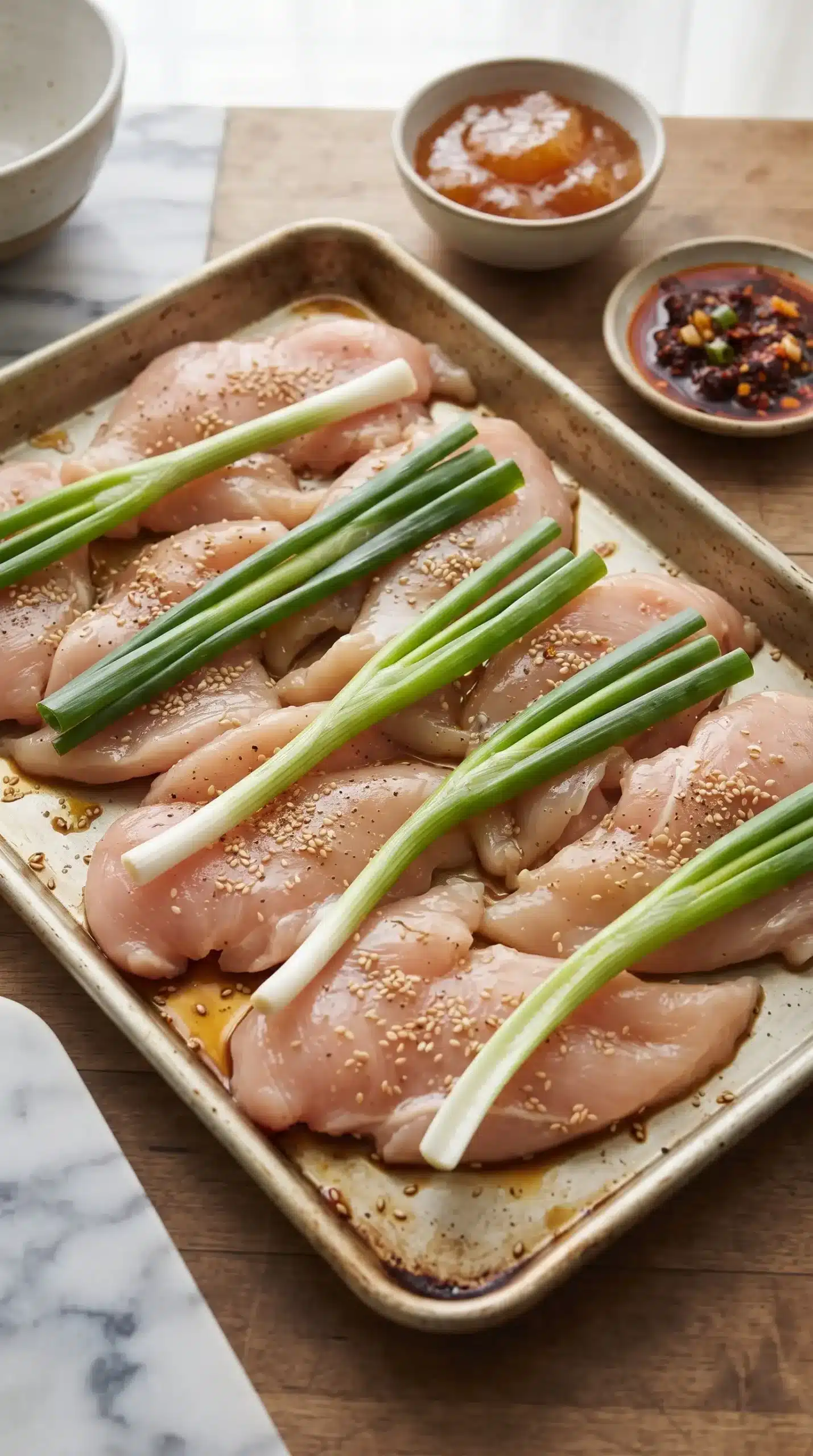
Toasted sesame oil is the main flavor carrier in sesame apricot chicken, and using it directly on the chicken allows its roasted aroma to spread through the pan. Because the oil is added before baking, it combines with soy sauce and the natural juices from the chicken to create a savory coating that remains after cooking.
Apricot preserves play a different role after the chicken has cooked. Spoonfuls added at the hot finish soften from the heat and create a loose glaze that clings to each piece. This timing keeps the fruit flavor fresh and prevents the sweetness from disappearing during the high-heat cooking process.
Chili crisp adds another layer by bringing spice, texture, and a savory finish. A small amount can change the character of the plate, so adding it after the chicken emerges from the oven gives cooks more control over the heat level and lets the apricot flavor remain noticeable.
Charred Scallions Create the Defining Baked Sesame Apricot Chicken Texture
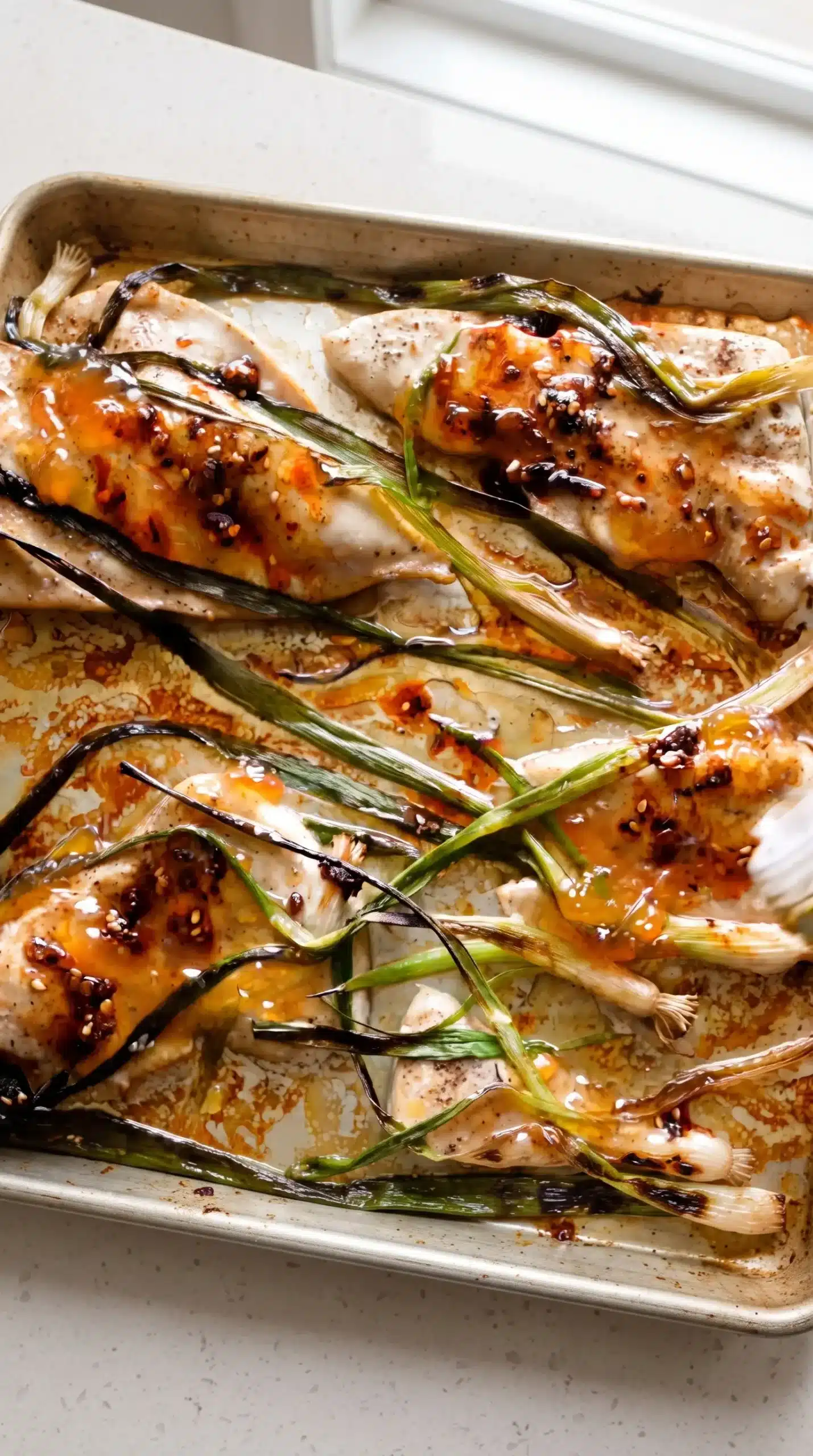
Charred scallions become more than a garnish when they roast above the chicken. Their softened centers and browned edges provide a smoky contrast that makes the baked sesame apricot chicken feel more complex while keeping the preparation simple.
Rice and Vegetables Complete the Chicken Plate
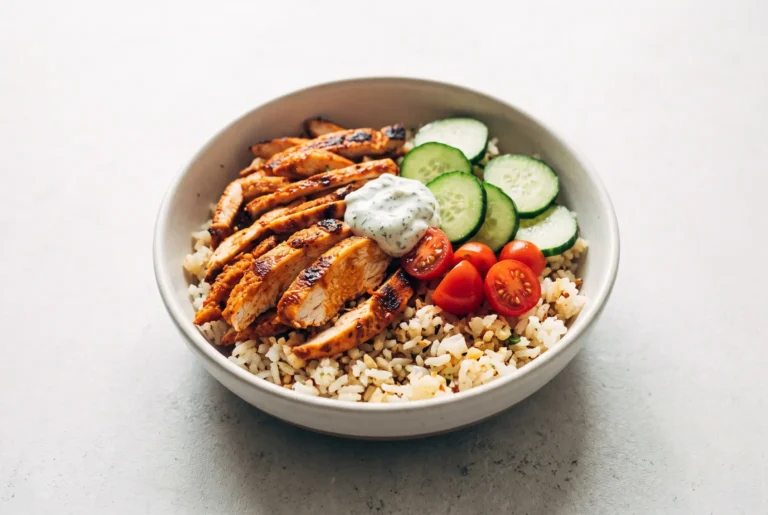
Rice provides a neutral foundation that catches the sesame-soy pan juices and balances the sweet-spicy topping. Fresh vegetables such as cucumbers add a cool, crisp element that contrasts with the warm chicken and caramelized scallions.
High Heat Placement Controls the Chicken’s Texture
High heat works especially well for this dish because thin pieces of chicken can cook quickly while the scallions develop color. Placing the oven rack in the upper portion of the oven positions the pan closer to stronger heat, helping the surface brown before the meat dries out.
Sheet pan placement matters during the short bake and broil stages. The chicken needs enough exposure to heat for the surface flavors to develop, while the broiler provides the quick burst that creates charred scallion edges and finishes cooking the chicken.
Temperature remains the most important safety check. Chicken should reach a 165°F internal temperature before serving, and checking the thickest piece helps confirm that thinner cuts have cooked evenly without relying only on appearance.
Small Cuts Make Chicken with Charred Scallions Cook Evenly
Horizontal slicing turns thicker chicken breasts into thinner portions that cook at a similar rate. This simple preparation choice also creates more surface area for sesame oil, soy sauce, apricot preserves, and chili crisp to coat each bite.
Apricot Chicken with Chili Crisp Mistakes to Avoid
Apricot chicken with chili crisp depends on careful timing, especially because the sweet topping and high heat serve different purposes. Avoiding a few common problems keeps the finished dish balanced.
- Early glazing: Adding apricot preserves before the intense oven heat can darken the sugars too quickly and reduce the bright fruit character.
- Uneven chicken pieces: Leaving some breast sections thick while others are thin can create mixed doneness across the pan.
- Missing scallion contact: Keeping scallions away from the hot surface limits the browned edges that give the dish its signature flavor.
- Excess seasoning: Soy sauce, chili crisp, and salted chicken seasoning all contribute flavor, so additional salty ingredients should be added carefully.
Overcooked edges usually happen when chicken pieces vary greatly in thickness or when they remain under intense heat after reaching doneness. Adjusting the cut and checking temperature early helps protect the texture.
Burned scallions can lose their pleasant roasted flavor and become bitter. A small amount of dark color is desirable, but removing the pan promptly after the brief broiling stage keeps the char balanced.
Serving Choices Keep the Flavors Balanced
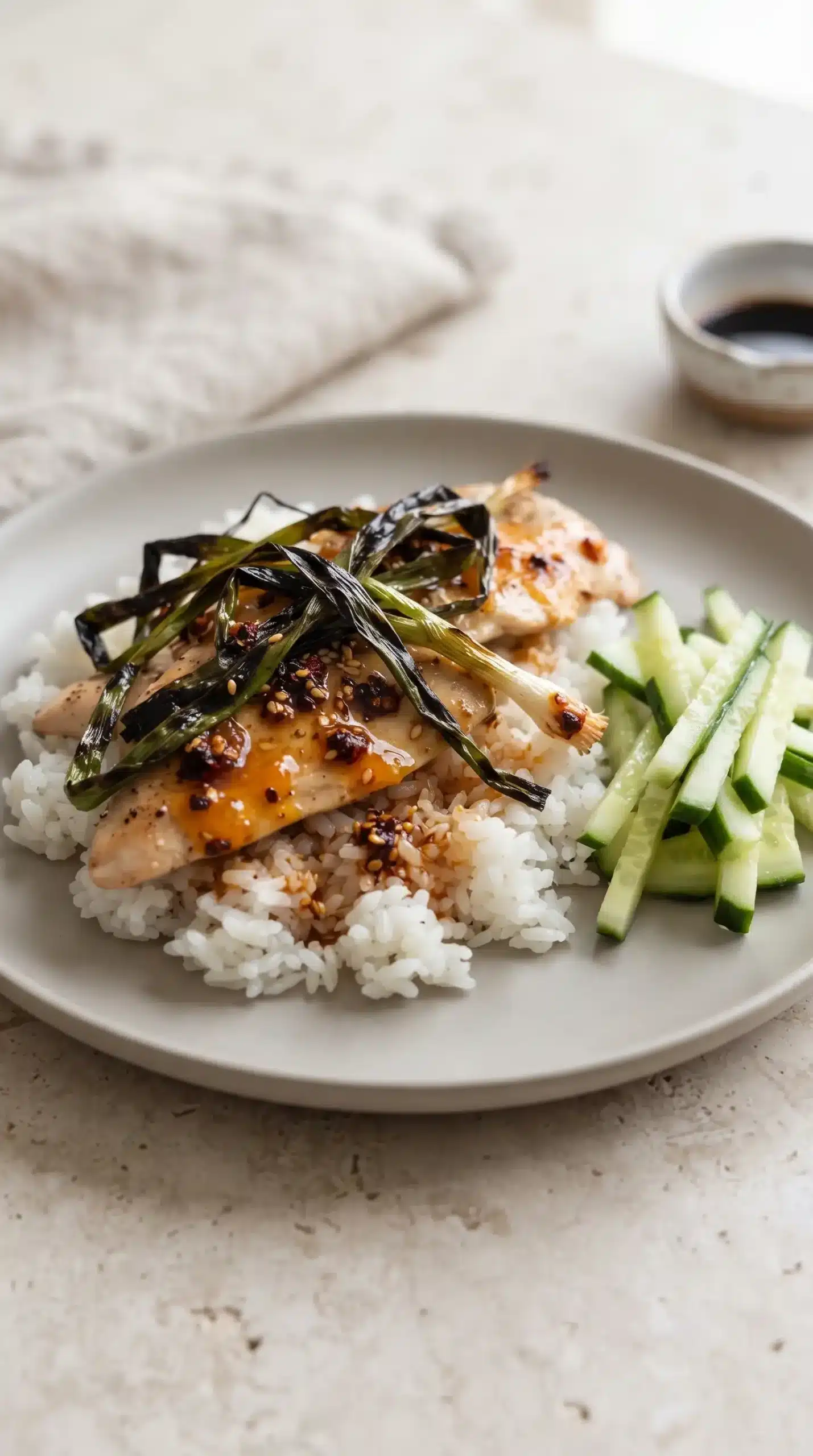
Serving warm chicken over rice creates a complete meal where the juices become part of every bite. Extra vegetables can be chosen according to preference, but crisp options work especially well alongside the sweet glaze and smoky scallions.
Leftovers and Reheating Preserve the Sesame Finish
Storage works best when the chicken, rice, and fresh vegetables are kept separate. This prevents the cucumbers from becoming soft and allows the chicken to be reheated without losing the contrast that makes the plate enjoyable.
| Component | Best storage approach | Reheating or serving note |
|---|---|---|
| Cooked chicken | Store covered after cooling | Warm gently and add fresh toppings if desired |
| Rice | Keep separate from sauces and vegetables | Reheat with a small amount of moisture |
| Fresh cucumbers | Store chilled separately | Serve cold for texture contrast |
Separate containers make it easier to preserve the flavors of sesame apricot chicken for another meal. Adding a little extra sesame oil or soy sauce after reheating can refresh the savory notes if the surface has dried slightly.
Reheating gently keeps the chicken tender because the meat has already reached its cooking point. A short warm-up is usually enough to bring back the texture without pushing the lean chicken breast too far.
Variations That Keep the Apricot Glaze in Focus
Flexible cooks can adjust the plate with different vegetables or serving styles while keeping the sesame-apricot combination at the center. Crunchy vegetables, extra rice, or a milder amount of chili crisp can change the experience without changing the identity of the dish.
A Sheet Pan Approach Makes Weeknight Cooking Practical
Home kitchens benefit from the simple arrangement of this dinner because the chicken and scallions share one cooking surface. Fewer steps between seasoning, baking, and serving allow the flavors from the pan to remain connected.
Careful preparation also reduces unnecessary handling. Once the chicken is sliced and seasoned, the remaining work focuses on watching the heat, judging the browning, and finishing the dish with the sweet and spicy toppings.
Simple cleanup becomes another advantage of the sheet pan method. The concentrated juices left behind can be spooned over rice, turning the flavorful cooking surface into part of the finished meal instead of something left behind.
Flavor Adjustments for Sesame Apricot Chicken Pairings
Fresh cucumbers, rice, and other vegetables give sesame apricot chicken room to show its range. Mild sides allow the apricot and sesame flavors to stand out, while additional spicy elements can be used when a stronger finish is preferred.
Fresh greens and crunchy vegetables can be paired with the meal when a lighter side is preferred, with a sesame chili vinaigrette dressing adding a bright finish that complements the savory chicken and sweet glaze.
Sesame Apricot Chicken Gets Its Character From Heat and Timing
Baked sesame apricot chicken succeeds because each cooking decision has a clear purpose. Thin chicken pieces support even cooking, upper-rack heat develops color, and the finishing toppings preserve the contrast between sweet fruit, savory sauce, and smoky scallions.
Chicken with charred scallions becomes especially memorable when the browned edges remain visible and the pan juices are treated as part of the meal. The short finish with apricot preserves and chili crisp creates a dish where small timing choices have a noticeable effect on the final plate.
Questions About Chicken Thickness, Storage, and Heat
Can sesame apricot chicken use chicken thighs instead of breasts?
Chicken thighs can be used when a richer texture is preferred. The cooking approach may need adjustment because thighs can vary in thickness and may require different timing to reach safe doneness while developing the desired surface color.
How can the chili crisp heat level be adjusted?
Chili crisp can be reduced for a milder serving or added gradually after cooking for more control. Serving extra chili crisp at the table allows each person to choose the amount of spice they prefer.
Why are the scallions cooked on top of the chicken?
Placing the scallions over the chicken allows them to soften from the steam of the cooking meat while still receiving direct heat for browning. Their position helps create both tender interiors and flavorful charred edges.
Can sesame apricot chicken be prepared ahead of time?
The chicken can be sliced and seasoned ahead of cooking, while the scallions and toppings can be prepared separately. Keeping the components ready makes it easier to cook the dish fresh when the browned textures are most noticeable.
What vegetables pair well with this meal?
Crisp vegetables such as cucumbers work well because they provide freshness against the warm, savory chicken. Other vegetables can be selected based on preference as long as they complement the sweet and spicy flavors.
Sesame Apricot Chicken with Chili Crisp and Scallions
Sesame apricot chicken is a quick sheet pan dinner featuring tender chicken, charred scallions, and a sweet-savory chili crisp finish. It is an easy weeknight meal with bold flavor and satisfying contrast.
Ingredients
Method
Preparation
- Preheat the oven to 450°F (232°C) and position an oven rack in the top third of the oven.
- Slice the scallions in half lengthwise.
- Cut the chicken breasts horizontally into thinner pieces. Arrange the chicken on a sheet pan, season with salt and pepper, then drizzle with sesame oil and soy sauce.
- Coat the scallions with some of the oil and place them over the chicken.
Cooking
- Bake the chicken and scallions on the upper oven rack for 6 minutes.
- Switch the oven to broil and broil for 1-2 minutes until the chicken is cooked through and the scallions have some charred edges.
- Spoon apricot preserves and chili crisp over each chicken piece immediately after cooking.
Serving
- Serve the chicken with the charred scallions over rice, adding extra pan juices over the top or drizzling with additional sesame oil and soy sauce.
Notes
Check the thickest chicken piece reaches 165°F (74°C) before serving.