From breakfast to dinner, from healthy meals to sweet desserts – Next Yum Recipes brings you quick, simple and tasty ideas for every occasion and every time.


 This Recipe
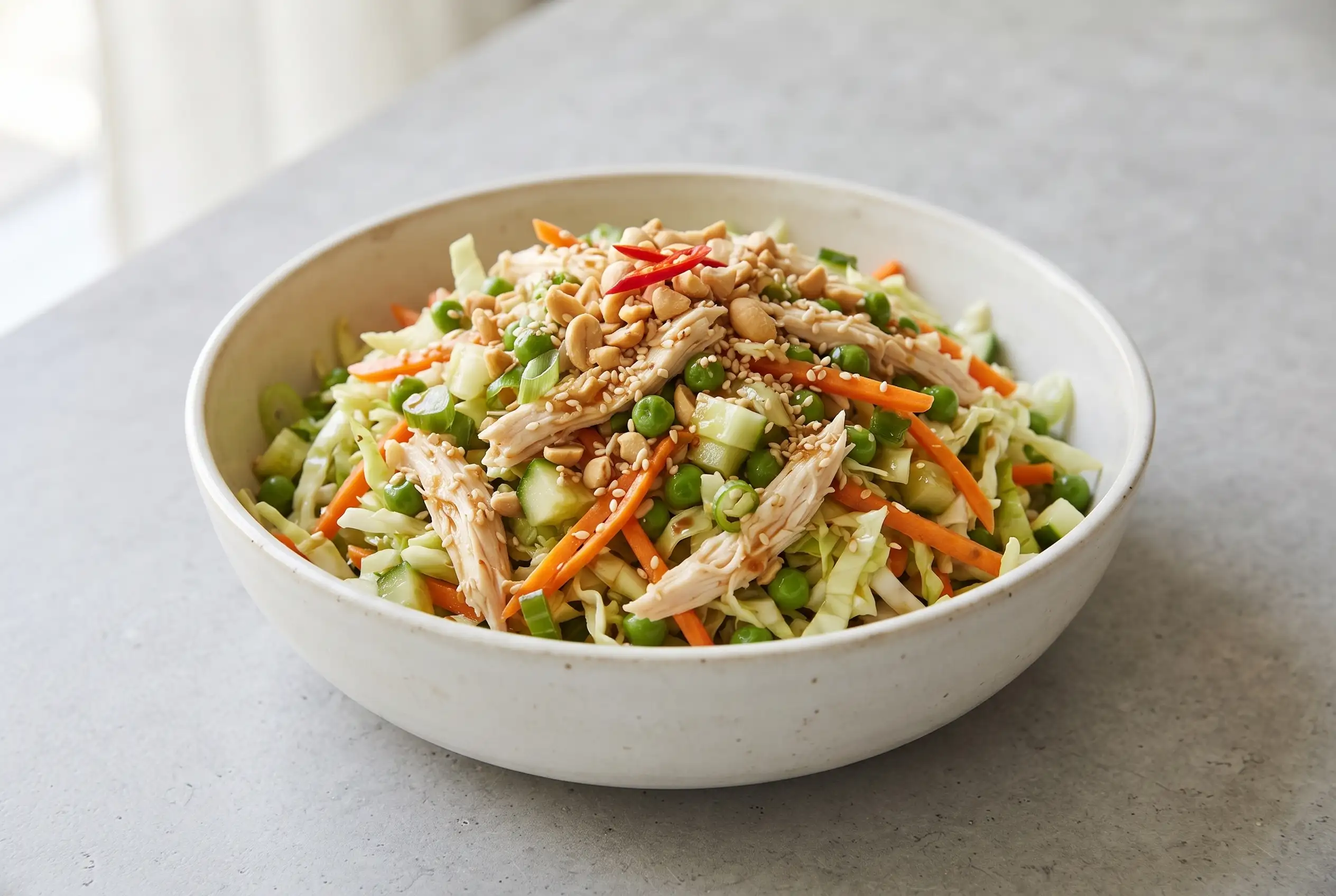
Asian chicken salad brings together shredded chicken, crisp Chinese cabbage, fresh vegetables, and a sweet-spicy sesame chili vinaigrette for a meal that balances cool textures with bold flavor. The combination works because each part has a clear role: crunchy vegetables keep the salad lively, rotisserie chicken makes preparation simple, and the dressing ties everything together with heat, sweetness, acidity, and sesame richness.
Unlike many heavy chicken salads, this chicken cabbage salad with sesame dressing stays bright and refreshing. The vegetables remain prominent, while the shredded chicken absorbs the flavors around it. A chilled serving style also makes the contrasting textures more noticeable, especially when the cabbage and cucumbers stay crisp.
Asian Chicken Salad Builds Contrast Through Fresh Textures
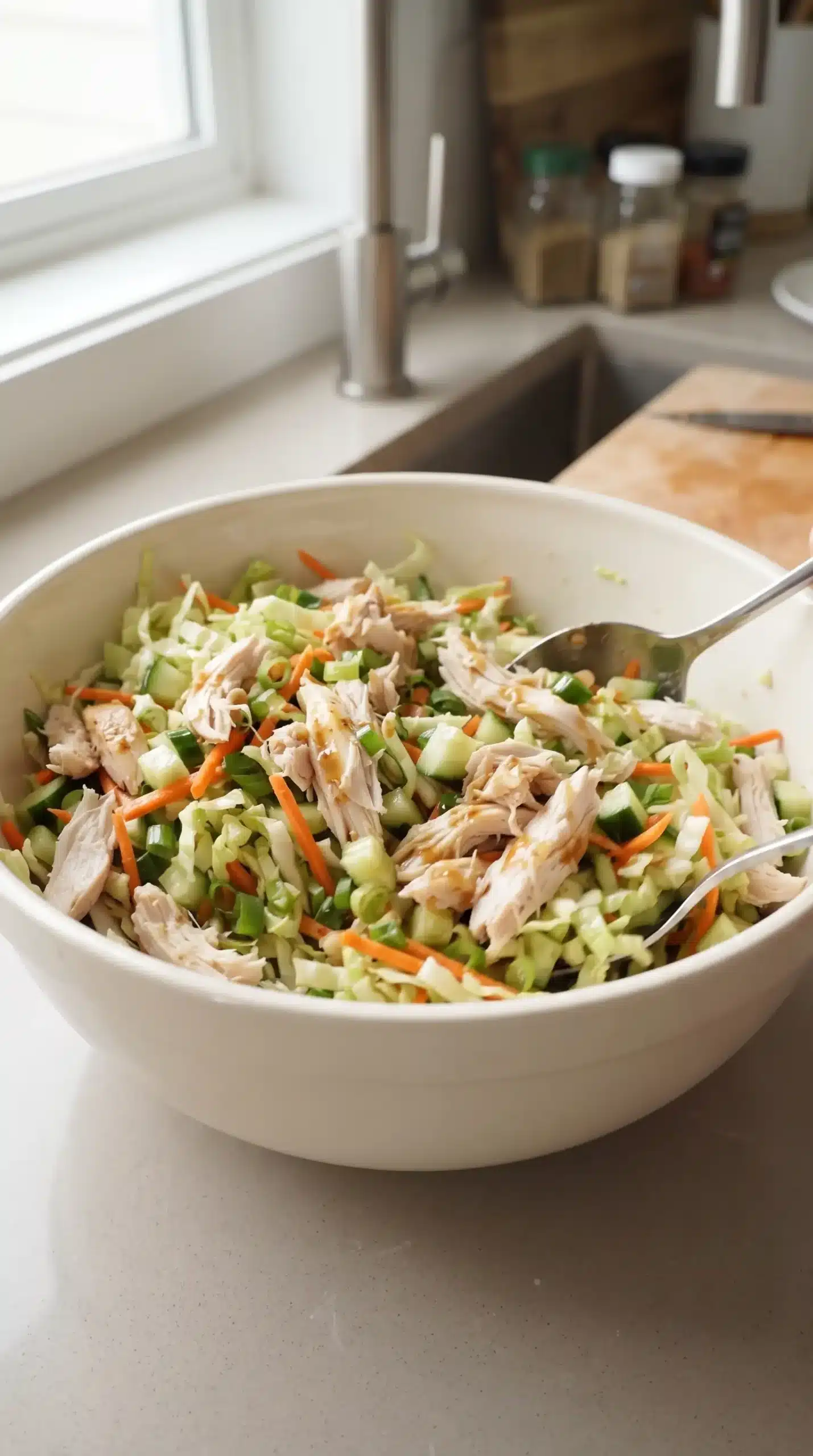
Crunch is one of the defining qualities of this salad. Shredded Chinese green cabbage creates a sturdy base that can hold up to the dressing, while carrots and cucumbers introduce different levels of crispness. The vegetables create variety across each bite without requiring complicated preparation.
Shredded rotisserie chicken changes the character of the dish by adding a tender, savory element among the fresh vegetables. Pulling the meat into small pieces helps the chicken mix evenly throughout the bowl, allowing the sesame chili vinaigrette to coat more surface area.
Balanced salads depend on how ingredients interact after they are combined. The peas add a softer texture and mild sweetness, green onions provide a sharper note, and crushed peanuts bring a finishing contrast. Keeping these textures distinct helps the salad feel complete instead of blended into one uniform mixture.
Sweet Chili Garlic Sauce Shapes the Sesame Vinaigrette
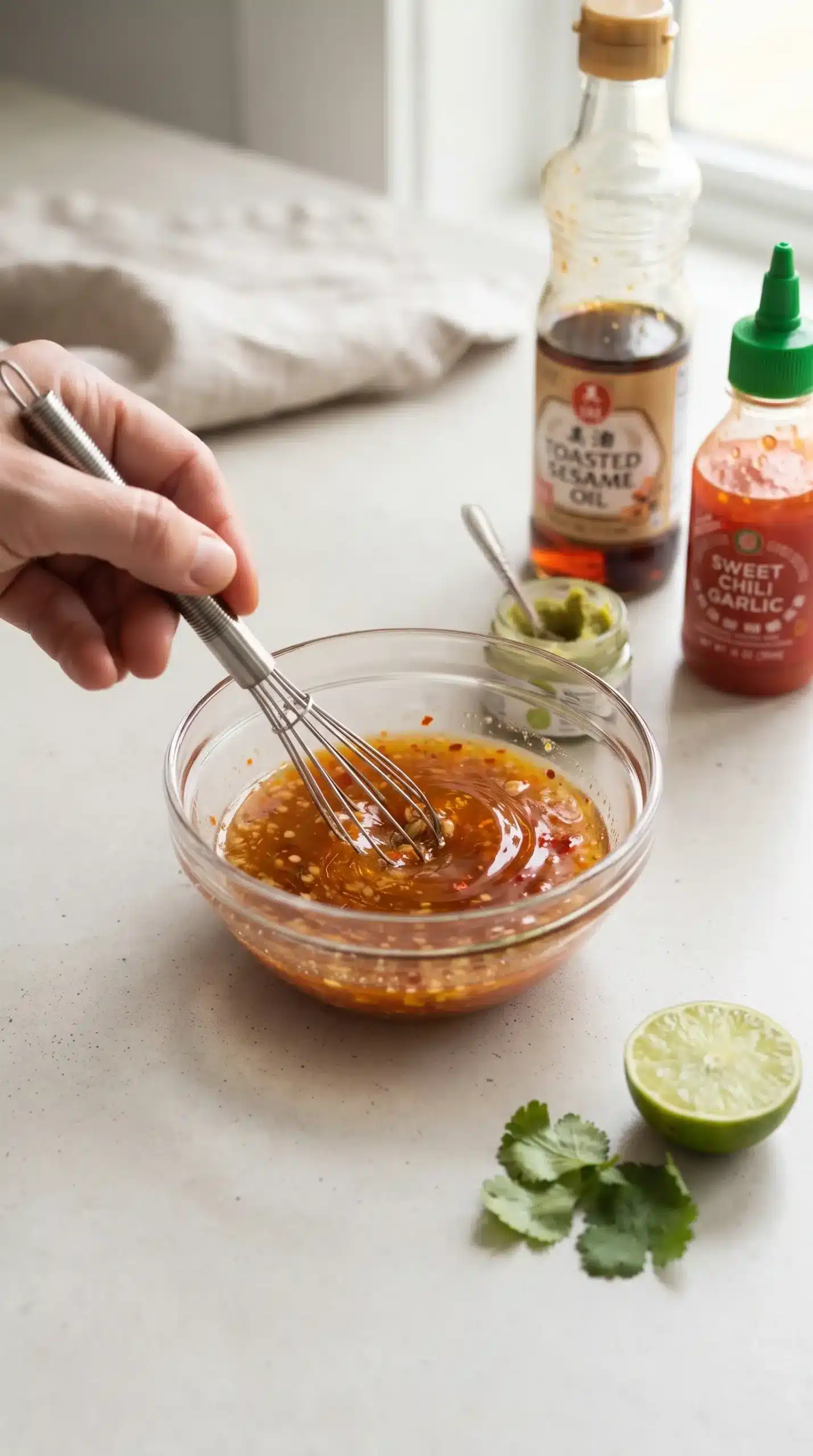
The dressing carries much of the personality in this Asian chicken salad recipe. Sweet chili garlic sauce supplies sweetness and gentle heat, while honey rounds out the sharper flavors from vinegar and lime juice. Sesame oil adds a deep toasted character that connects the dressing with the vegetables and chicken.
Calamansi can be used in place of standard lime juice when available, bringing a bright citrus quality to the vinaigrette. The acidity matters because it keeps the sweet ingredients from becoming overwhelming and gives the salad a cleaner finish.
- Heat control: Wasabi paste can be adjusted or omitted depending on the preferred level of spice.
- Acid balance: Extra vinegar or lime juice can sharpen the dressing when more brightness is desired.
- Texture finish: Crushed peanuts add a final layer of crunch when sprinkled over servings.
Small adjustments are useful because the dressing is easy to personalize. The core combination of sweet, spicy, tangy, and nutty flavors remains intact even when individual amounts are changed.
Vegetable Preparation Keeps the Salad Crisp and Balanced
Careful vegetable preparation improves the eating experience of this sesame chili vinaigrette salad. Cabbage should be shredded into pieces that are easy to pick up, while carrots and cucumbers should remain distinct enough to provide contrast. Uniform preparation helps every serving contain a similar mixture of ingredients.
| Component | Preparation choice | Effect in salad |
|---|---|---|
| Chinese green cabbage | Thinly shredded | Provides crisp structure and holds dressing well |
| Carrots | Shredded | Adds color and a firm vegetable bite |
| Cucumbers | Diced | Creates fresh, juicy contrast |
| Green onions | Chopped | Adds a mild savory sharpness |
Cold preparation also affects texture. Chilling the combined vegetables and chicken allows the flavors to settle while helping the salad maintain its refreshing character when served.
Rotisserie Chicken Makes the Salad Easy to Assemble
Using pulled rotisserie chicken provides a convenient starting point because the meat is already cooked and seasoned. Removing the meat from the bones and shredding it creates pieces that blend naturally with cabbage, peas, and vegetables.
Chicken selection influences the finished texture. Pieces from both light and dark meat can work well because the salad benefits from tender shredded meat that can absorb the dressing without requiring additional cooking steps.
Once combined with the vegetables, the chicken should remain evenly distributed. Large clumps of meat can overpower individual bites, while smaller shredded pieces allow the vinaigrette to reach more of the salad.
Cooking Control Prevents a Watery Asian Chicken Salad
Temperature and moisture management are the most important execution details for this dish. The peas need to be cooked and drained before joining the other ingredients so excess water does not dilute the flavors or soften the vegetables.
Proper chilling also affects how the dressing performs. Allowing the prepared components to become cold gives the flavors time to combine while preserving the crisp qualities that make the salad appealing.
| Cooking detail | What to watch for | Better result |
|---|---|---|
| Pea preparation | Extra cooking water remains | Cleaner flavor and firmer texture |
| Dressing mixing | Oil and liquids are not blended | More even coating across ingredients |
| Chilling | Salad is served immediately after mixing | More settled flavor and refreshing texture |
Good control does not require complicated techniques. Attention to moisture, coating, and temperature creates the biggest improvement in the finished salad.
Common Asian Chicken Salad Mistakes That Affect Texture
Several avoidable choices can change the balance of the salad. Understanding the cause of each issue makes it easier to correct problems before serving.
- Overwet vegetables: Poorly drained peas or excess moisture from vegetables can weaken the dressing and make the salad less crisp.
- Heavy dressing coating: Adding more vinaigrette than needed can cover the fresh vegetable flavors and make the mixture feel overly rich.
- Unbalanced seasoning: Skipping adjustments to acidity or spice can leave the sweet chili dressing without enough contrast.
Another common issue comes from ignoring personal heat preferences. Wasabi paste has a noticeable effect on the dressing, so reducing it allows the other flavors to remain more prominent for guests who prefer milder salads.
Serving Choices Highlight the Sesame Chili Vinaigrette Salad
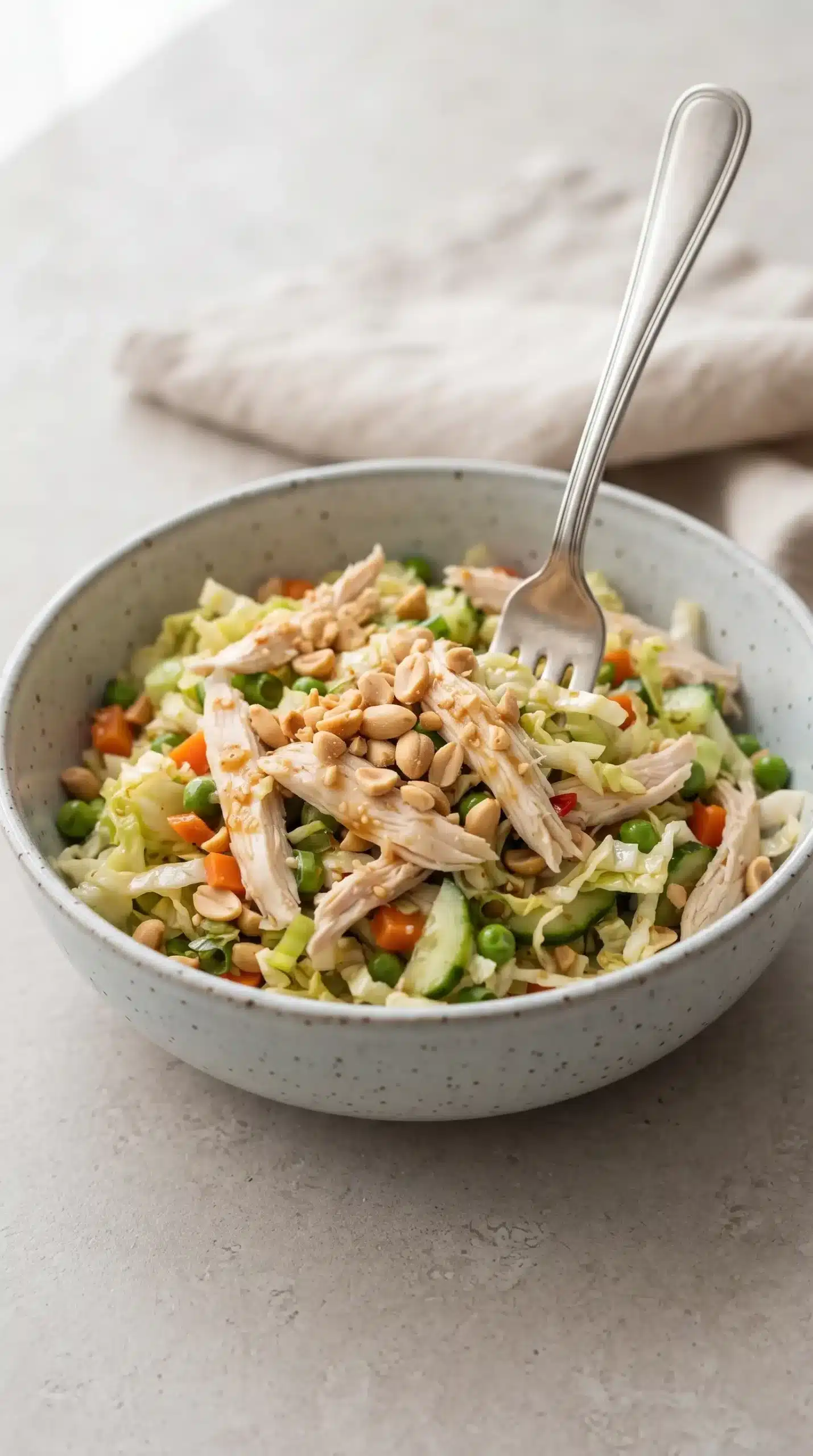
Serving style influences how the ingredients are experienced. A chilled bowl emphasizes the crisp vegetables, while crushed peanuts added at the table maintain their texture longer. Adding ingredients such as edamame and almonds creates a different balance of protein, crunch, and freshness in a salad like Asian Chicken Salad with Edamame and Almonds Recipe.
Portioning the salad before adding toppings can also help. Keeping the peanut garnish separate until serving preserves the contrast between the crunchy topping and the tender chicken mixture.
Flavor Adjustments Create a More Personal Chicken Salad
Individual preferences can guide small changes without changing the identity of the dish. The dressing provides the most flexibility because sweetness, acidity, and spice can all be adjusted while keeping the same overall flavor direction.
Some diners prefer a brighter salad with more citrus, while others enjoy a sweeter sesame-forward profile. Adjusting the vinaigrette after tasting allows the balance to match the vegetables and chicken.
Simple choices can also make the salad suitable for different occasions. A lighter dressing works well for a fresh lunch, while a more generous coating creates a stronger flavor experience for a larger meal.
Storage Practices Protect the Salad’s Fresh Qualities
Fresh vegetables are at their best when handled carefully after preparation. Keeping the salad chilled helps maintain its texture, while storing components separately can help preserve the crispness of the vegetables and the strength of the dressing.
Because this salad contains cooked chicken, it should be stored carefully after preparation. To help protect freshness and food safety, keep chicken salad at 40°F or below when chilled and avoid leaving prepared portions at room temperature for extended periods.
When preparing ahead, combining the chicken and vegetables closer to serving time gives the cabbage and cucumbers more opportunity to maintain their structure. Extra dressing can be kept separate and added as needed.
Asian Chicken Salad Works Because Balance Guides Every Bite
Asian chicken salad succeeds when the crisp vegetables, tender chicken, and sesame chili vinaigrette remain in balance. The dressing should enhance the ingredients without hiding the freshness that defines the dish.
Careful attention to moisture, chilling, and seasoning creates a salad where sweet, spicy, tangy, and crunchy elements appear together. The result is a colorful chicken salad that feels satisfying while staying light and vibrant.
Common Questions About Chicken Salad Texture and Flavor
Can Asian chicken salad be made less spicy?
Yes. Reducing or removing the wasabi paste lowers the heat while allowing the sweet chili garlic sauce, sesame oil, and citrus flavors to remain noticeable. Adjusting the dressing gradually makes it easier to match personal spice preferences.
How can the salad stay crisp after adding dressing?
The best approach is managing moisture before mixing. Properly draining cooked peas, keeping vegetables chilled, and adding only the amount of vinaigrette needed helps protect the crisp texture of the cabbage and cucumbers.
What makes the sesame dressing taste balanced?
A balanced sesame chili vinaigrette combines several flavor directions. Sweet ingredients soften sharp acidity, sesame oil adds depth, and lime juice or vinegar provides brightness that keeps the dressing from feeling heavy.
Can another type of cabbage be used?
Chinese green cabbage works especially well because it provides a crisp texture, but another firm cabbage variety can be considered if a similar shreddable texture is available. The important factor is choosing a cabbage that can hold up with dressing.
Why should the salad be chilled before serving?
Chilling gives the flavors time to combine and creates the cool texture that makes this salad especially refreshing. It also helps the vegetables and chicken feel more cohesive when served.
Asian Chicken Salad with Sesame Chili Vinaigrette Dressing
Asian chicken salad combines tender shredded chicken, crisp vegetables, and a sweet-spicy sesame chili vinaigrette for a fresh, flavorful meal. It is an easy choice when you want a refreshing salad with satisfying texture and bold dressing.
Ingredients
Method
Preparation
- Cook the peas according to the package directions, then drain and allow them to cool slightly.
- Combine the shredded chicken, cabbage, peas, carrots, cucumbers, and green onions in a large bowl. Cover and chill for 1 hour.
Dressing
- Whisk together the sweet chili garlic sauce, honey, sesame oil, vinegar, lime juice, and wasabi paste until the dressing is thoroughly combined. Chill for 1 hour.
Assembly
- Add the dressing to the salad mixture and toss until evenly coated. Finish each serving with crushed peanuts.
Notes
Chilling the salad creates a cold, refreshing texture, though the full hour of chilling can be shortened if needed. The dressing can be adjusted to personal taste by changing the wasabi for spice level, or increasing the vinegar or lime juice for more acidity.