From breakfast to dinner, from healthy meals to sweet desserts – Next Yum Recipes brings you quick, simple and tasty ideas for every occasion and every time.


 This Recipe
Caprese Penne Brings Tomato, Basil, and Cheese Together
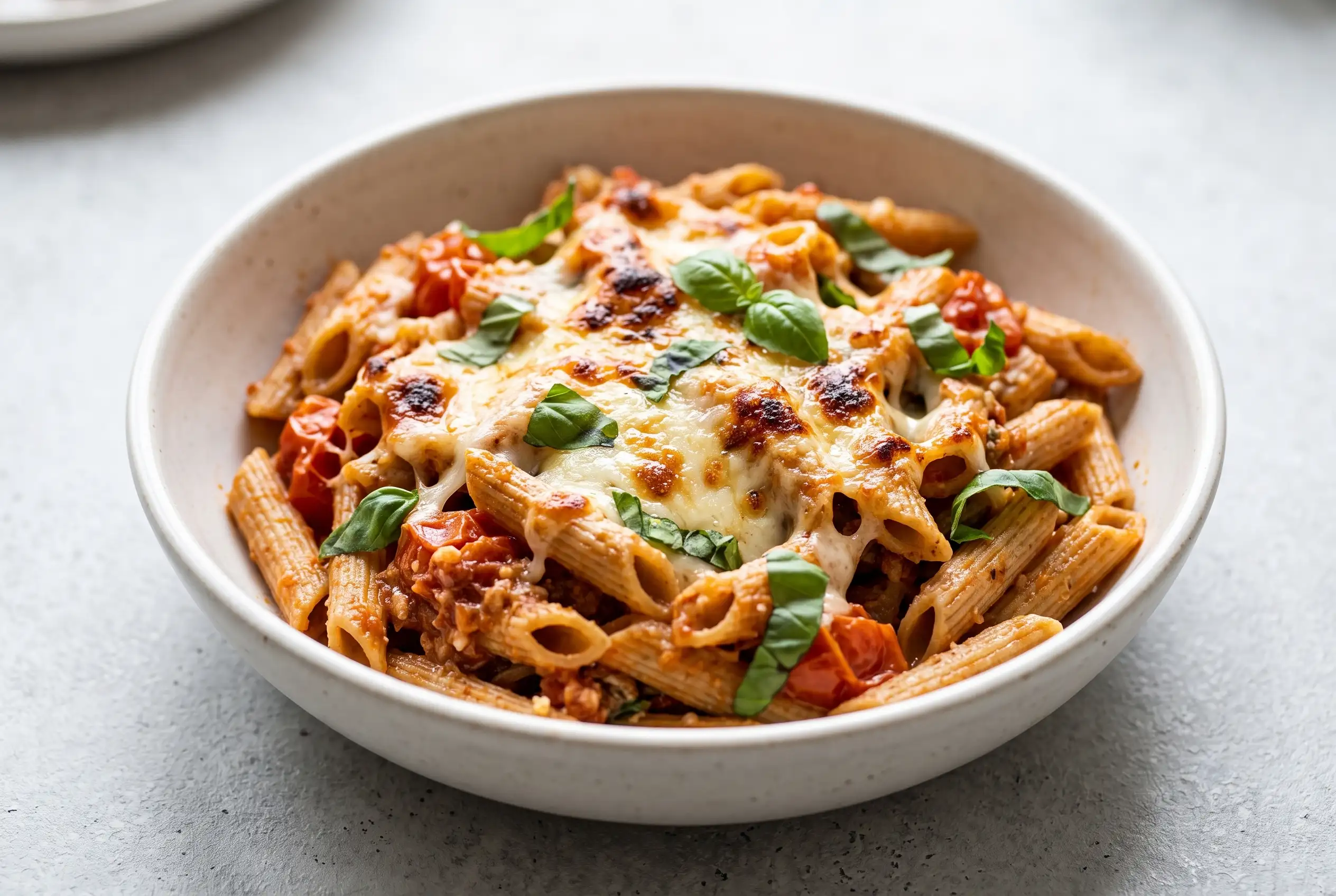
Caprese penne combines whole wheat pasta, tomato sauce, creamy dairy, fresh mozzarella, cherry tomatoes, and basil into a baked pasta dish with recognizable Italian-inspired flavors. The structure of caprese penne comes from balancing the hearty pasta base with fresh toppings so each serving keeps the contrast between warm sauce, melted cheese, and bright tomato pieces.
The dish works because the ingredients are handled in separate stages before they meet in the oven. Pasta is coated with a prepared sauce mixture, tomatoes and basil are folded in for freshness, and sliced cheese creates the golden surface that defines the finished bake. A few small choices during preparation help maintain those textures after baking.
Whole Wheat Penne Creates a Sturdy Pasta Foundation
Whole wheat penne gives the bake a firm structure that can hold sauce and melted cheese without becoming lost among the toppings. The shape of penne allows the tomato mixture to cling to the ridges and hollow centers, creating more consistent bites throughout the dish.
Cooking the pasta according to its package directions provides the right starting point for a baked pasta. The noodles continue to heat in the oven, so the texture before baking matters. Maintaining al dente pasta texture helps a properly cooked penne piece keep enough body to support the sauce, tomatoes, and cheese layer.
| Pasta consideration | What to watch | Effect on the bake |
|---|---|---|
| Whole wheat penne | Firm cooked texture | Supports the sauce and toppings |
| Pasta shape | Hollow center and ridges | Holds tomato sauce in each bite |
| Pre-bake texture | Not overly soft | Helps prevent a fragile finished dish |
A successful whole wheat penne bake depends on giving the pasta enough strength before it reaches the oven. The pasta is not only a base for the sauce; it also determines how the finished portions hold together when served.
Mozzarella Basil and Tomato Choices Define Freshness
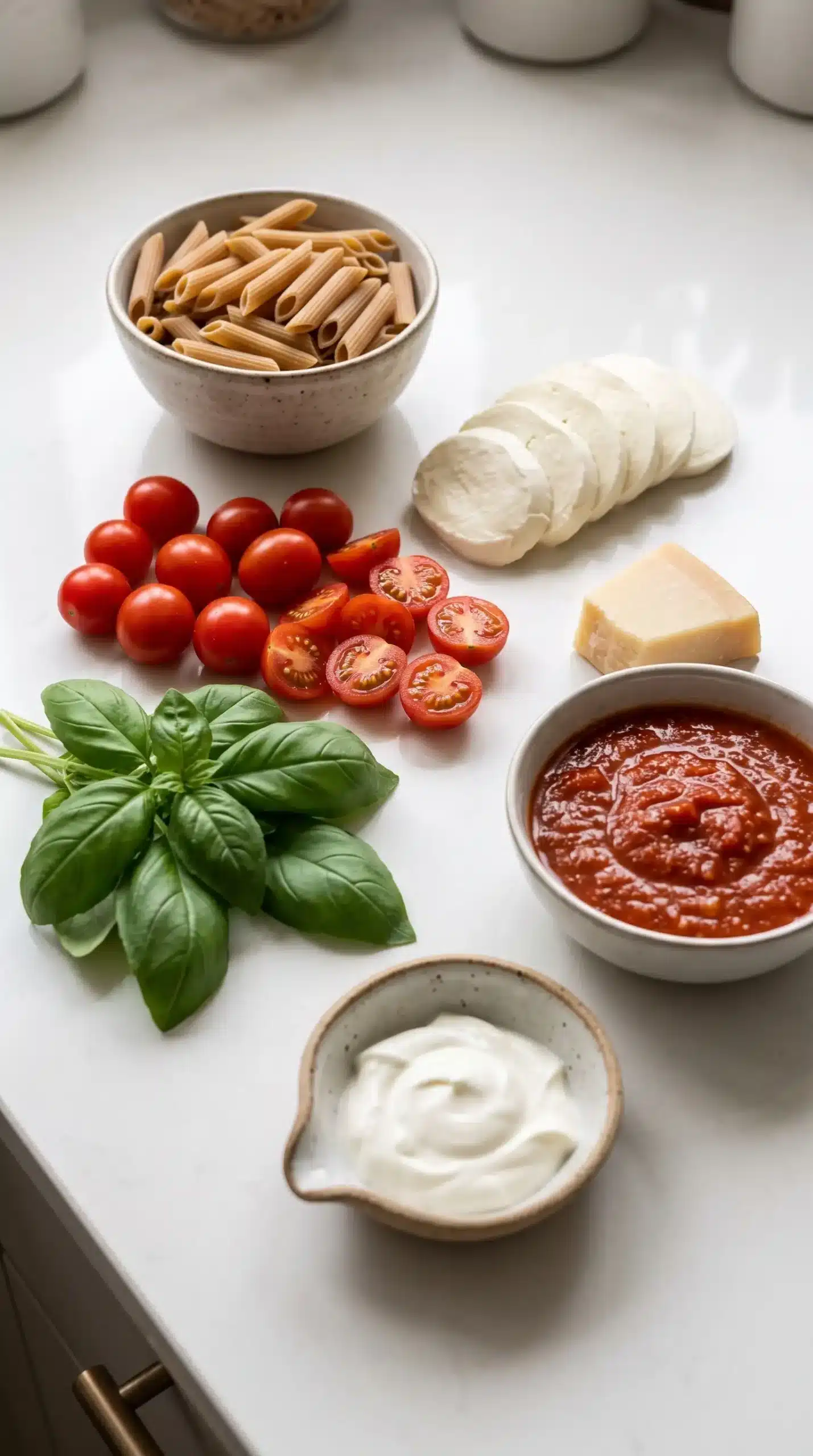
The ingredient decisions in caprese penne have the biggest effect on the balance between richness and freshness. Fresh mozzarella creates the melted cheese layer, while cherry tomatoes and basil bring the lighter qualities associated with caprese flavors.
Using some halved cherry tomatoes and some left whole creates variation in the finished dish. Halved tomatoes release more of their juices into the pasta, while whole tomatoes maintain a more noticeable shape. This combination helps the tomato presence remain visible after baking.
Fresh basil is best divided between the preparation stage and the serving stage. A small amount mixed into the pasta spreads its aroma through the sauce, while additional leaves added after baking keep the herb character bright. This timing prevents the basil flavor from becoming muted during oven heat.
- Mozzarella choice: Fresh slices create a soft melted topping, while sliced provolone can be used when needed.
- Tomato preparation: Mixing whole and halved cherry tomatoes creates different textures in the same pan.
- Basil timing: Adding leaves after baking preserves a fresh finishing note.
Tomato Sauce Balance Shapes the Creamy Pasta Layer
The tomato sauce mixture in caprese penne becomes smoother when warmed with sour cream and parmesan before meeting the pasta. Gentle heating helps the dairy ingredients blend into the sauce while keeping the tomato flavor present.
Baking Control Protects the Cheese and Pasta Texture
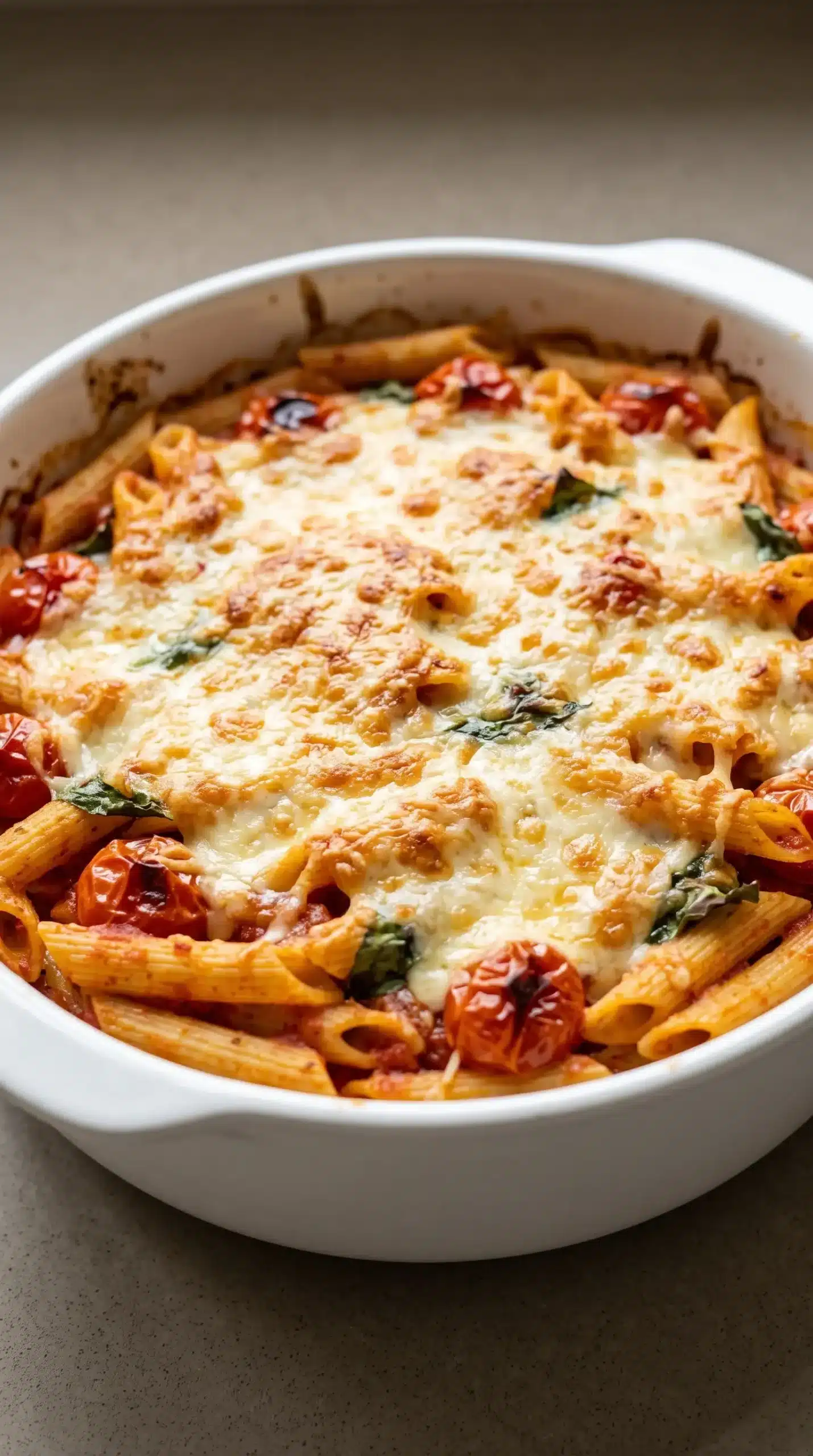
The oven stage transforms the assembled pasta into a cohesive baked caprese pasta. Heat allows the cheese topping to melt across the surface while the sauce settles around the penne pieces below. Watching the cheese instead of relying only on time helps determine when the dish has reached the desired finish.
The baking dish preparation also affects the serving experience. A lightly coated dish allows portions to release more easily after the cheese layer has melted and browned. Spreading the pasta mixture evenly helps the topping warm at a consistent rate.
Caprese penne benefits from a controlled finish because the ingredients have already been cooked before baking. The oven is mainly responsible for bringing the layers together, creating the golden cheese surface, and warming the tomatoes without removing their character.
Caprese Penne Mistakes That Affect the Finished Bake
Several avoidable mistakes can change the texture and appearance of caprese penne. The most common problems come from overhandling fresh ingredients, uneven preparation, or missing visual cues during cooking.
| Potential mistake | Visible sign | Better approach |
|---|---|---|
| Adding too much heat to the sauce mixture | Dairy loses its smooth texture | Warm the sauce gently before combining |
| Skipping even pasta coating | Dry or uneven bites | Mix the penne thoroughly with sauce |
| Overbaking the cheese topping | Cheese becomes overly firm | Remove the dish when the cheese is golden and bubbly |
Another issue occurs when basil is treated as only an ingredient for the mixed pasta. Reserving some leaves for the top gives the finished dish a fresher appearance and a stronger herb aroma.
A Baked Caprese Pasta Finish Depends on Layering
A baked caprese pasta finish succeeds when every layer has a specific role before the dish reaches the table. The sauce coats the noodles, tomatoes remain visible, and cheese creates the melted surface that connects the components.
Serving Choices Highlight Penne with Tomato Sauce and Mozzarella
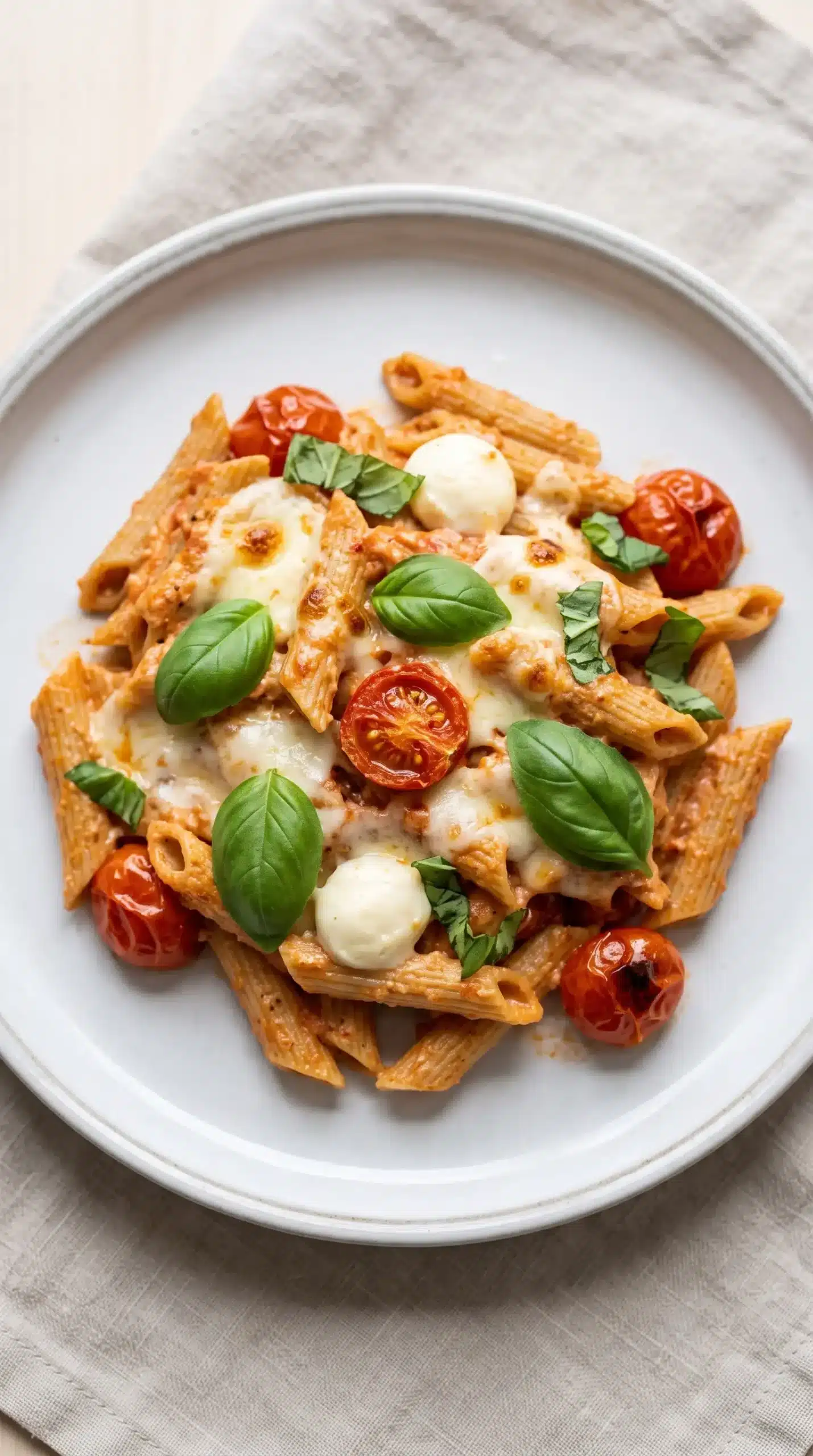
Penne with tomato sauce and mozzarella is easiest to enjoy when the contrasting textures remain noticeable. Serving portions with visible tomato pieces and basil leaves allows the fresh elements to stand out alongside the richer cheese and sauce.
The finished bake can fit a casual meal where a warm pasta dish is the centerpiece. Additional basil added after baking creates a simple presentation detail without changing the core flavors of the dish.
Whole Wheat Penne Bake Adjustments Fit Different Preferences
A whole wheat penne bake can be adjusted while keeping the same overall character. Provolone can replace mozzarella when fresh mozzarella is unavailable, following the same idea of creating a melted cheese topping.
Tomato preparation can also be adjusted according to texture preference. More halved tomatoes will release additional moisture into the pasta, while keeping more tomatoes whole creates larger bites with a firmer presence.
Storage Keeps Leftover Caprese Penne Ready for Later
Leftover caprese penne should be stored in a covered container after it has cooled. Gentle reheating helps warm the pasta while preserving the melted cheese and tomato flavors that make the dish recognizable.
Fresh Basil Timing Completes the Caprese Penne Experience
Fresh basil added after baking provides a finishing contrast that supports the warm sauce and cheese. This small step keeps the herb flavor noticeable and gives the dish its characteristic fresh caprese-inspired finish.
Caprese Penne Settles Into a Balanced Baked Pasta
Caprese penne depends on the relationship between sturdy pasta, creamy tomato sauce, fresh tomatoes, basil, and melted cheese. Keeping those elements distinct during preparation allows the baked dish to maintain both comfort and brightness.
The most important judgment comes at the oven stage: the cheese should become golden and bubbly while the pasta remains supported by its sauce. When the layers stay balanced, the result is a baked pasta that delivers rich flavor without losing the fresh qualities of its caprese ingredients.
Caprese Penne Questions About Texture, Storage, and Preparation
Can caprese penne be made with another pasta shape?
Yes, another sturdy pasta shape can work if it can hold the tomato sauce mixture well. Shapes with ridges or openings are useful because they help carry the creamy sauce through each serving.
Why use both whole and halved cherry tomatoes?
Using both styles creates different textures after baking. Halved tomatoes blend more into the pasta, while whole tomatoes provide noticeable pieces that stay intact.
How can the cheese topping stay smooth?
The cheese topping stays more appealing when the dish is baked only until the cheese is melted, golden, and bubbly. Extended oven time can make the cheese layer firmer and less soft.
Can caprese penne be prepared ahead of baking?
The assembled pasta can be prepared before the oven stage and baked when needed. Keeping the prepared dish covered until baking helps maintain the moisture balance of the pasta and sauce.
What makes the basil flavor stand out in the finished dish?
Adding basil both during mixing and after baking creates a stronger herb presence. The fresh leaves added at the end provide a brighter flavor than basil exposed only to oven heat.
Caprese Penne Baked Pasta with Tomato, Basil, and Cheese
Caprese Penne is a creamy baked pasta with a fresh tomato, basil, and melted cheese finish. This comforting dish is a great choice for an easy weeknight meal or a warm gathering centerpiece.
Ingredients
Method
Preparation
- Preheat oven to 400 degrees F (204 degrees C). Bring water to a boil and cook the pasta according to the package directions.
- While the pasta cooks, warm the tomato sauce over low heat in a large saucepan. Stir in the sour cream and grated parmesan once the sauce is heated.
Assembly
- Drain the cooked pasta and add it to the sauce mixture, stirring until coated. Turn off the heat, then mix in the tomatoes and a few chopped basil leaves.
- Coat a baking dish with non-stick spray and transfer the pasta mixture into the dish. Cover the top with the sliced cheese.
Baking
- Bake for 10-15 minutes, or until the cheese is golden and bubbly. Finish with additional fresh basil.
Notes
Use a mix of halved and whole cherry tomatoes to keep different textures throughout the baked pasta.