From breakfast to dinner, from healthy meals to sweet desserts – Next Yum Recipes brings you quick, simple and tasty ideas for every occasion and every time.


 This Recipe
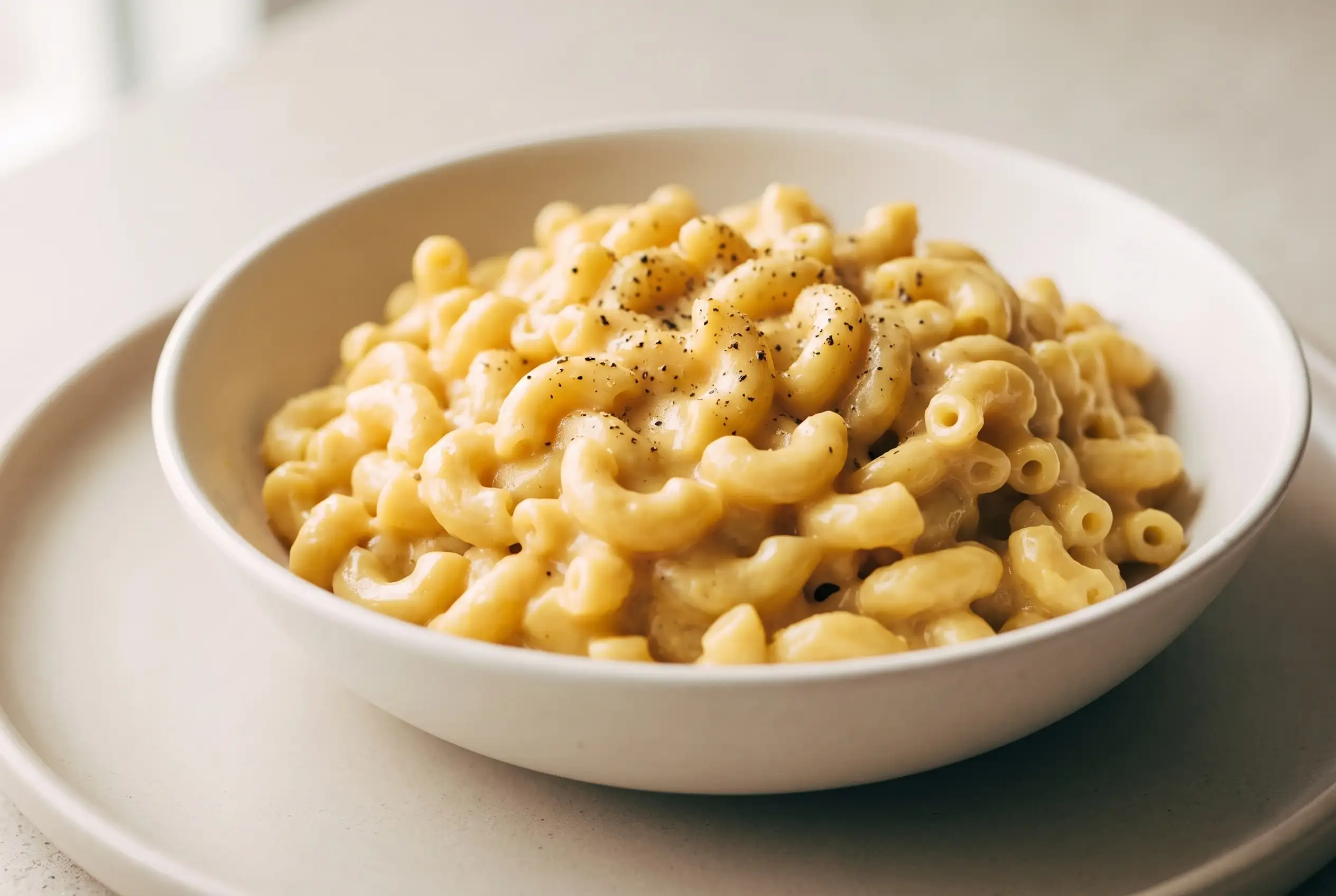
Vegan mac and cheese can be deeply creamy, savory, and satisfying without relying on dairy, and this version gets there with a homemade cheese powder that turns into a smooth sauce in minutes. Nutritional yeast supplies the signature savory character, while cornstarch gives the sauce body and turmeric and paprika add a warm golden color. Tossed with tender elbow macaroni and finished with non-dairy butter, the result is an easy vegan mac and cheese with a comforting stovetop feel.
A pantry-made cheese base keeps vegan mac and cheese practical
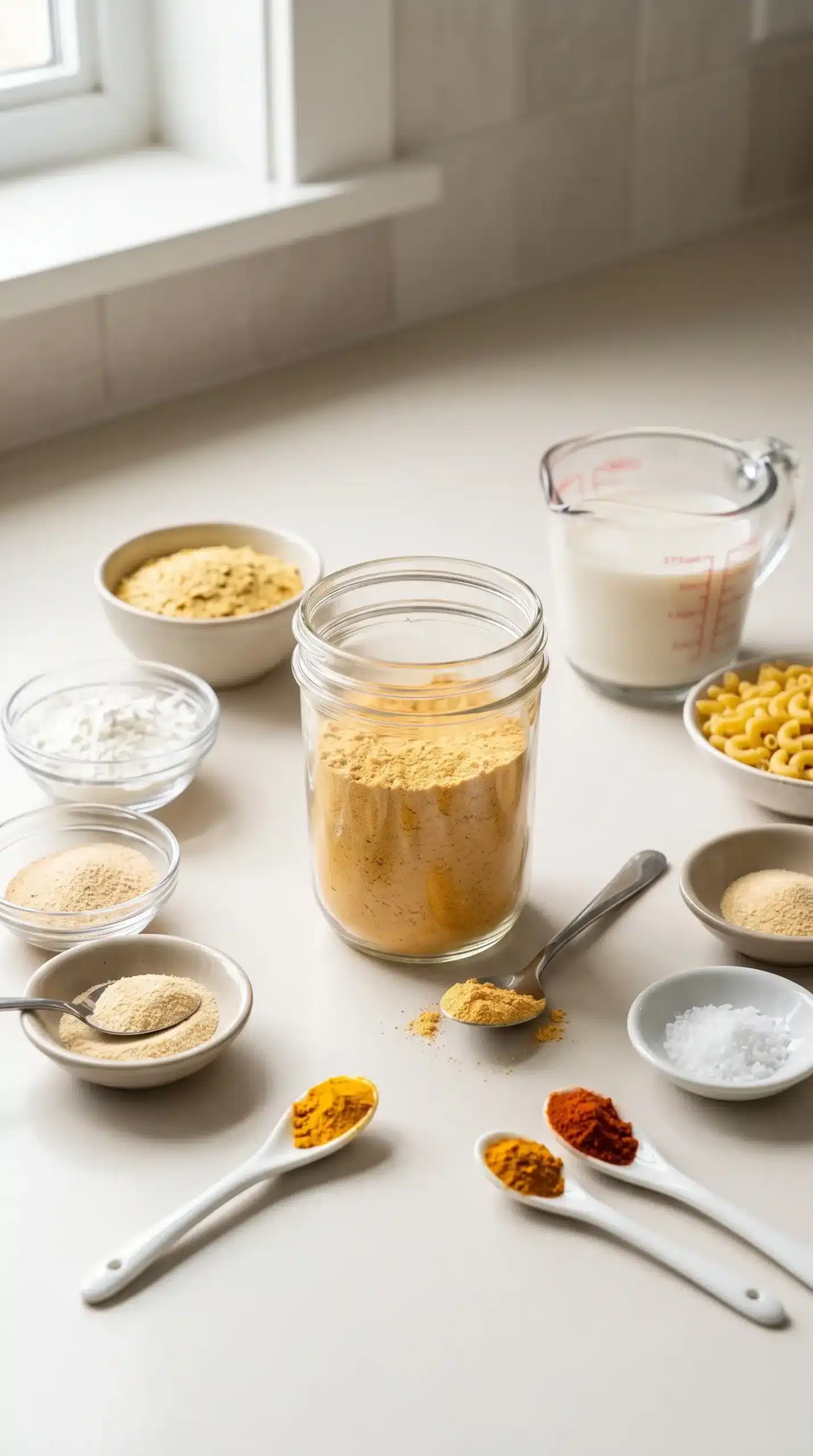
The clever part of the cheese sauce is that its dry ingredients can be blended together before any pasta goes near the stove. Nutritional yeast, cornstarch, onion powder, garlic powder, salt, turmeric, and paprika form a concentrated mixture that can be stored in a jar for later batches.
Blending matters because the cornstarch and seasonings need to distribute evenly through the nutritional yeast. A fine powder dissolves more predictably when whisked with non-dairy milk, reducing the chance of pockets of seasoning or little clumps of starch.
Keeping the mixture dry also changes the rhythm of the meal. Instead of assembling a sauce from several separate ingredients every time, you can measure the prepared powder into milk and build the creamy base directly in a saucepan.
Nutritional yeast and cornstarch determine the sauce’s character
Nutritional yeast brings the savory, cheese-like flavor that makes the sauce recognizable as vegan mac and cheese. Its flavor is fairly concentrated, so blending it with the seasonings creates a more balanced base than relying on nutritional yeast alone.
Cornstarch has a different job. It thickens liquid sauces as the mixture heats, transforming a loose combination into a sauce that can cling to macaroni. Because starch thickening depends on even dispersion and sufficient heat, thorough whisking before the mixture reaches a simmer is especially useful.
The small amounts of turmeric and paprika are primarily visual here. They give the sauce a warmer, more cheese-like color without requiring a large amount of either spice, while onion and garlic powders reinforce the savory profile already established by the nutritional yeast.
- Flavor balance: Nutritional yeast, onion powder, garlic powder, and salt form the savory foundation.
- Texture control: Cornstarch gives the milk mixture its creamy thickness once heated.
- Color: Turmeric and paprika create a warmer golden appearance.
Non-dairy milk changes how the creamy base behaves
Unsweetened almond, soy, and oat milk all work with the cheese powder, but their individual flavor and body can slightly influence the finished sauce. The most important choice is to use an unsweetened variety so that the savory seasoning remains the dominant flavor.
| Milk option | What to watch for | Best use in the sauce |
|---|---|---|
| Unsweetened almond milk | Light body and a mild nutty character | A lighter-tasting creamy base |
| Unsweetened soy milk | More substantial body with a neutral savory profile | A fuller-feeling sauce |
| Unsweetened oat milk | Naturally mild with a creamy impression | A particularly soft, rounded sauce |
Whichever option you choose, avoid sweetened milk. Even a subtle sweetness can make the garlic, onion, and nutritional yeast taste less balanced.
Gentle heat gives the vegan mac and cheese sauce its texture
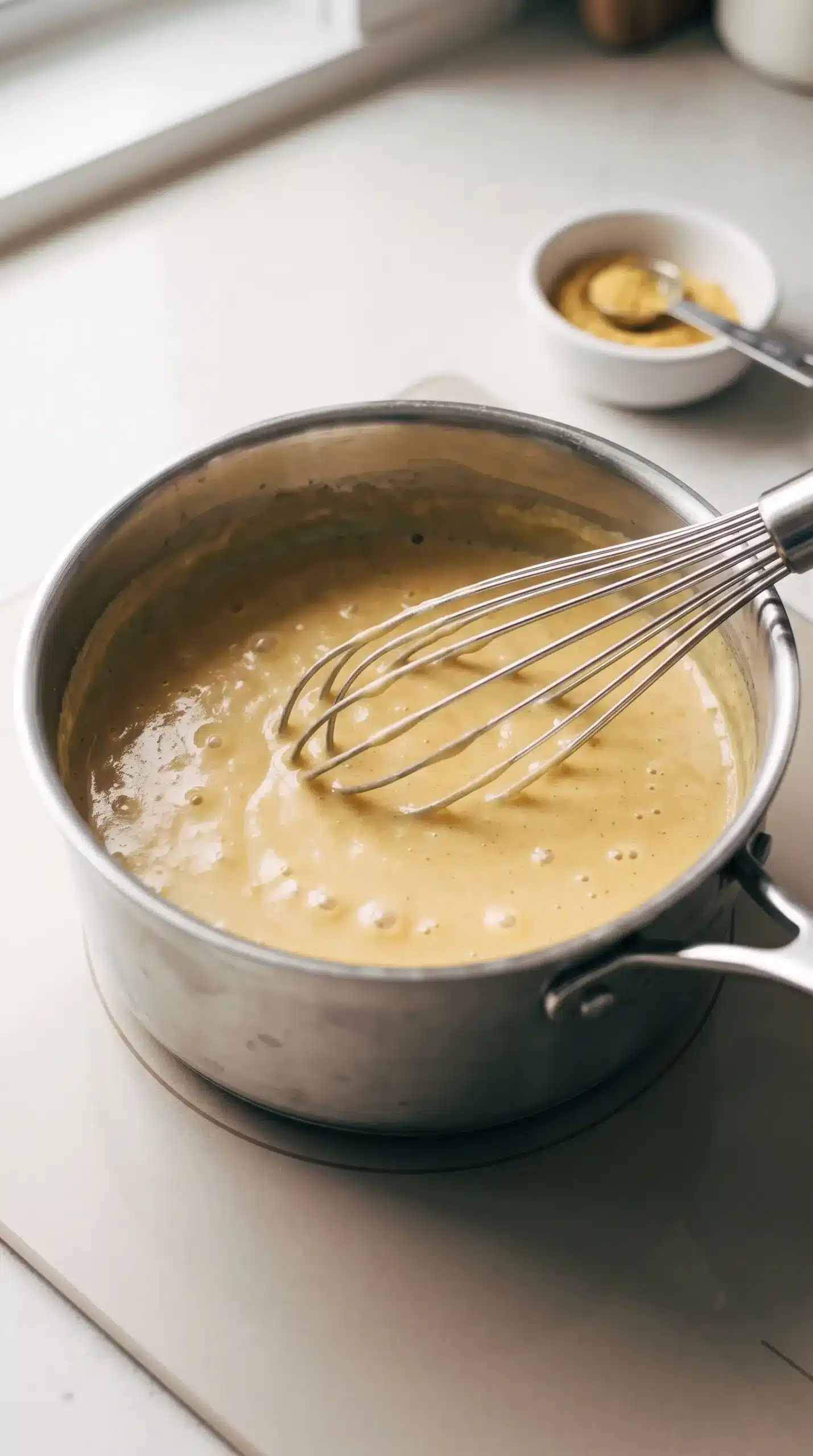
The sauce needs enough heat for the cornstarch to thicken, but it does not benefit from aggressive cooking. Once the milk and cheese powder have been thoroughly whisked together, bring the mixture gently toward a slow simmer while continuing to pay attention to its texture.
As the sauce heats, watch for a transition from thin and milky to creamy enough to coat the back of a spoon. That visible change tells you more than a rigid cooking cue because stovetops and saucepan sizes can vary.
Once the sauce reaches that creamy stage, combine it with the drained macaroni and stir until the pasta is evenly coated. Adding the non-dairy butter at this point gives the finished dish extra richness and helps create a smoother mouthfeel.
Freshly cracked black pepper works well at the end because it adds contrast without changing the core character of the sauce. A tiny squeeze of lemon juice can also brighten the flavor, but the amount should be restrained enough that the finished dish does not taste lemony.
Elbow macaroni gives the sauce plenty to cling to
Elbow macaroni is especially useful for vegan mac and cheese because its curved shape holds onto the creamy sauce. Cook the pasta according to its package directions and drain it thoroughly before combining it with the sauce. When a crisp topping is preferred, baked mac and cheese with a breadcrumb crust provides a contrasting finish, but the pasta should still be fully coated before baking.
Once drained, the pasta should meet the sauce while both are still warm. Stirring them together while the sauce is creamy allows the starch-coated curves and ridges to become evenly covered without requiring a separate finishing technique.
Three visual cues prevent a thin or clumpy sauce
Most texture problems can be caught while the sauce is still in the saucepan. Pay attention to how the mixture moves, how evenly the powder disperses, and how quickly the texture changes as heat reaches the starch.
- Before heating: The milk and powder should look evenly blended, with no obvious dry pockets or lumps.
- During simmering: The mixture should gradually become creamy instead of remaining completely fluid.
- Before combining: The sauce should be thick enough to coat the macaroni instead of disappearing into it.
If the mixture thickens suddenly, keep whisking so the sauce remains smooth. If it still looks thin, give it a little more gentle heating while stirring and watch for the creamy transition.
Common vegan mac and cheese mistakes are easy to catch early
A few errors can change the texture or balance of the finished bowl. The most common one is inadequate mixing before the sauce heats. Cornstarch needs to be dispersed through the liquid, so adding the powder without thorough whisking can leave unevenly thickened spots.
Overheating creates another avoidable problem. A controlled simmer gives the starch time to thicken the milk without turning the cooking process into a hard boil. Keeping the heat gentle also makes it easier to notice when the sauce has reached the desired consistency.
Adding too much lemon can shift the sauce from bright and savory to distinctly acidic. Start with the tiniest squeeze, taste, and stop as soon as the flavors seem more lively.
Finally, do not judge the sauce solely by how it looks in the saucepan. The macaroni absorbs and carries the sauce differently once everything is stirred together. A sauce that seems moderately thick before combining can become exactly the coating consistency you want on the pasta.
A tiny finishing adjustment can sharpen the whole bowl
The finished flavor benefits from restraint. Black pepper provides a little bite, while a very small amount of lemon juice can make the savory ingredients feel more awake without announcing itself as a separate flavor.
Make the prepared cheese powder work beyond one meal
The dry cheese mixture is useful because it separates the flavor-building stage from the actual cooking stage. After blending, keep the powder in a jar so it is ready when another batch of vegan mac and cheese is on the menu.
That approach also makes the sauce easier to reproduce. The nutritional yeast, seasonings, color spices, and thickener have already been distributed together, so the next batch does not depend on remembering several separate dry measurements.
For the smoothest result, give the stored powder a quick stir or shake before measuring it. Dry ingredients can settle differently over time, and redistributing them helps maintain the intended balance in each portion of sauce.
Stovetop vegan mac and cheese stays adaptable at the saucepan
The stovetop approach offers useful control because the sauce can be observed as it changes. If the mixture needs more time to thicken, you can continue heating it gently. If it becomes thicker than desired, a little additional unsweetened non-dairy milk can loosen it.
That flexibility makes the sauce forgiving once you learn to read its consistency. The ideal texture is creamy and spoonable, with enough body to coat the macaroni generously without becoming stiff.
Instant Pot preparation uses a different finishing rhythm
The same flavor profile can also be prepared with the Instant Pot method supplied for the dish. In that approach, the macaroni cooks with water first, followed by non-dairy milk, cheese powder, and butter after the pressure-cooking stage.
Because the pasta and liquid come together in the pot, the consistency may need a little adjustment after cooking. A brief period on the Sauté function can help reduce excess liquid, while additional non-dairy milk can loosen the mixture if it seems too thick.
Letting the finished macaroni sit briefly also matters because the sauce continues to thicken as it settles. That means the texture immediately after stirring is not necessarily the texture you will have after a short rest.
Why the creamy texture depends on timing
Creaminess comes from several small interactions happening at once: cornstarch thickens the milk, the warm pasta receives the sauce, and non-dairy butter rounds out the finished texture. None of those elements needs complicated treatment, but they work best when handled at the right stage.
Whisking the powder into the milk before the mixture thickens gives the starch a chance to disperse. Heating gently brings the sauce together. Combining it with warm macaroni then lets the coating settle across the pasta instead of sitting separately in the pan.
The result should feel cohesive rather than heavy. If the sauce seems too concentrated, a splash of unsweetened milk can restore looseness; if it is too fluid, additional gentle heating gives the cornstarch more opportunity to develop body.
Vegan mac and cheese is defined by controlled contrast
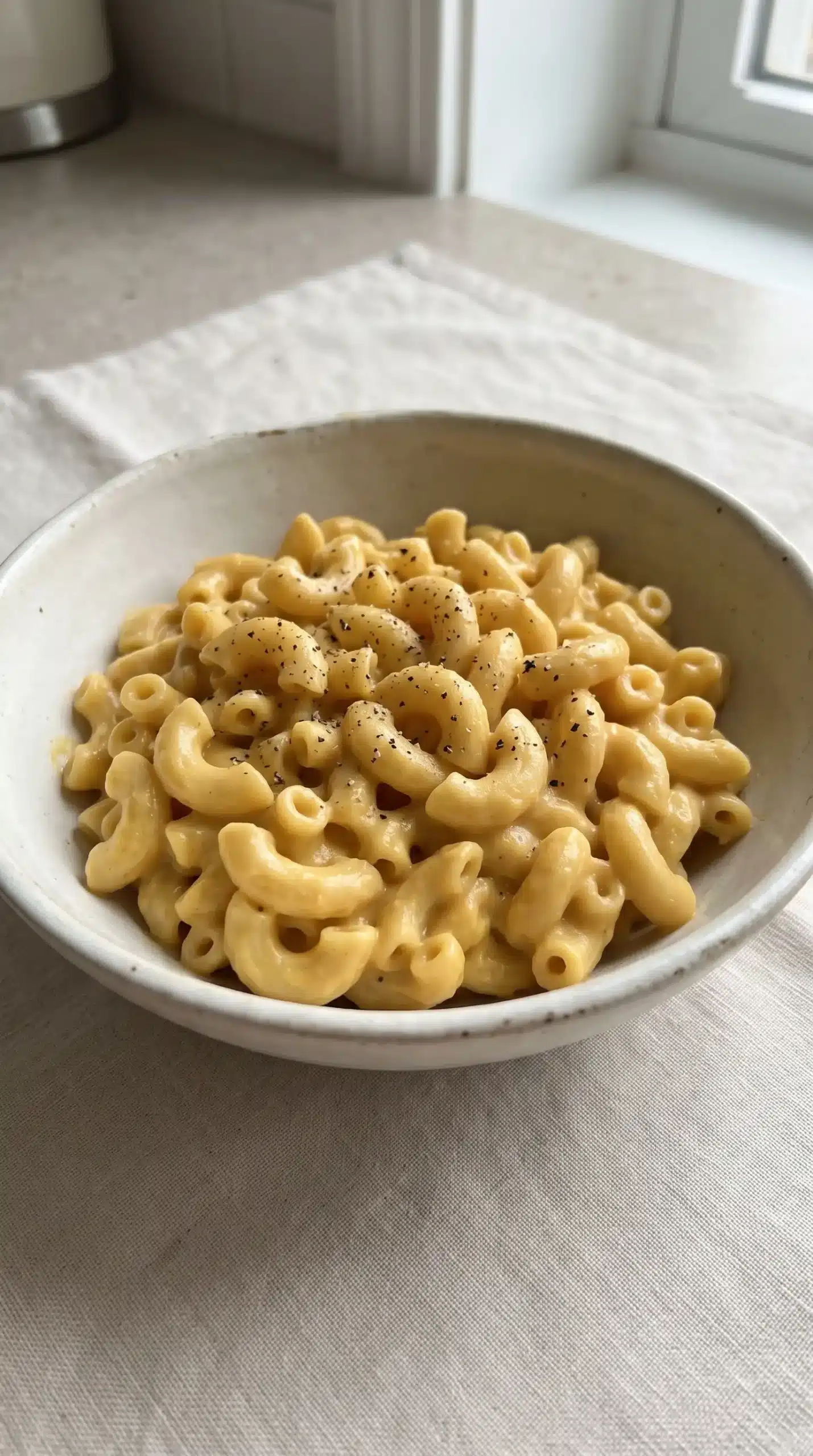
The strongest version balances savory nutritional yeast with a creamy starch-thickened base, then uses pepper and an almost imperceptible touch of lemon to keep the flavor lively. The sauce should coat the macaroni generously while remaining soft enough to stir easily.
Once those texture cues become familiar, easy vegan mac and cheese becomes less about following a rigid sequence and more about recognizing the right moments: an evenly blended powder, a gently thickened sauce, and warm pasta that accepts the coating smoothly.
Vegan mac and cheese questions about texture and ingredients
Can I use a different pasta shape?
Yes. Elbow macaroni is useful because its curved shape catches the sauce, but another small pasta shape can work if it has enough surface area or curves to hold the creamy mixture. Choose a shape that can be thoroughly coated so the sauce remains part of every bite.
Why does my vegan mac and cheese sauce look lumpy?
Lumps can develop when the cornstarch-rich powder is not fully dispersed in the milk before heating. Whisk the milk and powder thoroughly while the mixture is still cool, then heat gradually while continuing to stir. This gives the thickener a more even distribution as the sauce develops.
Can I make the cheese powder ahead of time?
Yes. The dry mixture is specifically designed to be blended and stored for later batches. Keep it in a clean, closed jar and mix the powder before measuring so the dry ingredients remain evenly distributed.
How can I make the sauce less thick?
Add a small amount of unsweetened non-dairy milk and stir until the sauce reaches the consistency you want. Adding liquid gradually gives you better control than pouring in a large amount at once, especially because the sauce can continue thickening as it sits.
Does the lemon juice make vegan mac and cheese taste lemony?
It should not when used sparingly. The intended effect is simply to brighten the savory flavors, so begin with a very small squeeze and taste before adding more. Too much can become noticeable and shift the balance of the finished sauce.
Can I use sweetened non-dairy milk?
Unsweetened milk is the better fit for this savory sauce. Almond, soy, and oat milk are all listed as suitable options when they are unsweetened, allowing the nutritional yeast, garlic, onion, and other seasonings to remain the focus.
Vegan Mac and Cheese with Non-Dairy Milk and Butter
Vegan mac and cheese with a creamy, savory sauce and comforting stovetop texture. It is an easy choice for a quick, satisfying meal when you want a cheesy-style pasta without dairy.
Ingredients
Method
Preparation
- Blend the nutritional yeast, cornstarch, onion powder, garlic powder, coarse salt, turmeric, and paprika into a fine powder for about 30 seconds. Transfer the prepared powder to a jar; the mixture makes enough for 3-4 future batches of vegan mac and cheese.
- Cook the elbow macaroni according to the package directions, then drain.
Cooking
- Combine 1 1/2 cups non-dairy milk with 3 tablespoons of the prepared cheese powder in a small saucepan. Whisk thoroughly, then bring the mixture gently to a slow simmer until it becomes creamy and sauce-like.
- Add the cheese sauce to the drained macaroni and stir to coat. Mix in the non-dairy butter, then finish with a tiny squeeze of lemon juice if desired.
Notes
Instant Pot instructions: Add the macaroni, 1 1/2 cups water, and a pinch of salt to the Instant Pot. Cook for 3 minutes on high pressure, then use Quick Release to release the steam. Open the pot and stir in 1/2 cup non-dairy milk, 3 tablespoons cheese powder, and the non-dairy butter. If the macaroni is too liquid, use the Sauté function for 1 minute, or until it begins to boil, then press Cancel and stir well. The mixture will thicken as it rests. If more milk is needed, add 1/4 cup at a time.