From breakfast to dinner, from healthy meals to sweet desserts – Next Yum Recipes brings you quick, simple and tasty ideas for every occasion and every time.


 This Recipe
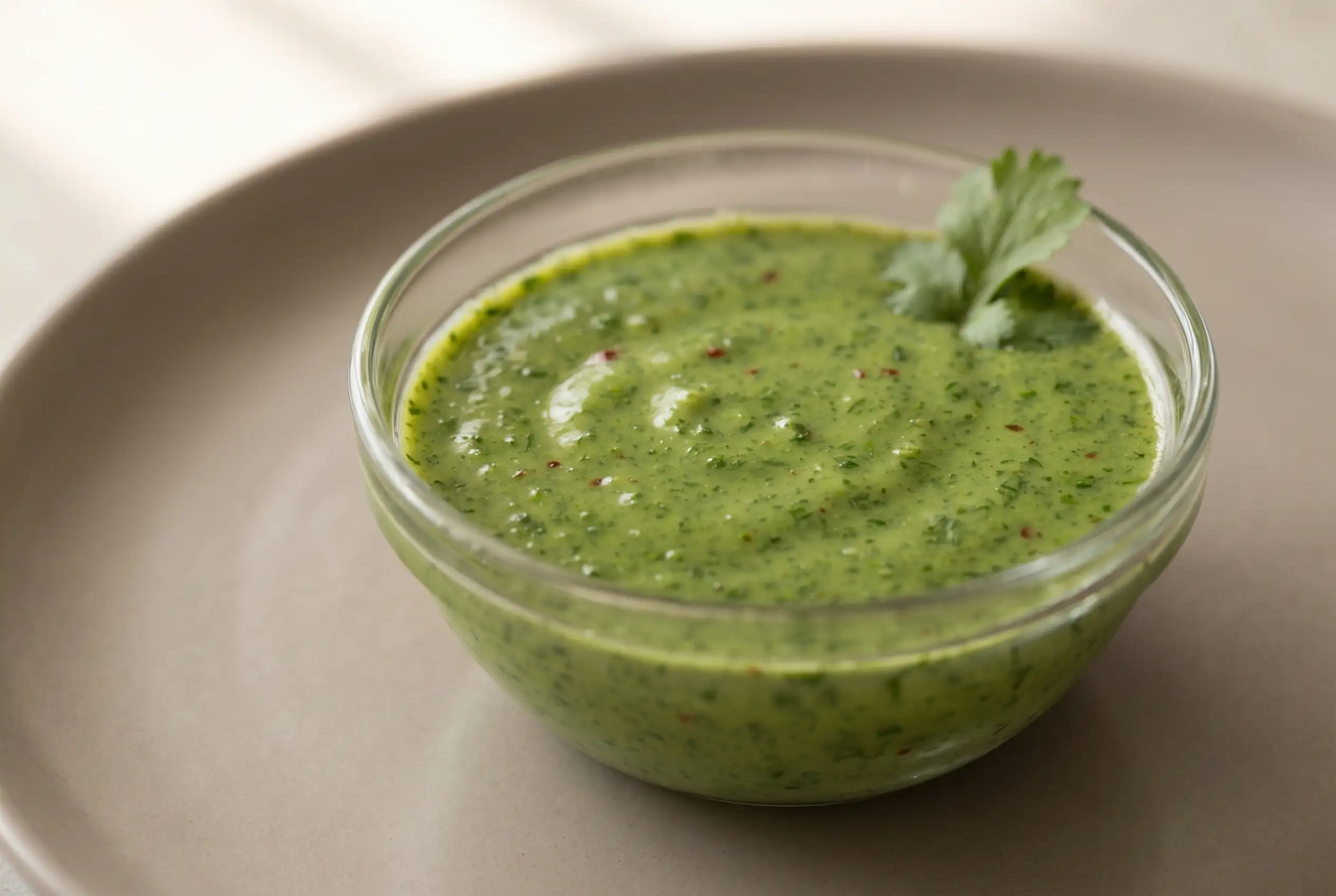
Cilantro vinaigrette brings fresh herbs, olive oil, vinegar, garlic, and seasoning together in a quick blended dressing that can transform everyday meals. The combination works because each element supports the others: bright cilantro creates the main flavor, olive oil smooths the texture, and white vinegar adds a sharp finish that keeps the dressing lively.
A 5 ingredient cilantro vinaigrette keeps preparation simple while leaving room for small adjustments. The blending process creates a smooth sauce that works across salads, bowls, vegetables, and other dishes where a fresh, savory topping can make a difference.
Bright Flavor Defines 5 Ingredient Cilantro Vinaigrette
Freshly blended cilantro vinaigrette depends on balance more than complexity. The dressing has enough richness from olive oil to carry the herb flavor, while the vinegar and red pepper flakes provide contrast that prevents the cilantro from feeling flat. A careful blend also helps the garlic and seasonings distribute evenly.
Many simple sauces become more useful when their texture matches the way they will be served. A smooth consistency allows the vinaigrette to coat ingredients evenly, whether it is tossed through greens or spooned over a finished dish.
Homemade cilantro vinaigrette stands apart from bottled dressings because the fresh cilantro remains the focus. The short ingredient list highlights the quality of each choice, making freshness and proportion important parts of the finished result.
Fresh Herbs Shape the Vinaigrette Character
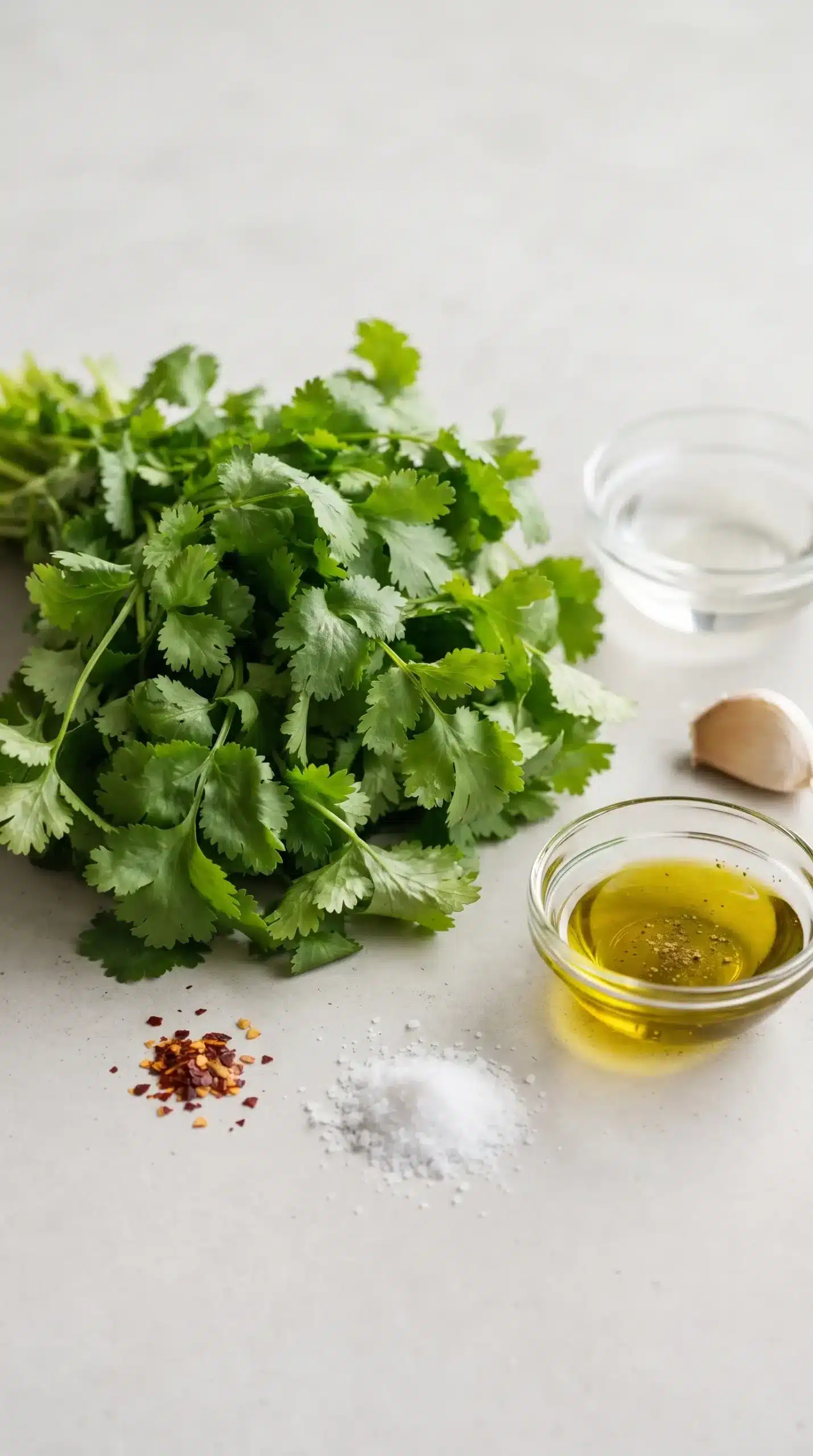
Cilantro selection has the biggest influence on the personality of the dressing. A large bunch with vibrant leaves creates the herb-forward flavor expected from this sauce, while careful rinsing and preparation help keep the blended texture pleasant.
Selecting the main herb carefully helps preserve the character of the dressing, since choosing fresh cilantro with bright green leaves can improve the starting quality of a homemade vinaigrette.
White Vinegar and Oil Balance the Dressing Texture
White vinegar gives the vinaigrette its sharp edge and creates the bright flavor associated with a fresh herb dressing. The vinegar choice also changes the overall impression because its clean acidity allows the cilantro to remain noticeable.
Olive oil provides the smooth body that brings the ingredients together. Its richness helps soften the stronger flavors from garlic, vinegar, and red pepper flakes, creating a dressing that feels complete when combined.
Small adjustments can change how the sauce performs at the table. More water can help the blender move smoothly and can create a texture that works better for pouring, while seasoning adjustments allow the finished dressing to match personal preference.
| Adjustment | Result in the vinaigrette | Useful situation |
|---|---|---|
| Additional water | Looser blending texture | Helpful when the blender needs more volume to run smoothly |
| More seasoning | Stronger overall flavor | Useful after tasting the blended dressing |
| Extra blending time | More uniform texture | Helpful when pieces of herbs remain visible |
Blending Technique Controls Homemade Cilantro Vinaigrette Consistency
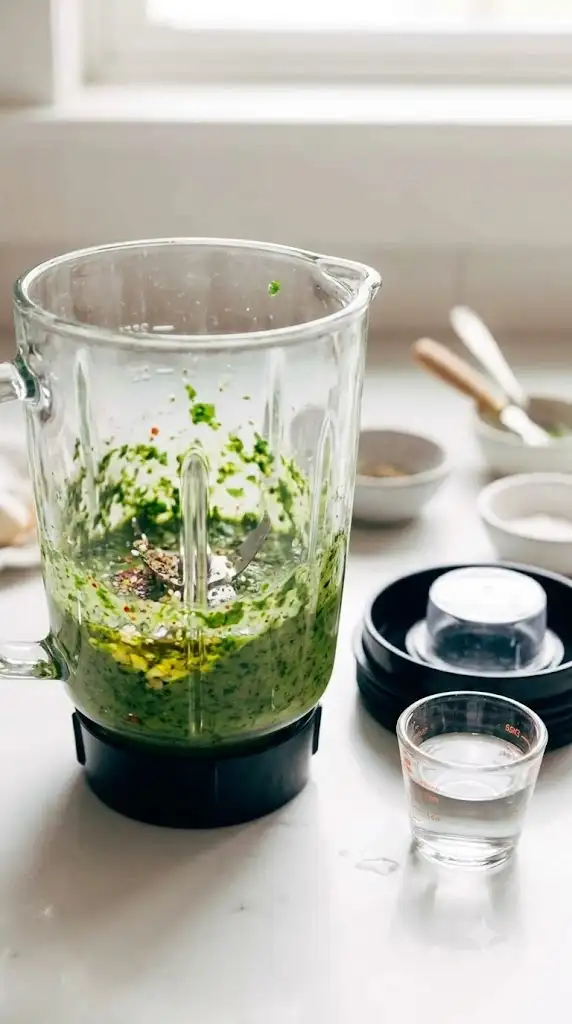
Proper blending creates the texture that makes this dressing versatile. A blender combines the oil, herbs, garlic, and seasonings into a unified mixture, allowing the flavors to spread throughout each spoonful.
Careful attention during blending helps avoid a dressing that feels uneven. Adding water only when needed keeps the mixture from becoming thinner than intended while still supporting smooth movement inside the blender.
Finished texture remains a personal choice. Some cooks prefer a completely smooth cilantro olive oil vinaigrette, while others may enjoy a little visible herb texture that shows the fresh ingredients used in the blend.
Common Mistakes With Cilantro Vinaigrette Steal Freshness
Overlooking the herb quality can weaken the dressing before blending begins. Cilantro with dull leaves or a strong unpleasant aroma may not create the fresh flavor expected from the finished sauce.
Rushing the tasting step can also lead to an unbalanced result. After blending, the dressing should be checked for seasoning because the combination of vinegar, salt, garlic, and herbs determines the overall impression.
Adding too much water at once can make the texture less concentrated. A gradual approach gives better control and keeps the dressing suitable for different serving uses.
- Flavor check: Taste after blending so seasoning can be adjusted before serving.
- Texture check: Add water carefully when the blender needs help moving the mixture.
- Freshness check: Use vibrant cilantro for the strongest herb character.
Small Adjustments Change Serving Style Without Changing the Base
The same blended dressing can take on different roles depending on how it is used. A slightly thinner texture can work well for drizzling, while a thicker consistency can coat ingredients more heavily.
Storage Decisions Keep Cilantro Vinaigrette Ready
Proper storage helps preserve the fresh character of the dressing after blending. Keeping the vinaigrette in a jar in the refrigerator protects the flavors and makes it easy to use again.
Uses That Show the Range of Cilantro Olive Oil Vinaigrette
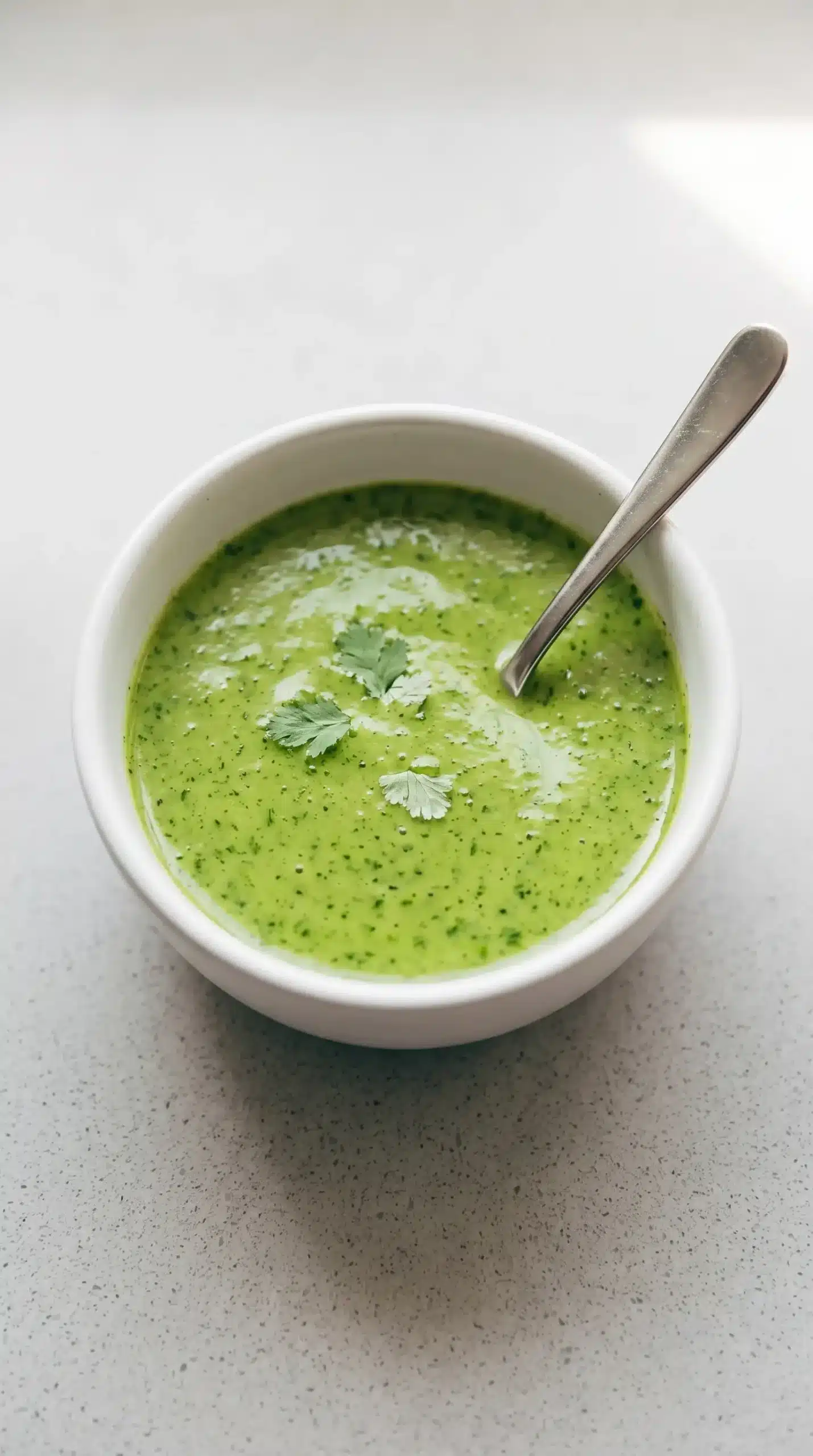
Versatility is one of the main strengths of this sauce. The fresh herb flavor can complement many foods because the dressing combines acidity, richness, and seasoning in a single preparation.
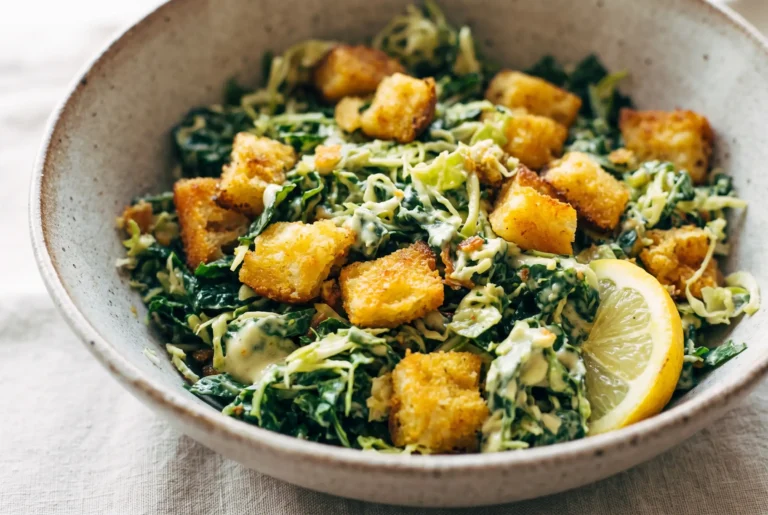
Salads are an obvious match, but the vinaigrette can bring brightness to cooked ingredients and simple meals that need a fresh finishing element. Creamy herb toppings such as avocado cilantro dressing can change the texture of a salad or bowl while keeping fresh ingredients at the center.
Serving ideas can include a range of textures and flavors. The dressing works especially well when a dish benefits from a sharp, herb-filled addition that does not require a long preparation process.
Ingredient Ratios Create a Reliable Five Ingredient Blend
The proportions in a cilantro vinaigrette create a dependable balance between fresh herbs, oil, acidity, and seasoning. Keeping those relationships consistent makes it easier to adjust the dressing without losing its core character.
Serving Adjustments Help Homemade Cilantro Vinaigrette Fit Meals
Different meals may call for different presentations of the same sauce. A salad may benefit from a pourable texture, while a thicker blend may cling better when used as a topping.
Creative uses remain simple because the flavor profile is already complete. The cilantro, vinegar, oil, garlic, and spices provide enough contrast to support many combinations without requiring extra preparation.
Thoughtful adjustments should focus on the dish being served alongside the vinaigrette. Small texture changes or seasoning choices can help the sauce complement the rest of the meal.
Blended Cilantro Vinaigrette Gains Freshness Through Careful Handling
Fresh cilantro and balanced blending determine how the finished vinaigrette performs. The strongest results come from preserving the herb flavor, maintaining a smooth texture, and adjusting only where the dressing needs more support.
Cilantro Vinaigrette Finds Its Balance Through Simple Control
Fresh cilantro creates the foundation of this dressing, while olive oil, vinegar, garlic, and seasoning shape the way the flavor develops. The short ingredient list rewards attention because each choice remains noticeable after blending.
Careful blending and thoughtful adjustments keep the sauce useful across many meals. A balanced texture and bright flavor allow the vinaigrette to move easily from a salad topping to a versatile finishing sauce.
Questions About Texture, Storage, and Cilantro Vinaigrette
Can cilantro vinaigrette be made less spicy?
The red pepper flakes provide the heat in the dressing, so reducing or omitting them lowers the spice level while keeping the cilantro, oil, and vinegar flavors intact.
Why does my cilantro vinaigrette need water?
Water can help a blender process the ingredients more smoothly when the mixture does not have enough liquid movement. Adding it gradually allows better control over the finished texture.
How long can homemade cilantro vinaigrette be stored?
The dressing can be kept in a jar in the refrigerator for several days. Using a clean container and keeping it chilled helps maintain its fresh flavor.
Can I use another vinegar for cilantro vinaigrette?
White vinegar gives this version its sharp tang, but another vinegar may change the flavor profile. Any adjustment should be made with attention to how the acidity works with the cilantro and olive oil.
What foods pair well with cilantro vinaigrette?
The dressing pairs well with foods that benefit from fresh acidity and herb flavor, including salads, vegetables, and other meals where a bright finishing sauce fits the dish.
Cilantro Vinaigrette with Olive Oil and Garlic Dressing
Cilantro vinaigrette is a fresh, smooth blended dressing with bright herb flavor, a sharp tang, and a balanced savory finish. This quick homemade sauce is perfect when you want an easy way to add vibrant flavor to meals.
Ingredients
Method
Preparation
- Blend all ingredients together for about 1 minute until the mixture is smooth.
- Add water as needed to help the blender process the mixture and reach the desired consistency.
- Taste the vinaigrette and adjust the seasoning as needed before serving.
Notes
The original recipe was adjusted by omitting the shallot, using white vinegar instead of red wine vinegar for a sharper tang, and adding water when needed to help the blender run smoothly. Keep the vinaigrette in a jar in the refrigerator for 3-4 days.